

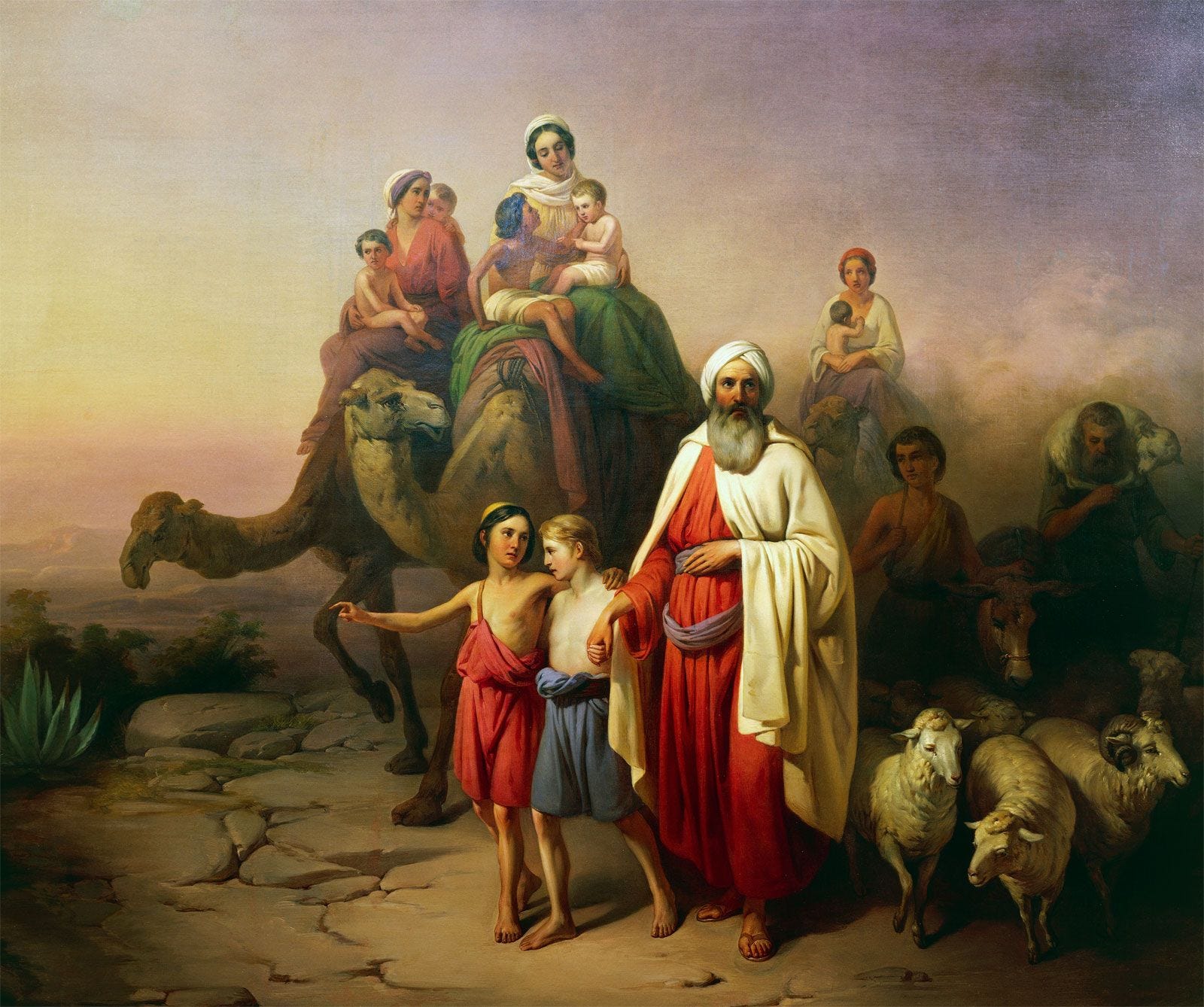
Abraham is one of the most foundational characters of the Biblical narrative, praised as a model of near perfect faith.
He enacts the beginning of God’s “rescue plan,” to save man from the Fall.
And this mission begins with his famous call, to a walk of Faith with God, to become a “Father of Nations.” His story then, is not just foundational to understanding the Biblical narrative, but to understand the universal wisdom behind what constitutes true faith, and also true civilization.
The suggestion is that the ability to walk with God and the ability to found a successful familial dynasty predicated upon virtue are fundamentally intertwined.
Today then, we’ll dive deep into Abraham’s story to understand the vision of what constitutes true faith, and how this helps man build a dynasty that lasts…
I am 100% reader-supported. This newsletter is free, but if you’re able to support, please consider a paid membership — it helps my mission of sharing Truth, Beauty and Goodness with maximal reach
As a paid member, you’ll get:
Two full essays a week
Access to all recordings (past & future) of my Great Books lectures on this publication
Eternal gratitude from me
The Call to Faith
As a recap, Abraham’s story begins in Genesis 12, which marks a shift in literary genre. Genesis 1-11 is the genre of “primeval history.” It recalls literal events, dramatized through a poetic medium to give a “larger than life,” feel that’s almost mythological in nature — the 7 days creation story, the Fall of Man, the Flood etc.
The underlying message of Genesis 1-11 is “man is fallen, and if left to his own devices, will freely embrace evil, vice, and self-destruction [Cain & his descendants, the Flood, tower of Babel]”
Genesis 12 marks the beginning of the more explicitly historical aspect of scripture —meaning that from Abraham onward, Scripture situates its characters within recognizable peoples, cities, customs, and events of the ancient world. Thus Abraham’s story is suspected to have taken place around 2000-1800 BC, in the Middle Bronze Age.
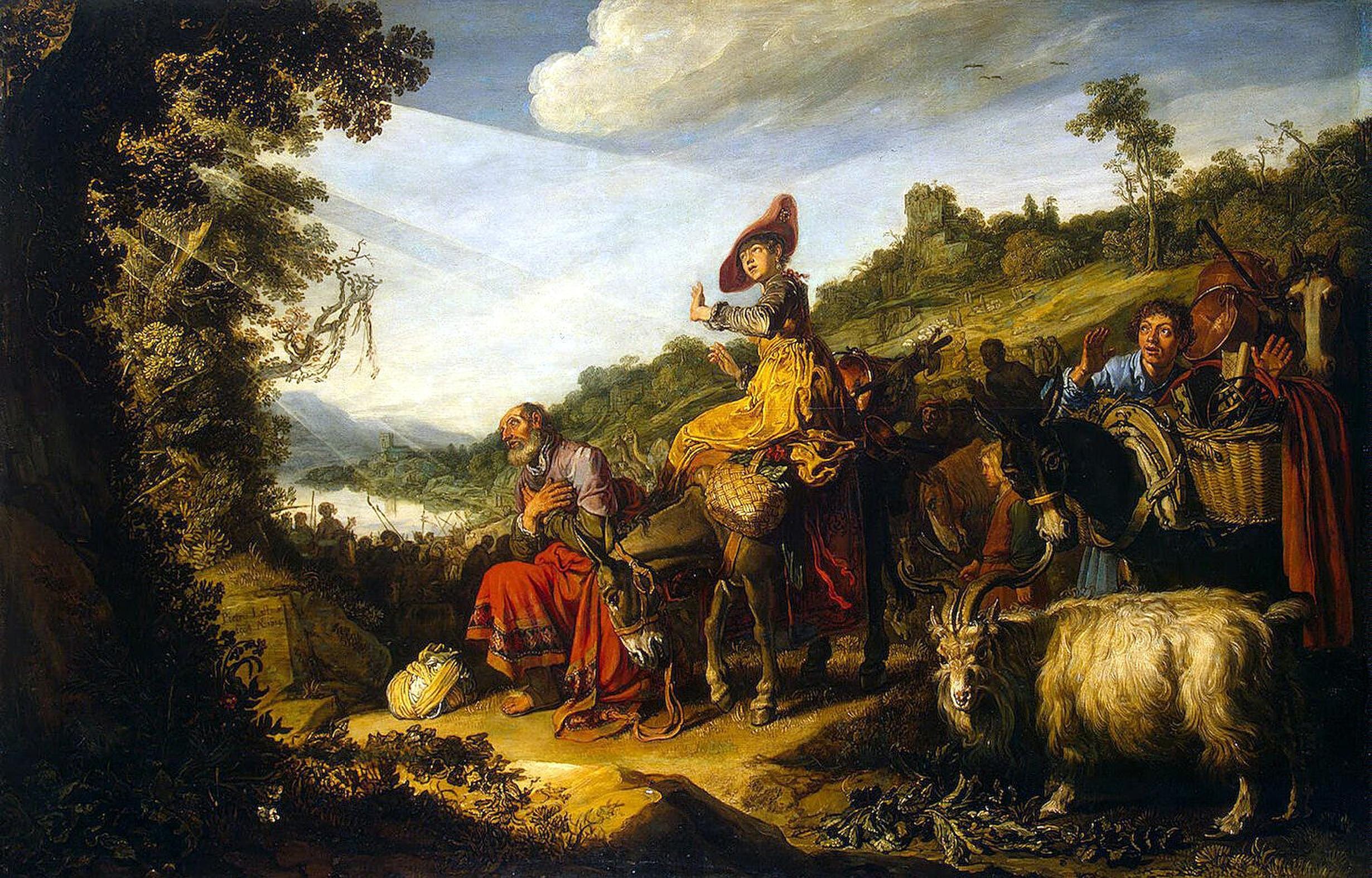
Gen 12 is also the beginning of God’s “rescue plan,” to save man from death.
The beginning of Abraham’s story is simple but profound:
“Now the Lord said to Abram, ‘Go from your country and your kindred and your father’s house to the land that I will show you. And I will make of you a great nation, and I will bless you, and make your name great, so that you will be a blessing.”
So the call is quite clear — leave your father’s house, to a foreign land I’ll show you. But a closer look shows this is no mere call at all.
In hindsight, you might think it’s simple to say, “oh, God is calling me. Who am I to say no?” but in reality, this simple call is historically unprecedented, and marks the beginning of man’s understanding of faith.
A Stranger and Sojourner
Lets give further context to what God called Abraham to do.
Recall that Abraham was originally from the city of Ur. This was a city in the fertile lands of Mesopotamia, and was one of the major metropolitan hubs of the known world — a land of high civilization, culture, literacy, architecture.
Abraham’s family leaves Ur for Haran, another metropolis that was a major trade center and hotbed of commerce. It’s here where Abraham’s father dies, when God calls upon him to leave his “father’s house,” for the land of Canaan to become a nomad.
This vocation is not an easy call. Whereas city life gave you a modicum of stability, security, and social safety nets, nomadic life was wild and precarious. You had no fixed identity, job, income, nor protection. Instead, you adopted the life of a “stranger and sojourner,” who adapted to the demands of nearby civilizations in one’s travels.
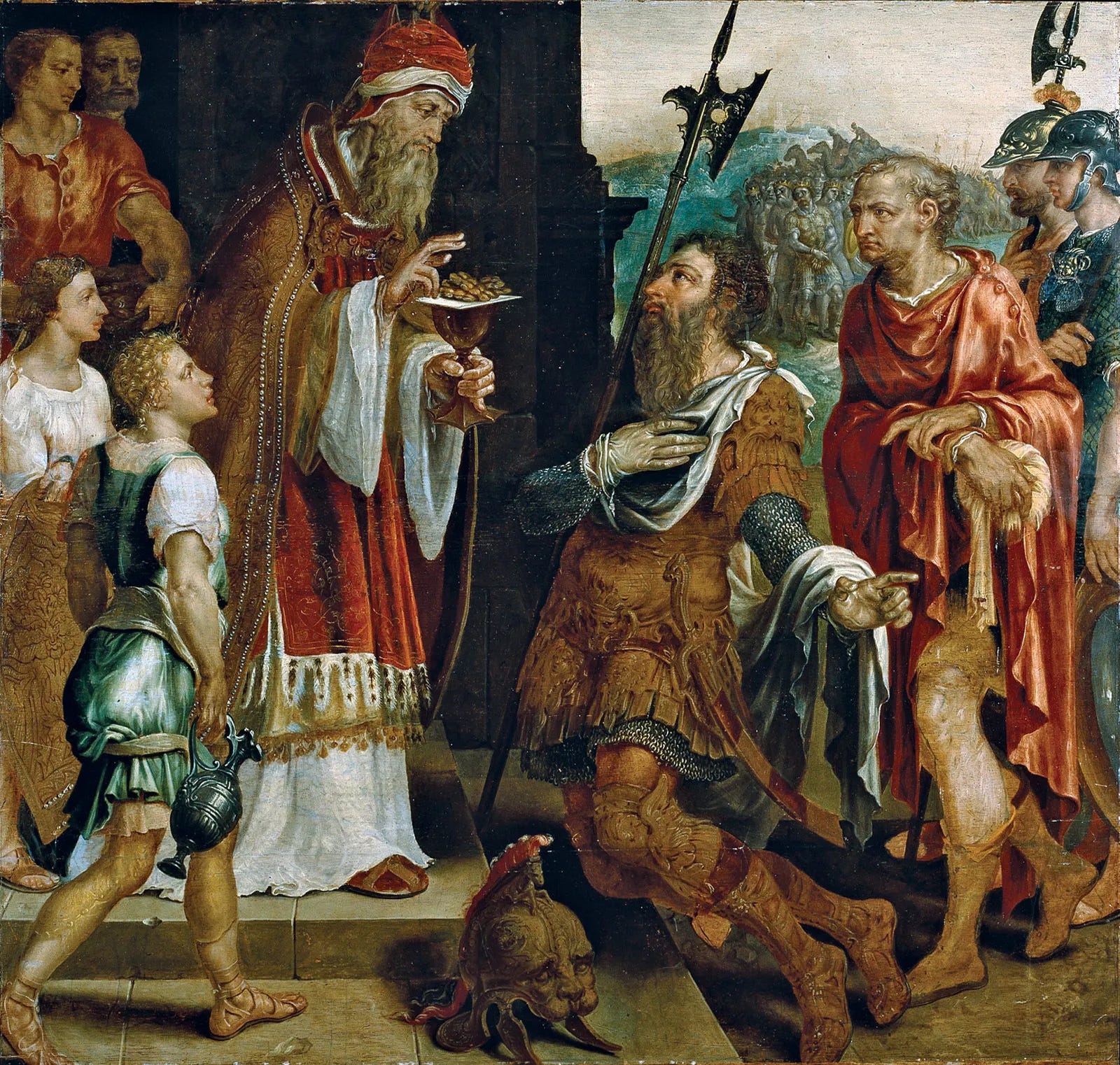
This work could vary from overseeing cattle, to trade crops in times of drought, or mercenary work in raiding/defense from warring cities. And of course, living in the plains meant you had no protection from bandits and raiders.
To summarize then, Abraham’s answering the call to “leave his father’s house,” in Haran is the cultural equivalent of a Wall Street banker moving to Africa to become a pig farmer and mercenary.
Interestingly as well, the name Haran etymologically means “intersecting roads.” In other words, God calls Abraham at the crossroads of his existence. Abraham can either answer the call — to venture into a life of faith in the wilderness — or he can ignore the call to remain in the familiar, the mundane, and the human.
Why is this significant?
It emphasizes that, for one, the call of a faithful life is not about safety and security, but has plenty of dangers. More importantly, Abraham’s nomadic life emphasizes that faith is predicated upon total surrender and dependency on God.
And of course, Abraham’s call to faith is archetypal — if any man wants to meet providence, it must be done via sacrifice in the wilderness, by renouncing worldly security in favor of providential faith.
Furthermore, the Bible actually ascribes a title for the man who answers the Abrahamic call to faith. Those who answer God’s call are given the title of “stranger and sojourner.” This is not only how Abraham introduces himself, but becomes the running label of many later Biblical descendants called upon by God, including David (Psalm 39:12), Peter (1 Peter 2:11), and Hebrews commenting on the entire Patriarch lineage (Heb 11:13-16).
The Biblical model of faith is to become a stranger and sojourner, thoroughly dependent upon God… but answering the call is just the beginning.
What Abraham is actually called to do in the wilderness of nomadic life is even more strange. And yet, when we inquire into Abraham’s actions, we discover exactly what makes him a “Father of Nations” — and what it means to become a true builder of a providential dynasty…
