

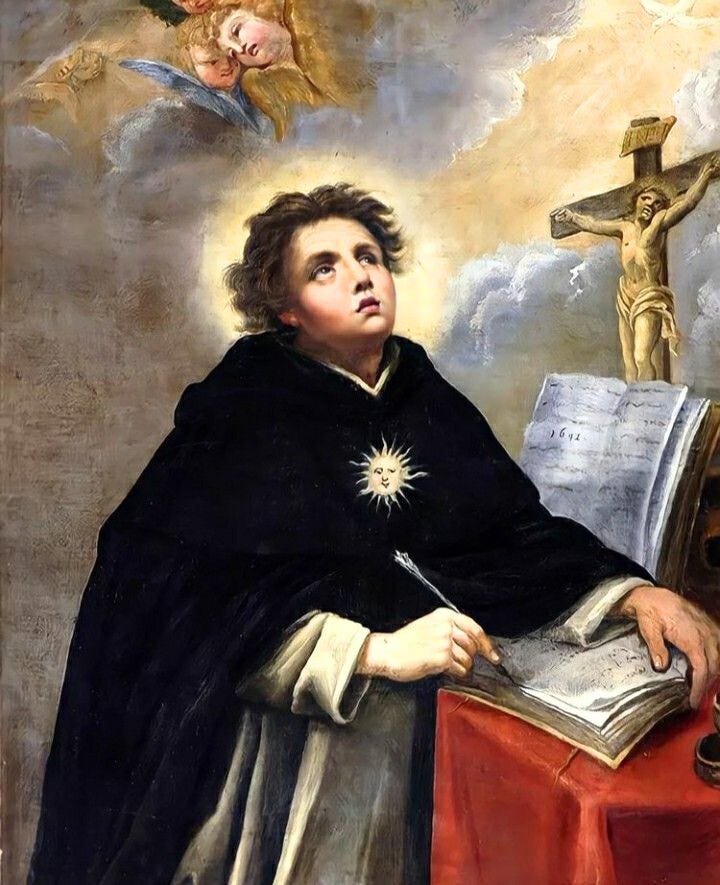
St. Thomas Aquinas wrote about everything under the sun. The Dominican friar spent his entire life praying, studying, and philosophizing about the nature of God, the cosmos, and the human condition.
His aim was to teach souls to seek Truth, grounded in God, so that mankind could live meaningful lives and seek the beatific vision. While his body of work spans tens of thousands of pages, his thoughts on beauty are of particular interest.
Beauty is perhaps the most adored, yet least understood, of the three transcendentals. When rightly understood, it does more than provide an “aesthetic experience,” but can transform your conception of reality.
Aquinas’ teachings on beauty can help us do just that. He said beauty is comprised of three main elements, and once understood, you can use beauty as a doorway to finding the divine.
Reminder:
Subscribe, if you’d like to support my mission of restoring Truth, Beauty, and Goodness to the West, subscribe below!
Paid members get an additional members-only email each week!
Defining Beauty
Aquinas gives a simple definition of beauty:
“beautiful things are those which please when seen”
He identifies the three elements of beauty below:
Integrity — the object is complete and, lacking nothing required for its nature, is not deficient.
Harmony — the proper, harmonious, and balanced relationship between the parts of an object, as well as to its purpose
Clarity — refers to brightness and luminosity. Beautiful things are bright and illuminating, hearkening back to the essence of God himself: “let there be Light”
These elements are seen most clearly in the gothic architecture of churches. Consider for instance, the Sainte Chappelle:
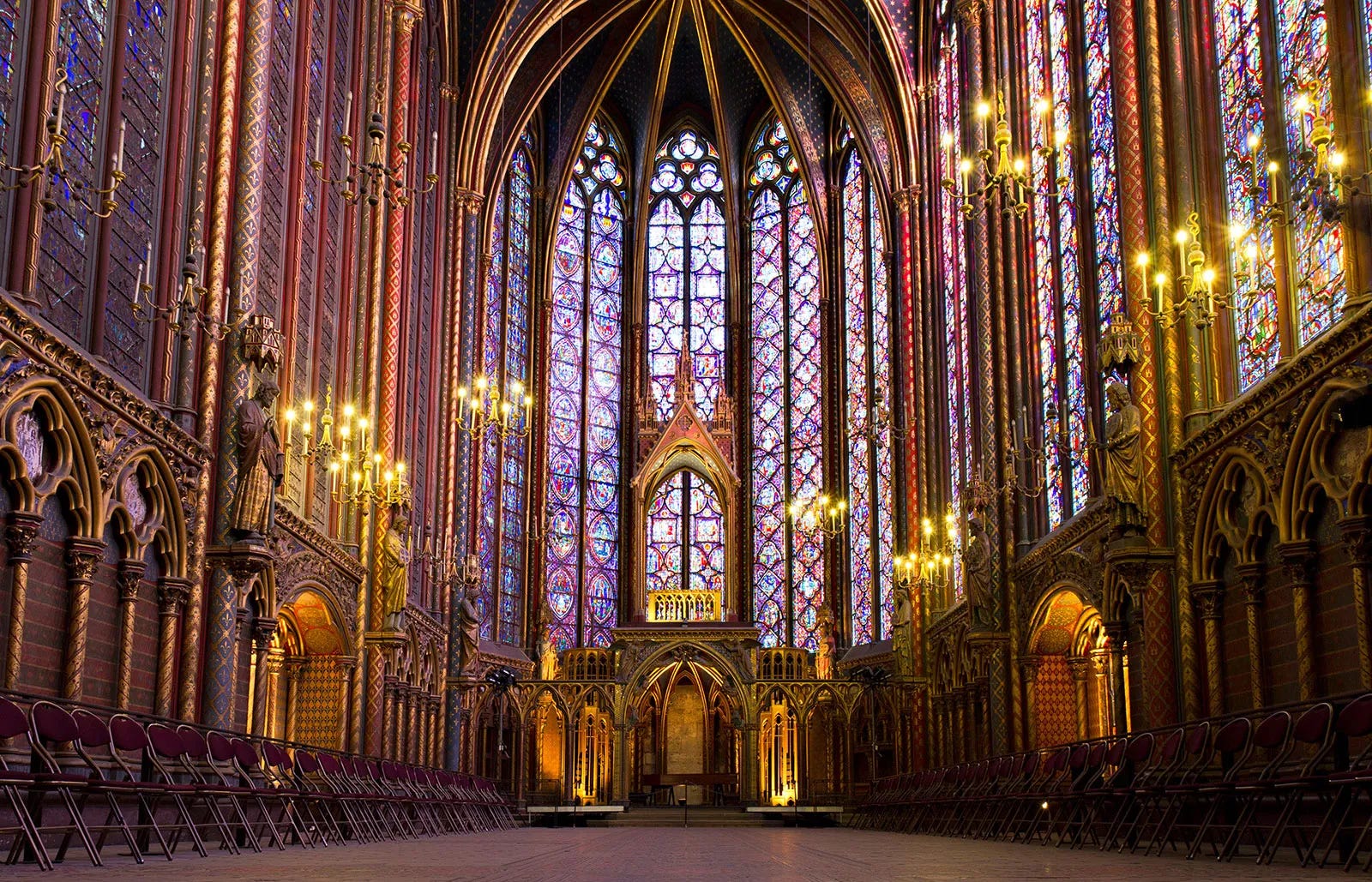
This building has integrity — it’s structurally sound, standing for 800 years
This building has harmony — its arches, windows, and walls abide by sound geometrical proportions
This building has clarity — its stained glass windows evoke a bright, otherworldly luminosity
The result is a transcendent, timeless beauty that attracts millions of souls annually for nearly a millenium.
But beauty is far more than a set of descriptive qualities. Aquinas gives us the three elements of beauty, yet he stresses beauty has a far greater purpose than to grant us an “aesthetic experience.”
Beauty is Goodness
Next, Aquinas stresses that beauty has a moral element to it:
“Beauty and goodness in a thing are fundamentally identical”
So beauty is good, and goodness is beauty.
A love of beautiful things teaches you a love of goodness.
Engaging with beauty is not a passive experience, rather dynamic and pedagogical. It should move you, unnerve you, inspire you, and above all, train the sensibilities of the heart.
Given that we love beauty, and beauty is goodness, a love of beauty leads to a love of goodness.
And yet, this transformation goes even deeper than training sentiments. It points to a fundamental reordering of one’s soul.
To understand, we need to focus on the third element of beauty — clarity (luminosity).
According to Aquinas, luminosity points to a greater, ethereal light, that is but the essence of God himself:
“created light is necessary to see the essence of God, not in order to make the essence of God intelligible… but in order to enable the intellect to understand…
[light] is required as a perfection of the intellect, strengthening it to see God”
Aquinas speaks here of the supernatural light granted in the beatific vision, but the analogy holds:
beauty strengthens the intellect by habituating it to receive light.
So beauty is a perfection of, or an awakening of, one’s intellect to heavenly reality.
Yet this is still theoretical. Let’s now give a concrete example, and perhaps no greater example of beauty, than the Ely Cathedral.
Eternity in Time
The Ely Cathedral has stood for over 1,200 years.
As a gothic cathedral, it follows the aim of Abbott Suger, who said the cathedral was to be a lux nova, or “new light.”
This new light was not just about luminosity via stained glass, but an earthly radiance that points to a heavenly light that is the essence of God.
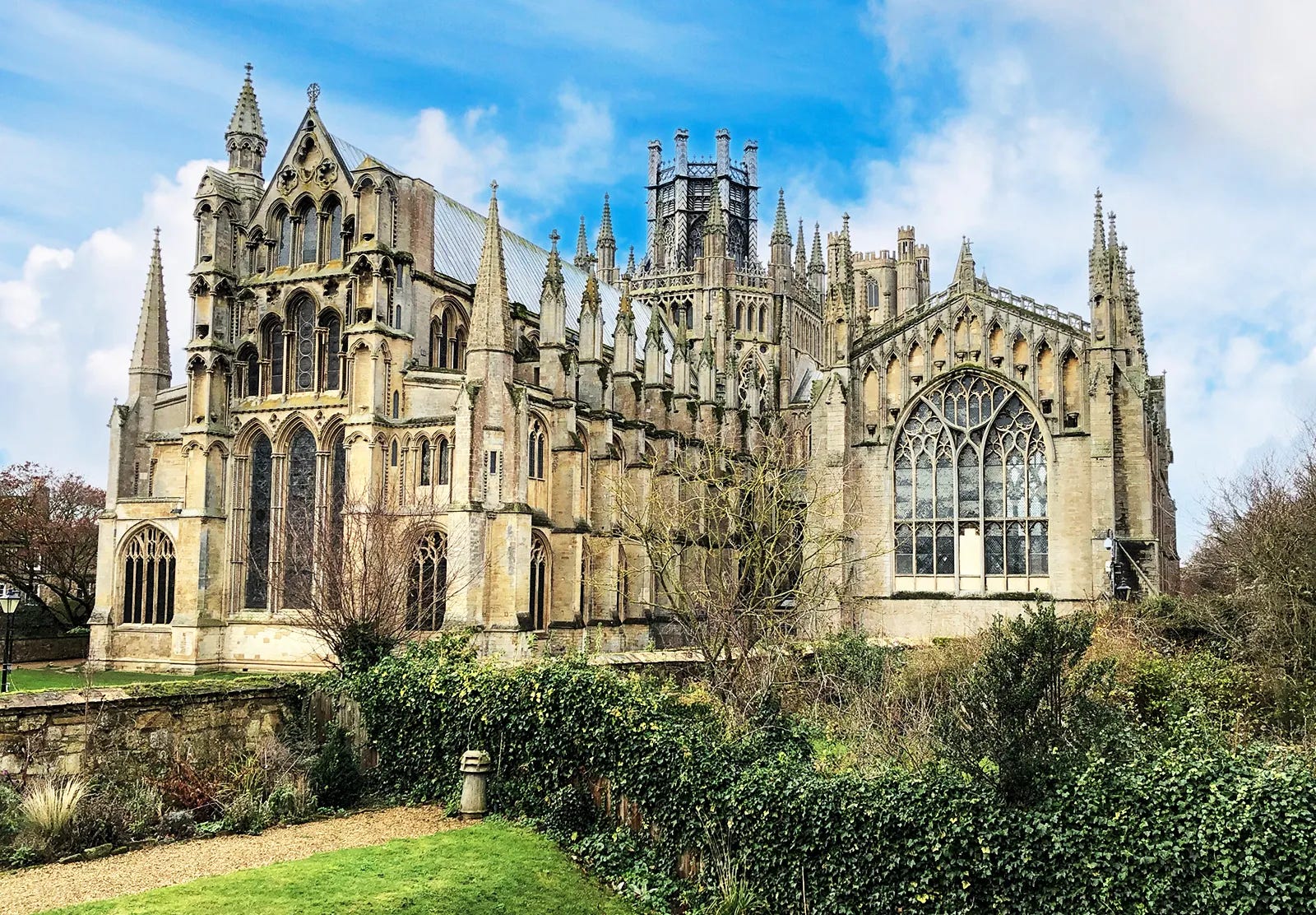
From the exterior, you can note not just harmony/geometrical symmetry, but the spires all point upwards. The building itself guides your attention upwards towards the cosmos.
The nave on the interior below continues this trend:
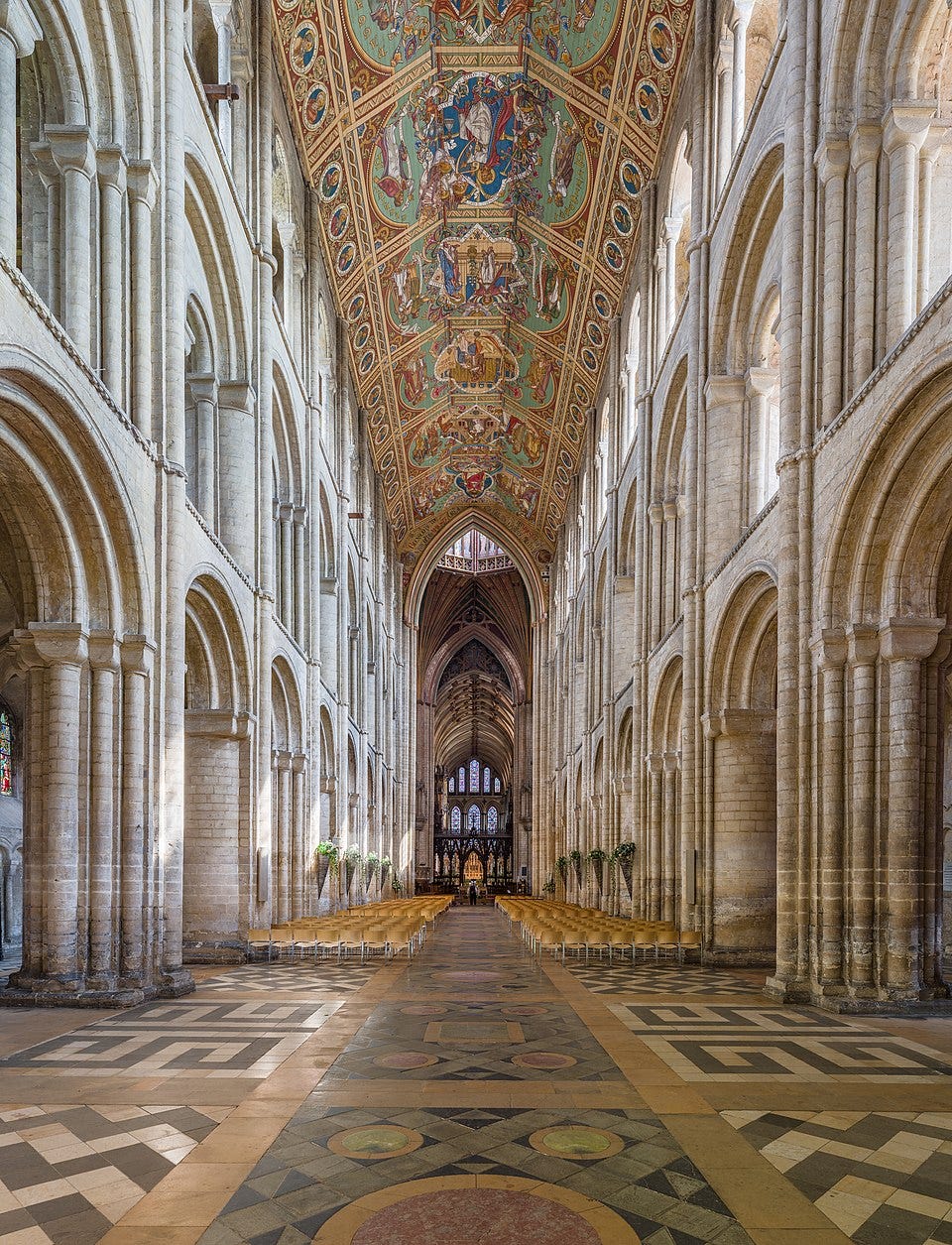
Notice how even though the space is materially constrained, one feels as if they’ve entered a domain that is larger than life. That’s the paradox of beauty — constraint is the artist’s best friend. Limitations lead to larger than life beauty.
And given that beauty is goodness, then the same is true about morality.
Goodness is a constraint on our free will, yet constraining our free will to the Good grants us authentic freedom and flourishing.
Constraint then, in harmony with goodness and beauty, points to everlasting grandeur.
If we continue our exploration through Ely Cathedral, below is the Lady Chapel, with another perfect example of clarity/luminosity.
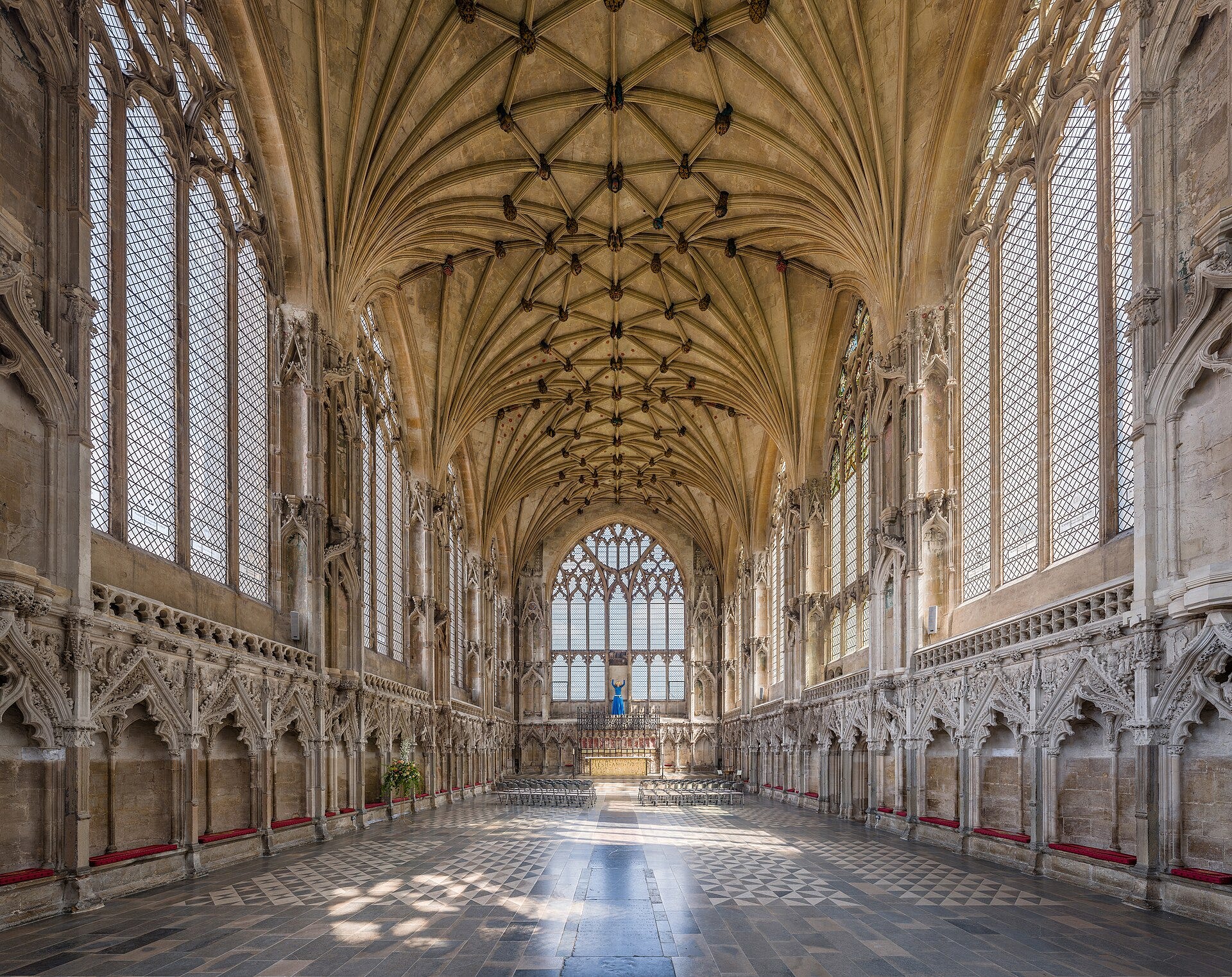
Notice how the windows of the Lady Chapel transform natural daylight into a glimpse of heaven. Materially, this room is but sunlight, stone, and marble — yet the structural integrity, harmony, and flooding of light makes raw material imitate eternity.
Finally, my personal favorite shot is below, featuring the nave and lantern
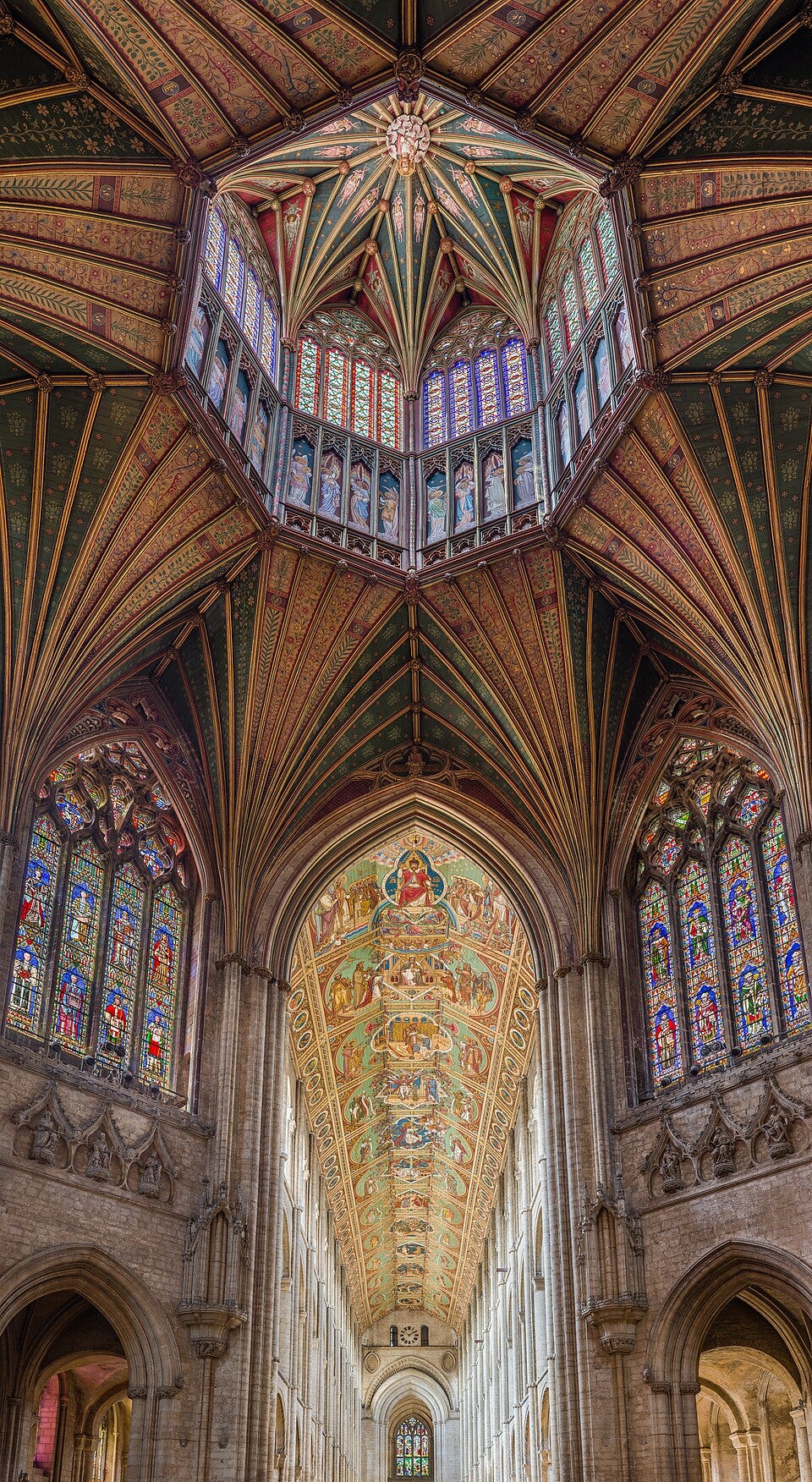
Here you see all three features on display in magnificence:
Structural integrity, harmony, and luminosity. Such a building is indeed beautiful, and is a lux nova — a new light pointing us to the heavenly light undergirding reality.
Beginning your Pilgrimage
As such, beauty is not about mere pleasure, but is indeed meant to be a pedagogical experience of transformation, pointing us to God.
CS Lewis says as much about beauty:
“The books or the music in which we thought the beauty was located will betray us if we trust to them;
it was not in them, it only came through them, and what came through them was longing.”
The same is true for beautiful literature as it does architecture, sculpture, and paint — all beauty is beautiful so long as we allow it to guide us beyond them. Beauty points not to themselves, but to a higher reality.
Beatrice’s beauty pointed Dante to Paradise.
The beauty of literature guided Lewis to Christ.
The beauty of the cathedral points to the celestial city.
In all things, beauty is found not just in the creation, but what the creation points to.
Learn to love beauty as a guide upward, and you may well find yourself ascending to sights you thought unseeable.
Reminder:
Subscribe, if you’d like to support my mission of restoring Truth, Beauty, and Goodness to the West, subscribe below!
Paid members get an additional members-only email each week!