

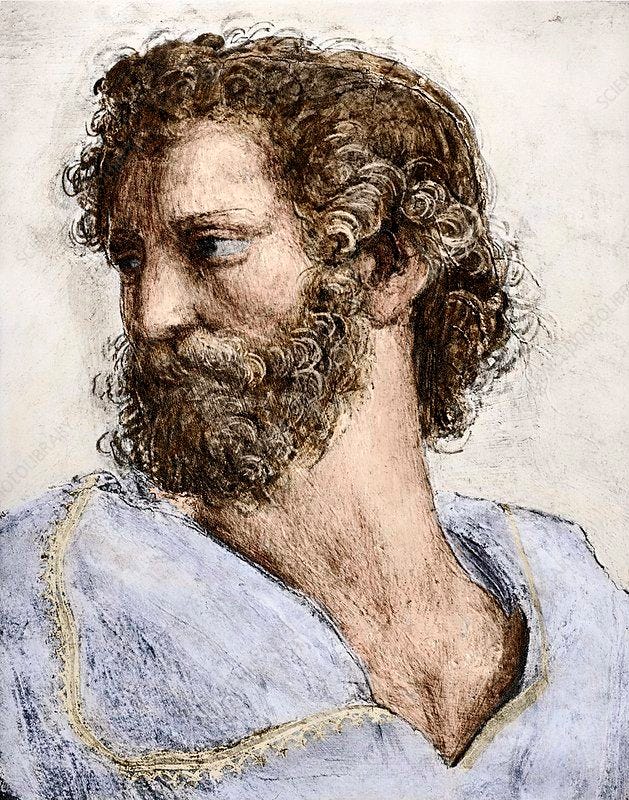
I often joke that Aristotle’s Nicomachean Ethics is the first, and greatest, self-help book of all time. Many consider this work to be his magnum opus, and for good reason:
No other work in literature has ever provided a greater practical example of how you can flourish as a human being.
For Aristotle, the best way to live a good life is to become a virtuous person, and the best way to master virtue is to understand the four states of the human soul. Once you learn them, you gain a personal understanding of your own virtues and vices, and more importantly, the path forward to becoming a truly virtuous person that leads a fulfilling life.
Reminder:
Subscribe, if you’d like to support my mission of restoring Truth, Beauty, and Goodness to the West, subscribe below!
Paid members get an additional members-only email each week!
The Golden Mean
So if the good life is all about virtue, let’s first see how Aristotle defines it:
“Virtue is a state of character concerned with choice, lying in a mean relative to us, this being determined by reason, and by that reason by which the man of practical wisdom would determine it.”
In other words, a virtuous person has built a character of moral excellence through their choices. Every good action engrains your soul toward the good. Every bad action etches your soul toward wickedness.

But how do you discern the right action to take?
Aristotle continues:
“Virtues are of such a nature as to be destroyed by deficiency or excess… for excessive gymnastic exercises, as well as deficient ones, destroy one’s strength.”
This is Aristotle’s famous golden mean: virtue lies between the extremes of two vices. In his example of the gym, both over-exercising and under-exercising harm the body. The virtuous athlete embraces both rigorous exercise and proper rest.
The same is true for moral character traits like courage, which lies between cowardice and recklessness.
Finally, Aristotle brings his point full circle:
“Virtue is of two sorts, one pertaining to thinking, the other to [action…] excellence of character comes into being as a consequence of habit.”
So Aristotle’s framework for the good life is simple:
Know what is good (virtuous thinking)
Take action in accordance with virtue
If you do this, your soul will be formed in accordance with virtue, and you will flourish.
Of course, this is easier said than done.
Anyone can know the right action, but how do you put virtue into practice?
You must first understand your soul personally. This, however, is impossible until you understand the four states of the human soul.
The Four States of the Soul
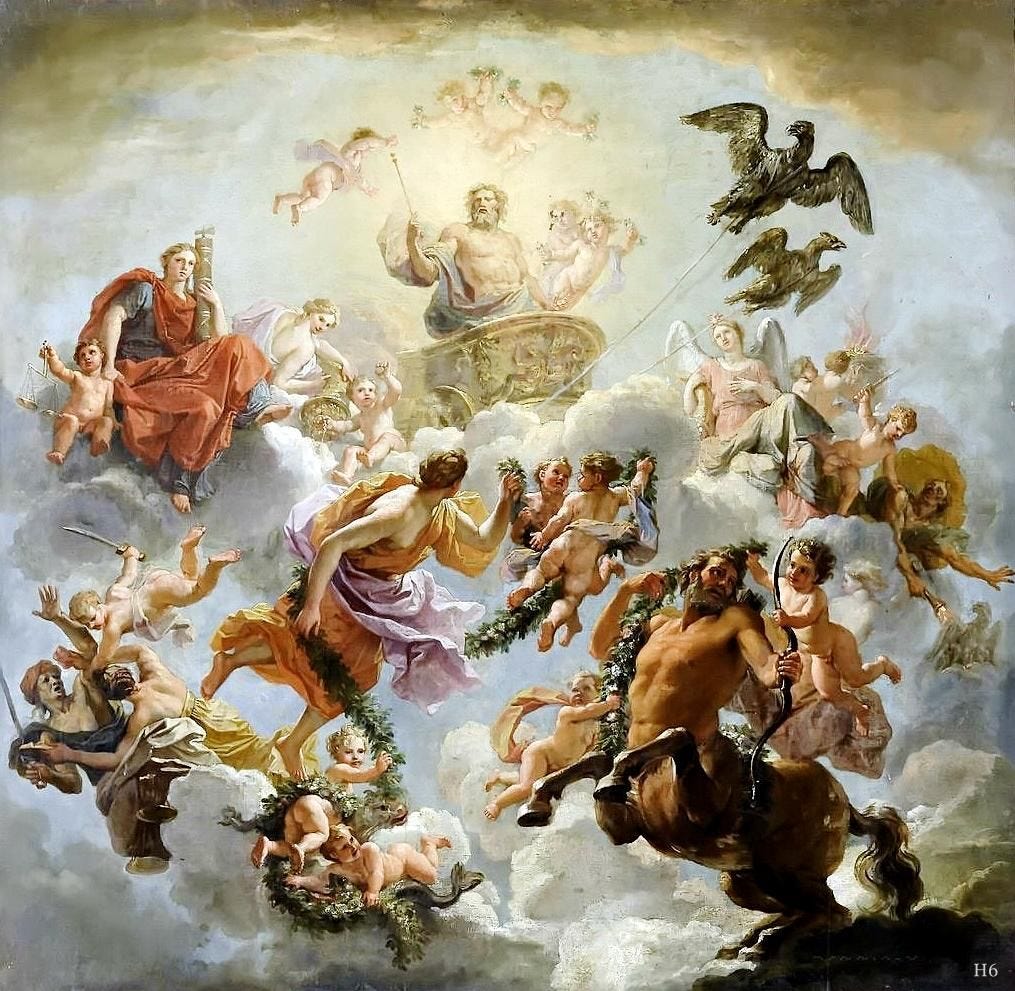
On the path to moral virtue, Aristotle says there are four states in which you can find your soul:
Virtuous: Knows what is good, desires what is good, and does what is good, finding pleasure in virtuous action; reason and desire are aligned.
Continent: Knows what is good and strives to do it but struggles against contrary desires; they have self-control but not natural inclination.
Incontinent: Knows what is good but fails to follow through, acting against reason due to passion or appetite.
Vicious: Does not know or care about the good; they embrace evil and take pleasure in wrongdoing, with reason and desire aligned toward vice.
These states help you understand yourself, especially because most souls are naturally a mix of continent and incontinent. In other words, unless you’ve had strict moral training (and already become virtuous), or devolved into psychopathy (became vicious), most people know what is good but struggle to practice it.
Therefore, we must pay close attention to the definition of the virtuous soul.
For Aristotle, you aren’t truly virtuous just by doing good deeds; a truly formed soul loves doing good deeds.
This is the quintessential idea of classical education that modern man has largely lost: the purpose of study and contemplation is not knowledge alone, but a properly trained heart. The beginning, end, and apotheosis of all education is to love the Good above all.
Finally, Aristotle explains how we can make the leap from continence to true virtue, shaping our souls in the form of Goodness itself.
A Properly Trained Heart

First, let’s do a quick recap of what Aristotle has taught us so far:
You live a good life by building a virtuous character through moral excellence.
Moral excellence is built through right action via the golden mean, the virtuous act between the extremes of two vices.
A virtuous character doesn’t just do good deeds; he takes pleasure in doing good deeds.
Finally, that brings us to our last question — how do we learn to take pleasure in good deeds?
Aristotle answers:
“We become just by doing just acts, temperate by doing temperate acts, brave by doing brave acts.”
In other words, practicing virtue teaches us to love virtue. In modern terms, this means “fake it til you make it.” If you consistently act like a good person, you’ll eventually love acting like a good person. Practicing right action, long enough, changes your soul.
To illustrate, let me share a personal anecdote.
From Cowardice to Courage
I struggled with cowardice growing up.

In my twenties, I became a boxer to learn courage, though I hated the sport and hated getting punched in the face. My first experiences in the ring were miserable; it was not uncommon to leave black-eyed and bloody-nosed.
Though I hated it, I stuck with boxing for four years. Every time I re-entered the ring, despite my fears, I was practicing courage. Over time, I progressed and the bloody-noses became less frequent. I grew calmer in the ring, sharpened my jab, and learned a fighter’s instincts. Finally, against all odds, I became a competent fighter capable of competing in sanctioned bouts, or sparring against professionals.
But here’s what’s interesting:
After four years of boxing, I hadn’t just learned courage or skill… rather to this day, I love fighting. I love getting called into the ring and trading blows with an opponent.
This isn’t because I enjoy receiving or inflicting pain, rather the rush of exerting courage in a high-stakes situation.
The point is simple but cannot be overlooked:
Practicing virtuous habits makes you a virtuous soul, and becoming a virtuous soul transforms every area of your life.
A lifelong embrace of virtue teaches a love of goodness for its own sake, bringing meaning, redemption, and a genuine love of life despite suffering, drawbacks, or tribulations.
Conclusion
If I were to offer a practical takeaway to become virtuous:
First, read Nicomachean Ethics if you haven’t already (or read it again!). Beyond that, take some time to meditate on your biggest vice.
Ask yourself which state of the soul you’re in—vicious, incontinent, or continent—and make it your mission for three months to turn that vice into a virtue. Put your full effort into practicing virtuous habits so that this weakness becomes your greatest strength.
If you do this, you’ll set yourself free in more ways than one.
You won’t just conquer a vice; you’ll discover you are far more disciplined and competent than you probably expected—the beginning of true self-knowledge. Your quality of life will improve from these new habits alone, and, by extension, the rest of your life will improve as well.
Life doesn’t necessarily get easier, but you become stronger, and everything becomes better simply because the state of your soul has fundamentally changed.
So take action: turn one vice into a virtue, and watch your destiny transform.
Reminder:
Subscribe, if you’d like to support my mission of restoring Truth, Beauty, and Goodness to the West, subscribe below!
Paid members get an additional members-only email each week!
The anecdote about, boxing really hit home. Martial arts doesn’t make you immune to fear, rather, it builds your tolerance—in this case, courage. The golden mean is highly relevant today, and Aristotle’s comparison with exercise just goes to show the practical underpinnings of his philosophy. Anyone can theorize from an armchair, but a practical philosophy needs to be tested.
Great read sir!
Enjoyed this article. There are books you should read more than once and Nicomachean Ethics is one of them.