

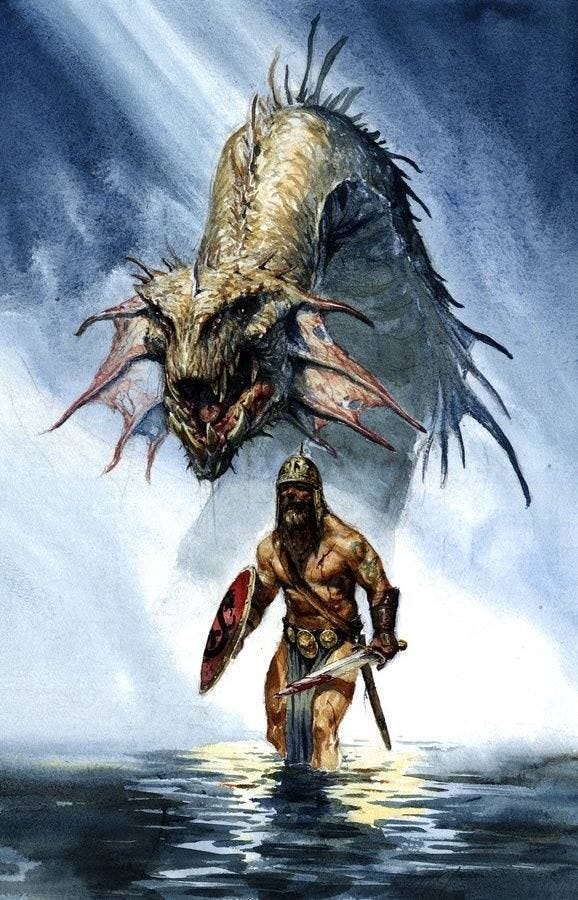
Beowulf is one of the greatest epic poems in literary history. It tells the story of a larger-than-life hero—Beowulf, a 5th-century Scandinavian warrior—fated to slay a host of monsters risen from Hell.
Yet as powerful as Beowulf is, it is the monsters that make the poem genius. They are typologies of the greatest evils one can encounter in existence. And none is more fearsome than the demon Grendel—the exiled beast who feeds on the flesh of men.
Today, we’ll examine the legendary showdown between Beowulf and Grendel. We’ll see what specific evil Grendel represents, why he is a grave threat to human civilization, and how Beowulf teaches us to confront the monsters of our own age.
Reminder:
Subscribe, if you’d like to support my mission of restoring Truth, Beauty, and Goodness to the West, subscribe below!
Paid members get an additional members-only email each week!
Heorot and the Summoning of Hell
The poem is set in 5th-century Scandinavia, in the Danish kingdom. The Danes are a victorious warrior people, and to celebrate their success King Hrothgar constructs a great mead hall called Heorot.
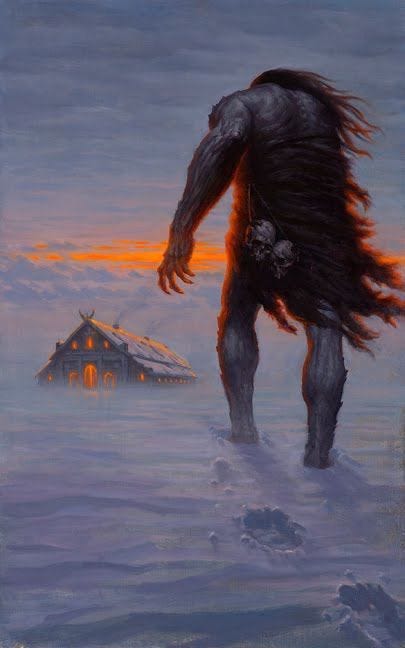
In this hall, men gather daily to drink ale, feast richly, sing, dance, and rejoice together.
This is human civilization at its height: men united in peace, ritual, fellowship, and joy. And yet, paradoxically, it’s this very joy that summons Hell itself.
Grendel is introduced as follows:
“Then the fierce spirit that abode in darkness grievously endured a time of torment, in that day after day he heard the din of revelry echoing in the hall…
Grendel was that grim creature called, the ill-famed haunter of the marches of the land, who kept the moors, the fastness of the fens…”
Grendel is a shadow-dwelling beast who is summoned by the joys, songs, and revelry of the mead hall. He storms Heorot and slays thirty men, feasting on their flesh and bone… and it doesn’t stop there.
Night after night, Grendel returns — systematically disrupting the feasts, devouring the helpless Danes, and reducing Heorot to silence and dread.
This is our first clue: Grendel is not merely a wild animal, but a demonic beast.
How do we know?
Because it’s not vice that enrages him, but mirth — he was not summoned by predatory instinct, but out of hatred for the joys and revelries of the Mead Hall.
The poet of Beowulf is clear:
Grendel despises civilization itself — the gathered life of men ordered toward joy. Yet this is just the surface of Grendel’s hatred. To fully comprehend his evils, we must trace his origins.
Cain and the Anti-Logos
In a single, easily missed line, the poet reveals Grendel’s origin:
“For God had condemned him with the race of Cain…
Of him all evil broods were born, ogres and goblins and haunting shapes of hell, and the giants too, that long time warred with God.”
Grendel is descended from Cain.
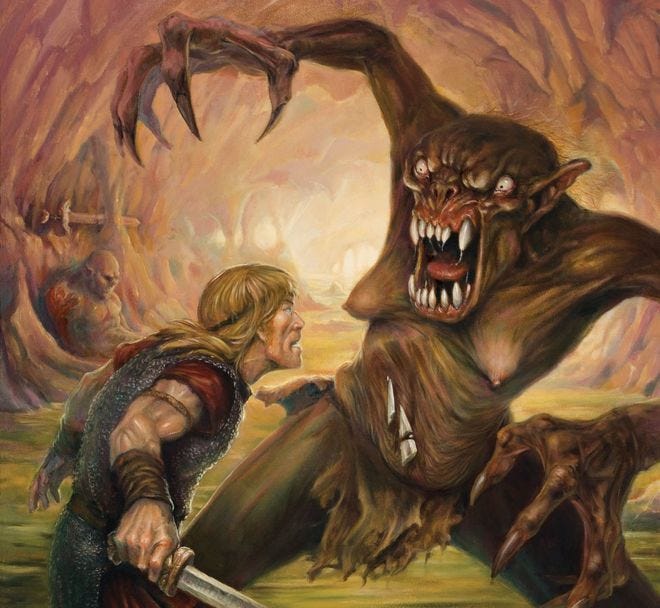
Cain, the first murderer, slew his brother Abel and was condemned to wander the earth — an exile, cut off from community, settlement, and shared life. Cain’s punishment was not merely death postponed, but separation from the joys of community… and Grendel inherits this exile.
It’s now that his torment becomes intelligible. The joys of Heorot wounds him because it is everything he can never possess, namely fellowship, order, comradery, friendship, love, and home.
Grendel is thus not merely a monster, but an anti-logos — a force ordered against meaning, communion, and even civilization itself.
And here the danger sharpens.
Because an enemy born of exile cannot be defeated by weapons, nor by strength, nor even by victory as men usually understand it. To fight him wrongly is to become like him.
This is why Beowulf’s arrival matters. His battle will not merely decide the fate of a kingdom, but reveal a terrifying truth:
That evil cannot be conquered by power alone.
The Danes are helpless because their weapons, brawn, and might are insufficient against the demonic. But Beowulf will teach us the heroism that is not just capable of slaying Grendel, but teaches us the blueprint to withstand the hordes of Hell itself.
