

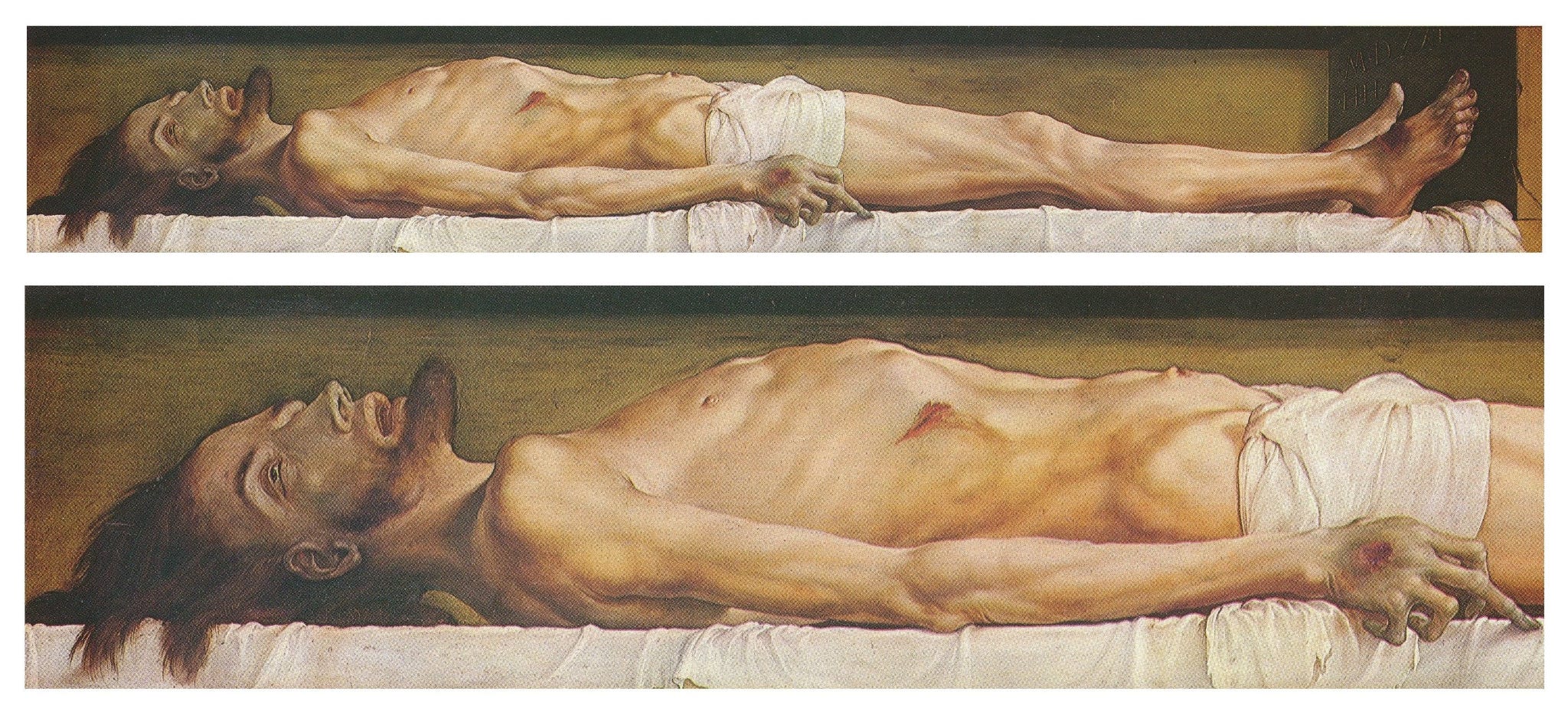
Hans Holbein’s The Dead Body of Christ in the Tomb, is a haunting and grotesque painting. Dostoevsky himself, upon seeing it, remarked “it has the power to make its viewer lose faith.”
In fact, Dostoevsky felt so strongly about this painting that it became central to one of his more underappreciated masterpieces, The Idiot. The novel is a story of paradoxes, of a Christlike hero who is marred by an unchristlike world. Its men of faith gradually lose theirs, while its characters of sinners yearn for an absolution they do not have.
And it’s in this novel that Dostoevsky writes his famous line “beauty will save the world.”
But what does that mean exactly?
Believe it or not, the full meaning of that phrase can be understood by meditating on this very grotesque painting above. To understand what about this painting both disturbed, but inspired, Dostoevsky’s masterpiece is to understand what it takes to have a real, substantive faith in life, God, and goodness, and beauty’s key role in helping make that faith a reality…
I am 100% reader-supported. This newsletter is free, but if you’re able to support, please consider a paid membership — it helps my mission of sharing Truth, Beauty and Goodness with maximal reach
As a paid member, you’ll get:
Two full essays a week
Access to all recordings (past & future) of my Great Books lectures on this publication
Eternal gratitude from me
An Innocent Prince
To summarize the core story of the Idiot, the novel asks whether Christ-like innocence can be found in a vicious, secular modern world.
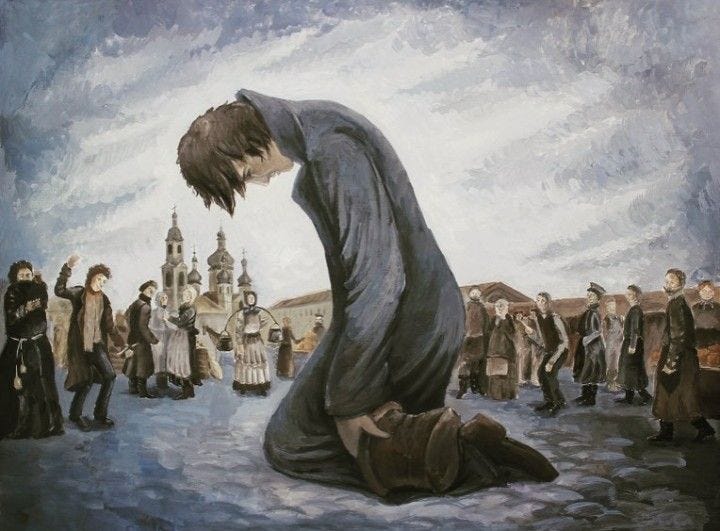
The story follows protagonist Prince Myshkin, who is meek, humble, and saintly. His virtues are a striking contrast to the grim world of late 19th century Russia. He is both beloved and hated by the world for the very virtues of his soul. Characters are attracted to the goodness in his being — as if it reminds them of their once possessed innocence of youth that they’ve now lost — but these same characters just as quickly punish Myshkin for reminding them of their fallen state.
As such, Myshkin’s goodness kindles the good in those around him, even as that same goodness torments them by reminding themselves of the innocence they have lost. It’s a strange story in which a man is beaten, berated, and punished expressly for the goodness of his being.
But what does this have to do with beauty, faith, and the disturbing painting above?
Beauty and the Grotesque
Again, Dostoevsky will project his real life experience with Holbein’s painting onto Myshkin.
Myshkin will come across this painting and remark it’s ghastly enough to make a man lose his faith.
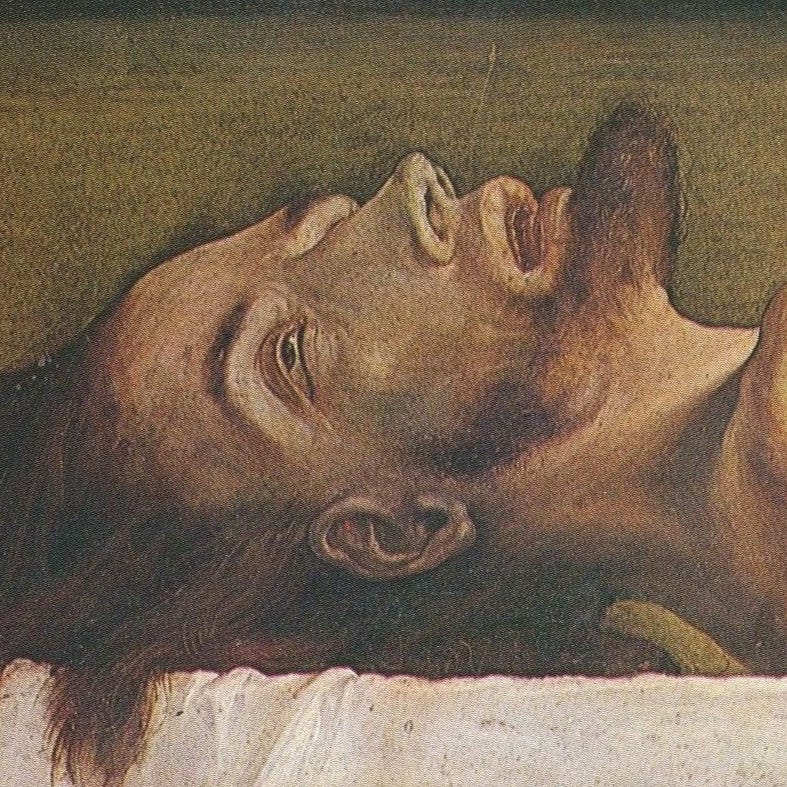
Why would Dostoevsky — a devout orthodox Christian — obsess over this very portrait that threatens that which he most loves?
Well we might remember that anytime Dostoevsky attempts to defend Christianity, he attempts to do so by attempting to destroy it. In layman’s terms, if Christianity is the way, the truth, and the light, then it must be able to withstand darkness. Dostoevsky’s novels then, are not positive praises of Christianity so much as they are illustrated attempts at destroying the faith through explorations into depravity, suffering, evil, suicide, psychological illness, and more… and he asks “can Christian faith truly survive this?”
In effect then, this Holbein painting becomes the perfect representation of Dostoevsky’s literary genius. Dostoevsky defends the resurrection by obsession over the passion, humiliation, and crucifixion. He believes if a faith is to promise man eternal life, it must endure and survive total damnation.
This is precisely why classical art itself often dons the grotesque in the name of beauty, like in the beheading of St. John the Baptist, or the countless paintings of the crucifixion, or the disturbing works of Caravaggio.
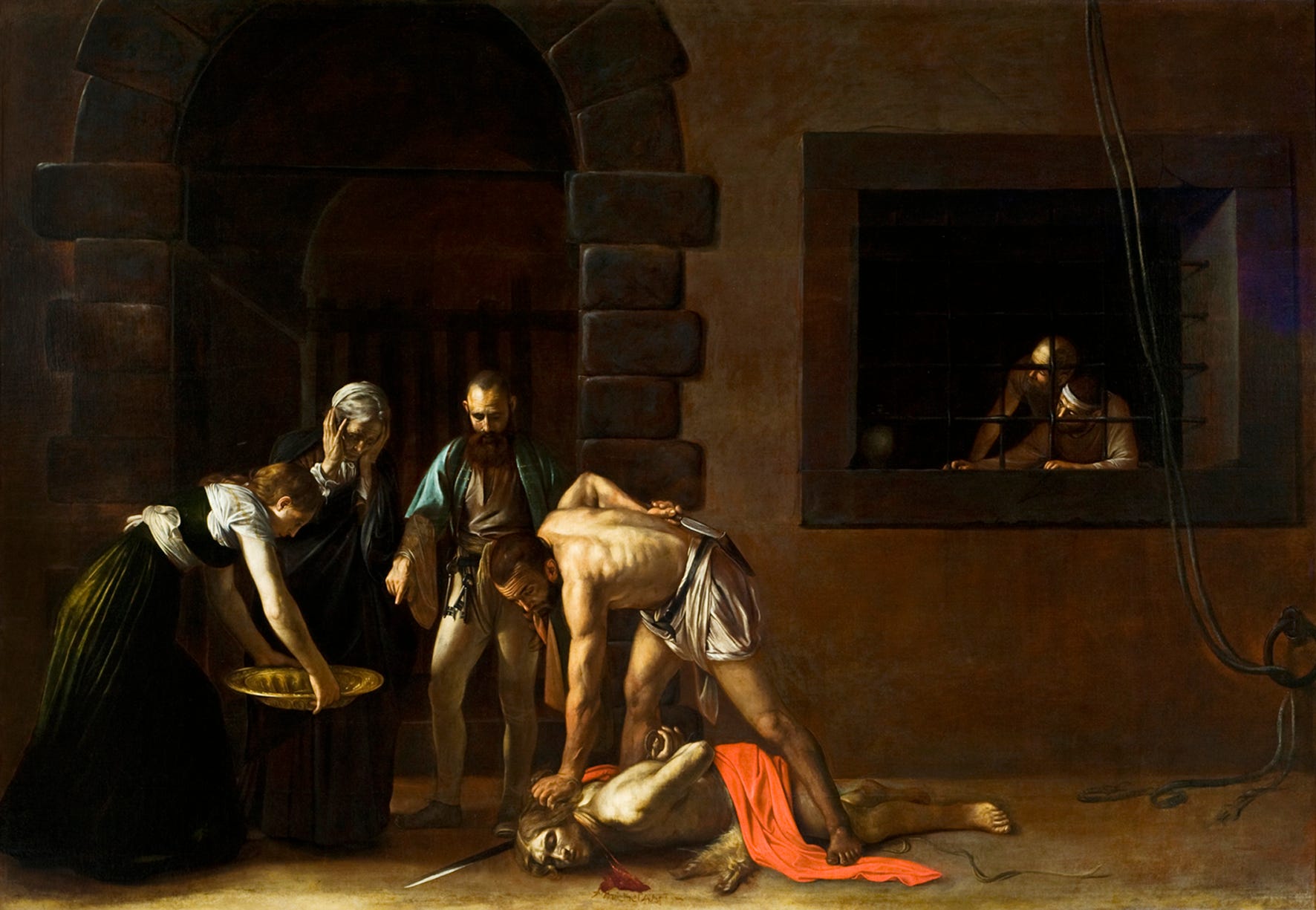
True beauty contains the sublime, which means it just as much shocks, terrifies, and disturbs as it does inspire. Beauty as such is meant to “rock your world.” Beauty is a pale of water splashed upon your snoozing body, awaking you from the drowsiness of mundane life to gape in awe at the miracle of Being.
And it is precisely because beauty can disturb us that it can lead us toward salvation. It awakens us from our comfortable assumptions, illusions, and narratives of life, and confronts us with the reality of our own smallness and helplessness. It lifts the veil of familiarity from the world and allows us to see reality as it truly is: terrible, glorious, mysterious, and full of Being.
And that’s because Beauty wakes us up to one key truth that truly brings about faith — one salvific for both your immortal human soul, and the cosmos at large…
