


Cato the Younger is one of the most controversial figures in history.
Depending on whom you ask, he was either “the most just man” of the Republic or one of Rome’s greatest villains, whose uncompromising idealism helped bring about its collapse.
He was a controversial figure, to say the least, and arguably no Roman statesman had a more controversial end.
Following his defeat by Julius Caesar — the newly crowned dictator of Rome — Cato famously committed suicide. He treated it as a final act of defiance against tyranny, refusing to legitimize what he deemed an unjust regime.
And while suicide is normally considered a morally compromising act, Cato has been immortalized for his self-destruction. His death became a focal point in the centuries-long debate over virtue, political duty, and the fate of the Roman Republic.
In other words, at the heart of Cato’s demise lies a timeless philosophical question:
What is the duty of a righteous man in the face of unstoppable civilizational decline?
For some, Cato’s suicide was the ultimate act of heroism. For others, it was an act of cowardice, pride, or folly. Perhaps most strikingly, one famous Christian thinker even suggested that Cato’s pagan suicide may have sent him straight to paradise!
Today, we’ll explore the mystery of Cato’s demise to understand not just why he remains so controversial, but what his death can teach us about virtue, God, and living well in the face of civilizational decline.
I am 100% reader-supported. This newsletter is free, but if you’re able to support, please consider a paid membership — it helps my mission of sharing Truth, Beauty and Goodness with maximal reach
As a paid member, you’ll get:
Two full essays a week
Access to all recordings (past & future) of my Great Books lectures on this publication
Eternal gratitude from me
The Pure-hearted Idealist
Before we get to his demise, we’ll first touch briefly on Cato’s character.
He was a devoted practitioner of Stoicism, meaning his life’s ultimate duty was to be controlled by reason in accordance with virtue and justice. His chief aim in life was to preserve the Roman Republic, and assure the safety and prosperity of its citizens to the best of his ability.
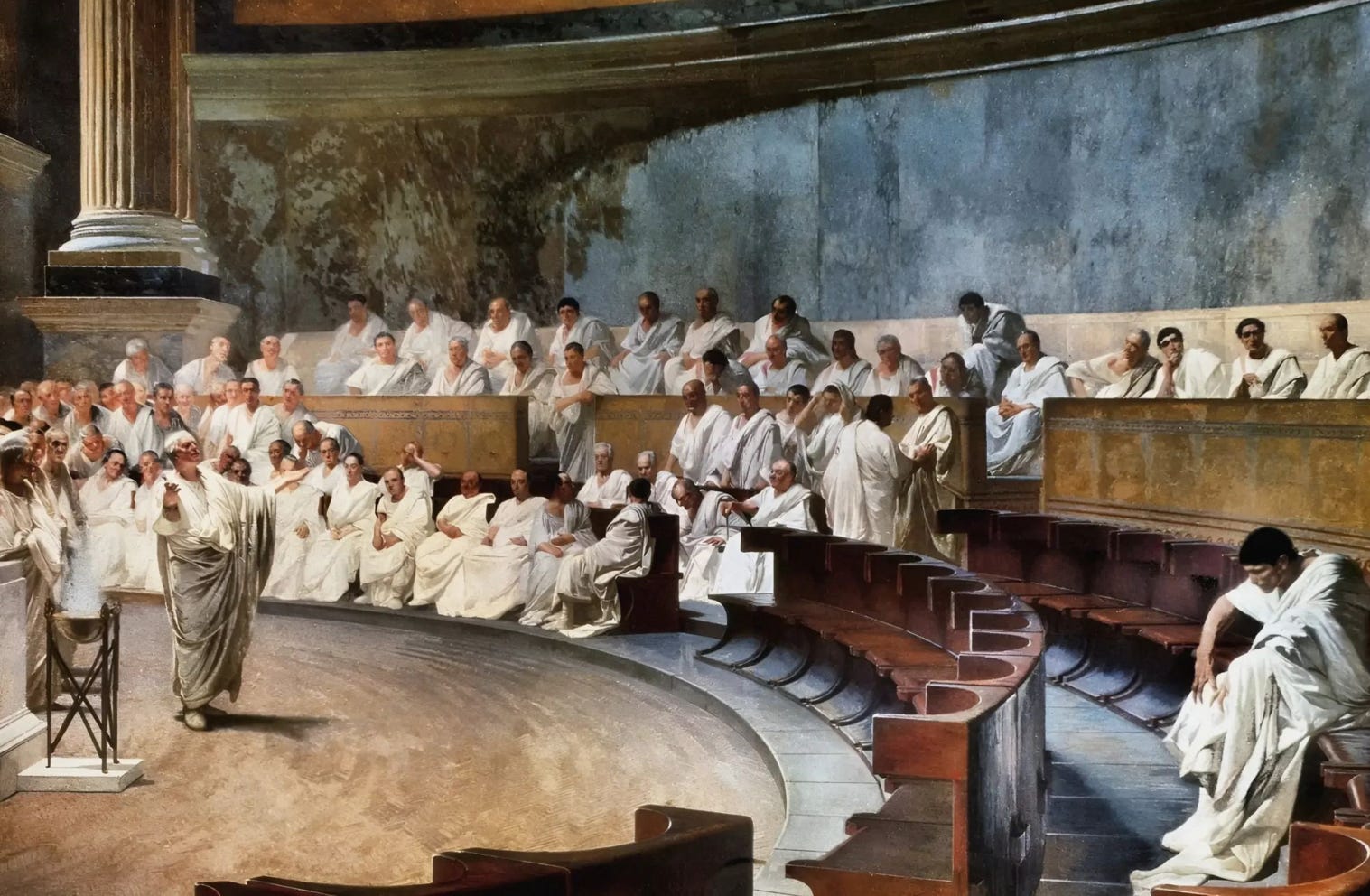
His attitude is perhaps best summed up by his contemporary, Cicero:
“I admire Cato as much as [any man], but the fact remains that for all his patriotism and integrity, he is sometimes a political liability. He speaks in the senate as though he were living in Plato’s Republic instead of Romulus’ cesspool”
In other words, Cato was a pure hearted idealist.
His intentions were noble, and he cared little for honors, wealth, or vainglory. But his idealism made him a flawed statesman; his refusal to compromise amongst politicians arguably fueled the decline of the Republic that led to Caesar’s dictatorship.
Nonetheless, Cato genuinely pursued justice as best he could. It was only fitting that, as Julius Caesar marched on Rome, Cato stood as the fiercest of opponents in defiance of the ascendant dictator. Unfortunately for Cato, and the Republic, Caesar would prove too brilliant a commander to overcome. He decisively conquered the Republican powers, leaving Cato as one of his last surviving enemies, stationed in Africa.
Famously, Caesar adopted a policy of clemency — he pardoned and spared his conquered foes, welcoming them back into the government beneath his reign.
But Cato had other plans…
The Agony of Defeat
In his final days, Cato’s grief at the collapse of the Republic was apparent to all.
Plutarch writes:
“For a long time, [Cato] had determined to destroy himself, and he was undergoing dreadful toils, and suffering anxiety and pain on behalf of others, that he might put them all in th way of safety before he took leave of his life.”
After ensuring, to the best of his ability, the safety of his loved ones, Cato’s final day was infamously recorded. He held a banquet where wine flowed freely, as he and his friends discusses their loves of philosophy, and the consolation its teachings offer a man, even in the face of total defeat.
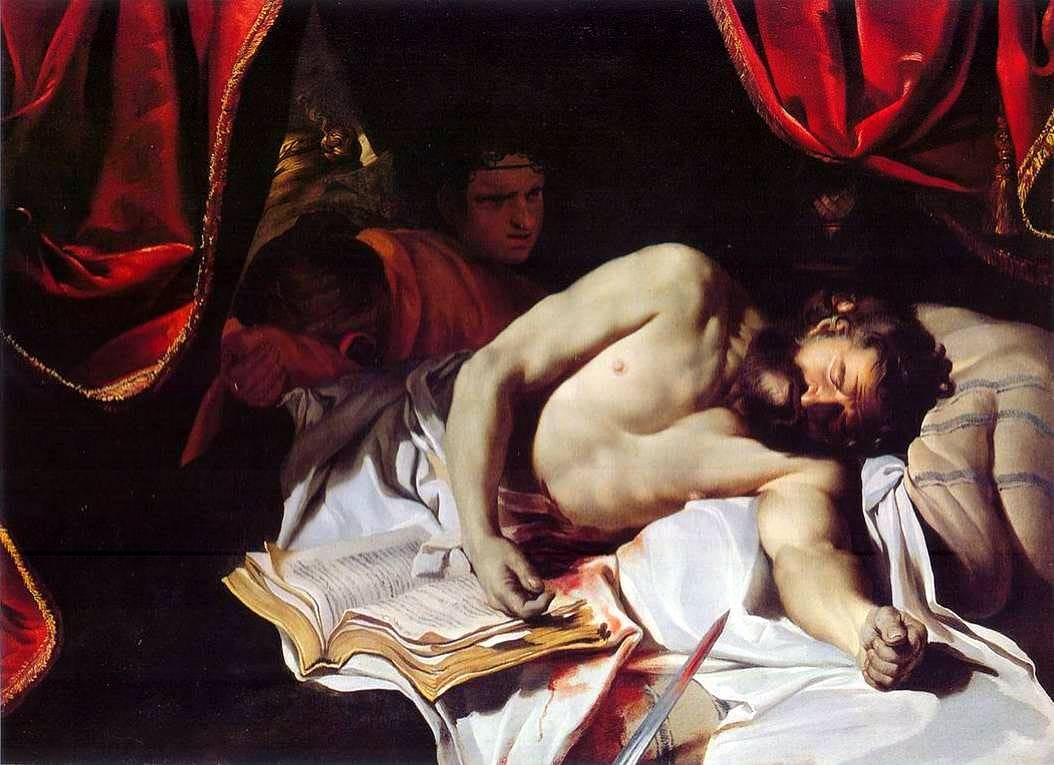
Then Cato retreated to his room where he read Plato’s Phaedo — a work arguing for the immortality of the human soul.
As the night came to a close, Cato arose, unsheathed a nearby sword, and struck a blow beneath his chest. A physician reportedly rushed in, attempting to save him, but Cato pushed him off in defiance, passing away minutes later.
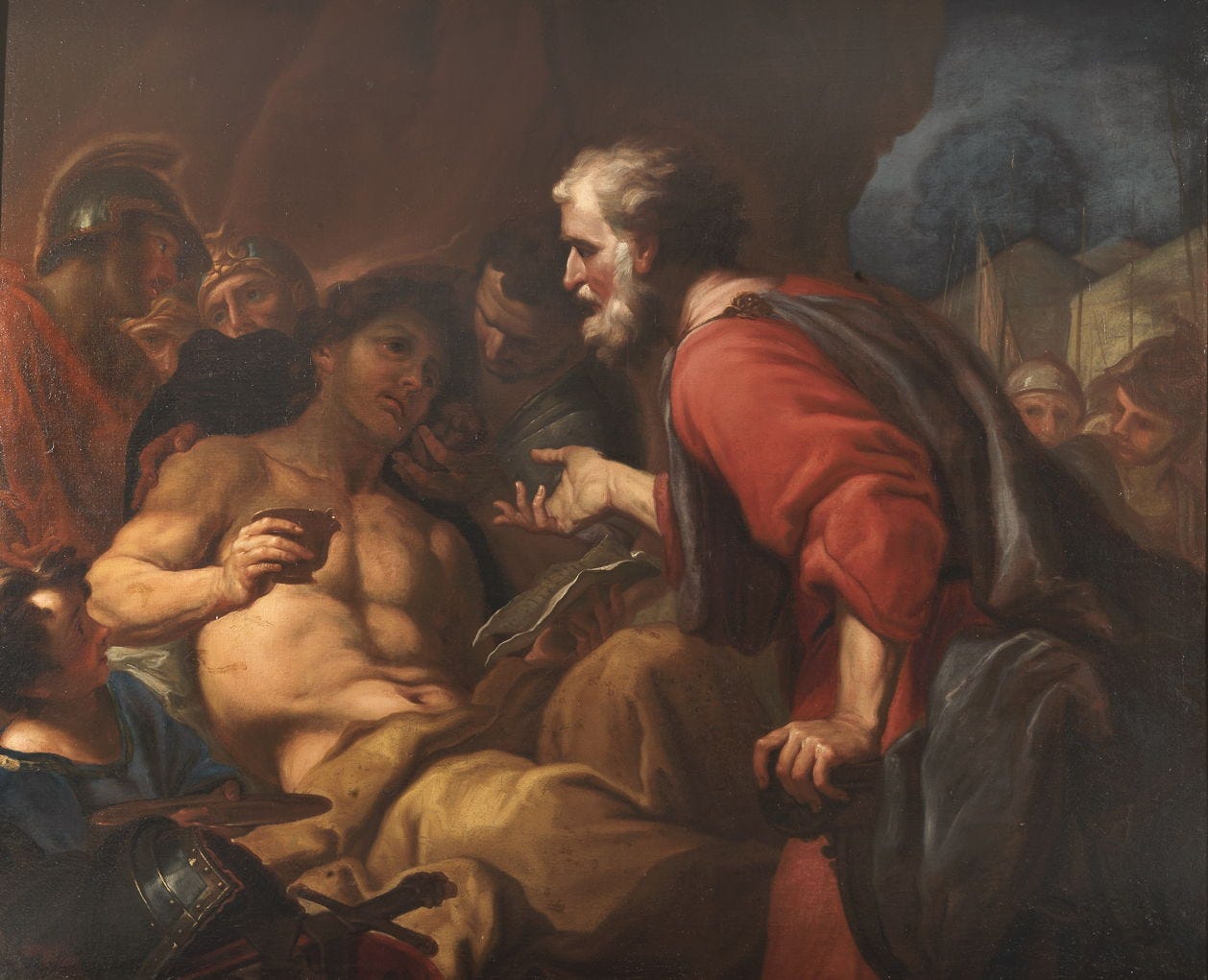
When Caesar heard the news, he lamented:
“O Cato, I begrudge thee thy death; for thou didst begrudge me the sparing of thy life”
Indeed, Cato would rather die than live alongside what he deemed to be an unjust, tyrannical regime.
And his death would not go unnoticed…
Judging Destiny
Cato’s death has been widely controversial in history thereafter.
The immediate response was largely admiration and respect. Admirers of Rome’s failed Republic viewed the suicide as the ultimate act of glory from “the most just man,” of Rome.
The Stoics also look at Cato’s end as the ultimate fulfillment of philosophy. If indeed, man’s life is about acting in accordance with sound reason, duty, and virtue — then it is to man’s glory if he renounce life itself in favor of said virtue.
It was a common adage in politics back then that “we can’t all be Cato,” and yet Cato’s demise helped enshrine that saying into memoriam. There is no greater good for a statesman than he who sacrifices his life for his country.
And yet, noble as this reputation goes, Cato’s death would later be rebuked by one of the greatest thinkers of history.
St. Augustine, in City of God, denounces Cato’s suicide as vice. He draws not merely on the Christian doctrine that a freely-chosen destruction of self is a sin, but questions the otherwise unquestionable integrity of Cato’s heart.
He said the suicide was not bravery but weakness — that Cato’s constitution was not as formidable as it ought to have been, and that he should have had the fortitude to endure under Caesar’s dictatorship.
Augustine’s account, when fully considered, proved to be a striking rebuke against Cato and the legitimacy of his death. Perhaps indeed, it was the sin of not just pride, but despair as well — the unjust proclamation that life is fundamentally corrupted and no longer worth living.
One might expect Augustine to have closed the case on Cato here. After all, Christian thinking would dominate Western thought for centuries thereafter, and arguably no single thinker was more influential than the renowned Bishop of Hippo.
And yet, one later Christian thinker would offer a startling reassessment of Cato’s death.
In one of the greatest works of fiction ever written, he would interpret Cato’s death in a radically new light — leading to one of history’s most compelling understandings of virtue, faith, and the possibility of salvation.
Here’s what Dante Alighieri saw in Cato the Younger, and what his teaching reveals about the relationship between pagan virtue, Christian faith, and the providence of God…
