

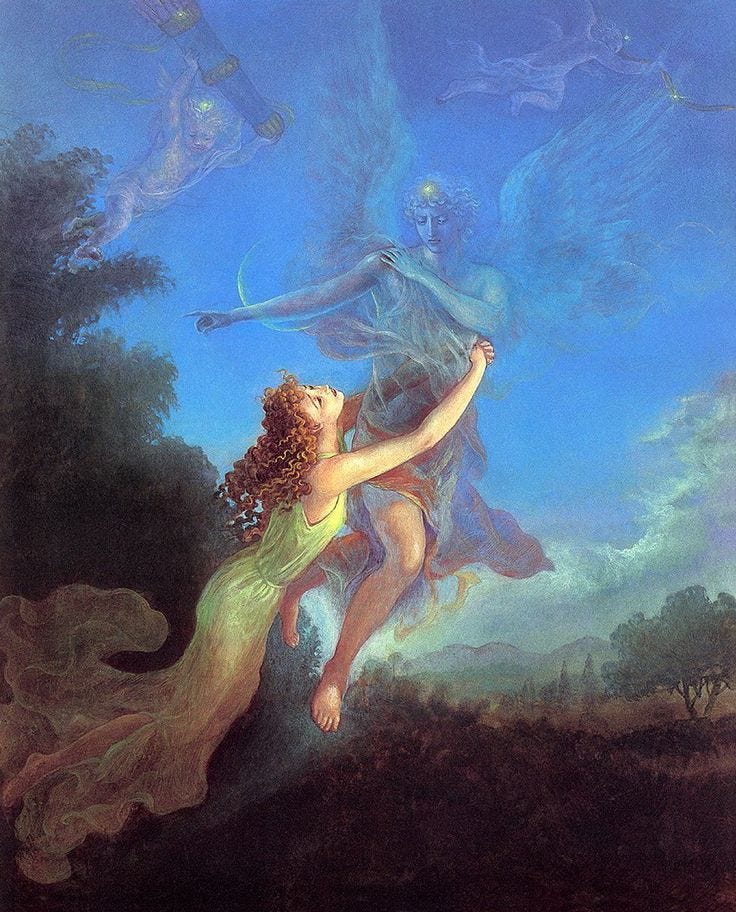
Eros and Psyche is one of the richest meditations on love and the human soul ever penned by the pagan imagination.
The tale — translated as “Love” and “Spirit” — is one of the most moving romance stories ever told.
In fact, it singlehandedly inspired C.S. Lewis’ final novel, Till We Have Faces, which he considered his magnum opus.
Yet this story is far more than a romance. It is one of mankind’s oldest reflections on the relationship between love and the human spirit.
For the myth of Eros and Psyche asks a timeless question:
Can the human soul ever be united with the love it desires most?
It offers one of the most profound and enduring answers to this question, which has captivated mankind for millennia. Today, we’ll explore the Eros and Psyche’s profound answer on the human soul, love, and how the two can be united in eternity.
I offer private mentorship in the Great Books for those seeking clarity of vision and depth of soul. Inquire here.
If you’d like to support this work and receive future writings, you can subscribe below.
A Marital Curse
The story begins in an ancient Greek kingdom, following the King and his family.
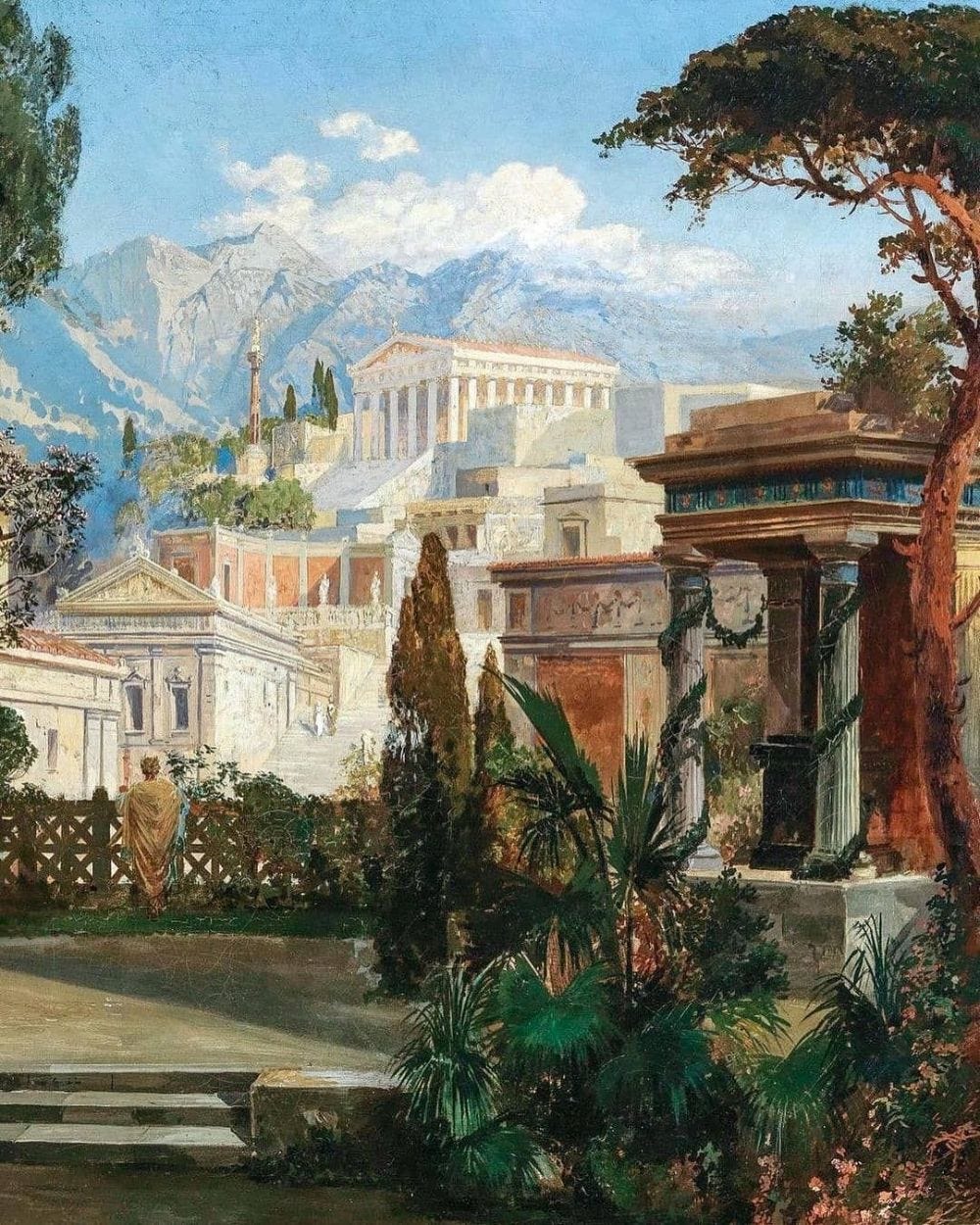
The king had three daughters, one of which was named Psyche. She was the most beautiful of all and beloved. Strangely, however, Psyche was never married.
Her sisters had no troubles, yet no man ever approached Psyche.
Troubled, the King sought out an oracle of Apollo for marriage advice, who gave a strange prophecy:
“[Psyche’s husband] is no wight of human seed,
But serpent dire and fierce as may be thought,
Who flies with wings above in starry skies
And doth subdue each thing with fiery flight.”
In other words, Psyche is to be wedded to some immortal, serpentine spirit with “wings above in starry skies.” As such, Psyche is dressed in funeral garbs, brought to the edge of a cliff, and swept away by a western wind.
Already, we should notice something peculiar, namely, Psyche’s marriage resembles a funeral. The union she is called toward requires a kind of death before it can begin. As we’ll see throughout the myth, the soul cannot attain its highest fulfillment without offering a selfless sacrifice of sorts.
Eventually, the wind places Psyche in a paradisal temple — the home of her lover. However, we’ll find it’s no ordinary lover awaiting her.
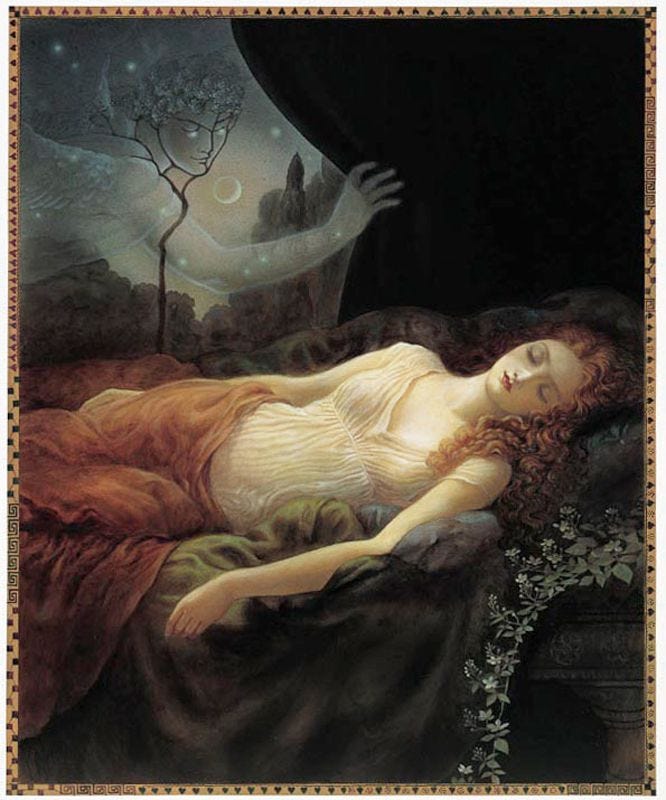
Psyche meets her anonymous lover in the darkness of night. They consummate their longings for each other and begin a long romantic affair.
In the days, Psyche lives in paradise in her palace without a want, and in the evenings she is reunited with her lover. There is only one rule:
She can never look upon his face.
Hence we have the beginning of a happy marriage, but this marital arrangement itself raises a deeper question:
Why can the spirit [Pysche] not look directly upon love?
The myth never fully answers this question, yet it hints at an enduring truth. It’s often the case that the greatest and noblest loves of the human condition surpass our understanding. Like Psyche, we long for beauty, goodness, and love itself long before we possess the wisdom required to behold them directly.
This myth helps us appreciate the struggle, and yearn to mature in these very loves that make life meaningful.
That said, despite the paradise of Psyche’s new marriage, touble will soon be brewing.
Lonely in Paradise
Though Psyche spends her days in bliss, and even becomes pregnant, a dissatisfaction begins to emerge. She finds herself lonely, missing her family.
It’s important to stress this loneliness of Psyche, which not even Paradise and the perfect lover can satisfy.

We’re reminded of a universal truth, namely:
Man’s nature cannot be perfected in isolation.
She echoes Aristotle’s later assertion that man is a political animal. He cannot find himself, or the optimum level of fulfillment, living separated from his fellow man. Not even erotic passions, or a happy marriage, can quench the sorrow of the human soul in isolation.
Luckily, Psyche’s husband permits her to visit her family.
Though it’s a happy reunion, we find that jealousy soon sours the meeting. Psyche’s sisters envy her paradisal life and her mysterious lover, whose face she still has not seen. When they learn this, they convince Psyche to shine a light upon her sleeping husband — for surely she will discover he is some beast who has taken advantage of her.
Distraught, Psyche agrees to do so.
Yet upon her return to the castle, lamp in one hand, knife in the other, she is shocked at what she finds in her bedroom:
Her husband was none other than Eros — the god of love himself.
Consider the significance of this symbolism:
Psyche, whose name means spirit/soul, has already been united with Love, yet she cannot naturally trust this love, as suspicion mires her heart. It’s a classic case of mythic downfall, because man sought certainty where trust/fidelity/faith was asked of him.
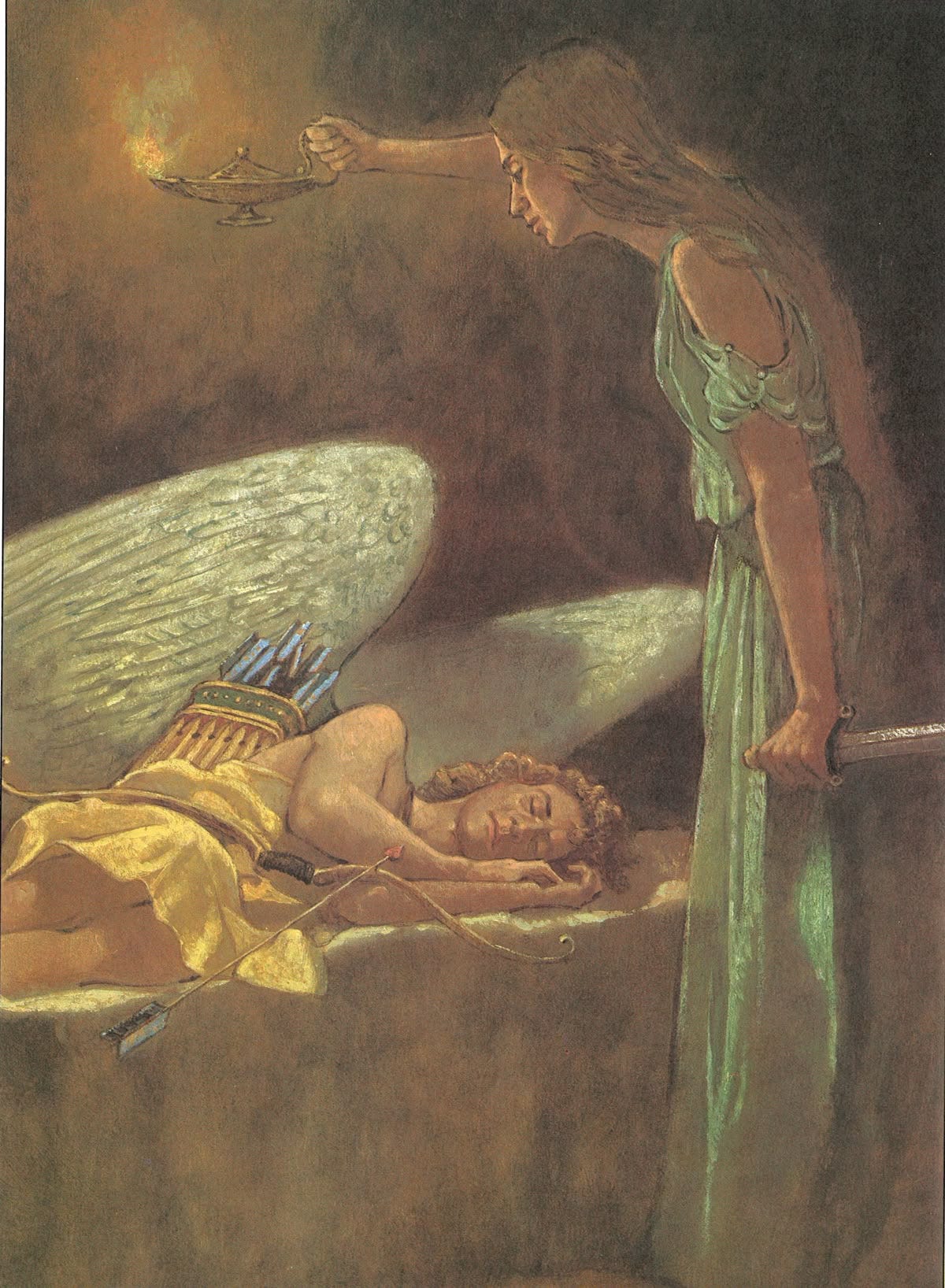
The god awakens, sees that Psyche has betrayed him, and flees, leaving her abandoned.
This is the infamous climax that most readers remember. The great separation between Eros (”love”) and Psyche (”spirit”).
At first glance, the lesson appears bleak. The human spirit longs for a sort of heavenly love, yet cannot seem to hold onto it. Through fear, pride, jealousy, or mistrust, it repeatedly separates itself from the very thing it desires most…
Yet only half of the story has been told thus far.
Indeed, many know of the great divorce between Eros and Psyche, but equally important is what comes next:
Psyche’s grand pursuit of Eros.
For the remainder of the myth is devoted to a single question:
Can the human spirit, once separated from love, ever find its way back?
