

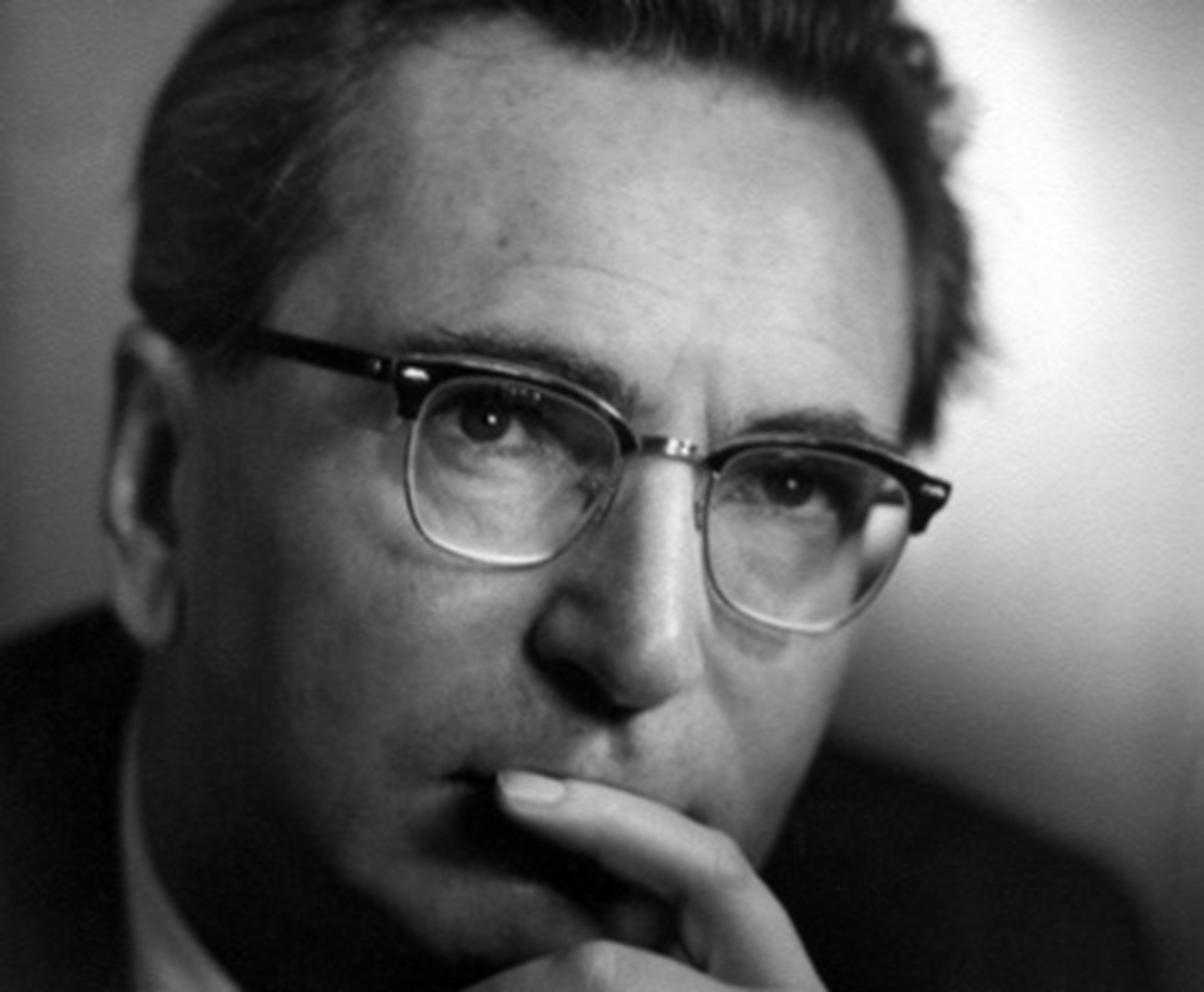
Can you find meaning while starving to death in a Nazi death camp?
Victor Frankl affirmed you could… and he knew from personal experience. He not only survived several such camps, but spent a lifetime afterwards with an obsessive study on one question:
How can human beings persevere through pain?
Frankl reveals not just the horrors of the gas chambers, but the depths of suffering in the psychology of its countless victims. And yet, only by trekking into the abyss does Frankl discover a true light in the human condition — a means to not just persevering through pain, but living a meaningful life in even the most meaningless pits of despair.
Today, we’ll explore the key ideas of Man’s Search For Meaning, to learn how man can live with meaning even inside a living hell.
I offer private mentorship in the Great Books for those seeking clarity of vision and depth of soul. Inquire here.
If you’d like to support this work and receive future writings, you can subscribe below.
Prisoner Psychology
Frankl affirms that his book is not primarily about the horrors of the Nazi death camps, rather the psychological state of mind of its prisoners.
Specifically, he was curious about what was the common pattern amongst the survivors, compared to the many who perished.

Of course, blind luck played a major role, but this didn’t explain the full picture to Frankl. He was baffled by the fact that many prisoners who were physically strong and capable perished, while sickly souls who had no business doing manual labor persevered through years of torment.
It was a phenomenon that defied understanding, and not only until years later — after Frankl interviewed countless survivors — did he realize the main driver that helped a soul overcome the horrors of a Nazi concentration camp.
Your Choice is Your Destiny
Frankl said the primary driver of one’s survival came down to a matter of choice. Most simply, the choice between hope and despair.
Those who despaired that life was meaningless perished, but those who found a will to live uncovered a remarkable strength of soul. Hence despair saps the strength of even the strongest men, while hope allows a sickly soul to draw from a strength that defies understanding.
One recognizes then that man is more than mere flesh and bone, and his true self is discerned through a spiritual life.
Frankl himself would agree, and he said such a strength is drawn through a strong why. Every survivor Frankl talked to said they had a reason to live. Frankl himself said his single vision of one day reuniting with his wife is what enabled him to endure years of labor, torment, and suffering.
In his own words:
“He who knows the ‘why,’ for his existence will be able to bear almost any ‘how.’”
But how do you build a strong why?
It’s not just as simple as making up false scenarios in your head, rather your “why,” must have genuine substance. This substance can be built from three domains:
Love (mankind, neighbor, spouse, etc.)
Work
Suffering with dignity
The first two are fairly intuitive, but the last point is perhaps the most remarkable.
Frankl expands on how to suffer with dignity:
“Dostoevsky said once, ‘There is only one thing I dread: not to be worthy of my sufferings.’ These words frequently came to my mind after I became acquainted with those martyrs whose behavior in camp, whose suffering and death, bore witness to the fact that the last inner freedom cannot be lost. It can be said that they were worthy of the their sufferings; the way they bore their suffering was a genuine inner achievement. It is this spiritual freedom—which cannot be taken away—that makes life meaningful and purposeful.”
He later quips that, though man was the evil creature who created the gas chambers, he’s the same creature who enters those chambers upright with dignity [in prayer].
The dignity of one’s suffering then, can even be found in the gas chamber itself, if man stays resolute in his faith, his regard for man, or belief that life’s beauty remains - even while its present ugliness defies understanding.
In this lens, Frankl is in great company with many of the West’s greatest heroes — who suffered with dignity. We can think of Boethius — sentenced to death — writing The Consolation of Philosophy, in his prison cell as a final gift to the world. We imagine Socrates drinking the hemlock, at peace, comforting his friends who mourned his demise in tears. And the quintessential example is, of course, Christ’s crucifixion.
Man was Made for… Love?
Yet Frankl’s most beautiful writing comes not from his direct writing about camp experience, but from his observations of human nature.
For instance, he said there’s only two types of people in reality — decent people, and indecent people.
Shockingly, however, he says this binary is not as simple as you’d think. He writes that many fellow inmates were vicious, indecent people, and many guards were decent people! Specifically, Capos were inmates who ratted out prisoners to guards for personal gain, while some guards displayed sympathy or even acts of kindness to prisoners when circumstances permitted.
One cannot but admire this degree of magnanimity in Frankl’s soul. His ability to distinguish decency and indecency suggests a willingness to forgive his enemies — at least those of a good-nature.
And this forgiveness leads to an unexpected conclusion of Frankl’s work. Namely, a universal exhortation to love:
“For the first time in my life I saw the truth as it is set into song by so many poets, proclaimed as the final wisdom by so many thinkers. The truth - that Love is the ultimate and highest goal to which man can aspire. Then I grasped the meaning of the greatest secret that human poetry and human thought and belief have to impart: The salvation of man is through love and in love.”
Frankl is not just stressing that love and forgiveness were necessary to “move on,” from the horrors of the prison camps. He says these are the most fundamental realities of human nature — that you most truly become yourself when you lose yourself in love.
This is made explicit here:
“The more one forgets himself--by giving himself to a cause to serve or another person to love--the more human he is and the more he actualizes himself.”
So Man’s Search for Meaning becomes far more than a manual for surviving Hell on Earth. It’s not a modern day stoic’s guide to persevering in pain, rather it’s a guide to meet life’s sufferings with dignity such that you become your most fully human self.
We might recognize then, as Frankl suggests, that man was made for love. Frankl’s news is as horrifying as it is beautiful. The good news is, indeed, you can find meaning in a Nazi death camp, even in a gas chamber. The bad news is… you can find meaning in a Nazi death camp, even in a gas chamber.
It impresses upon us that life’s battlefield lies in our choices. That in the grand scheme, and the small, we always act in manners that breed either hope or despair. And Frankl says that there is never an excuse for despair. Though we may be victims, it is never permissible to play the victim and withdraw from life.
Yet perhaps that brutal truth is the most beautiful thing you can hear. It’s a reminder that dignity belongs to even the lowliest of human beings who remains upright, even if he enters a gas chamber. And given that our life is but a blink of an eye in the face of eternity, then perhaps there is no better way to meet one’s destiny than to have spent a life lived in such dignity.
I offer private mentorship in the Great Books for those seeking clarity of vision and depth of soul. Inquire here.
If you’d like to support this work and receive future writings, you can subscribe below.
I read this book for the first time this year and found it profound.
You summarized it well here.
A quote I wrote down:
"I told the men that they must not lose hope but should keep their courage in the certainty that the hopelessness of our struggle did not detract from his dignity and its meaning. I said that someone looks down on each of us in difficult hours and he would not expect us to disappoint him. He would hope to find us suffering, proudly - not miserably - knowing how to die.
And finally, I spoke of our sacrifice, which had meaning in every case. It was in the nature of the sacrifice that it should appear to be pointless in the normal world, the world of material success. But in reality, our sacrifice did have a meaning."
Amen.
And: well done, Frankyl.
“The salvation of man is through Love and in Love.” Connection beyond competition makes us capable of mutual co-existence as we look to help others thrive and survive. The circulatory system of Life is living to Love in reflected respect. What we feed the world nourishes us.