

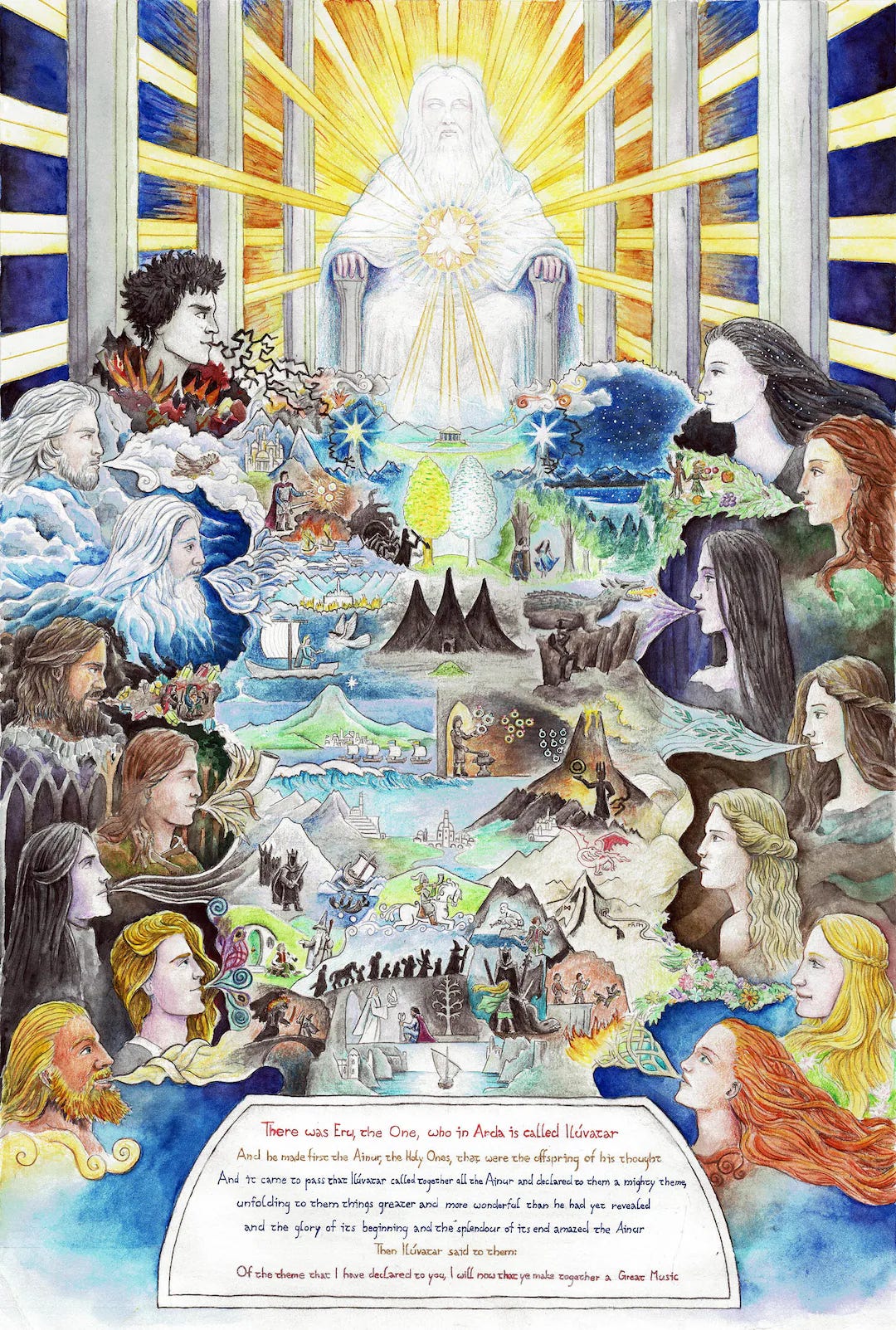
The Divine Comedy and Lord of the Rings are amongst the greatest works of human genius ever conceived.
The former is glorified as the apotheosis of all pre-modern thought in human history, the latter one of the greatest selling works of all time, despite its relatively recent publication compared to most classics.
And there’s a strange point of connection between both Dante and Tolkien — that fueled both their artistic genius and taught them deep insights into the human condition. It’s subtly one of the greatest reasons that distinguish them both as literary and theological giants amongst mankind.
That point of connection isn’t just their love of Catholicism, myth, and philosophy, but also a heartfelt love of language itself.
Dante’s master innovation was to make beauty of the Italian vernacular (a historically unprecedented move), and Tolkien spent an entire career studying language as a philologist.
But what exactly did their love of language teach them?
Today we’ll discuss how they studied language, how it influenced their greatest works, and how we too can embrace a love of language to cultivate a genius like Dante and Tolkien.
I offer private mentorship in the Great Books for those seeking clarity of vision and depth of soul. Inquire here.
If you’d like to support this work and receive future writings, you can subscribe below.
The Origins of Speech
Dante boldly sought to write his masterpiece, The Divine Comedy, in the Italian vernacular.
Again, this was unprecedented, as at the time it was normative that scholars wrote serious intellectual works in latin — the “learned language.”
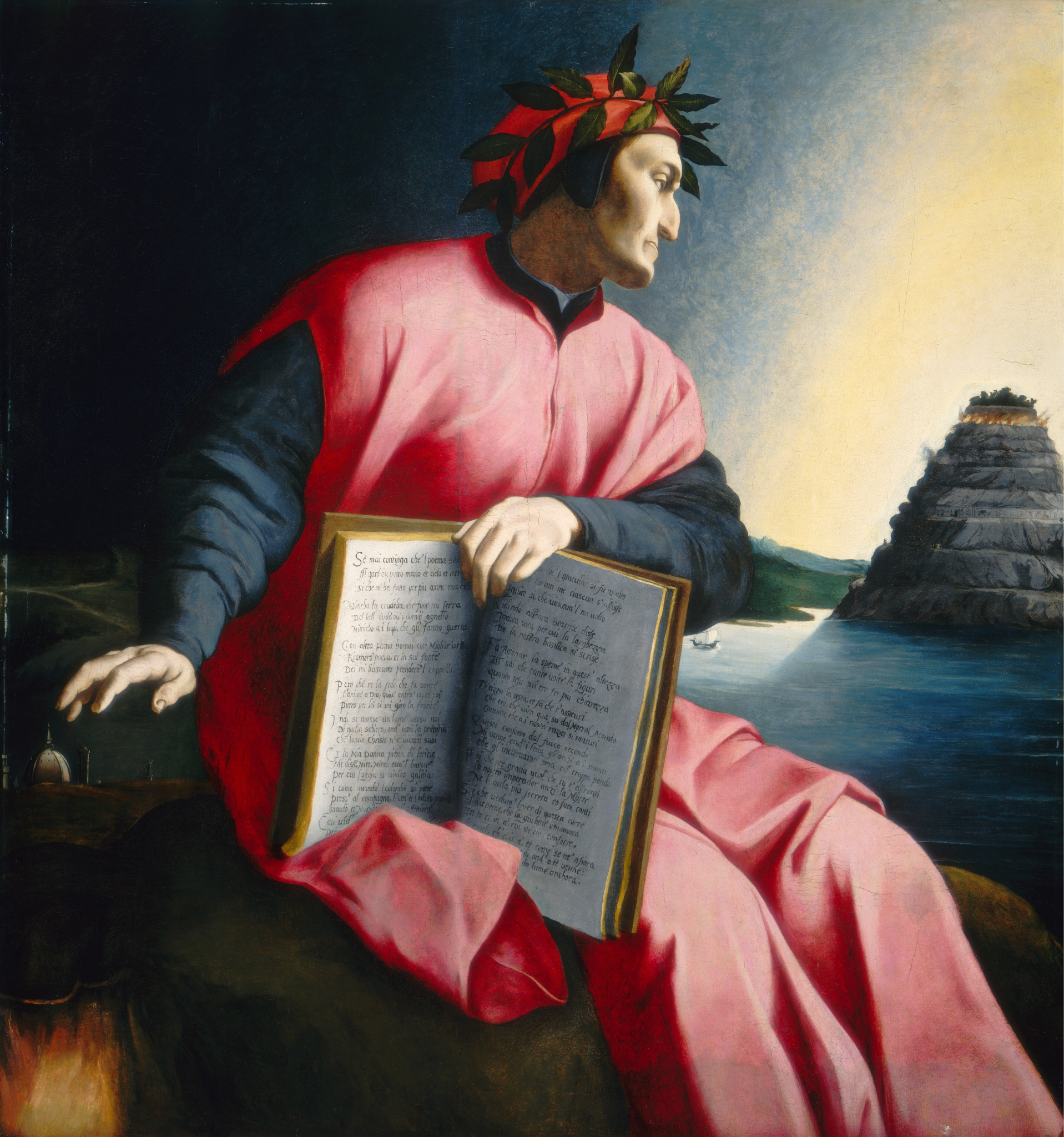
Yet Dante felt otherwise. Though he was learned in Latin — and respected as a language to preserve and convey truth across time, place, and culture — he believed that perfected vernacular had more beauty than Latin.
He argues this explicitly in his unfinished work De Vulgari Eloquentia.
He begins with a simple question: what is the purpose of language?
Theologically, he notes, language is a gift unique to man. Animals do not speak, and angelic beings, possessing superior intellects, communicate without words.
He then reflects on how this gift was first given to Adam:
“it is reasonable to believe that the power of speech was given first to Adam, by Him who had just created him. As to what was first pronounced by the voice of the first speaker, that will readily be apparent to anyone in their right mind, and I have no doubt that it was the name of God”
Dante argues that the first word Adam spoke (in Hebrew) was “God.” His point was that the purpose of language is not just for man to communicate, but to use their communication to know themselves, their neighbors, and God. This knowledge finds a perfection in love that brings man together and makes life worth living.
So if the purpose of language is love and self-knowledge, how can we study and perfect language itself?
Dante tackles this question next.
Natural Beauty
Dante argues the vernacular is superior to latin language:
“Of these two kinds of language, the more noble is the vernacular:
first, because it was the language originally used by the human race;
second, because the whole world employs it, though with different pronunciations and using different words; and third because it is natural to us, while the other is, in contrast, artificial.”
Latin was the language of scholars, theologians, and intellectual life. It was stable, universal, and learned, yet Dante insists that the vernacular has the greater potential for beauty because it is natural, lived, and rooted in human experience.
That said, there’s still a problem that needs to be addressed. The vernacular, as it actually exists, is fragmented.
Italian dialectic varies region to region:
Tuscany speaks one way
Sicily another
Romagna another
Each of these dialects are authentic and natural, but also flawed and coarse in their own right.
So which of these expressions of the vernacular is the most beautiful?
Dante’s answer is simple — none of them are.
Yet this is where Dante’s genius comes in. He says the goal of the artist is to make “illustrious vernacular,” that isn’t drawn from any one dialect, but manifests as the perfection of them all.
Where can you find such an example of illustrious vernacular?
Dante did it himself with the Divine Comedy — a perfected form of the Italian language.
No Italian in his day spoke like the Italian in the Divine Comedy, but thereafter the Divine Comedy became a form of excellence of the Italian language, culture and spirit. It set the standard thereafter in which Italians themselves aspired to beauty in their language.
And yet here’s where the real beauty of illustrious vernacular comes in — it becomes a gateway into knowing the soul of a people.
To study a luminous vernacular is not just to learn words and grammar of a language, rather it’s a method to enter into the way a people sees the world. Every dialect carries a fragment of meaning and a piece of lived experience, but the artist gathers those fragments and gives them form.
That language doesn’t just capture the particular soul of a people, but transcends time, place, and culture too — and teaches you universal truths about the human condition. This is why, to this day, we still read and are moved by an 800 year old work of Italian poetry.
And so Dante’s mastery of the Italian vernacular was crucial to the Divine Comedy’s success, but Tolkien will take it up 10 notches — by mastering many languages to create an entirely new reality that speaks to the deepest universals of the human condition.
Philology as Subcreation
Again, LOTR is worth considering for the simple fact that it had no business succeeding. It was a feel-good fantasy story written at a time when the genre was scoffed at, and the world was jaded and disenchanted.
Hobbits and dragons shouldn’t go on to sell hundreds of millions of books across generations, and launch a multimedia empire that’s still producing spin-offs today… but it did.
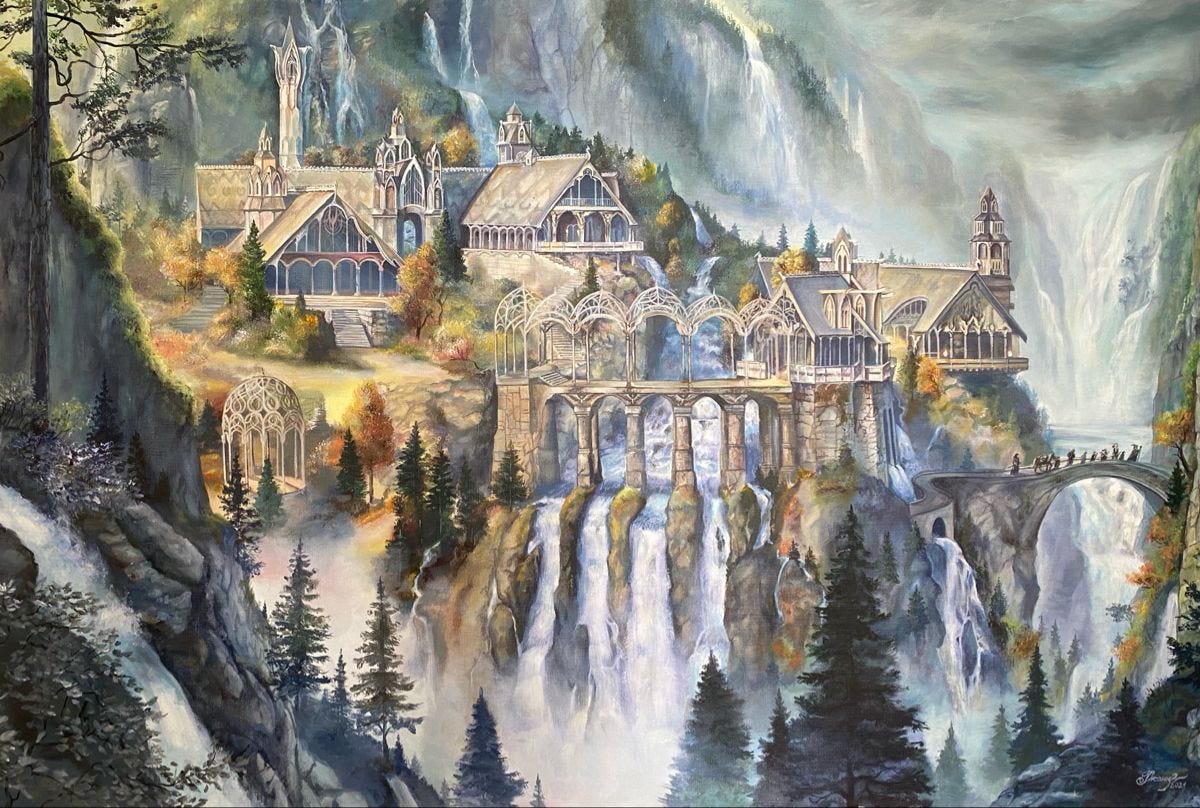
While Tolkien’s Catholicism, his theory of subcreation, and his decades of studying and building his own mythological universe played a crucial role to Tolkien’s success, so too did his love of language.
In fact, his love of language came first. By adolescence he had studied several languages and was already inventing his own. He began writing fantasy largely to give those languages a world to inhabit.
He later became one of the world’s leading philologists, eventually reading over twenty languages.
Why does this matter?
Tolkien’s philology background gave him a felt sense of culture, history, and human nature. Language is not just a means of communication, but a bedrock of culture itself. It’s the foundation in which civilization emerges and communicates the spirit of a people.
To study a language then, is to understand:
What a culture has many words for (what it values)
How it handles timeless human values like love, virtue and vice
The rhythm of speech (direct, formal, rhythmic, hierarchical)
In totality then, language becomes a compressed record of how a people perceives and inhabits reality itself.
Again, this is quite literally how Tolkien built the grandeur of Lord of the Rings:
He studied language
Invented roughly 15 languages himself
Used these languages to build the civilizations and races of Middle Earth
And as Tolkien himself said, good fantasy is “truer,” than reality. It’s perhaps no coincidence then, that his works have sold millions, worldwide, across generations — his languages, civilizations, and sub-cultures are particular, real, and moving, yet correspond to universal truths of the human condition.
It’s why his heroes are so loveable, his villains so chilling, and his themes so enduring.
Language, Being, and Love
We reconcile then, that learning languages — or mastering one’s own vernacular — is not merely done for the sake of sounding “cultured,” or presenting one’s self as educated.
To love language is to love reality more precisely.
Dante shows us that the vernacular can be perfected into a timeless form of beauty, while Tolkien shows us that language carries the soul of a people — that to understand it is to understand how humans inhabit the world.
Taken together, we reconcile that language is not just how we speak, but how we perceive and comprehend reality itself.
And the more deeply we enter into language, the more clearly we begin to recognize both the uniqueness of each culture and the shared structure of the human soul, and ultimately, reignite a love for the timeless truths and beauty that make life worth living.
I offer private mentorship in the Great Books for those seeking clarity of vision and depth of soul. Inquire here.
If you’d like to support this work and receive future writings, you can subscribe below.
Always love deep thinkers. Thank you for this.