

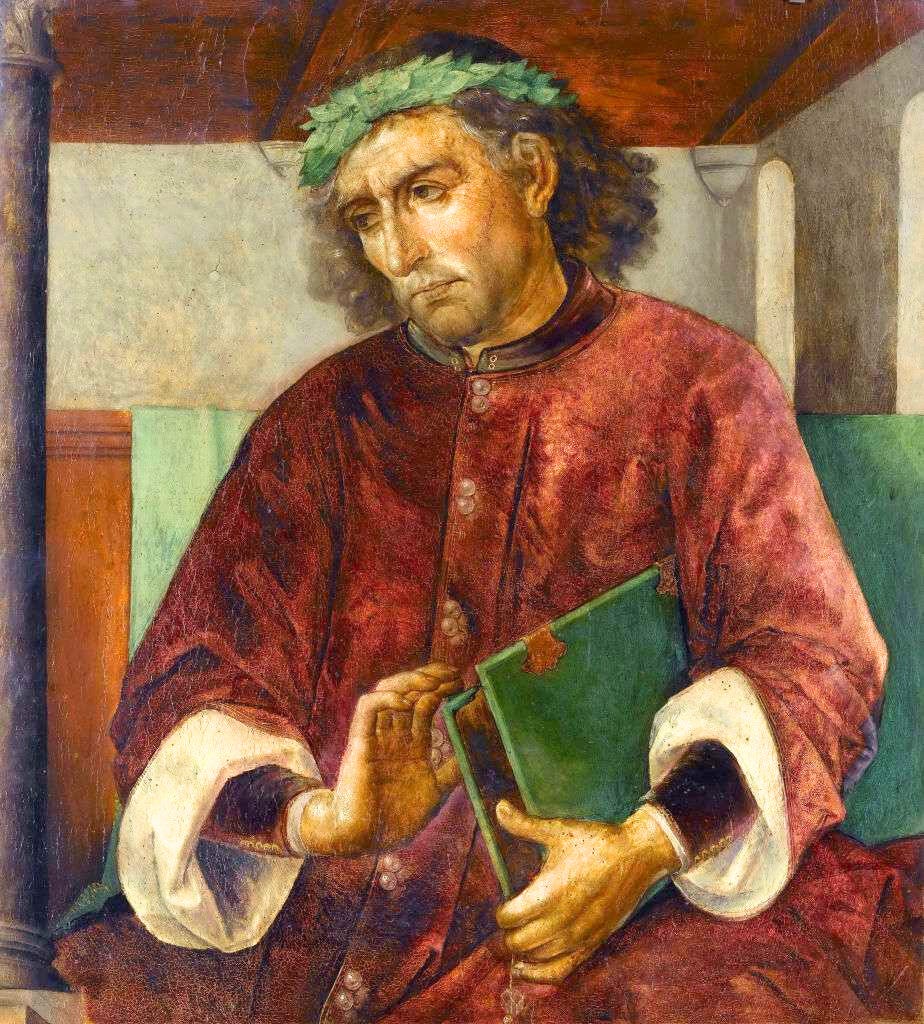
Virgil is one of the greatest poets in human history.
Depending on who you ask, he was immortalized for his pastoral poetry, his magnum opus the Aeneid, or his famed role as the guide to Dante throughout the Divine Comedy.
In fact some say his poetry was so inspired that he even foretold the coming of Christ himself!
Today we’ll look at his first masterpiece — The Eclogues — to understand Virgil’s greatness, the wisdom of his poetry, and why his poetry may have borne the mark of divine inspiration.
I offer private mentorship in the Great Books for those seeking clarity of vision and depth of soul. Inquire here.
If you’d like to support this work and receive future writings, you can subscribe below.
Pastoral, but not Peaceful
As a reminder, Virgil was a Roman poet in 1st century BC, who first rose to prominence after he published the Eclogues.
This was a set of 10 pastoral poems — or poems that idealize the tranquility of rural life amongst shepherds in nature. It often juxtaposes a contrast with the corrupting influences of the metropolis.
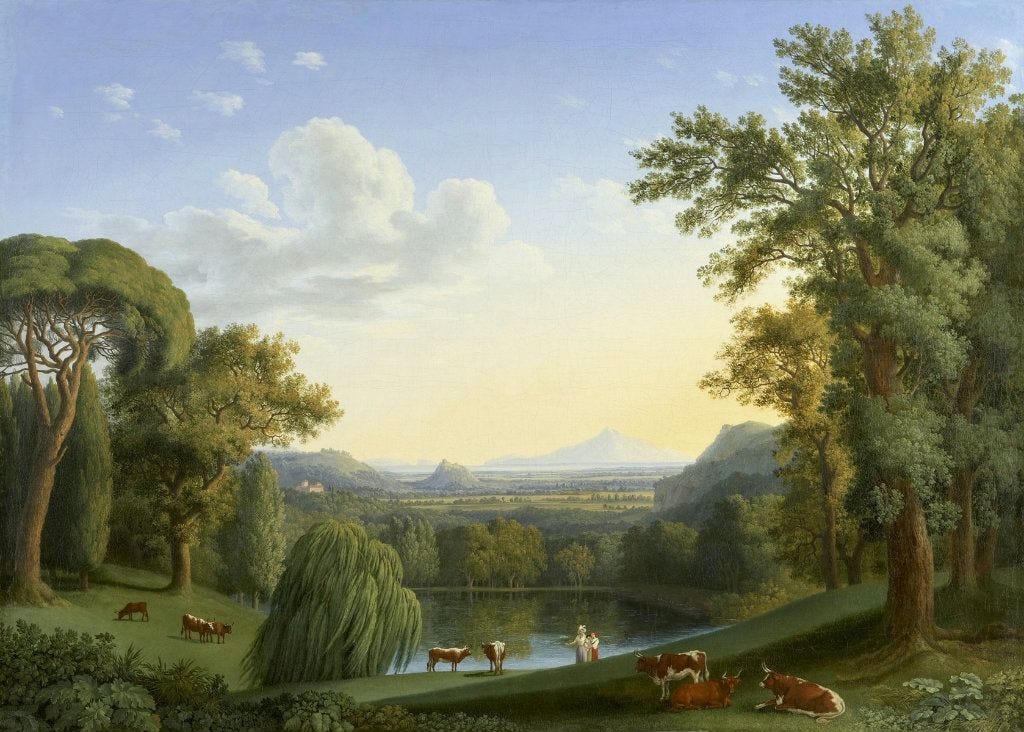
In a sense, you see this longing today when man romanticizes “selling everything and moving off-grid,” yet Virgil’s poetry runs far deeper than mere romanticism. It’s rife with political, spiritual, and even theological allegory.
This is because he was writing at one of the most chaotic, bloodiest, and darkest moments in history, which ironically, led to some of the greatest lights and insights mankind has ever conceived.
But what was happening in history at this time?
Chaos, War, and Beauty
Virgil published his poems around 40BC, four years after Caesar was assassinated. In the wake of his death, Rome suffered a maelstrom of civil wars that lasted well over a decade.
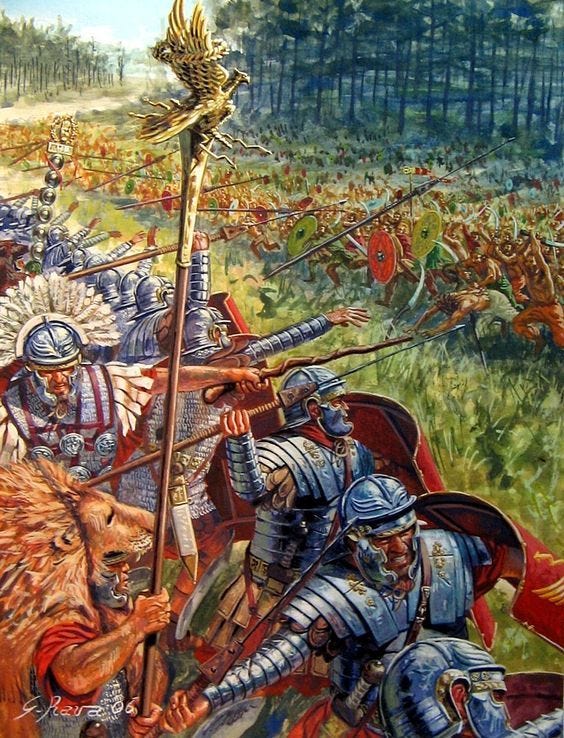
Violence and political chaos ran amok, disturbing the city and countryside alike.
Virgil includes this chaos in his Eclogues. We don’t find shepherds relaxing in a paradise like Tolkien’s shire, rather we find shepherds in fear, lamentation, and vice:
Eclogue one features a shepherd lamenting his farms were stolen and gifted to the Roman army.
Eclogue three features shepherds discussing their various crimes and immoral behaviors, while excusing their vices because “everyone is doing it.”
Eclogue six features a vast and negative view of human history — catalogued through violent and tragic events — suggesting that chaos and heartbreak reign supreme over human existence.
We see then, a strange theme of the Eclogues:
The beauty of nature represents a human longing for peace, while mankind suffers in a hotbed of political turmoil amongst an universe dominated by anarchy, bloodshed, and heartbreak.
And it’s here where Virgil’s most famous eclogue stands out in glory.
In Eclogue four, he shares a vision never before conceived of by any poet, priest, or philosopher in history. It was so poignant, some scholars suggest it was inspired by God himself.
The Messianic Eclogue
Eclogue four is dubbed the “Messianic Eclogue.”
Contrasting with the turbulence of the other eclogues, eclogue four envisions a future golden age.
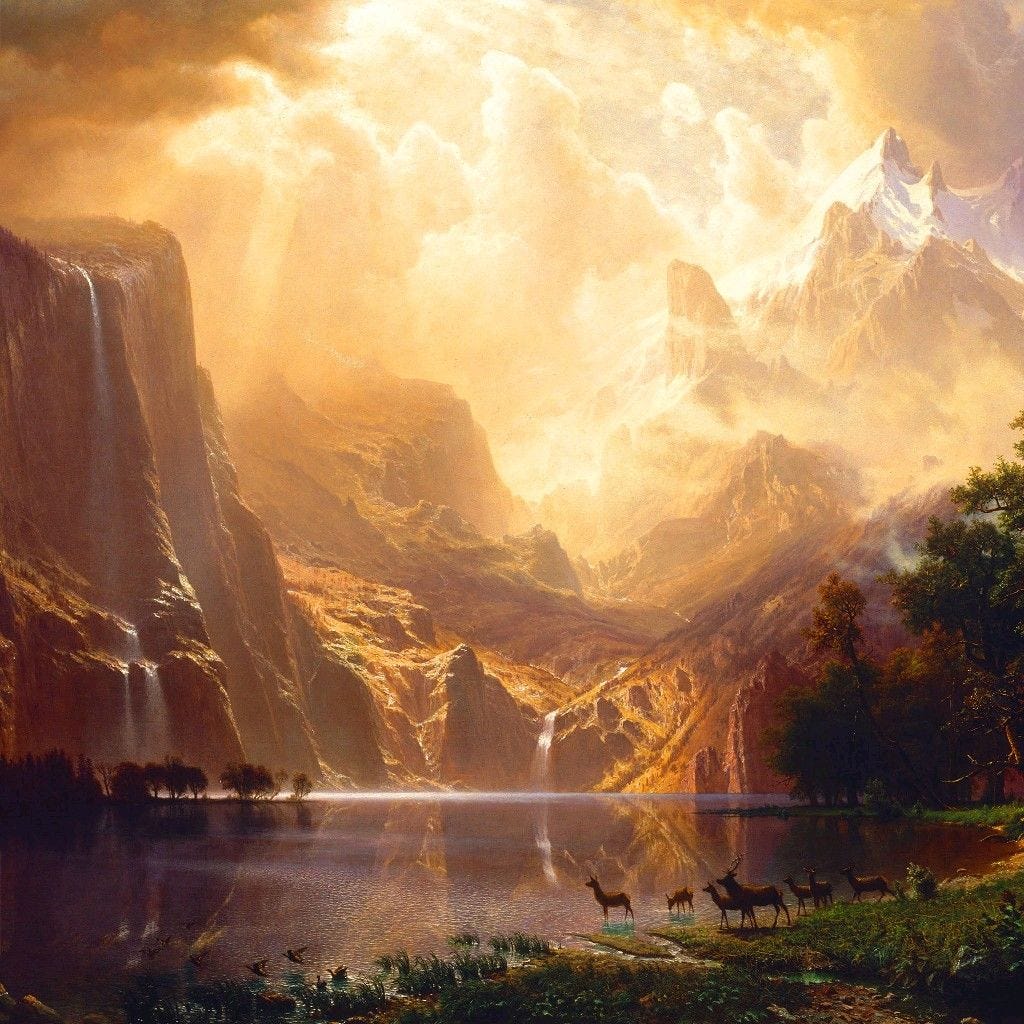
This vision contains some striking imagery. I recommend reading the full ecologue, but I’ll share excerpts here that show why the Medievals thought Virgil was inspired by God.
“Now the last age of the Cumaean prophecy begins:
the great roll-call of the centuries is born anew.
Now Virgin Justice returns, and Saturn’s reign:
now a new race descends from heaven above.”
This opening imagery shows a changing of ages — a “new race descends from Heaven,” to end the Iron Age (of evil) and restore man to a Golden Age.
“Only favour the child who is born, pure Lucina,
under whom the first race of iron shall end,
and a golden race rise up throughout the world.”
Here, Virgil says this golden age will be made manifest through a child… but not just any child:
“He will take on divine life,
and see gods mingled with heroes,
and he himself will be seen among them,
and rule a peaceful world with his father’s powers.”
So a divine son will rule the world through the authority of his father. This will lead to the defeat of evil:
“The snakes will die
And deceitful poisonous herbs will wither”
Of course the serpent evokes imagery of Eden, but that’s not all to come. In this new golden age, Virgil envisions a paradise restored, almost like a return to Eden:
“The goats will come home themselves, their udders swollen with milk,
and the cattle will have no fear of fierce lions.
Your cradle itself will pour out delightful flowers…
See the world, with its weighty dome, bowing —
earth and wide sea and deep heavens:
see how everything delights in the coming age.”
Harmony will return, and all of creation will rejoice at the redemption brought about through this divine, heavenly child.
And how exactly does this Eclogue end?
With an appeal for this newborn child to recognize its blessed mother:
“Little child, begin to recognise your mother with a smile:
ten months have brought a mother’s long labour.
Little child, begin: he on whom his parents do not smile
no god honours at his banquets, no goddess in her bed.”
And so Eclogue 4 ends with waiting for the Incarnation of the divine child to redeem man to this golden age.
According to the Christian tradition, such a child did arrive, roughly 40 years after Virgil, the pagan poet, penned these words.
A Return to Harmony
It’s worth noting that modern scholars tend to read the poem as political allegory rather than prophecy. They believe the child predicts a Roman citizen, rather than God.
Such an interpretation has merit, yet the theological interpretation shares remarkable insights and wisdom from the pre-modern mind.
The medieval mind saw Virgil as a prophet — perhaps not in the strict sense — but as an artist who wore witness towards heavenly Truth.
This suggests that even outside revelation, the human imagination yearns for redemption, as guided by Providence.
In other words, if the world is ruled by God, or a transcendent intelligence, then its workings govern all passages of life, beyond the famed miracles as recorded in scripture.
To see Virgil as divinely inspired is to see all reality ruled by this intelligible providence — that even in the days of civil war, turmoil, and despair, God is working to bring about man to redemption.
And if such was true then, such is true now, that it’s often the darkest days, and harshest times, where Providence rests closer than ever, preparing to make all things new and restore Good to a world marred by chaos.
I offer private mentorship in the Great Books for those seeking clarity of vision and depth of soul. Inquire here.
If you’d like to support this work and receive future writings, you can subscribe below.
Fascinating. The question of whether or not the people outside the Judeo-Christian tradition (i.e. Pagan poets, philosophers and writers) can be divinely inspired is something I've been contemplating about these days.
I believe it was Tolkien who suggested that all Pagan myths contained fragments of the shared truth about God that He revealed more fully through His covenant with Israel, and later through Christ. Perhaps some are simply closer to the truth than others. Perhaps God granted some of them to perceive things more clearly. Do those count as divine inspiration? It can certainly serve as a form of "seedbed for truth".
I actually wrote a recent article arguing that the Chaoskampf pattern common across various myths are actually distorted memories of the fall in the garden and the yearning for the promise given about the serpent's defeat at the aftermath.
https://evangel108.substack.com/p/dance-of-the-dragons
Wonderful piece. Thank you!