

No novel tormented Dostoevsky’s writing process more than The Idiot. In fact, halfway through he was convinced the work was an abject failure.
It was his most ambitious project to date, where he dared to capture in literature a portrait of the “positively good man.”
Specifically, he wrote:
“The main idea of the novel is to depict the positively good man. There is nothing more difficult than this in the world, especially nowadays… the task is immeasurable… there is only one positively good man in the world, and that is Christ.”
Thus the Idiot is Dostoevsky’s attempt to portray a human who draws as near to Christ as possible. He asks not only if man can be Christ-like, but whether his Christ-like nature is enough to bring him and his fellow man salvation. This is explored through protagonist Prince Myshkin.
Today, we’ll dive into Prince Myshkin’s character to understand what a “positively good man,” is — whether or not Myshkin lives up to the title — and what that reveals to us about human beings on a similar struggle to pursue the Good.
I am 100% reader-supported. This newsletter is free, but if you’re able to support, please consider a paid membership — it helps my mission of sharing Truth, Beauty and Goodness with maximal reach
As a paid member, you’ll get:
Two full essays a week
Access to all recordings (past & future) of my Great Books lectures on this publication
Eternal gratitude from me
A Sickly Prince
First, how does Dostoevsky attempt to create this “positively good man,” in Prince Myshkin?
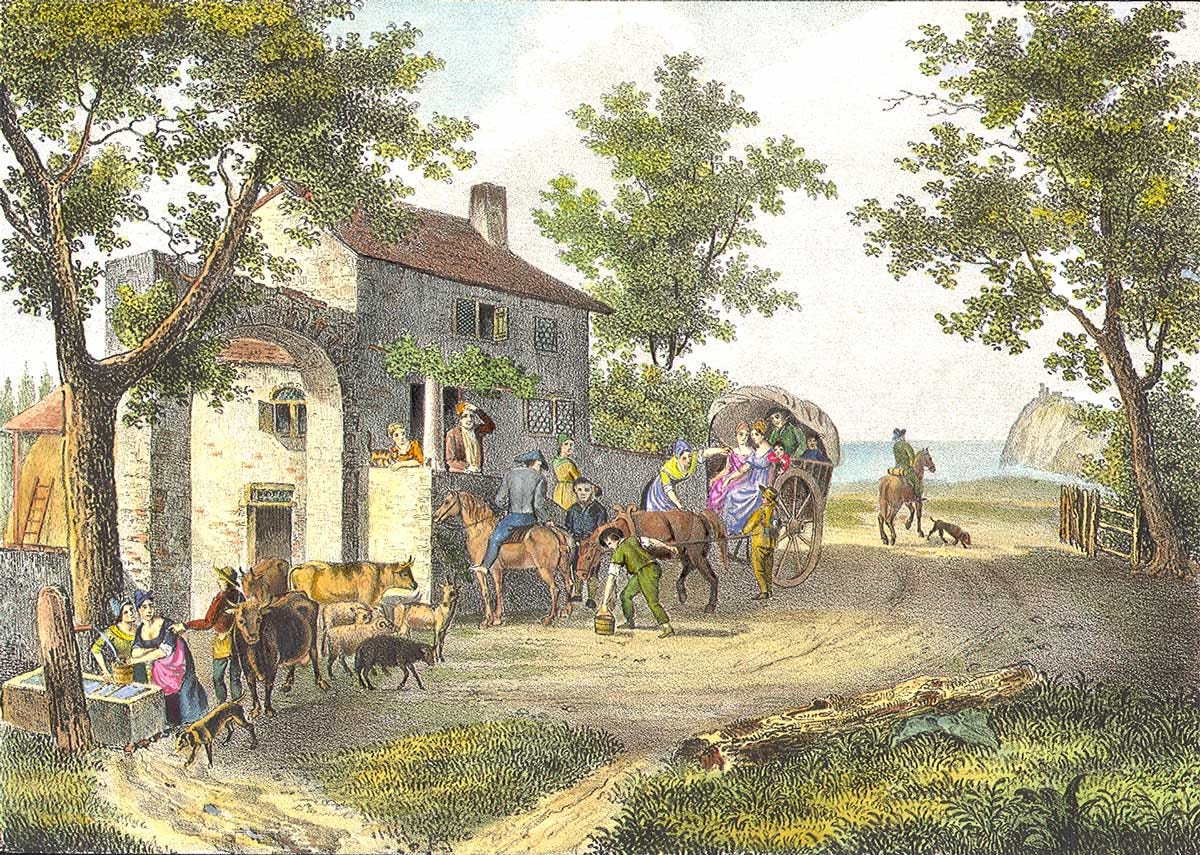
Recall that the Prince was orphaned and raised communally in villages, before spending four years in a Swiss sanatorium to treat his epilepsy. The Prince himself said his illness made him an “idiot.”
As a result of his suffering and reclusive upbringing, Myshkin is an “idiot” insofar as he cannot understand societal conventions. The modern world mocks him as a clueless man who doesn’t understand social cues, customs, or traditions.
However, Myshkin’s suffering also gave him a deep spiritual life. There was a mysterious transformation in his soul that gave him an intensified love for simply living. Though Myshkin’s transformation surpasses neat comprehension, it’s akin to a man who, “had little and suffered much,” but began to cherish his bare existence upon recovering.
And through this love of life grew a love for his fellow man that is almost heavenly in nature. We first see this love pour out in the Swiss village where Myshkin was raised, in reaction to the downfall of a peasant named Marie.
Forgiving a Fallen Woman
Marie’s story is simple and to the point:
She was a peasant seduced by a traveling salesman, eloped with him, only to be abandoned and returned to the village ashamed and sickly with consumption.
The village scorns Marie for her folly. They mock and shun her, and the children of the village cast stones at her. Only the Prince arises to comfort her.
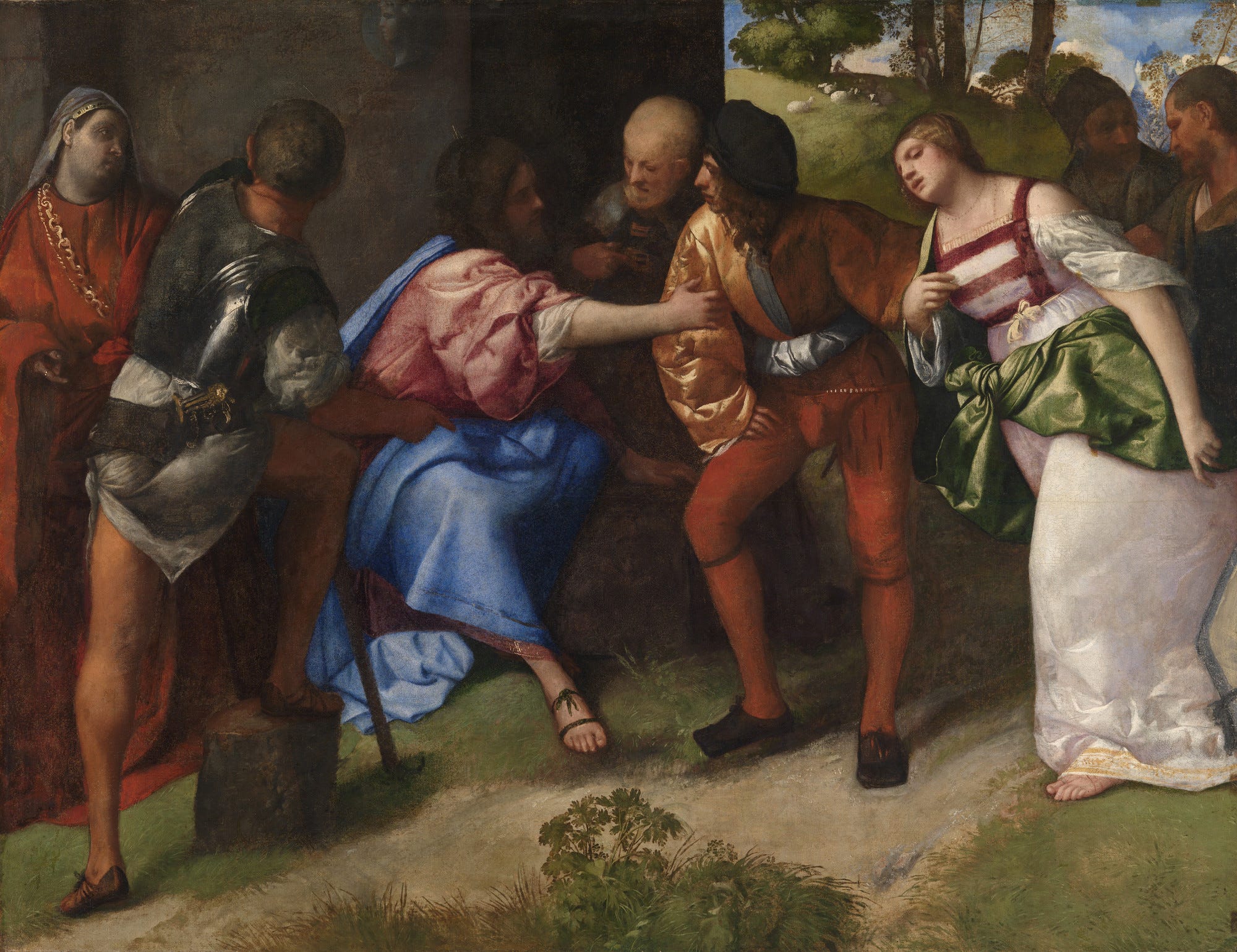
Sharp readers will notice a connection to Scripture here — the Prince arises to save a licentious woman being stoned and punished by her broader community. But we must pay close attention to the nature of this mercy, rather than dismissing it as, “the Prince is non-judgmental and kind.”
Such a statement is technically correct, but actually dilutes the fullness of the Prince’s love and virtuous character.
First, Dostoevsky makes it clear that the village was indeed cruel in their rejection of Marie. She was humiliated, ashamed, and rejected at the lowest moment of her life. Their ceaseless mockery borders on immoral hatred.
But here’s where Dostoevsky himself complicates the story:
Neither he, nor the Prince, suggest that Marie is an, “innocent victim.” Indeed, while the village became a cruel mob towards her, and Marie herself dated a terrible man, she transgressed the agreed-upon morality of her village. To elope and surrender oneself to a stranger outside of the marital contract would be both a violation of prudence and the contemporary laws of sexual morality.
In other words, the villagers’ cruel scorn — which is excessive, and perhaps unjust in its own right — is incited by a genuine wrongdoing from Marie.
Again, this echoes Scripture’s story of Christ and the adulteress, in which the woman’s infidelity genuinely transgressed divine law. And yet, it’s this real injustice by Marie that emphasizes Myshkin’s love.
He grants her mercy, kindness, and forgiveness despite the fact that Marie committed a real injustice. In a sense, this is an “undeserved” mercy that is the fullness of Christian love.
So Myshkin is not “Christ-like” because he’s merely non-judgmental. Rather, he forgives and extends mercy to a fallen woman who did nothing to, “earn that mercy.”
And to extend this idea further — this is what Christianity says is the state of all mankind, namely, all are fallen. And just as the dictum goes, “you must forgive if you want to be forgiven,” so too must you extend love and unearned mercy to your fellow man if you wish to receive the same.
And this is the heart of how Myshkin aspires to be a “positively good man,” in the image of Christ.
And yet, there’s one crucial flaw in Myshkin’s mercy as we’ve seen it presented thus far. This flaw, though subtle, could prove fatal — and lead to the Prince’s own undoing if he doesn’t discover it in real time.
But in order to understand what Myshkin is currently missing in his mercy, we have to take a closer look at the story of Christ and the adulteress…
