

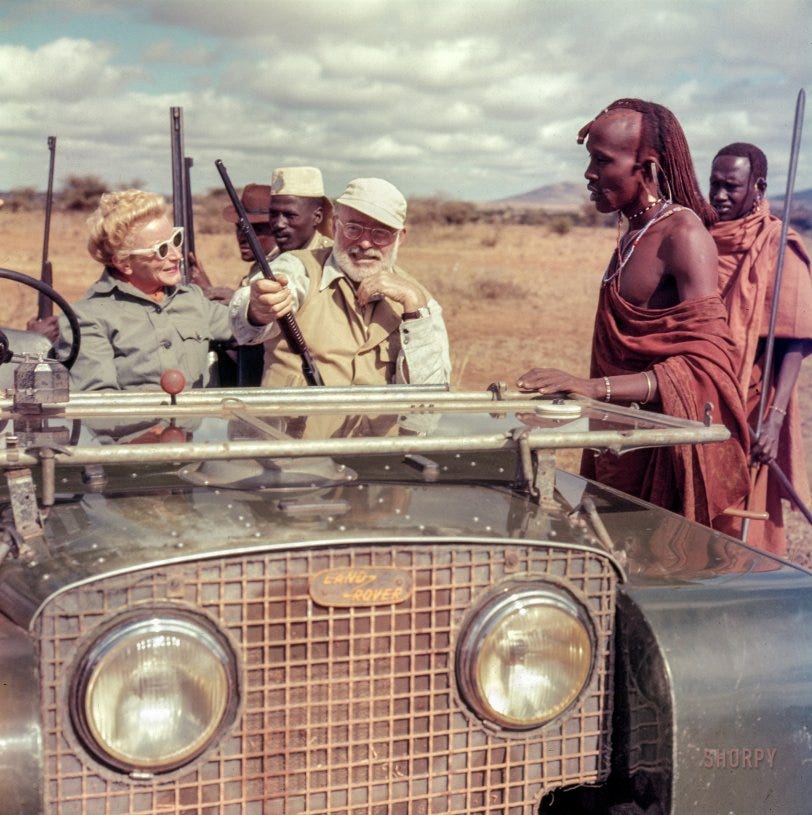
How do you turn a sheltered, cowardly boy into a man?
This is the question of Hemingway’s short story, The Short Happy Life of Francis Macomber.
It follows the coming of age story of a 35 year old man deficient in fortitude, courage, and self-control.
And while Hemingway executes on this premise, we find the story is far more than a meditation on manhood. We also learn how dangerous a strong man can be. At the story’s heart, we find a tragic tale of betrayal which gives us insight into the cruel, fallen nature of man.
Specifically, Hemingway warns against the poisons of resentment, that can lead one to commit evils worse than they ever imagined.
Here’s the story, and Hemingway’s meditations on manhood, resentment, and how to find virtue in a fallen world.
Reminder:
Subscribe, if you’d like to support my mission of restoring Truth, Beauty, and Goodness to the West, subscribe below!
Paid members get an additional members-only email each week!
An Unhappy Marriage
The story follows three key figures — Francis Macomber, his wife Margot, and a professional hunter named Robert Wilson.

The Macombers hired Wilson to lead them on a big game hunting safari in Somalia. Hemingway reveals sparse details about the brokenness of the Macomber marriage:
“His wife had been through with him before but it never lasted. He was very wealthy, and would be much wealthier, and he knew she would not leave him ever now…
His wife had been a great beauty and she was still a great beauty in Africa, but she was not a great enough beauty any more at home to be able to leave him and better herself and she knew it and he knew it. She had missed the chance to leave him and he knew it.
If he had been better with women she would probably have started to worry about him getting another new, beautiful wife; but she knew too much about him to worry about him either.”
So Margot married Francis for his money, Francis married Margot for her beauty. Yet neither loved each other. In fact, they fought often, and it’s implied that Margot has been unfaithful to Francis in marriage. Yet neither leave, because neither believe they can do better.
Why does Margot dislike Francis?
We get a hint from Robert Wilson, the masculine hunter. He has an internal monologue, sharing his thoughts about the 35 year old Francis and his boyish nature:
“Look at the beggar now, Wilson thought. It’s that some of them stay little boys so long, Wilson thought. Sometimes all their lives. Their figures stay boyish when they’re fifty. The great American boy-men.”
Francis has a boyish countenance, and we discover the outward points to the inward — he is soft-souled and cowardly.
This had been proven on the safari — at the first sight of a charging lion, Francis dropped his gun and ran away in fear, forcing Robert to take down the lion and rescue him.
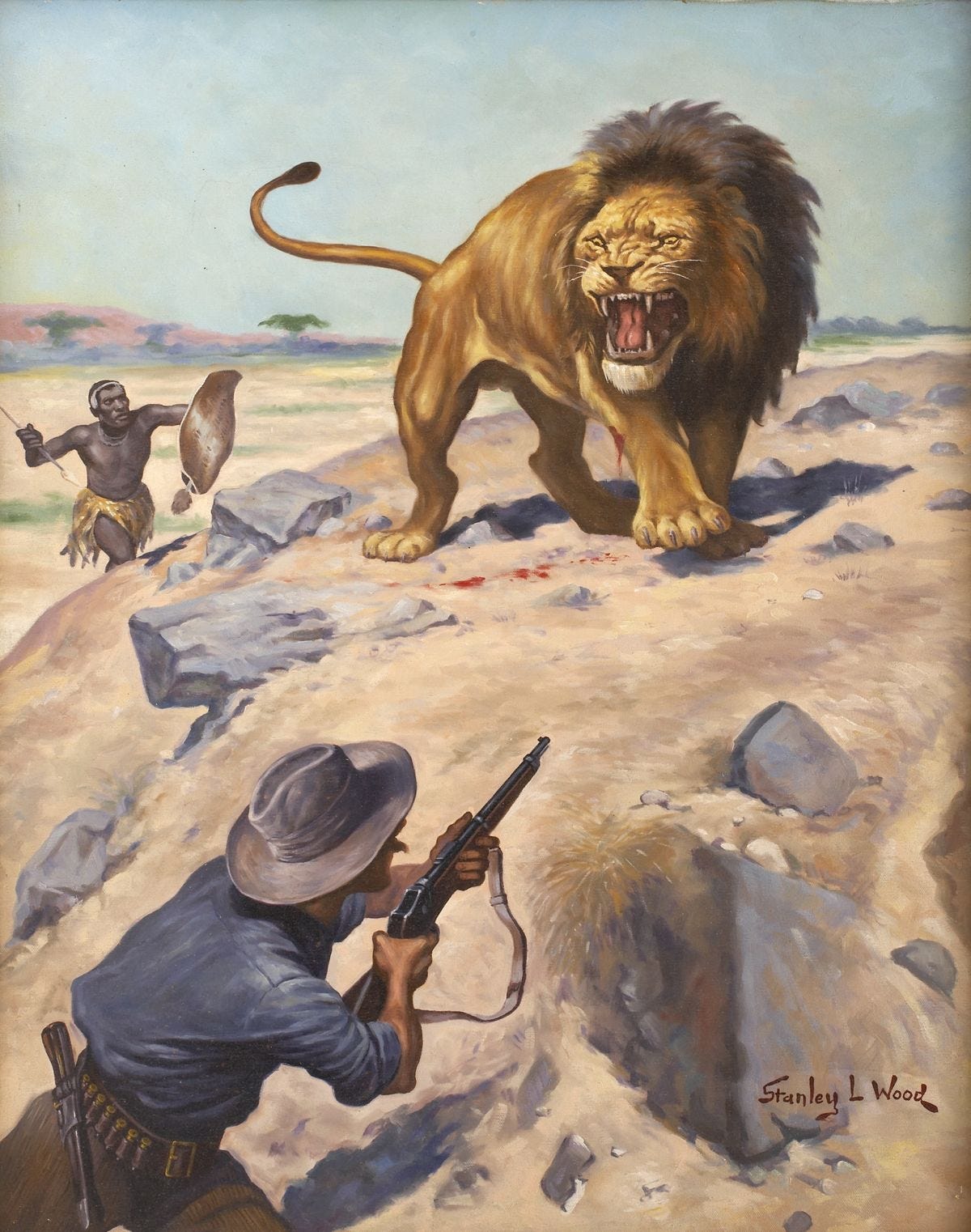
It’s an understandable act of fear, but Wilson and Margot both are disgusted in their cowardice. And it’s this very disgust that leads to a grave betrayal.
Betrayal and Wrath
That very night, Margot sleeps with Wilson to spite her husband, who catches her in the act. She’s unapologetic, yet Francis is too weak to condemn her. He begrudgingly accepts her betrayal.
The next day, he’s fuming with rage as they hunt buffalo. Wilson himself notes the change, noting that Francis’ wrath has made him dangerous.
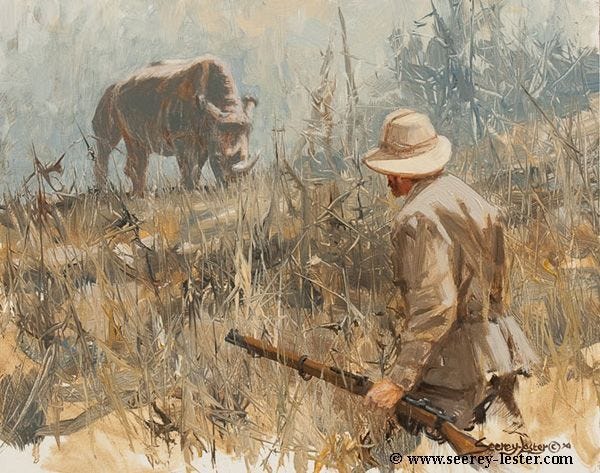
A now fearless, or reckless, Francis leads the charge on three buffalo:
“he had no fear, only hatred of Wilson, while the brakes clamped on and the car skidded, plowing sideways to an almost stop and Wilson was out on one side and he on the other, stumbling as his feet hit the still speeding-by of the earth, and then he was shooting at the bull as he moved away, hearing the bullets whunk into him, emptying his riffle at him as he moved steadily away, finally remembering to get his shots forward into the shoulder, and as he fumbled to reload, he saw the bull was down.”
Francis succeeds in dropping all three buffalo, and is ecstatic. Wilson notes it’s not just the thrill of the hunt. A change has transpired over Francis — for the first time in his life, he showed true courage, and discovered his manhood. Even his complexion seems to change, a fire in his eyes, a broadness to his shoulders, and a renewed vitality to his soul.
Wilson and Francis even share a brotherly comradery over this victory, yet Margot stares at her husband with sullen resentment, unbeknownst to the men.
A White Hot Light
The celebration is short lived, however, as the men discover one of the buffalos is alive, and dragged itself into some tall grass. The men gather their rifles and approach the grass to finish it off, leaving Margot behind them with her own rifle for protection.
As Wilson and Francis close in, the buffalo charges from the grass. The men take aim, while the bull locks in on Francis.
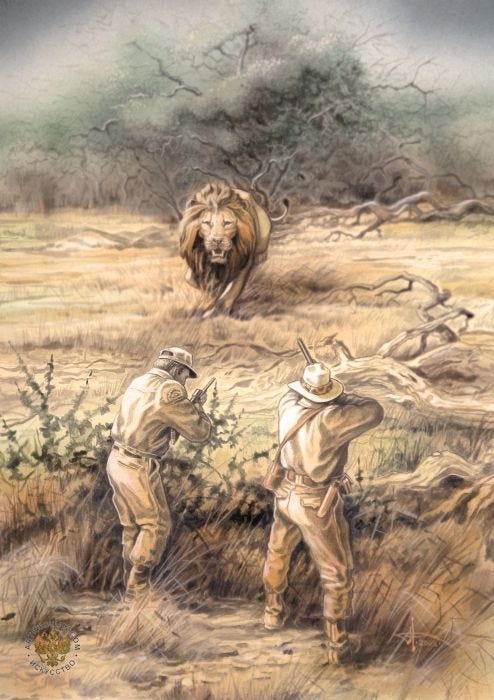
At once, three shots ring out:
Francis fired, and his bullet ricocheted off the Bull’s horns.
Wilson fired, and his bullet killed the bull dead.
Margot fired, and landed a clean round in the back of her husband’s head…
Margot collapses into hysterics over her husband’s body, but Wilson does not indulge her performance.
In a flat, toneless voice, he says:
“You murdered him.”
She tells him to stop… but she cannot deny it.
Here’s why.
