

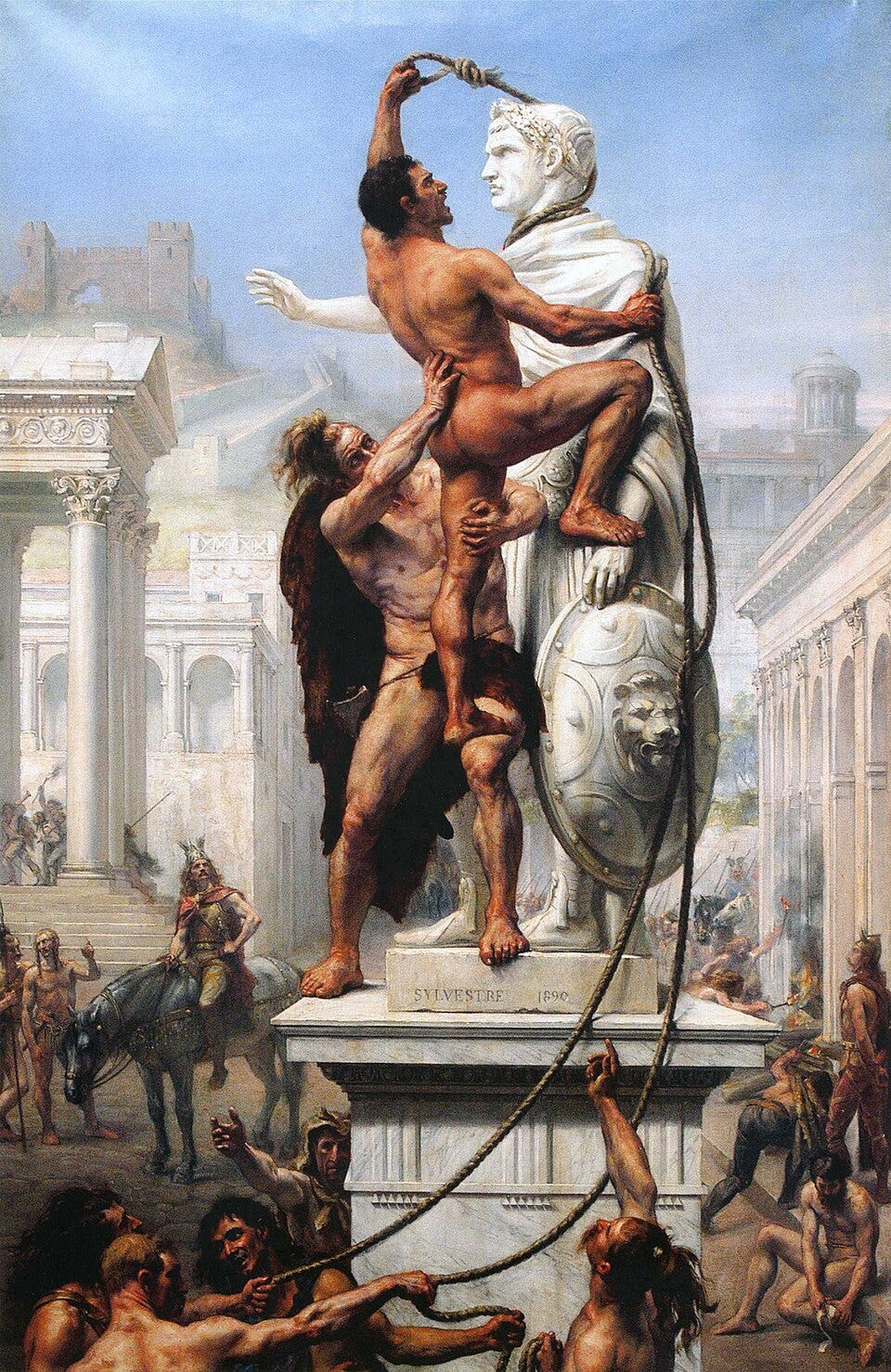
Western Civilization never faced greater peril than after the Fall of the Roman Empire.
Barbarians ravaged Europe, looting cities, burning buildings, and plundering whatever wealth they could seize.
The once-exalted Roman Empire was reduced to rubble and fractured kingdoms.
More tragic than the fall of empire was the loss of literature. The great writings of the classical era — Plato, Aristotle, Virgil, Cicero, the Church Fathers — were all under threat of being lost to history.
In other words, mankind didn’t just lose a political empire, but risked losing the very ideas and traditions that taught them what it meant to be human.
And yet, in one of the darkest periods of history, a single man helped save the West from collapse.
He would not only rise to unite the divided states of Europe, but institute reforms that recovered, preserved, and promoted the Great Books of antiquity throughout the continent.
Here then is the man who saved Western Civilization from descending into a permanent dark age.
I offer private mentorship in the Great Books for those seeking clarity of vision and depth of soul. Inquire here.
If you’d like to support this work and receive future writings, you can subscribe below.
The Frankish King
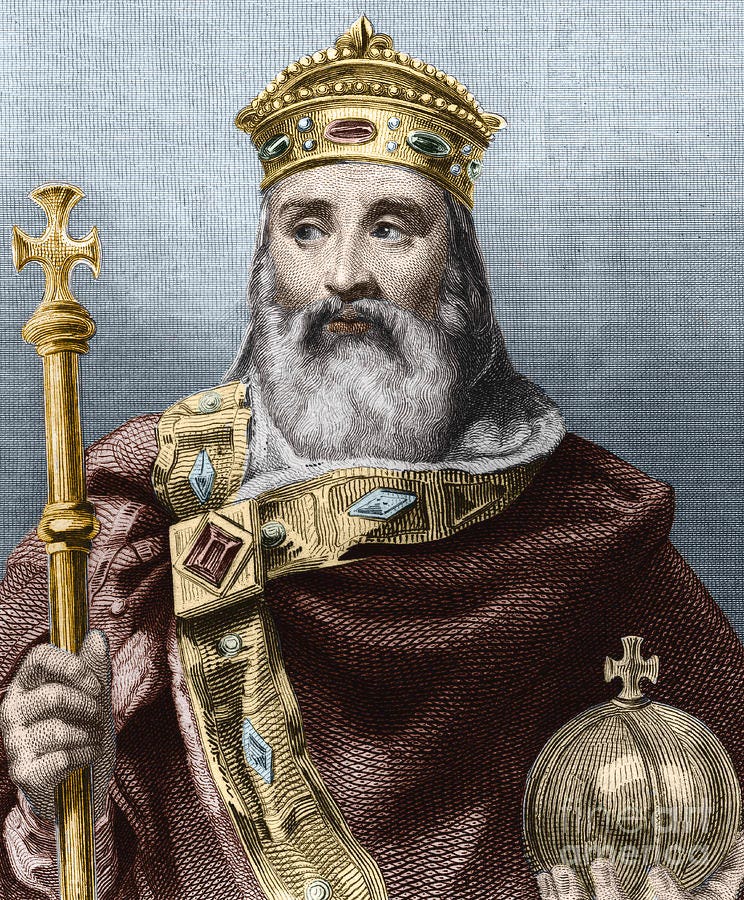
The man I’m referring to is, of course, Charlemagne the Great.
Today we know him as the man who founded the Carolingian Dynasty and ascended to become the first Emperor of Rome after its initial fall.
But how did he ascend to such heights? Especially considering his origins — leading a Frankish kingdom that was but one of many divided and warring city states.
Well, Charlemagne united Europe through conquest, but not as one might expect. He wasn’t a ruthless warrior in the vein of Achilles, nor a battlefield genius like Hannibal. In fact, Charlemagne often sought to avoid large-scale conflict whenever possible.
His genius lay instead in logistics and foresight. Rather than charging blindly into battle, he orchestrated calculated military campaigns that leveraged the strengths of his army.
For instance, he planned campaigns around Easter, when fodder was plentiful and troops could remain supplied for months at a time. In victory, he didn’t simply “plunder and run,” but established fortresses that ensured long-term control over newly conquered territory. He also used his numerical advantage to create chokeholds around key bottlenecks in enemy lands.
In other words, Charlemagne’s prudence in logistics, planning, and foresight enabled him not merely to win battles, but to build a stabilizing empire upon the fractured soul of Europe.
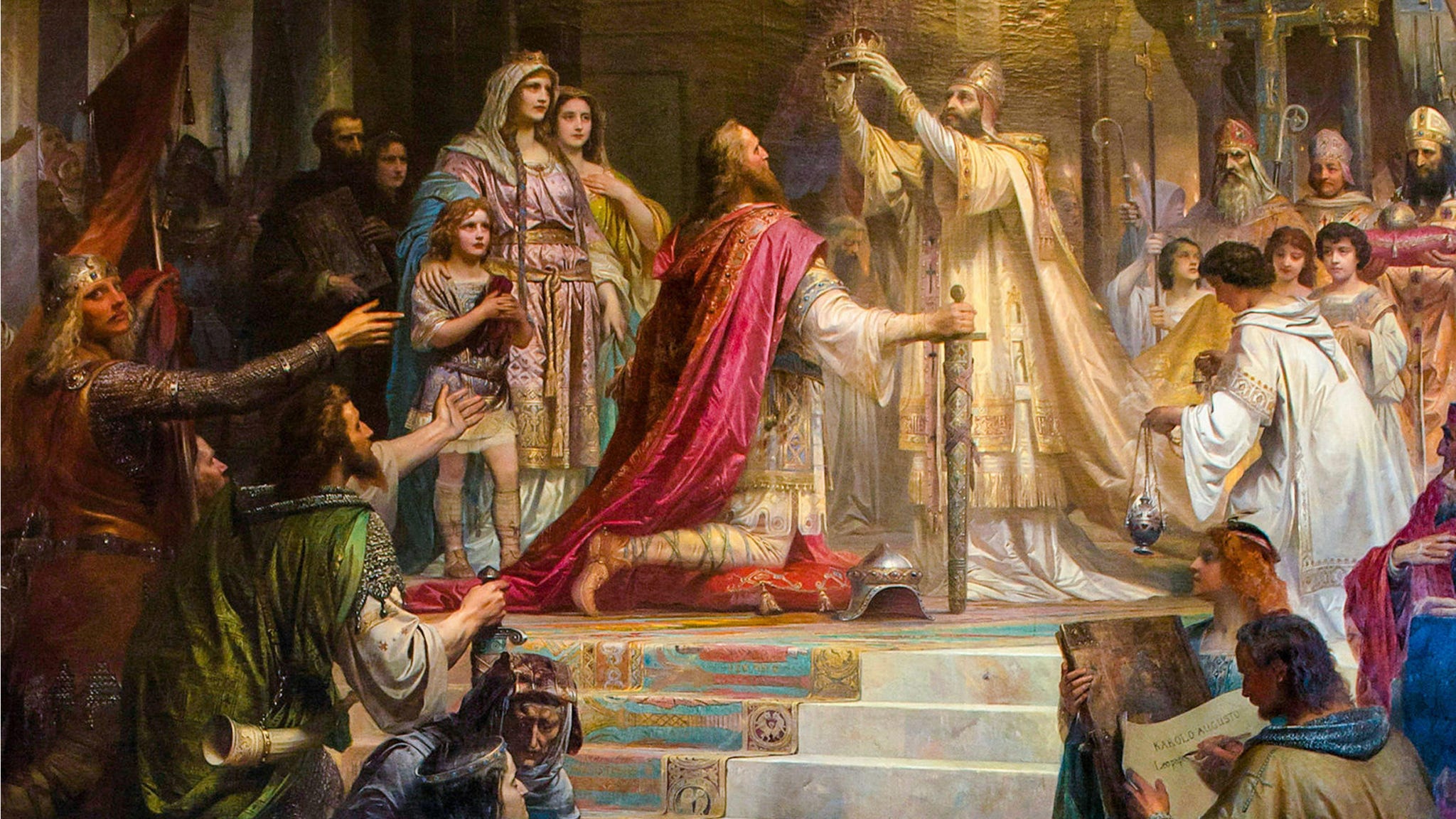
By the year 800, much of Europe had been united under his reign, and the Pope crowned him Emperor.
Yet Charlemagne’s greatness did not end with military success.
His true brilliance lay in his administrative reforms.
Rekindling the Embers
Charlemagne understood that education is central to unifying a nation. A civilization must be bound together by a shared sense of origin, morality, and telos — otherwise it will fragment.
And tragically, after centuries of disorder following Rome’s collapse, education had severely deteriorated.
To give you a sense of how dire things became, St. Boniface reportedly complained to the Pope that he heard a priest baptizing Christians in nomine patria et filia et spiritu sancta — “in the name of the fatherland, the daughter, and the Holy Spirit.”
Conversely, as ruler, Charlemagne seemed to intuit Plato’s assertion that if a man is to rule others, he must first learn to rule himself (through education).
According to his biographer Einhard, Charlemagne taught himself to read as an adult. He embraced a study of the seven liberal arts, frequently read Augustine and the Early Church Fathers, and even engaged with the classical thinkers of Greco-Roman antiquity.
He proved in real time that philosophy and politics are deeply intertwined. The emperor who cultivated a philosophic spirit would soon launch one of the greatest educational reforms in history: the Carolingian Renaissance.
It was this Renaissance upon which the fate of Western identity hinged. Through Charlemagne — and a handful of determined monks — Europe was spared from a cultural collapse that might have condemned it to a permanent Dark Age.
