

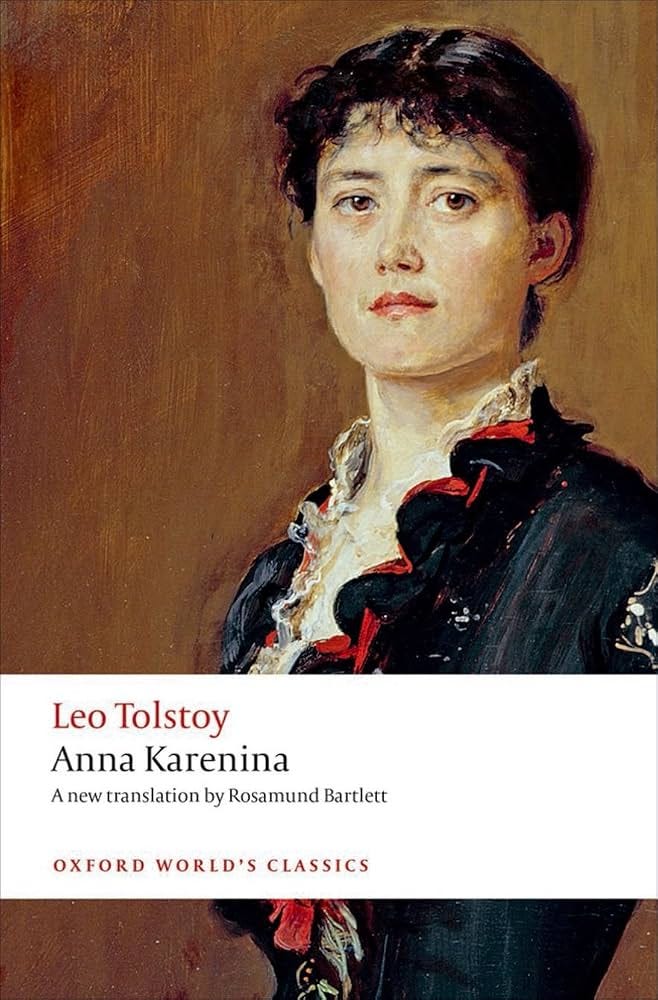
Tolstoy’s Anna Karenina is a classic that every human being ought to read before they die.
This masterpiece captures the full complexity of human life — a novel of romance, tragedy, family, philosophy, psychology, and theology — and thus transforms the ordinary affairs of everyday life into a sprawling moral drama on the human soul.
To read this book is to inform you that you too inhabit such a drama — that the stakes of your everyday mundane life are indeed rife with meaning, staged upon a battlefield in which you can make your story one of beauty or despair.
And while the wisdom you can draw from this work is nearly limitless, the heart of this novel is moved by one central inquiry, namely:
The pursuit of happiness, a properly ordered human soul, and the deadly consequences of disordered love.
At its heart, Anna Karenina reveals to us an uncomfortable truth of the human condition, namely:
Untamed human desire can become a scourge on the human soul.
Indeed, our greatest loves that promise us happiness, can become the very instruments of our destruction if we do not learn how to control them.
This novel then, is both a warning and inquiry into what a properly ordered human soul looks like…
Understanding the Pursuit
So what is this novel about?
It’s perhaps explained in the famous opening sentence of this novel:
“Happy families are all alike; every unhappy family is unhappy in its own way.”
This sentence sets an important paradigm, namely, that this novel is about the human family as the means of understanding the human soul.
In other words, Tolstoy rejects the modern idea that man is an individual who knows himself through selfish pursuits of personal liberty, rather he suggests your nature is fully realized through the adventure of building a happy family.
He affirms this theme himself, as recorded in a conversation he had with his wife (later inscribed in her diary):
“In order for a work to be good, one must love its main basic idea, as in Anna Karenina I love the idea of family.”
From this lens, we can recognize the plot of Anna Karenina is figurative tale of two families, via the journey of its two main protagonists:
The story follows Levin, who attempts to build a happy family, and Anna, who threatens to ruin her family.
Anna is not a simple villain, nor is she merely a victim of an oppressive society, rather she’s an intelligent and passionate woman who finds herself increasingly dissatisfied with her life.
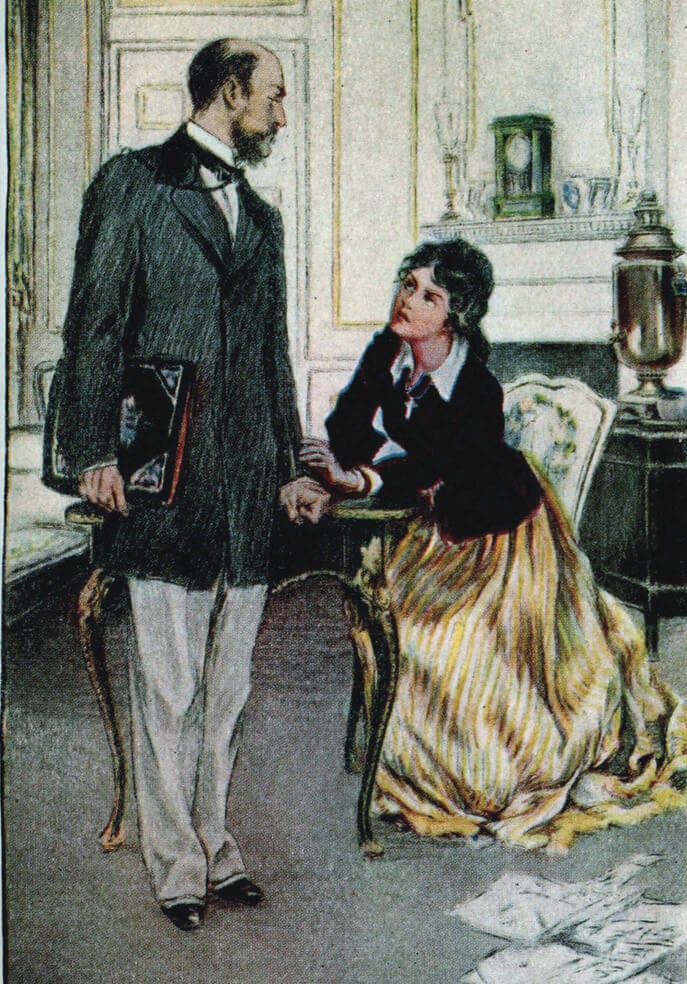
Her marriage to Karenin is cold and loveless, and her encounter with a young aristocrat named Vronsky awakens a long lost erotic passion in her being. For the first time in years, she feels truly desired and loved, and thus begins an ill-planned affair with him.
But there is an obvious problem with this affair:
It’s all consuming nature destroys everything else she once held dear, including her marriage, her son, her reputation, and even her own peace of mind. An ill-thought path of liberation gradually becomes a prison of her own making.
And in the psychological breakdown of Anna, Tolstoy asks a greater question than a simple moralistic condemnation of adultery. Anna’s breaks asks whether or not she can find redemption, and moreover begs the deeper question:
What actually makes a human life happy?
For while Anna pursues happiness through romantic passion, another central character is pursuing it through an entirely different avenue…
The Foil to Anna’s Passions
Konstantin Levin acts as the moral foil to Anna.
Like Anna, he suffers deeply with his humane pursuits of love and marriage — and yet his struggles go deeper as he is existentially distraught with life.
Levin doesn’t seek happiness in the thrills of erotic pleasure, rather he toils hard and questions life deeply. In Levin there are countless musings on the nature of life, death, and religious speculation which prove a striking contrast to the carnal desires of Anna’s erotic pursuit of happiness.
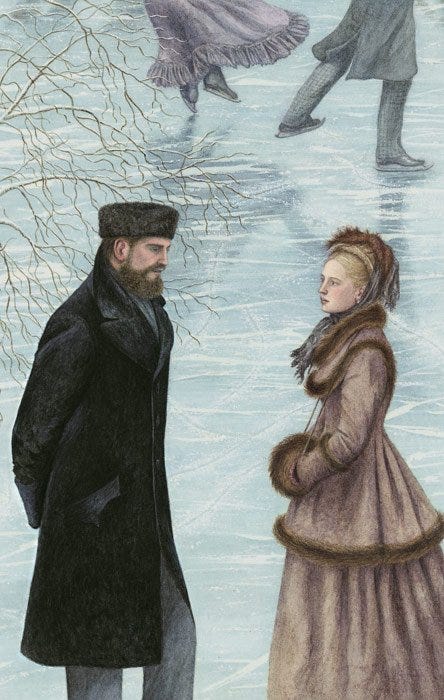
Levin’s pursuit of Kitty is far less glamorous than Anna and Vronsky’s affair. The couple lack the glamour, prestige, and attractiveness of Anna and Vronsky, but still suffer the same human vices of jealousy, insecurity, disappointment, and instability. Levin struggles to understand his place in the world and even questions whether life itself has any meaning.
And yet the hope for Levin is that — though he suffers greatly — he nobly toils in regard for his family nonetheless. Anna’s pains threaten to dissolve her family, yet Levin’s pains aim to build one.
And through the spirited desires of these two distinct characters comes two entirely different moral arcs that stand as Tolstoy’s vast meditation on the nature of the human soul — that happiness is most fully realized or lost through the building or dissolution of the human family…
The Meaning of a Happy Life
Ultimately, Anna Karenina is Tolstoy’s attempt to wrestle with some of the deepest questions we can ask about the human condition:
Can romantic love sustain human happiness?
Can the unapologetic pursuit of personal happiness lead to self-destruction?
Is happiness actually the satiation of human desire, or the peace instilled through virtuous, self-sacrificial human action? Or both?
How does the institution of the human family inform the full maturation of the human soul?
Can a person find lasting peace without a relationship to God?
What does it actually mean to live well?
Tolstoy does not offer us simple answers, but challenges us to think clearly about life’s deepest questions — for only in such scrutiny can man discover a life worth living.
Yet if there is one idea Tolstoy wishes us to consider, it’s this:
The good life is not simply a life in which we acquire good things, but a life of ordered loves — a life in which we learn fundamentally to love what is good.
And if you want to understand the relationship between love, happiness, and the ordering of the human soul, there may be no better place to begin.
If you are looking for a place to put that approach into practice with others, we just crossed 60,000 readers over at the Athenaeum Book Club.
Our discussions offer a depth you can’t find anywhere else online. We don’t read books to check them off a list, but to train the soul — and Anna Karenina is one of the greatest trainers of the soul in world literature.
We are about to begin our read of Anna Karenina over the next six weeks, and I’ll personally be leading the discussions.
It is a demanding book, but one of the most rewarding literary experiences you can have. And it is far better read in company than alone.
Our first discussion, covering Parts 1-2, is on November 24th at 12pm ET.
And remember: all sessions are recorded if you can’t make it live.
Note: You don’t have to have finished the book by then, but the more you’ve read, the more you’ll get out of the session.
Thanks to every one of you for being here and making it possible for us to do this work.
If you’re new here, definitely join our book club discussions if you can. They take place biweekly, and have been nothing short of electric of late. And if you can’t make it, everything is recorded!
I subscribed to Athenaeum book club partly because I wished to read the great Russian novels but didn’t want to do it alone. So now we’re reading a second one right after I spent weeks re-reading the first one because of the world-expanding insights revealed in the club commentary. I guess I should have been more careful about what I wished for. On the other hand, it’s a different author and it explores subjects I have pondered for most of my life. And after reading this introductory essay, my anticipation now far outweighs the anxiety. Thank you.
I read Anna Karenina for the first time earlier this year and absolutely adored it. Totally fell in love with Levin!