

Note: In the spirit of Christmas, I’m making today’s paid-post available to all readers.
I hope you all have a very Merry Christmas!
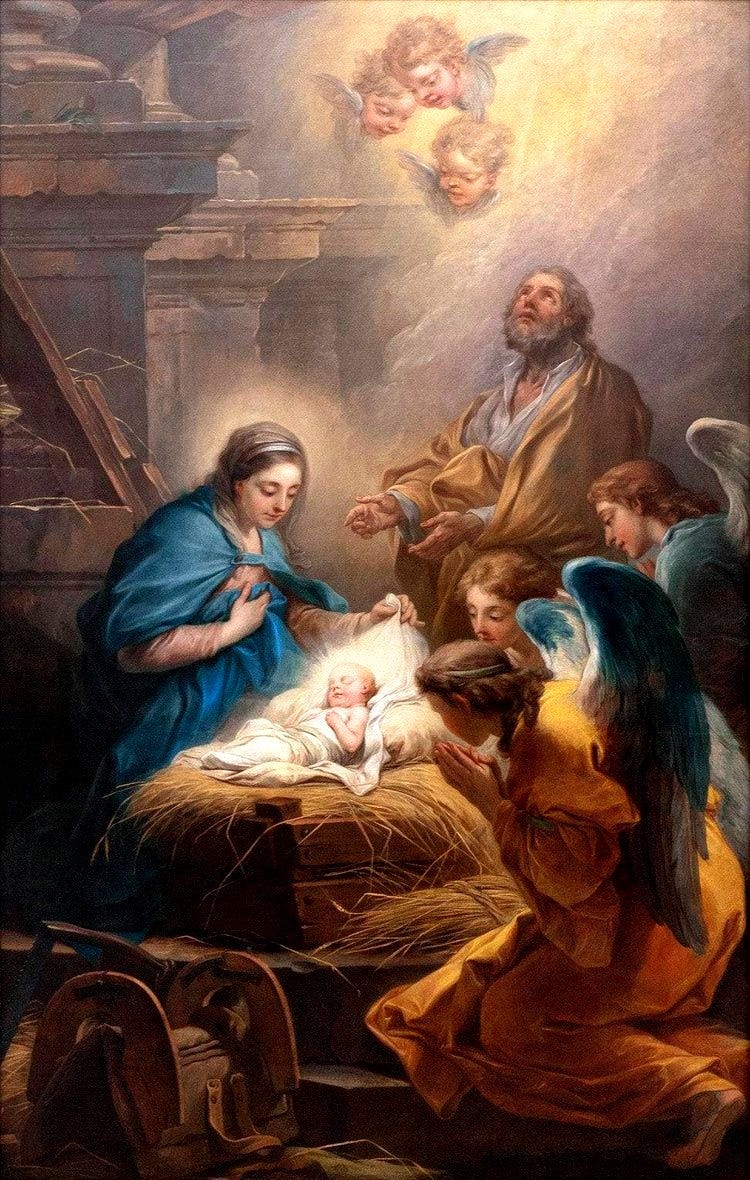
How do you capture the true Christmas spirit?
How do you make the most of Advent, or the broader holiday season, in a secularized world saturated with commercialism?
That is the question of today’s post.
Of course, the true Christmas spirit points to Christ. But there is also a rich tradition that explains how to live Advent well.
There’s concrete steps that allow us to recover that elusive “Christmas spirit,” and to remember that this world is, indeed, a good and fine place; that even in the darkest seasons, a light is coming that is promised to all.
Here then, is how to make the most of Advent, and how to discover the light that fuels not only the “jolliest time of year,” but endures throughout every season, era, and epoch of human history.
Reminder:
Subscribe, if you’d like to support my mission of restoring Truth, Beauty, and Goodness to the West, subscribe below!
Paid members get an additional members-only email each week!
What Is Advent?
Advent is a season within the liturgical calendar of the Christian tradition. Historically, the Church orders time itself around the life, death, and resurrection of Christ, along with the Church’s ongoing mission in the world.
But why have a liturgical year in the first place?
At a broad level, the purpose of this calendar is to bring the “economy of salvation” into contemporary time. The cycles of the seasons become typological realities that point to Christ.
In other words, the Church uses the rhythm of the year — its seasons, feasts, and holy days — to help us see Christ’s life embodied in time incarnate. It’s a reminder that faith is transforming not just our lives, but the cosmos we inhabit…
So how does advent fit into this bigger picture?
Well Advent is the beginning of the liturgical year, starting four Sundays before Christmas.
Also, the word Advent comes from the Latin adventus, meaning “arrival.”
Advent, then, is a season of hope, waiting, and arrival. It’s a season of anticipation that doesn’t just mark the beginning of the liturgical year, but also the “new beginnings,” that echo throughout time eternal.
The promise of advent then is — if Christ “makes all things new,” — then Advent’s season of hope is a spiritual renewal, one that recovers the joys of a child-like innocence in adulthood.
But of course, we have to be more specific:
How do we hope and wait in a way that is spiritually fruitful and transformative? How do we live Advent in a way that truly captures the Christmas spirit?
To understand this fully, we must look to the greatest saint in human history.
The Yes that Changed it All
Mary’s fiat is the definitive model of how to live Advent.
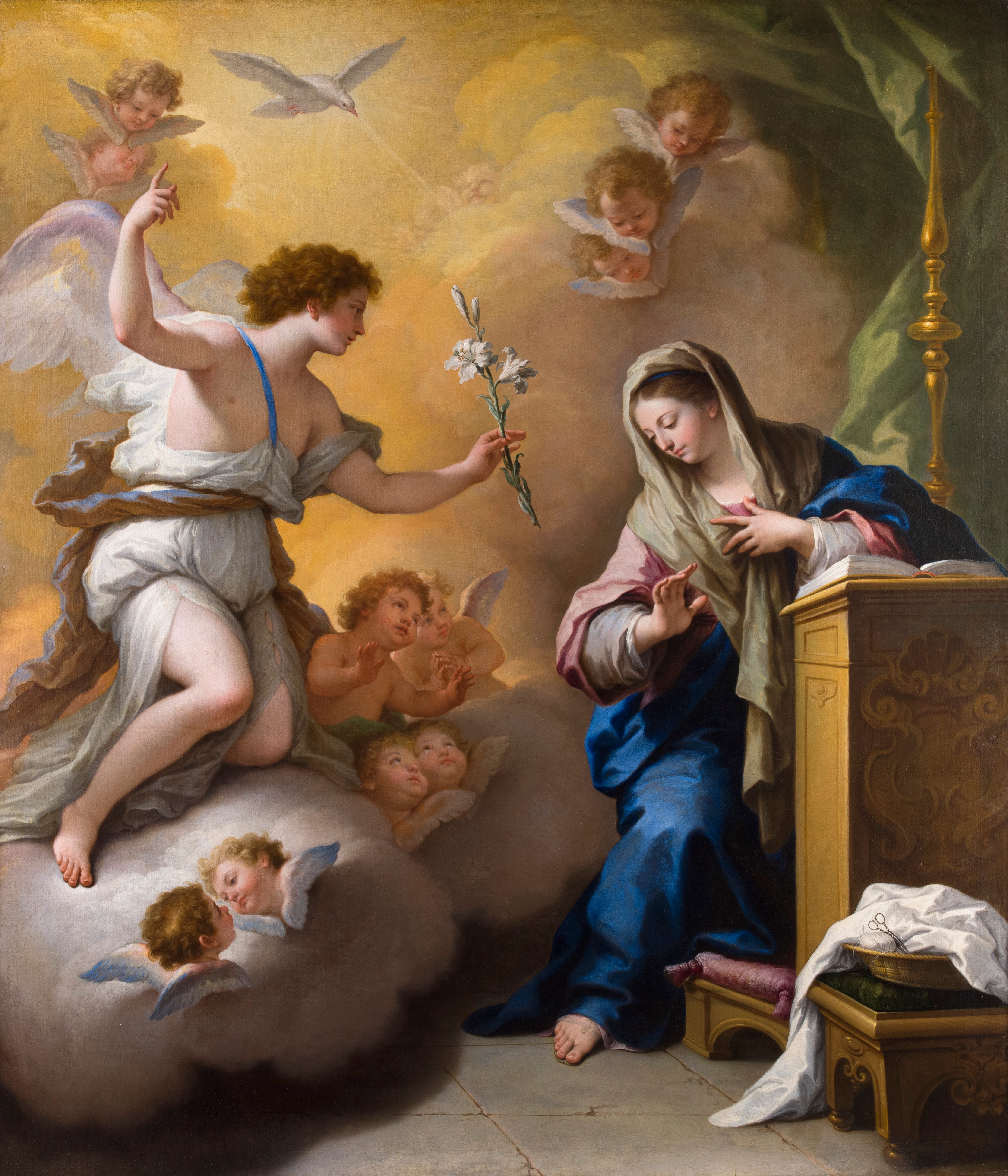
To grasp the weight of her “yes” to the angel Gabriel is to understand the posture of soul that opens the human heart to grace, and through which redemption enters a fallen world.
Tolkien, a devout Catholic himself, emphasized this point repeatedly:
“I attribute whatever there is of beauty and goodness in my work to the Holy Mother of God.”
“All my own small perceptions of beauty, both in majesty and simplicity, are founded upon Our Lady.”
If Tolkien attributes the beauty of The Lord of the Rings to Mary, then her fiat clearly signifies something of value that opens the soul to grace, genius, and inspiration.
To appreciate it properly, we have to take a closer look at Mary’s words.
As a recap, in the Gospel of Luke, Mary is visited by the angel Gabriel, who announces that she will give birth to a son named Jesus.
Mary replies:
“‘How can this be, since I have no husband?’
And the angel said to her, ‘The Holy Spirit will come upon you, and the power of the Most High will overshadow you; therefore the child to be born will be called holy, the Son of God… for with God nothing will be impossible.’
And Mary said, ‘Behold, I am the handmaid of the Lord; let it be done to me according to your word.’”
— Luke 1:34–38
These simple words, Mary’s fiat, stand as the greatest expression of faith and discipleship in the Christian tradition. On the surface, they’re venerated because it led to the incarnation, but there’s so much more to these words that most people miss.
Mary’s words actually reveal the purity of her spirit — a purity that doesn’t just teach you how to capture the Christmas Spirit, but to learn the posture that’s required to carry the light of Christmas through every season of life.
The Model of Perfect Faith
Why are Mary’s words a perfect expression of faith?
Because they encapsulate humility, awe, and wonder — an interior disposition of soul that opens the human heart to grace.
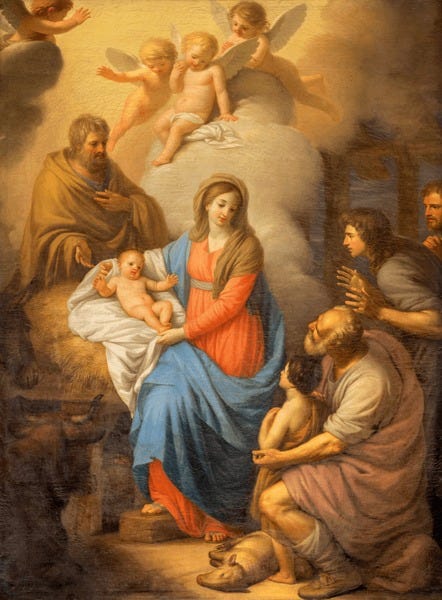
Her initial response, “How can this be?” is not an expression of doubt, but wonder. It reflects a reverent curiosity before the mystery of God. This openness to divine mystery is precisely what makes the soul receptive to joy.
This is also why Gabriel greets her as “full of grace.”
But Mary’s fiat reaches its apotheosis in her conclusion:
“Let it be done to me according to your word.”
These words foreshadow Christ’s own prayer in the Garden of Gethsemane, just before the Crucifixion:
“My Father, if it be possible, let this chalice pass from me; nevertheless, not as I will, but as you will.”
— Matthew 26:39
Mary’s fiat anticipates Christ’s own self-offering. Glory is reached through assent, through the surrender of one’s will to God.
Mary lives this surrender not only in word, but in deed, offering even her Son, her most beloved treasure, back to God.
This leads to the final question:
How does such an assent, one that’s marked by discipleship, longsuffering, and sacrifice, become the source of the Christmas spirit’s joy?
The Gospel Beyond The Darkness
Strikingly, the “good news” of Christ’s coming is not a promise of comfort. The Gospel often sounds like its opposite:
“Take up your cross and follow me.”
“Whoever loses his life will find it.”
Christianity teaches that true life is found only through a faith willing to offer everything to God—who is Truth, Beauty, Goodness, and Love itself.

This often entails trials, suffering, and sacrifice. In the case of the martyrs, it required death itself.
In the case of Mary, it required watching her beloved Child get butchered, as “a sword pierced her heart.”
Yet, paradoxically, it’s this all-demanding message of the cross that points to a profound joy.
That joy is felt most clearly during the Christmas season: a joy of hopeful anticipation, even in the darkest time of the year. This is because the promise inaugurated by Mary’s fiat is not a promise of ease, but victory.
The joy of Christmas is not merely a pause from work, an exchange of gifts, or time with loved ones (beautiful as these are). It is a celebration that a light has entered the world, promising triumph despite a fallen universe marked by suffering and death.
The promise is, for the souls who cling to the Good with faith in a fallen world, grace will make itself known to them, and they are promised a victory in totality that no principalities of darkness can harm.
This is the true joy of Christmas, and its received by the militant who assent in humility like Mary, even at the risk of a “sword piercing their own heart,” because in totality, there’s a light that endures.
Conclusion — The Magnificat
I’ll conclude with Mary’s Magnificat, one of the most profound expressions of faith in Christian history.
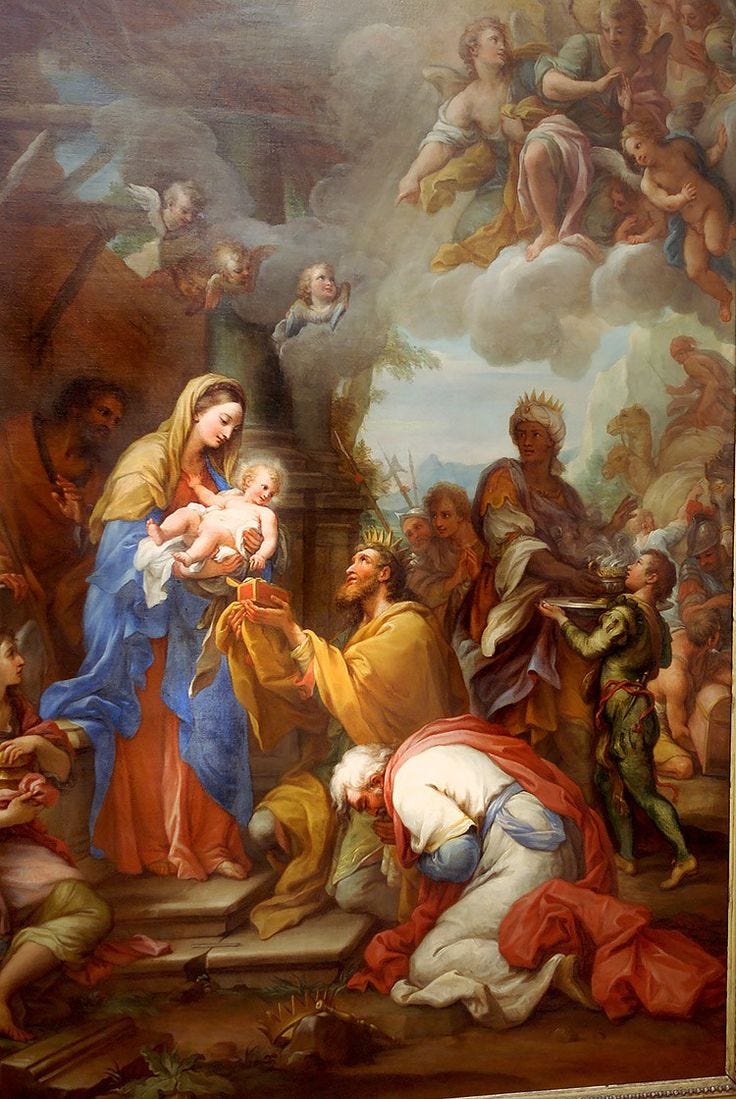
It testifies to her joy and love of life, even amid a life marked by suffering, patience, and endurance:
“My soul magnifies the Lord,
And my spirit rejoices in God my savior,
For he has regarded the low estate of his handmaiden.
For behold, henceforth all generations will call me blessed;
For he who is mighty has done great things for me,
And holy is his name.
And his mercy is on those who fear him
From generation to generation.
He has shown strength with his arm,
He has scattered the proud in the imagination of their hearts,
He has put down the mighty from their thrones,
And exalted those of low degree;
He has filled the hungry with good things,
And the rich he has sent empty away.
He has helped his servant Israel,
In remembrance of his mercy,
As he spoke to our fathers,
To Abraham and to his posterity for ever” - LK 1:46-55
The joys of such a magnificat need not be restricted to Mary, but all who follow in her spirit.
And so we see, what waits for us is a joy far greater than a few weeks of the Christmas spirit, but a light everlasting that can withstand all the darkness of this world.
Reminder:
Subscribe, if you’d like to support my mission of restoring Truth, Beauty, and Goodness to the West, subscribe below!
Paid members get an additional members-only email each week!
Very nice. Merry Christmas to you and yours.
Merry Christmas Sean to you and your family.