

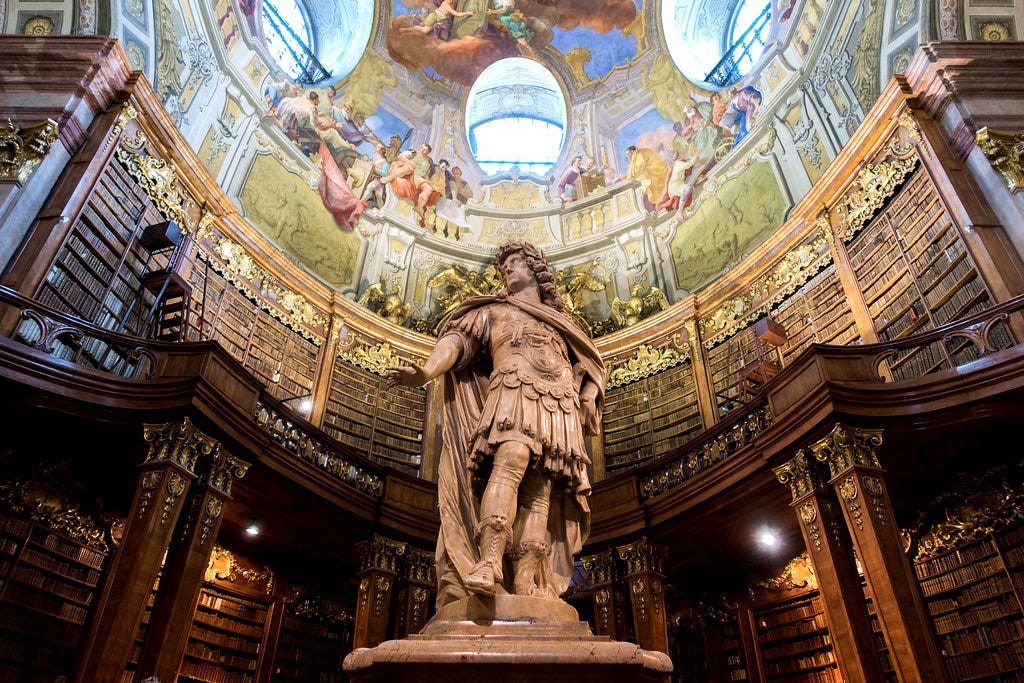
Modern education has destroyed the Great Books.
Shakespeare, Plutarch, and Plato were once staples of classical education, but today you’ll be lucky to find a college graduate who has read any of them.
Worse still, students often regard these thinkers as antiquated figures with nothing to offer. The bottom line is, modern education doesn’t just teach apathy toward the great books, but often an outright contempt for them.
You might wonder — where did it all go wrong?
Indeed, many of us ask this as we find ourselves standing amongst the ashes of a once great literary tradition, wondering how we can revive it.
As in all things, the great revival starts with you!
Today we’ll discuss where modern education went wrong, why we no longer read the great books, and how you can fall in love with reading the classics today.
Reminder:
Join me on Dec 10 for a live discussion where we’ll explore how to recover the education modernity stole from us.
Seats are limited — reserve your spot now and start rebuilding your intellectual foundation:
The Frankfurt School
While countless factors have contributed to the decline of literacy and a great books education, none have been more devastating than the rise of critical theory.
Critical theory is a 20th-century method of interpreting literature, developed by the Frankfurt School — a group of Marxist intellectuals who redefined how we read books.
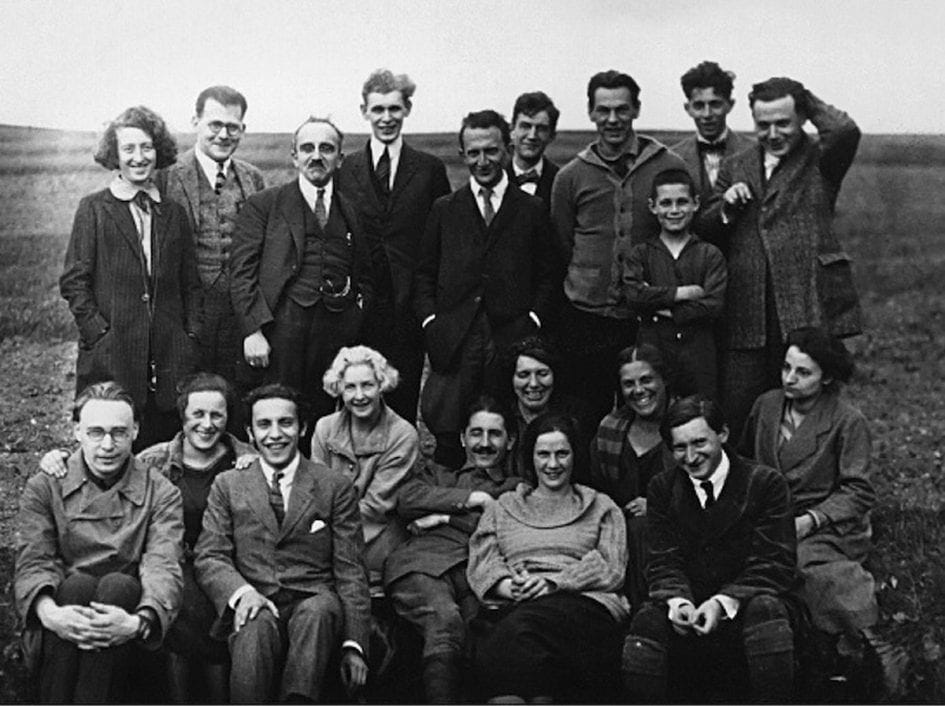
You might argue their intentions were understandable: they were reacting to the horrors of WWI, WWII, and Nazism, and sought to create a new framework to perceive and interpret reality (including how we read books), to prevent future atrocities.
Despite their good intentions, their solutions were disastrous.
They insisted that truth, good, and evil do not exist — only power does. Thus, they claimed all narratives, including great books, are not sources of wisdom but tools of oppression. They concluded that all the great books must be deconstructed to expose their oppressive nature.
Enter critical theory…
Deconstructing Literature
When reading through critical theory, you no longer ask, What is this book teaching me?
Instead, you ask, How is this book being used to oppress human beings?
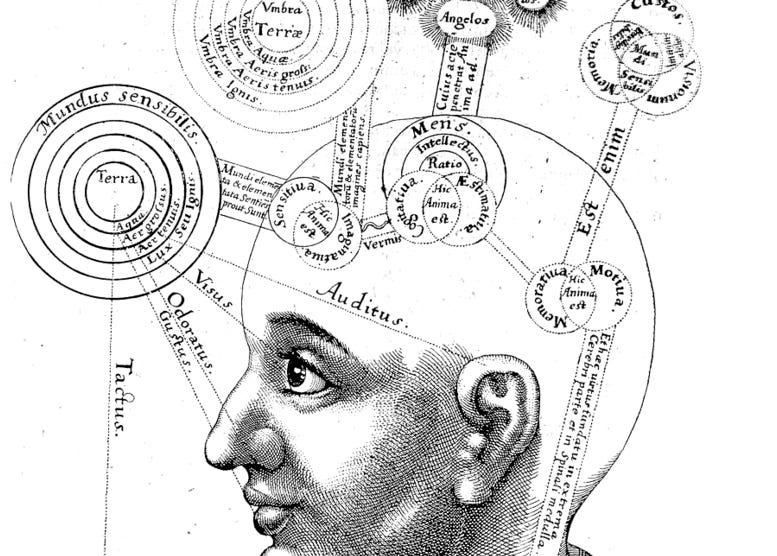
Othello is no longer a warning against envy and human frailty, rather it becomes evidence of Shakespeare’s supposed racism.
The Great Gatsby stops being a study of American decadence. Instead, it becomes reduced to a critique of gender hierarchy.
Moby Dick ceases to be a universally allegorical tale of unmoored ambition, temptation and human evil. Instead, it’s a Freudian tale of repressed homoeroticism due to outdated and oppressive sexual norms.
The point is that critical theory doesn’t teach love of books, rather suspicion. You assume that literature solely exists to manipulate and harm others. It trains students to approach books with an agenda: dismantle and discredit them. Any thinker who fails to fit modern sensibilities is dismissed as a villain.
Of course, none of this is to deny that oppression exists in the world. Indeed, a true and honest look at history shows a bloody, fallen world filled with suffering… but to only view the world through the lens of power is to become a blind ideologue, forever divorced from the wisdom of the past, and the best that humanity has to offer you to live a good life.
Carrying the Torch
To love the great books in 2025 is to become a cultural dissident.
If you’re reading this, the chances are you’re disillusioned by the state of literacy today, and perhaps angered that you were denied the classical education you deserved growing up.

Even if you read the great books, it’s doubtful this was done within a curriculum that taught you the Great Conversation, or how to live in a never-ending pursuit of the True, Good, and Beautiful.
While I’ve written before about how to develop your own great books curriculum, today’s task is simpler:
How can you fall in love with reading the Great Books?
How do you fall in love with the process of reading great but difficult literature?
I’ve found that one question alone can change your entire reading experience. Seriously, one question is all it can take.
Anytime you’re reading a great book, and struggling with a passage/chapter/theme etc, ask yourself this question:
“What is [author] trying to teach me?”
I beg you, don’t scroll past this section. This one question alone changed my entire reading experience with the classics, and taught me how to fall in love with reading.
When I first began reading classical literature, I struggled immensely, but things changed when I began to ask myself:
“What is Homer trying to teach me?”
“What is Dante trying to teach me?”
“What is Shakespeare trying to teach me?”
When you ask this question, the book in front of you becomes alive, because this question induces wonder.
Suddenly, you become an active and curious reader.
Suddenly, the book starts opening up to you (or your mind starts opening up to the book).
Suddenly you start engaging in a conversation with the text.
Suddenly, it’s as if you are speaking directly with Dante Alighieri.
Suddenly, you’re critically thinking, and beginning to wrestle with Truth.
This process — which is birthed by this simple question — is how you learn, and engage in, the Great Conversation. This is how you don’t just fall in love with books, but learn the wisdom that transforms your soul.
Soon enough, you learn to love all the great books, and all the great thinkers, because you’re all united in a love of the True, Good, and Beautiful… and it’s this very love that does more than revive literacy, but brings to life anew the great conversation that built civilization.
Conclusion
It’s not an exaggeration to say that society lives and dies by its readers.
But it’s not enough just to read books. You need to read good books, and you need to love good books for their capacity to teach you truth.
The very fact that you desire to learn the great books to appreciate the beauty of antiquity shows you’re already closer than most people — even the most educated of elites — for any true love of the great conversation begins with humility and a desire to learn. Without that humility, all knowledge is vanity, but with it, you have no idea how far you can transform your life.
Truly, the greatest act of rebellion is the heart that loves virtue, and pursues it at all costs. Such souls are those that become heroes and guardians of civilization. Such souls are those who carry the torch, and pass it on to the future generations.
And such souls are those who restore beauty and order and goodness to civilization.
Reminder:
Don’t miss this opportunity to participate in a live discussion on Dec 10 about reclaiming the education modernity abandoned. Seats are limited — claim your spot here:
I'm in İzmir, Turkey, teaching The Odyssey (grade 9), the Iliad (grade 11) and having just taken my grade 12s to a Greek theater as a reward for completing Antigone-- in English Language and Literature classes. We're out here, loving teaching, and connecting a new generation with great works!
I agree man. Kids nowadays are doomed. And books are so important and many of them don’t want to read. I hate that as an author. Hopefully we can all do our parts to change this!