

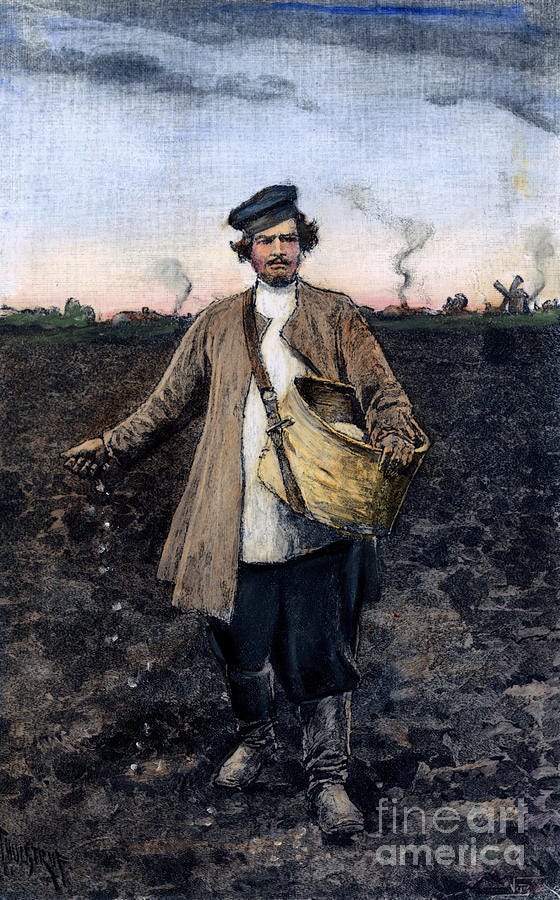
Tolstoy is a master at exposing the ways we mistake material prosperity for human flourishing
Nowhere is this better demonstrated than his masterful short story How Much Land Does a Man Need?
This work can be read in twenty minutes, but can follow you for a lifetime if you give it due consideration. It follows a peasant farmer in 19th century Russia who boasts that if he were a mere landowner, not even the devil himself could bring him to ruin.
Little did our protagonist know, however, that the devil was within earshot of this very boast. What follows was an unfortunate story and moral lesson on the nature of pride, greed, and how even noble pursuits of wealth can lead a man to ruin.
I am 100% reader-supported. This newsletter is free, but if you’re able to support, please consider a paid membership — it helps my mission of sharing Truth, Beauty and Goodness with maximal reach
As a paid member, you’ll get:
Two full essays a week
Access to all recordings (past & future) of my Great Books lectures on this publication
Eternal gratitude from me
A Devilish Boast
Our story follows protagonist Pahom, who is a peasant farmer who overhears his wife arguing with a friend about the merits of city life versus country life. Pahom agrees with his wife that it’s far superior to live in the country — it’s a simpler existence without the vice, rush or temptations of giant metropolitans.
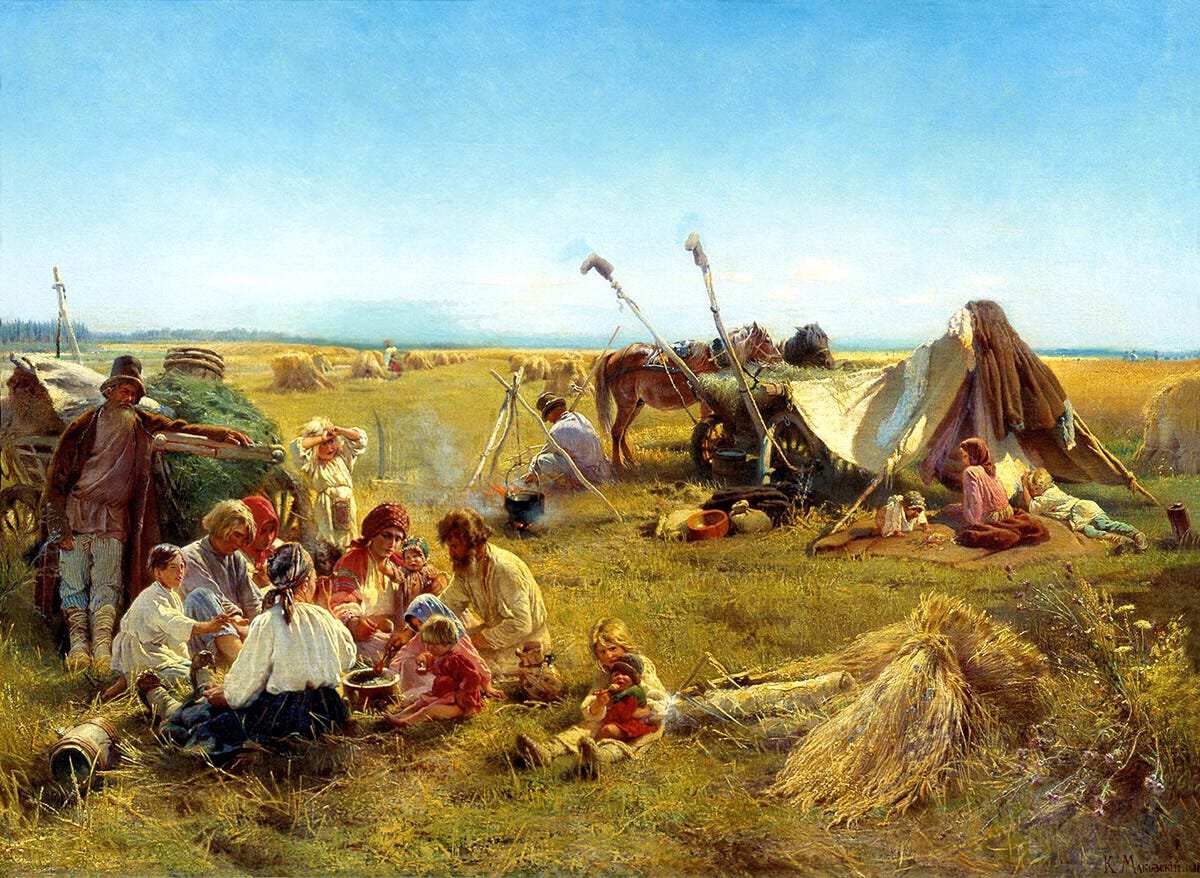
Indeed Pahom appears wise here. He recognizes correctly that man is happiest by denying the extremes of life, for even too much of a good thing like money or pleasure can become a vice.
However, he lets off an ill-fated boast about how little he’d need for true happiness:
“Our only trouble is that we haven’t land enough. If I had plenty of land, I shouldn’t fear the Devil himself!”
While this sounds like an innocuous boast, Tolstoy writes that the Devil was in ear shot, and happy to take up Pahom on his boast:
“I’ll give you land enough: and by means of that land I will get you into my power.”
And thus, the devil promises that the very “good,” that Pahom most desires will be his own undoing…
A Homeless Landowner
Soon after this promise, it’s revealed that Pahom’s landlady plans to sell off the farmland she owns.
Pahom and his neighbors decided to pool their money together to buy it — each will put forth what he can afford, and be given his respective due.
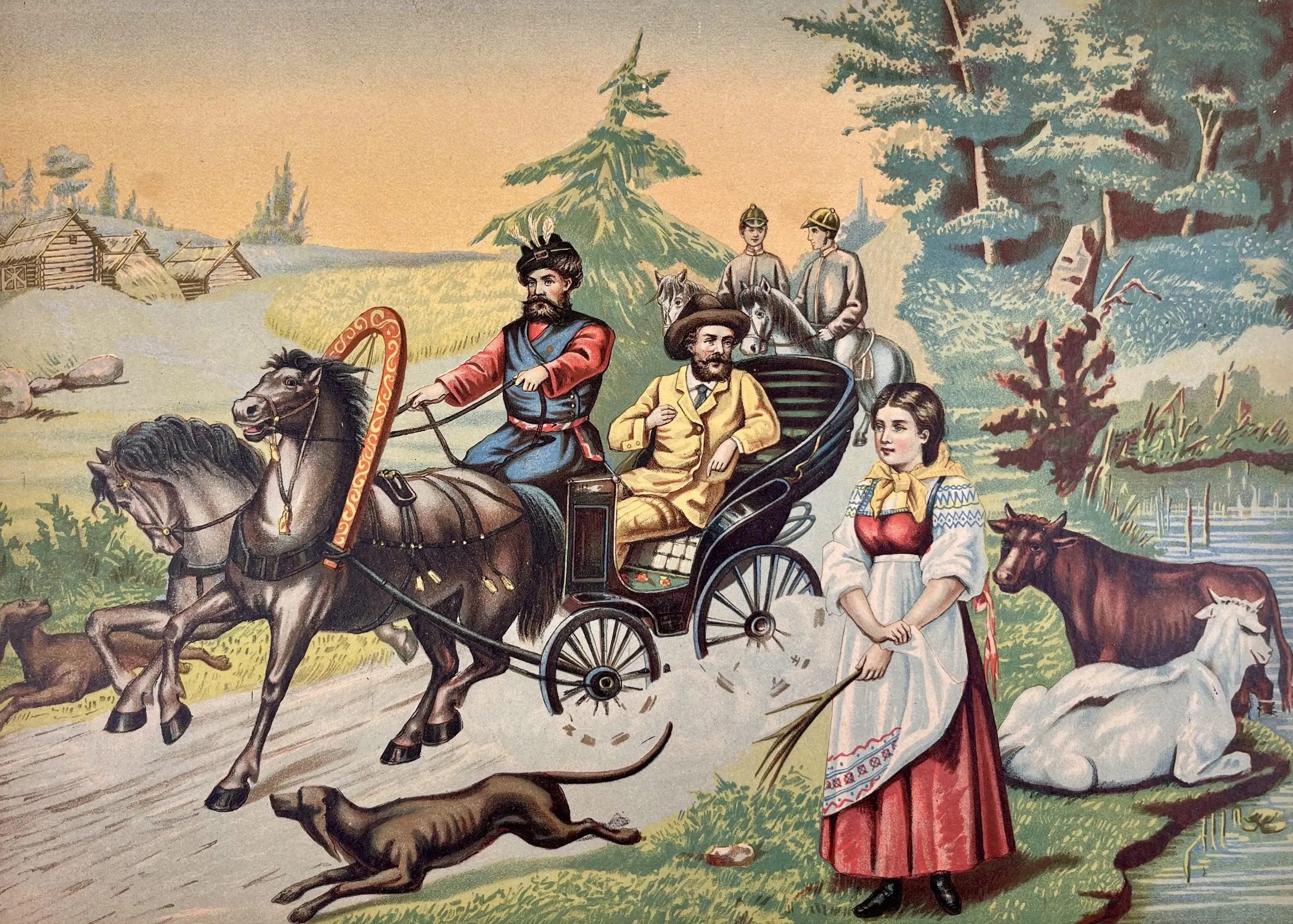
Pahom is eager for land, but distraught by his meager finances. He and his wife decide to go into debt to buy more land. This excites Pahom, who reasons that he’s buying his freedom, and yet he’s made himself indebted with interest. Of course, there are plenty of warnings about taking on unsound financial debt — but there’s a greater danger for Pahom than financial ruin.
He feels pressure to produce, and possessive over his land. As such, he grows territorial any time a neighbor trespasses or accidentally plots on his land. Soon enough, he takes his neighbors to court, loses his cases, and cusses out the judges. This goes on for so long until the peasants consider burning down his house.
In other words, the unsound pursuit of land/wealth has not just made Pahom indebted and greedy, but sown discord with him and his community. He quickly finds himself a friendless outcast, an exile in his own land.
It’s a strange paradox that the landowner becomes homeless in his hometown.
He believed owning land would make him free, but instead he was made increasingly dependent upon the very thing he owns. He must defend, monitor, expand and protect his land from his neighbors. Hence the irony is the “freedom,” his land promised ended up demanding his constant attention, crushing his friendships, and isolating him from his community.
And yet, this is just the beginning. Tolstoy’s masterstroke of greed’s self-destructive nature comes in the closing chapters.
Some Land To Die For
Eventually Pahom perseveres and sees some financial success — at the continued alienation of his neighbors.
Soon, he hears about a deal of a lifetime. An associate tips him off about the land of the Bashkirs — where a man can reportedly buy any parcel of land for a flat rate of 1,000 roubles. Pahom is skeptical, but travels to the Bashkirs nonetheless.
Upon arriving, he’s greeted by a fair and simple people with an abundance of land for sale. Pahom exchanges gifts and is warmly accepted by the Bashkirs. To his surprise, the deal he heard of is true — he can have any amount of land for 1,000 roubles. But there’s a catch.
He can mark out as much land as he wants with a shovel, but he must return to where he started before sundown, or else he loses the land and his money is forfeit.
Pahom is ecstatic, as he can earn far more ground than 1,000 roubles goes for.
The next morning he takes off at dawn, marking his turf with a shovel. He figures he can cover 35 miles in a day, and aims to push this to his very limits. Predictably, however, he takes this logic too far and overestimates his ability.
As the sun begins to set, he realizes he’s far too far away to make it back in time. Fear overwhelms him as he begins sprinting back.
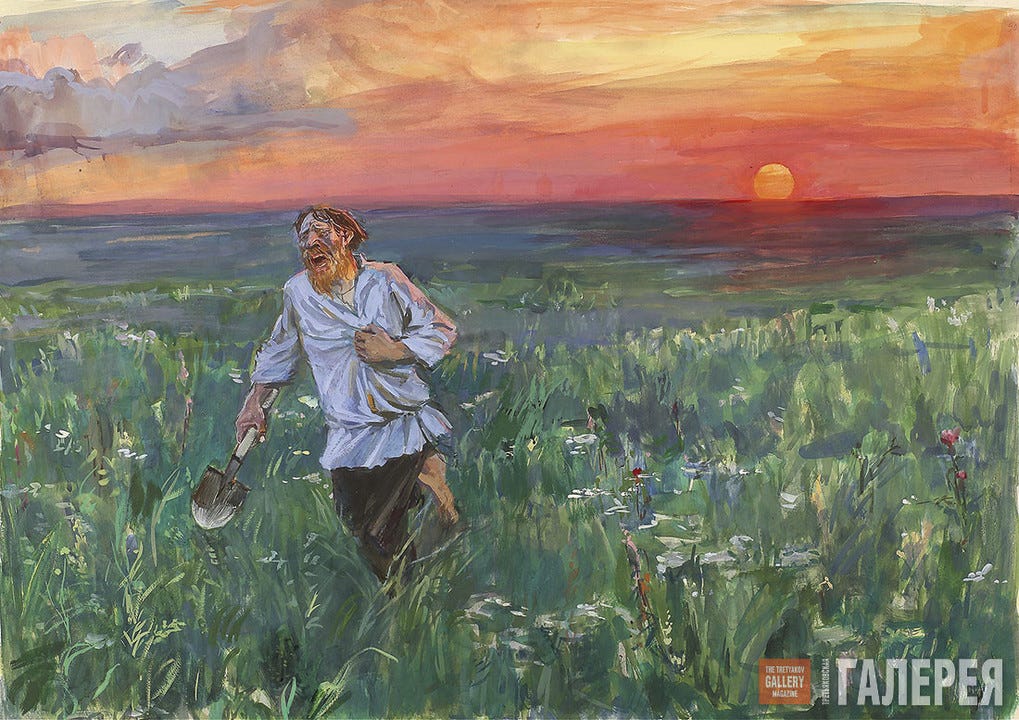
Tolstoy writes:
“This fear made him still more breathless. Pahom went on running, his soaking shirt and trousers stuck to him and his mouth was parched. His breast was working like a blacksmith’s bellows, his heart was beating like a hammer, and his legs were giving way as if they did not belong to him. Pahom was seized with terror lest he should die of the strain.
‘There is plenty of land,’ thought he, ‘but will God let me live on it? I have lost my life, I have lost my life! I shall never reach that spot!’”
Notice he says he lost his life because he won’t make it back in time. This may sound strange, as he’s merely out 1,000 roubles, but this shows how far gone Pahom’s spirit has been corrupted. For him, a profit/loss statement has now become a matter of life and death. He’s so attached to his land, wealth, and independence that he may as well die if he’s to be parted from it.
And ironically, this is precisely what happens.
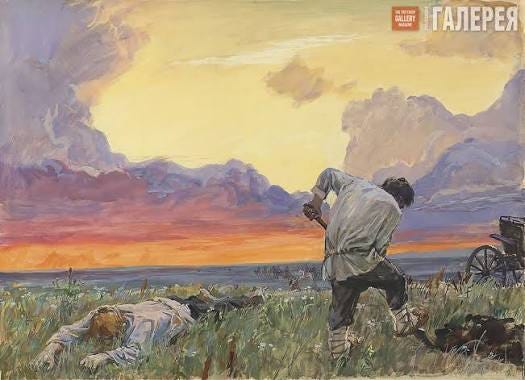
Pahom exerts himself with inhuman efforts, and returns to the Bashkirs with moments before sundown. His triumph is short lived, however, as he passes out from exhaustion, and dies.
Tolstoy closes with these haunting words:
“His servant picked up the spade and dug a grave long enough for Pahom to lie in, and buried him in it. Six feet from his head to his heels was all he needed.”
This final line answers the story’s question with bleak humor. It turns out, man needs no more land than six feet to be buried.
This is not to give a total renunciation of all worldly endeavors and finances (although Tolstoy’s radical spirituality may have exhorted that) rather it’s to emphasize that if man is at nature an ensouled being, than his ultimate needs are not satiated by Earth, rather the spiritual.
The tale is not so much a criticism of Pahom — who’s essentially a man of the times — but rather an indictment on the generation of 19th century Russia as such. The fact that Pahom is all too human, and relatable, goes to show the state of 19th century Russia, and perhaps 21st century Western Civilization too (given Pahom’s story still resonates with audiences today).
Indeed, an excessive love of the Earth risks making man impoverished in the spiritual. To make wealth one’s summum bonum is to be an exile in one’s own land, a foreigner to one’s neighbors, and a man who lives and dies by the land. Perhaps Tolstoy is correct, man need no more land than that which can house him — in this life, and the next.
I am 100% reader-supported. This newsletter is free, but if you’re able to support, please consider a paid membership — it helps my mission of sharing Truth, Beauty and Goodness with maximal reach
As a paid member, you’ll get:
Two full essays a week
Access to all recordings (past & future) of my Great Books lectures on this publication
Eternal gratitude from me
All I can get :)
I was exposed to this story a few years back, in the form of a Little Black Penguin Classic. It struck me then that it's a story that seems older than its years, and when I return to it I still find myself thinking the same thing. A 'modern' parable it may be, but its wisdom rings true across time.