

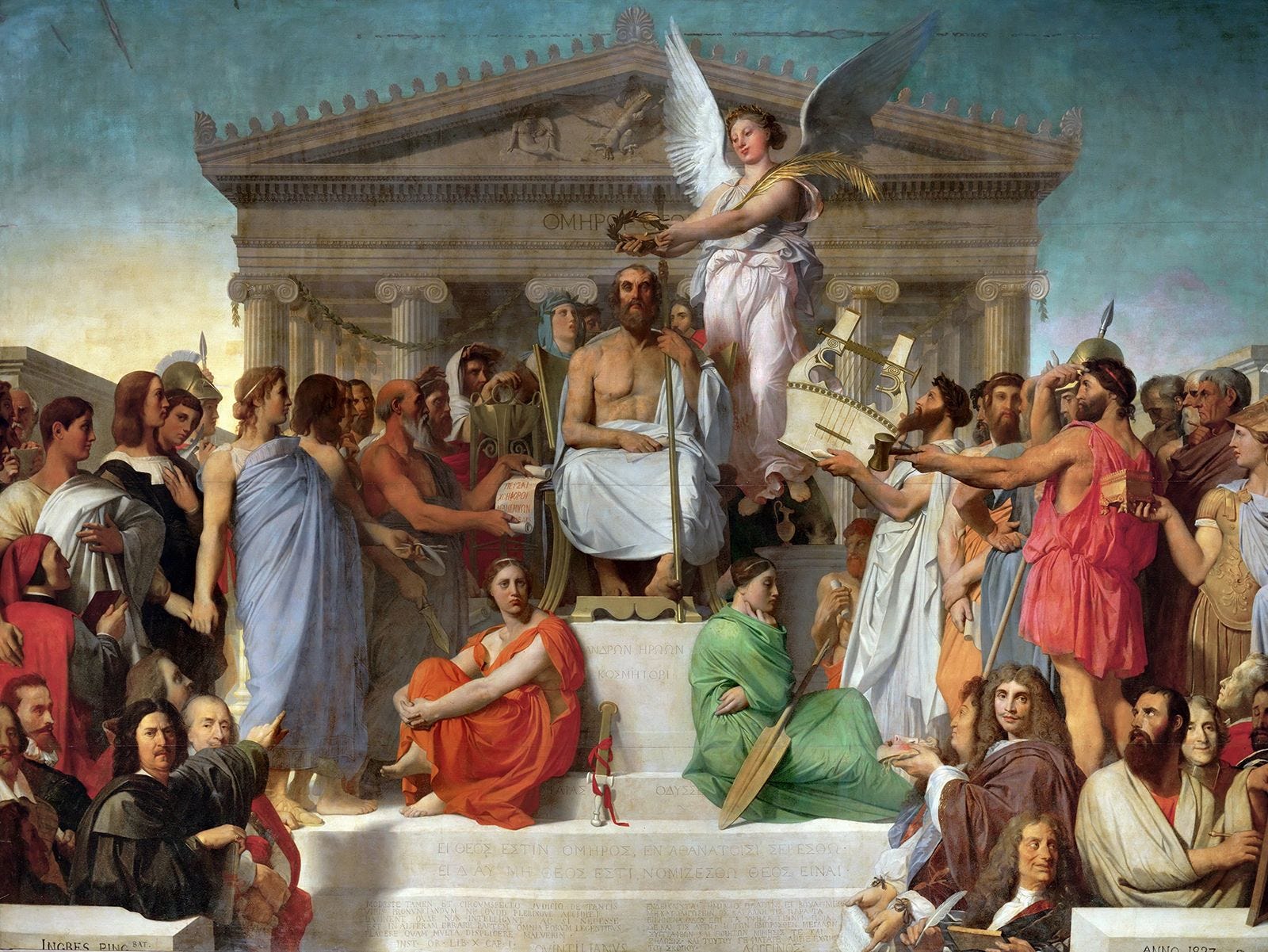
Longtime readers know that I lament the fallen state of modern Western education.
It’s normatively accepted today that school is built upon utilitarian grounds of molding young souls into “productive,” workers who can graduate with a stable job, make a living, and contribute to our glorious GDP.
And yet, and serious scholar from the pre-industrial era would be horrified at such a philosophy. A true education has very little concern for practicalities regarding joining the workforce.
Indeed, any serious scholar formed in the classical tradition would be horrified at such a philosophy. A true education has very little concern for practicalities regarding joining the workforce. Your studies were not meant to simply make you an “engineer,” a “doctor,” or a “teacher,” rather its aim was to make you a virtuous human being.
But how exactly was this done?
Today, we’ll go back to Plato — the philosophic roots of our 2,500 year old educational beliefs — and see what wisdom he shares on giving your soul a true education in accordance with virtue.
I am 100% reader-supported. This newsletter is free, but if you’re able to support, please consider a paid membership — it helps my mission of sharing Truth, Beauty and Goodness with maximal reach
As a paid member, you’ll get:
Two full essays a week
Access to all recordings (past & future) of my Great Books lectures on this publication
Eternal gratitude from me
Concerning the Republic
The Republic is Plato’s magnum opus, where his most famous remarks on education are made.
While this book’s fundamental concern is the nature of justice — and how to build a just civilization — Plato considers education paramount to answering this question. In fact, he goes so far as to argue civilization itself lives or dies by its ability to educate the souls of its populace to love virtue!
How is this education done?
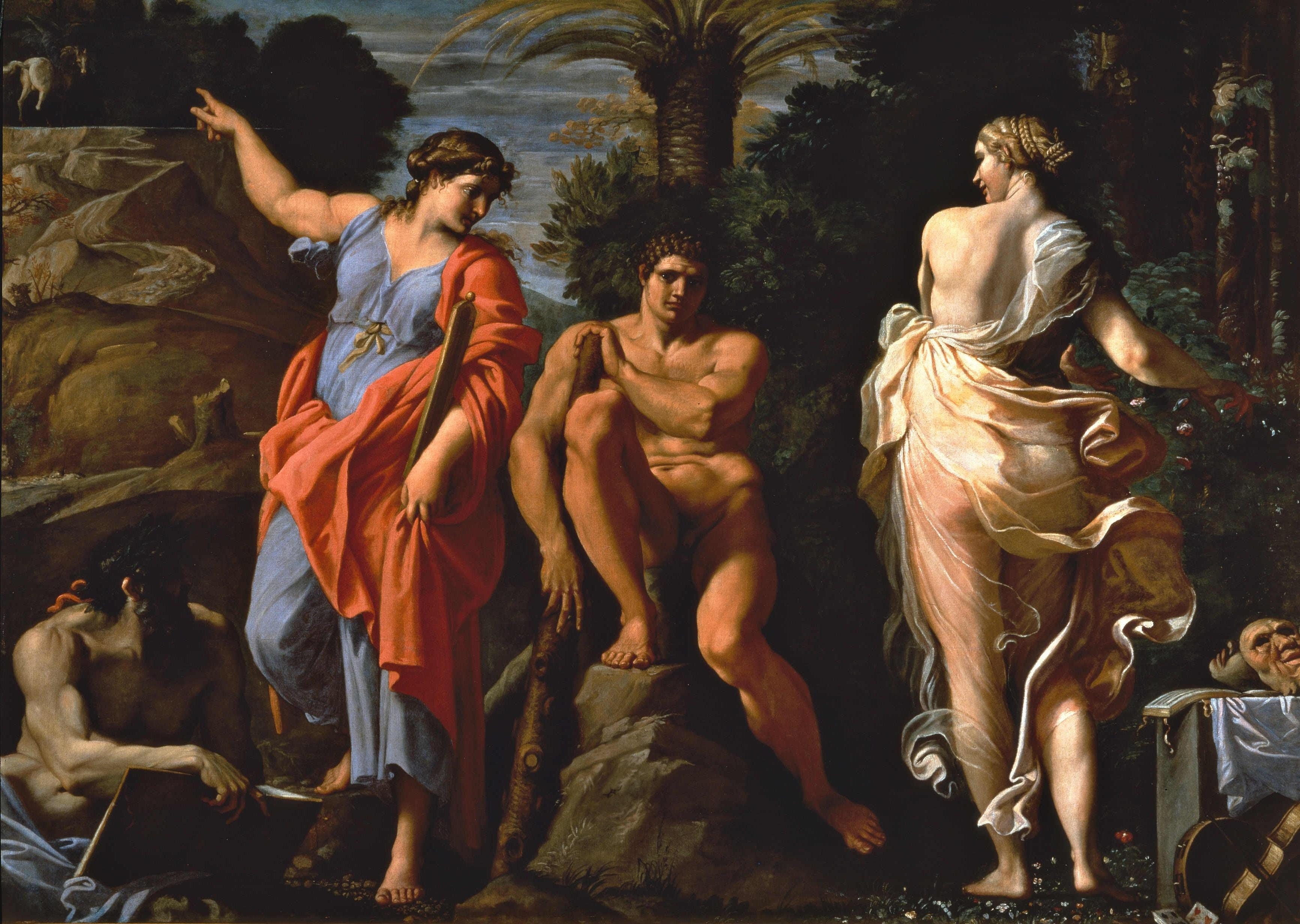
By two means — gymnastics and music (which encompasses poetry, storytelling, myth, and song).
The former cultivates the body and contributes to fortitude, the latter uses its powers to mold man’s soul. Hence, sing beautiful songs and tell beautiful myths about virtuous heroes, and men will learn to love these virtues and wish to embody them.
Thus, it comes as a shock to modern readers that a classical education is largely a matter of eroticism — of training one’s soul to love virtue and hate vice. In Augustinian terms, you become what you love, and your love leads to your destiny.
This begs the next question, however:
What exactly is the human soul?
Plato’s most famous answer is that it is a tripartite soul.
What is the tripartite soul?
Plato’s discussion of the tripartite soul appears in Book 4 of the Republic.
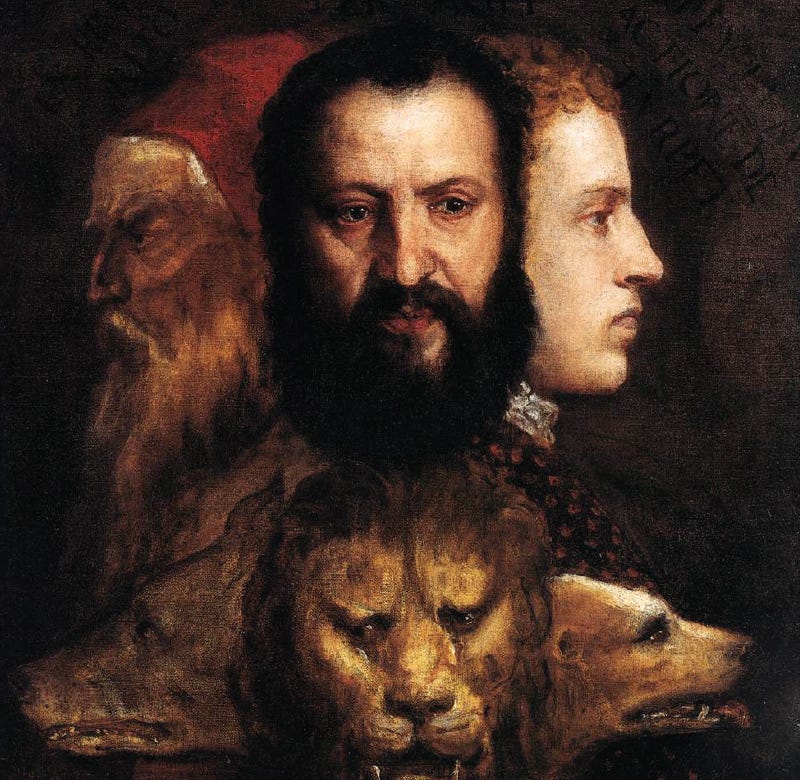
Through Socrates, he explains that the human soul consists of three principal parts:
Reason — the thinking part of the soul that loves truth and virtue, and desires to seek them.
Spirit — the spirited part that can whirl you into rage, but also fuel ambition, courage, and indignation in the face of injustice.
Appetite — the instinctive part that desires food, pleasure, sex, and more.
This framework shows that human beings are a mixture of will and rationality, comprised of competing desires.
For example, if you want to get on a diet, your head may tell you to go to the gym, while your appetite urges you to rest and eat cake. Or perhaps you know that you ought to forgive someone, but your spirit remains consumed by anger. The chief concern of becoming a virtuous soul, then, is learning how to integrate these competing desires.
Plato’s solution to this is a brilliant one — the charioteer analogy.
This analogy appears in a different work, the Phaedrus, but it explains how the tripartite soul can be disordered, and what it takes to bring harmony to one’s spirit:
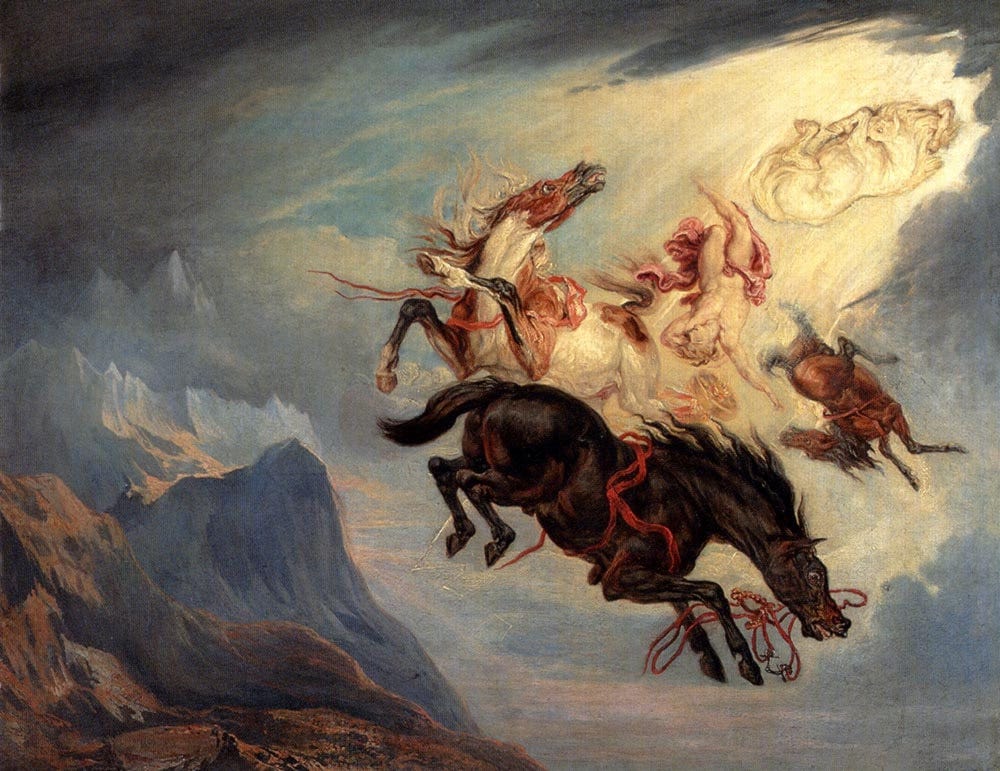
Imagine a chariot led by two horses, driven by a charioteer. The charioteer represents reason, while the horses represent your spirit and appetite respectively.
If the horses overpower the charioteer, the chariot falls out of control, placing one in grave peril and likely to crash. In other words, if our passions and appetites dominate reason, we risk living a life of vice, suffering, and unfulfilled potential.
Of course, to be ruled by reason is easier said than done. As in our fitness example: everyone knows how to get fit, yet many struggle to follow through. In many ways, modern consumer culture is practically designed to make our appetites stronger than our reason.
So what then is the key to actually ordering the human soul?
The answer, surprisingly, comes down to the spirit.
Spirited to Truth
The spirit, or thumos, channels one’s passions, anger, and strong emotions.
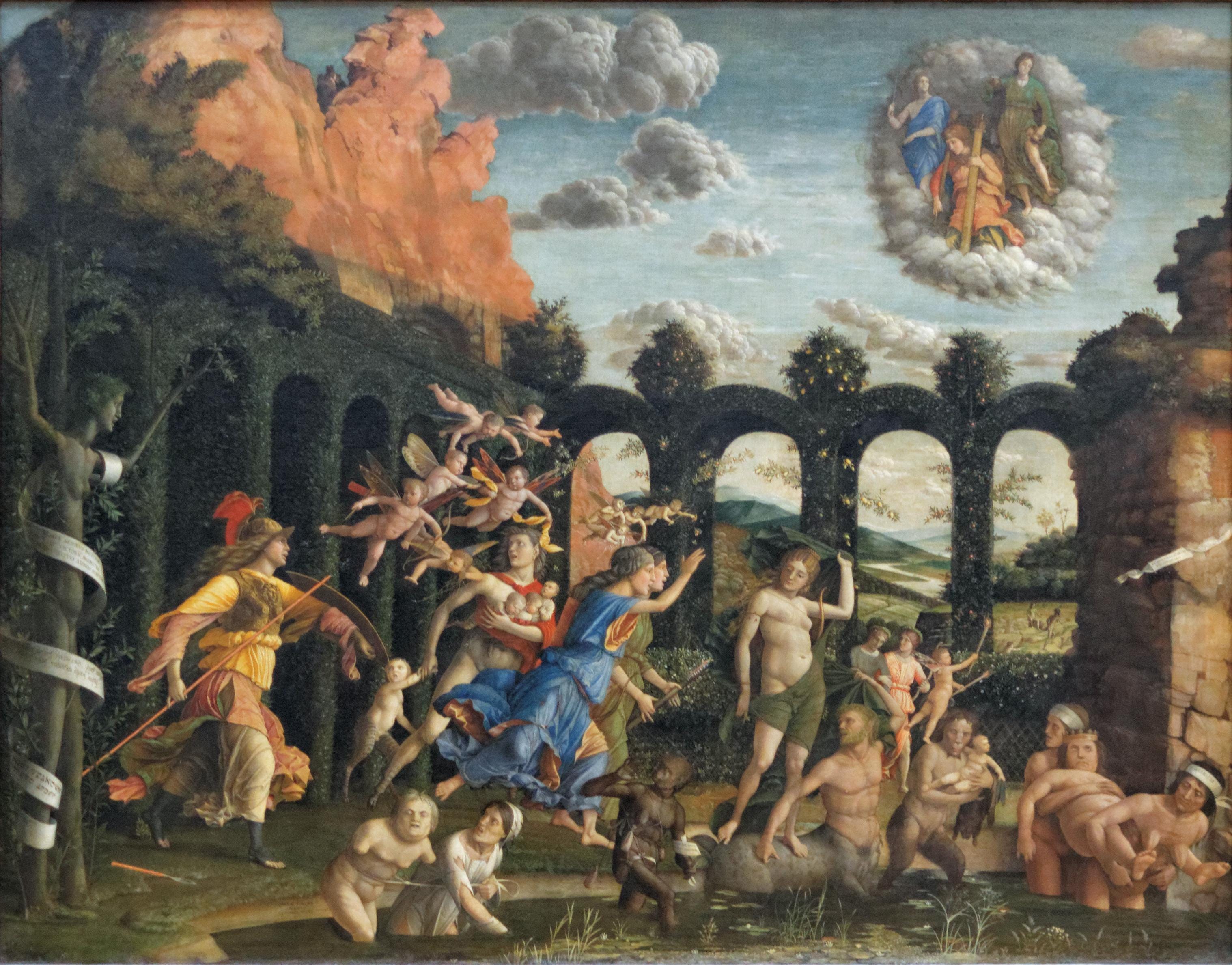
Plato asserts that man’s soul should never be dominated by wrath such that his rationality is diminished — but without a formidable spirit, man’s knowledge of virtue remains sterile and effeminate.
Remember, the key to virtue is not just knowing it rationally, but loving it, and this is where one’s spirit comes in.
Take for example, Greek Hero Themistocles. While many young men in his day said, “I want glory!” the historian Plutarch notes that Themistocles had an almost maddening obsession with becoming a war hero. He had a reported habit of pacing the Athenian streets alone at night muttering, “The trophy of Miltiades [a war hero] will not let me sleep”
Plato wishes this type of obsession be evoked by the human soul — but oriented toward not just glory, but moral excellence and a love of virtue (which encompasses glory, but doesn’t worship it as it’s final object).
Thus it bears repeating: a truly integrated soul doesn’t just know virtue, but yearns for it, obsesses over it, and loves it so much it would die for it as Socrates did.
This brings us then, to perhaps our most important question — how does your soul learn to love virtue like a Platonic philosopher? How can we yearn for the good so much that our soul fundamentally transforms in accordance with virtue?
Well thankfully, Plato has an answer for you.
His solution is simple in concept, but has sadly been forgotten in history. In fact, Plato wrote entire dialogues explaining how to educate the soul to love truth, beauty, and goodness.
Those who learn this do not just live virtuously, rather they move closer to the highest form of the Good and the fullest potential of the human soul…
