

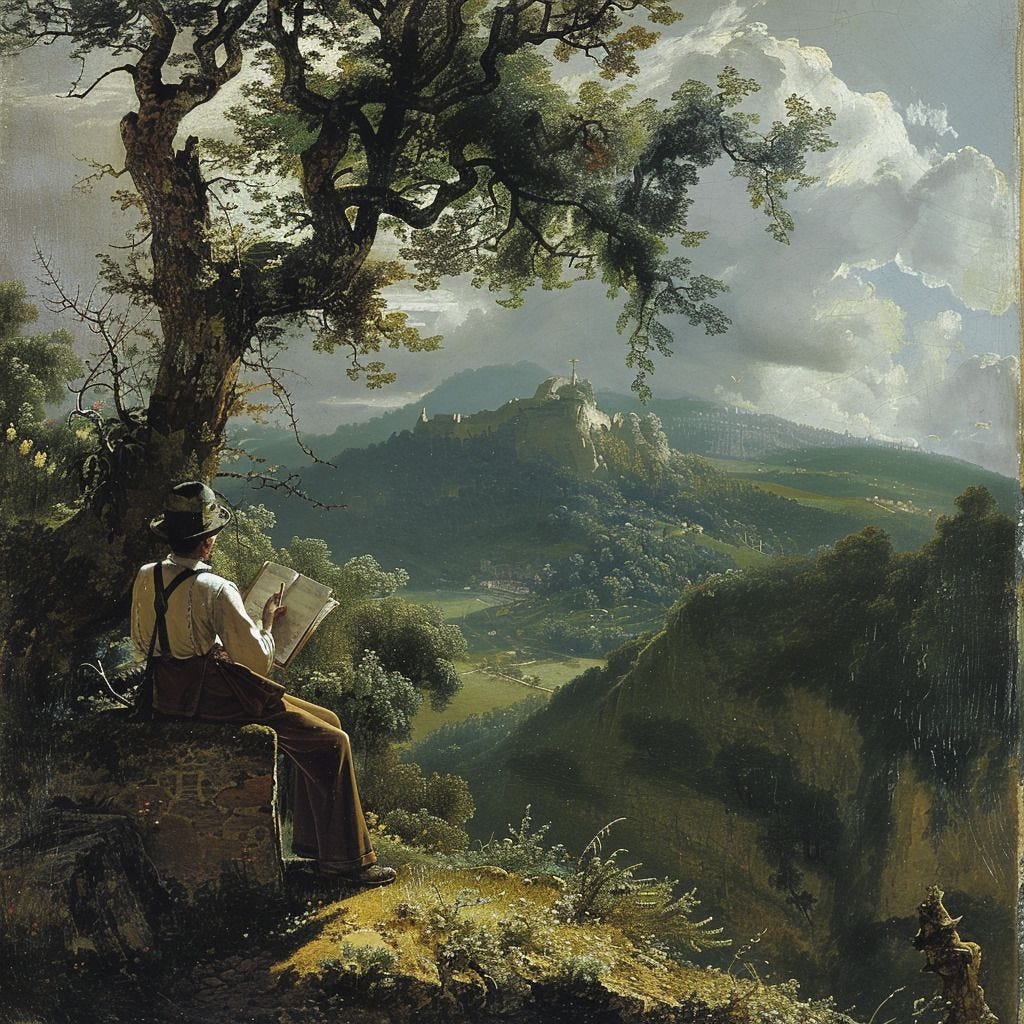
Modern man has lost himself in the world of total work.
His modern spiritual malaise is due to acedia — a refusal to accept one’s nature. This has been espoused through a modern culture that celebrates the extremes, whether it’s a “self-help,” culture that affirms laziness is an acceptable way of being, or worships “work as a way of life,” where happiness is found by getting ahead by any means.
Pieper’s Leisure: The Basis of Culture, is the famous 20th century essay that diagnoses and attempts to solve this problem. Modern man has worshipped the culture of work and productivity to such an extreme that he has forgotten his own fundamental nature. As such, we find ourselves living in a technologically prosperous society of spiritually impoverished, miserable, individuals.
This week, we continue our journey through Pieper’s essay, to further understand our culture’s unhealthy obsession with work, why leisure is the true solution, and how we can begin to reimplement it into society at large…
I am 100% reader-supported. This newsletter is free, but if you’re able to support, please consider a paid membership — it helps my mission of sharing Truth, Beauty and Goodness with maximal reach
As a paid member, you’ll get:
Two full essays a week
Access to all recordings (past & future) of my Great Books lectures on this publication
Eternal gratitude from me
(this is part 3 of a 4-part series on Human Leisure. You can find part 1 here, and part 2 here).
Dehumanizing Labor
Pieper does not mince words about the disastrous state of affairs modern man’s spiritual life is in under the “world of total work.”
In his own words:
“The world of the ‘worker,’ is taking shape with dynamic force—with such a velocity that, rightly or wrongly, one is tempted to speak of demonic force in history.”
Recall that he blames the disastrous rise of the world of total work with a failure in education. Traditionally, schools taught the liberal arts, whose goals were to make humans virtuous and “liberate them.” Now, however, modern education has been overrun with a celebration of functionality and productivity.
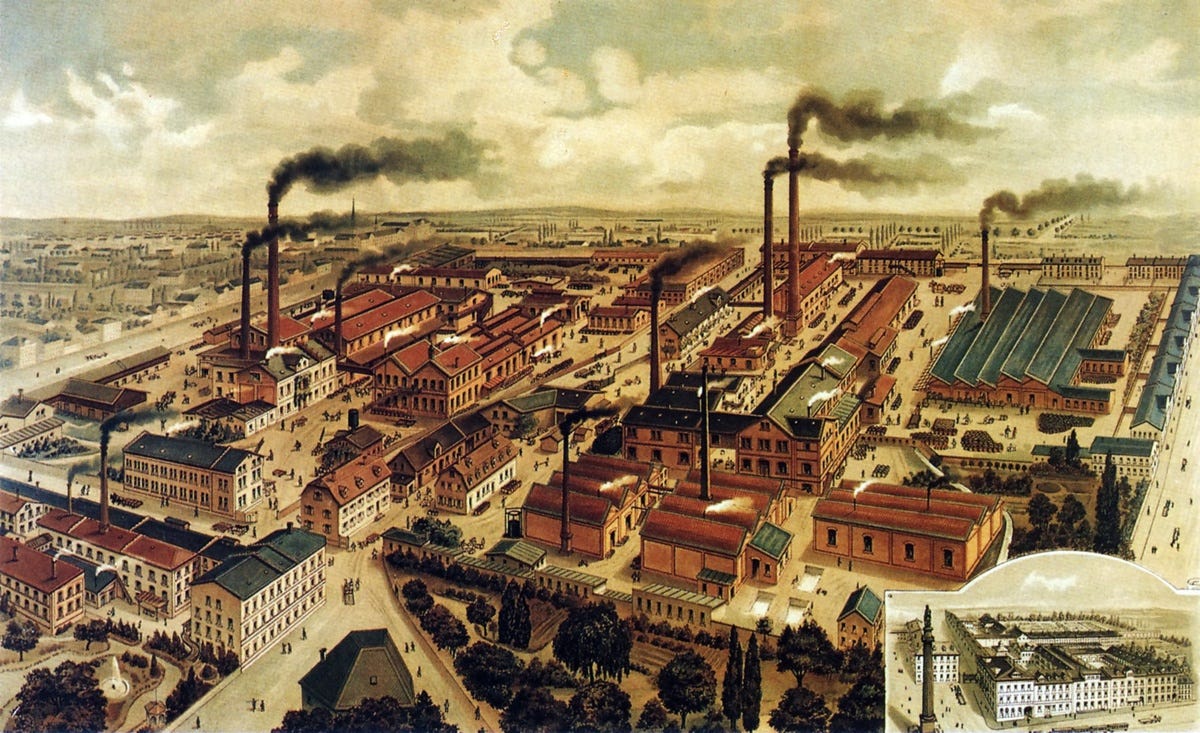
The purpose of school is not to be virtuous, but to get a job.
Now, the problem may be education, but the solution goes beyond education. Pieper rejects secular humanism — the attempt to rediscover the great books and tradition — as a solution. Even the great books are no help without a guiding philosophy. Their thinkers disagree with each other, and only encourage nihilism in students not properly trained.
Pieper says instead, the main problem to be solved is the problem of “mass proletarianization.”
The Problem of the Proletariat
In the world of total work, Pieper defines a proletarian as:
“The man who is fettered to the ‘process of work,’… the all embracing process in which things are used for the sake of the public need.”
Remember, Pieper says proletarians are not just confined to blue collar labor, but even scholars and professors. A scholar who only studies literature as a trade to pay bills, or for status, or professional opportunities — basically any labor as means to an end — is a proletarian.
Society is amassed with proletarians then, for we’ve lost the art of leisure, or enjoying virtuous activities as ends in themselves.
This might sound like a “high-brow,” critique against common enjoyments, but Pieper warns there’s serious political risks if we don’t rediscover the art of leisure. Namely, an embracement of proletarianism is what fuels tyranny and civilizational downfall:
“[in the totalitarian state], everyone is a proletarian because he is bound by the orders of others, ‘to the necessities of an absolute economic process of production,’ by outside forces, which means that he is entirely subject to economic forces, entirely proletarian…
The ‘total work,’ State needs the spiritually impoverished, one-track mind of the functionary… In that case, spiritual immunization against the seductive appeal and the power of totalitarian forms must be sought for at a much deeper level of thought than on the level of purely political considerations”
This spiritual impoverishment is made clear in the great books of dystopian literature, like the “proles,” of 1984, or the mindless, hedonistic masses of Brave New World.
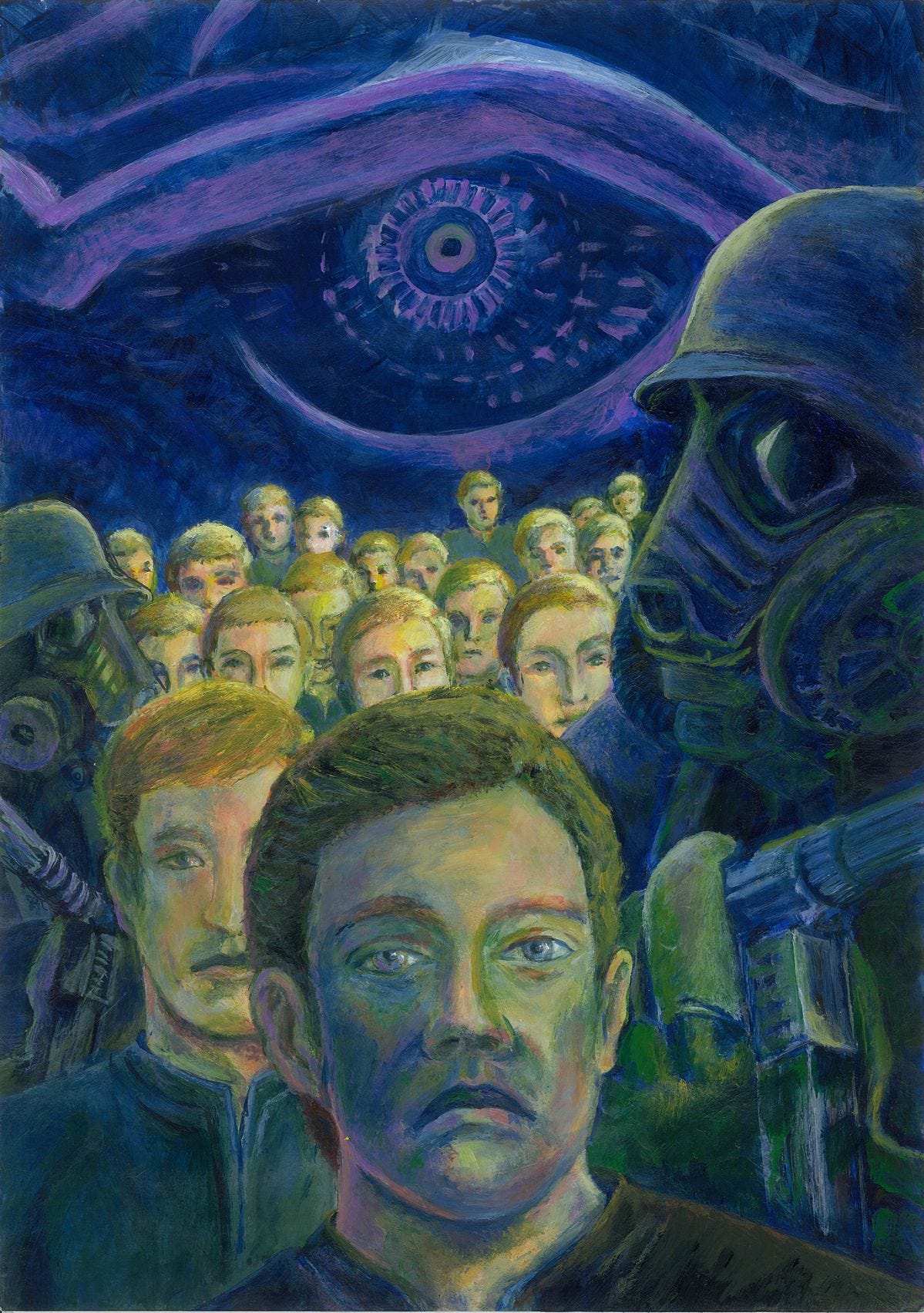
So civilizational collapse, and the rise of modern totalitarian states, is a byproduct of ensuring the soul of a nation becomes spiritually malnourished and empty. If the tyrant reduces mankind to cogs, mechanisms, and springs, then he’s constructed a self-serving machine of dehumanized labor.
For Pieper, society lives or dies in accordance with our ability to rediscover true leisure and contemplation.
The End of Proletarianization
Pieper’s solution calls for a general “deproletarianization,” of human society. But what does that look like?
In politics, the common solutions tend to be economically related:
Higher wages
Cheaper houses
Affordable social programs
This solution presupposes that poverty has made man spiritually impoverished, and that with enough wealth for all, our problems would be solved.
Pieper, however, rejects this view. Yes, poverty ought to be absolved, but it’s not a solution to the spiritual crisis:
“Genuine deproletarianization, which must not be confounded with the struggle against poverty, assumes that the distinction between the artes liberales and the artes serviles is a meaningful one…
The liberal arts which cannot be put at the disposal of useful ends”
We need a return to a “useless,” education. A true liberal arts education where knowledge is an end in itself, because it teaches mankind the fullness of his nature, and how to flourish. Indeed, as Aristotle asserts, the end of all human activity is happiness, but such a project is impossible if man does not know who he is.
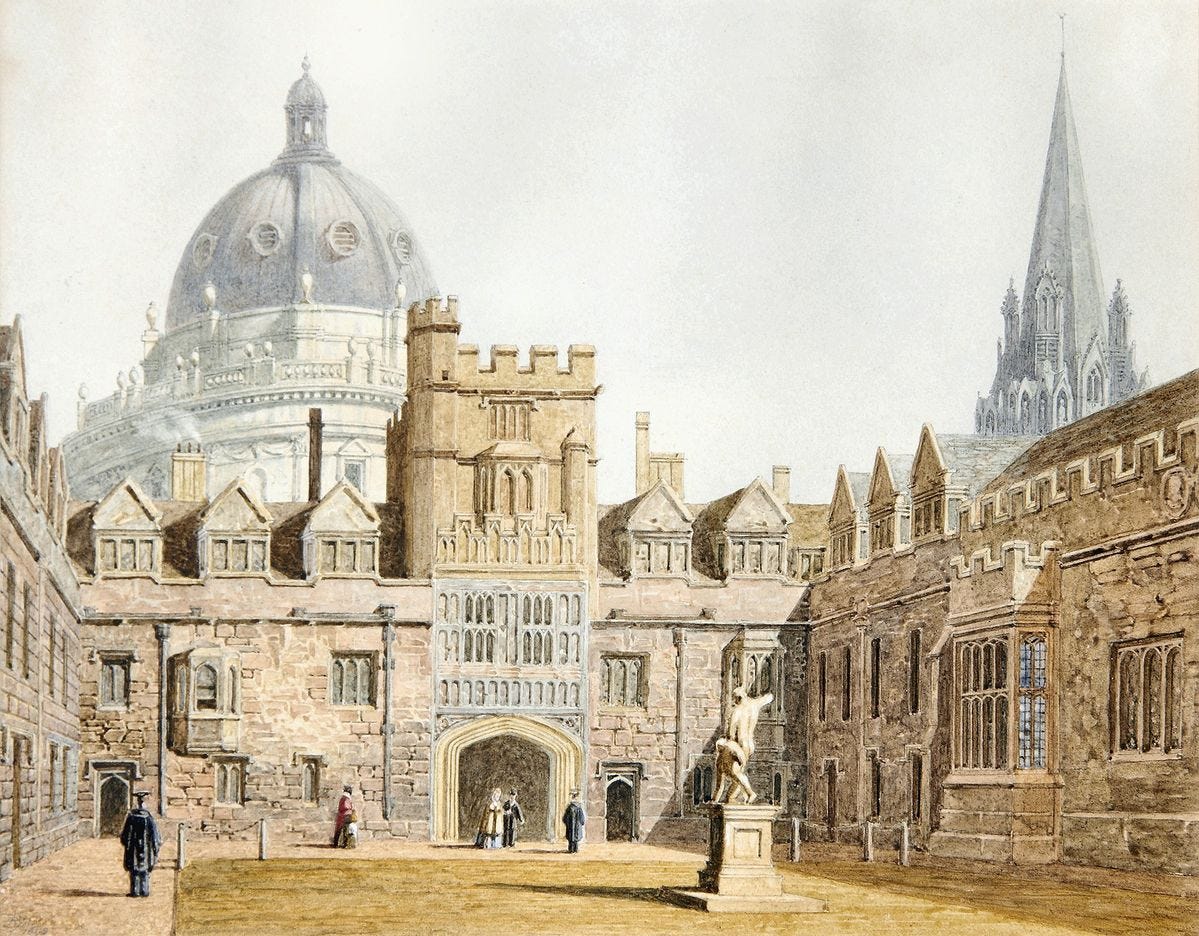
But if leisure is the solution to proletarianization, then a proper saving of civilization goes beyond mere individual contemplation. Society itself must make room for an entire field of contemplation, that currently does not exist:
“If the essence of ‘proletarian,’ is the fact of being fettered to the process of work, then the central problem of liberating men from this condition lies in making a whole field of significant activity available and open to the working man—of activity which is not ‘work’; in other words: in making the sphere of real leisure available to him”
Now this is far easier said than done. Surely, dear reader, you and I can take Pieper’s advice seriously, and learn a proper rediscovery of contemplation, philosophy, and liberal arts education — of loving truth, beauty, and goodness for its own sake — but how can we hope to effect change at scale?
This question is now approaching Pieper’s final arc of his full argument.
Institutional Leisure
Pieper himself is cautious to offer a concrete solution to the problem of proletarianization, but he does gesture at one.
He points out that philosophy is good in itself for the individual, but you cannot hope to reasonably train an entire country of philosopher kings through rigorous educational study.
One wonders if there is perhaps an institution that could teach a country the art of contemplation in mass?
Pieper thinks so:
“Whereas the ‘total work,’ State declares all un-useful work ‘undesirable,’ and even expropriates free time in the service of work, there is one Institution in the world which forbids useful activity, and servile work, on particular days, and in this way prepares, as it were, a sphere for a non-proletarian existence”
Pieper leaves the gesture here, but it’s an obvious reference to the institution of the Christian Church and its practice of the Sabbath.

Historically speaking, the Church allowed six days of labor, and a mandatory day of leisure to contemplate God (who himself rested on the 7th day of creation).
Whereas today, this “day of rest,” sounds like an optional luxury for those who have the time, in history it was considered a grave matter if you violated the Sabbath. For instance:
In Roman Catholicism, skipping mass without reason is a mortal sin
In Eastern Orthodox Christianity, willingly skipping mass is a grave sin (and in antiquity, could even warrant excommunication)
In Pre-Christian Judaism, violating the sabbath could warrant the death penalty
Christianity recognizes that the fullness of human nature is realized in leisure. It suggests that a life without leisure is a life separated from God. Remember that leisure is not merely “resting,” so that you can return to work recharged, rather leisure is the state of “joyfully affirming one’s being.”
As we’ve previously discussed, this joy can be found through philosophic contemplation, religious worship, or a detached joy in beautiful things for their own sake. In other words, a cultivation of Truth, Goodness, and Beauty.
Pieper then, has made due on his promise in the beginning of his essay, when he stated that a full scope into understanding leisure and the problem of total work requires, “digging down to the roots and basing our conclusion on a philosophical and theological conception of man.”
The art of leisure is discovering the fullness of our nature, by an embracement of philosophy and theology that reminds us we’re ultimately religious beings as such, whose full identity is felt in celebrations of life with our fellow man, whether that’s the town festival, the neighborhood block party, or the Sunday service.
We’ll conclude our discussion on leisure next week, by examining Pieper’s arguments about leisure’s true roots in theology itself, and how leisure becomes not just a means of rediscovering one’s humanity, but restoring vitality to civilization at large.
I am 100% reader-supported. This newsletter is free, but if you’re able to support, please consider a paid membership — it helps my mission of sharing Truth, Beauty and Goodness with maximal reach
As a paid member, you’ll get:
Two full essays a week
Access to all recordings (past & future) of my Great Books lectures on this publication
Eternal gratitude from me
My book list is becoming endless. Pieper will be added. An intriguing article and analysis. Made me think of Charlie Kirk’s book on the sabbath. I do agree there’s something we’re missing here in America. I lived in Spain at one point and the sabbath is taken seriously there, though it’s not really because they’re devout. Regardless, I think their culture has stayed intact better than most, and their Sundays and siestas probably have something to do with it.
This book is one of those books I feel I should re-read as often as I can.