


Is Hell locked from the inside?
This is the question of CS Lewis’ novel The Great Divorce. It follows CS Lewis as the book’s protagonist, as he and a group of passengers on a bus ride from “the Grey Town,” (Hell), on a journey to Heaven.
It sounds like a strange idea, perhaps even heretical, that Heaven would allow souls of the damned entrance into beatitude after their judgment. Yet even stranger is this — the gates of Heaven remain wide open, but no one chooses to stay.
Almost all the souls of Hell prefer an eternity of damnation than paradise. Jarring as this sounds, a careful inquiry into this novel shows it’s far more human than you would expect. The souls of the damned are strikingly human, and some will even sound like people you know.
The Great Divorce then, is best understood not as a work of dogmatic theology, but a masterful meditation on the desires of the human heart: both what the soul of a saint looks like, and the countless ways in which man could go astray on the path to perdition.
To appreciate The Great Divorce then, is to mature in discovering what a truly blessed existence looks like, both in this life, and perhaps for all eternity.
I am 100% reader-supported. This newsletter is free, but if you’re able to support, please consider a paid membership — it helps my mission of sharing Truth, Beauty and Goodness with maximal reach
As a paid member, you’ll get:
Two full essays a week
Access to all recordings (past & future) of my Great Books lectures on this publication
Eternal gratitude from me
A Bus Ride to Heaven
As stated, Lewis himself is the story’s narrator who finds himself in “the Grey Town.”
He and a group of inhabitants board a bus and begin a commute to an unnamed destination. To the Lewis’ shock, however, he soon finds that the bus is flying — ascending up to the Heavens.
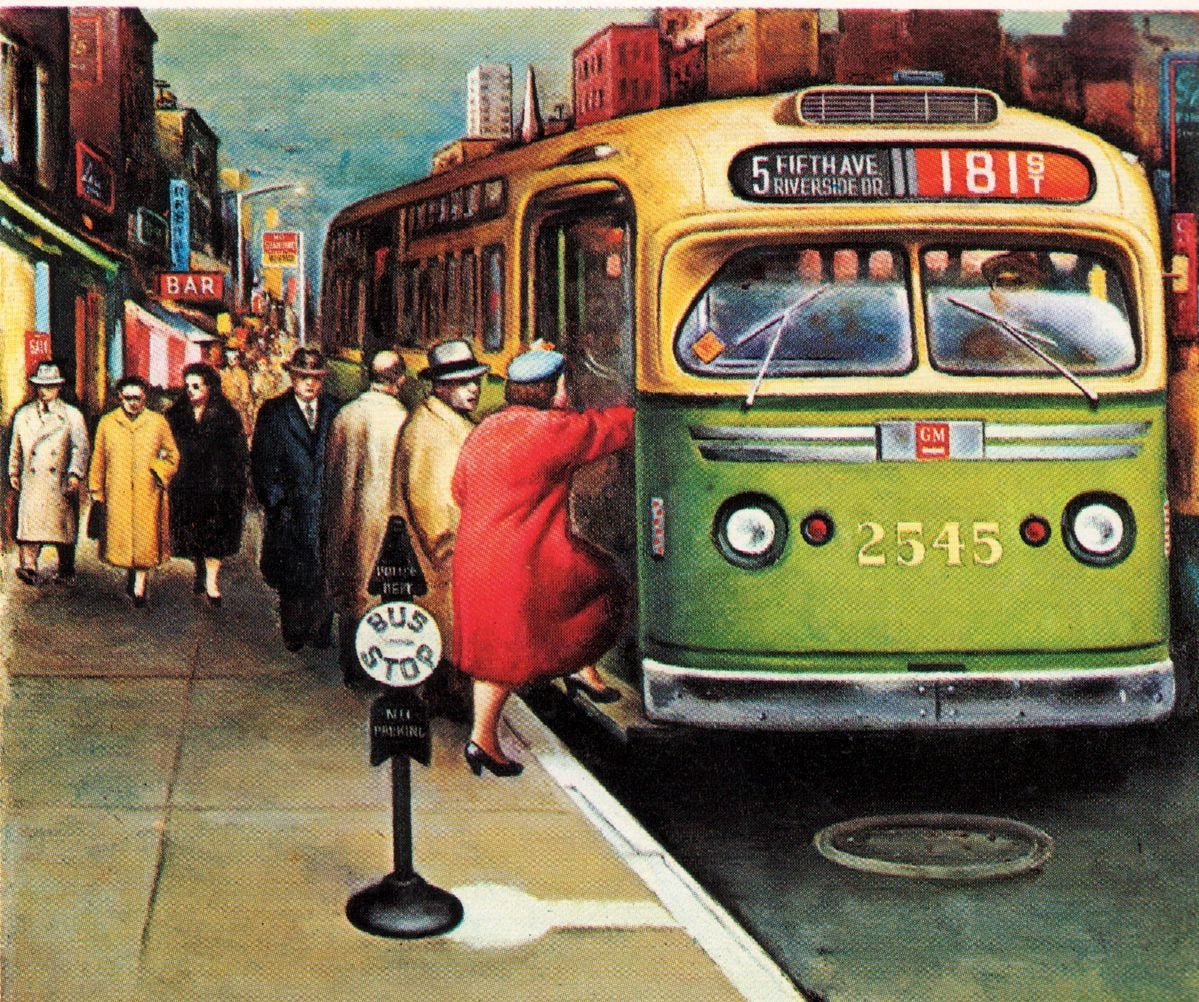
While on the bus, fellow inhabitants explain the nature of “the Grey Town,” (Hell) which they left.
We discover many interesting things about Hell, such as
Endless expansion — the town grows bigger everyday. This is because its inhabitants despise each other, and continue to build on the outskirts to avoid one another
Endless desires — man can satisfy any craving. He can construct a real life mansion in moments through his mind, or can indulge in any pleasures of the flesh he desires
The eternal abyss — the inhabitants fear a rumor that one day, the twilight of the grey town will be replaced by an eternal, unending darkness
What’s fascinating about this account of Hell is how human it is. Effectively, Hell’s inhabitants live in an eternity where all their desires are satisfied without privation.
How on Earth is this just?
This is Lewis’ first lesson about human desire. Natural desires and pleasures of the flesh may be pleasant, but they’re insufficient without the divine. Hell is the disillusionment of all your dreams and desires coming true. As the narrator puts it:
“The trouble is they have no Needs. You get everything you want (not very good quality, of course) just by imagining it… In other words, there’s no proper economic basis for any community life.”
Notice also there is no friendship in Hell. Man knows no harmony, nor strife. When we recall the wisdom of Aristotle, citing man as a “political animal,” or Dostoevsky, who laments that “Hell is the inability to love,” then an eternity divorced of love, friendship, and harmony is an eternity cut off from the most fundamental nature of yourself.
Hell is an eternity divorced from God, and the fullness of your being.
The Gates of Paradise
Eventually, the bus reaches Heaven, and Lewis and its inhabitants step outside.
Their eyes are blinded by the brightness of Heaven, and their feet cannot bear to stand on the grass. Surprisingly, though their bodies are of Earthly flesh, they appear as mere shadows in comparison to the fullness of Heaven’s glory.
Eventually, the group gets greeted by a host of angels. Each angel is a guardian specifically tasked to help a particular individual make the pilgrimage across the meadows to “the mountains,” where Heaven resides.
Surprisingly, however, all the souls waver. One by one, each soul starts to complain. They have dialogues with their angels, and despite the encouragement of the latter, every soul of the damned starts to board the bus back to Hell of their own accord.
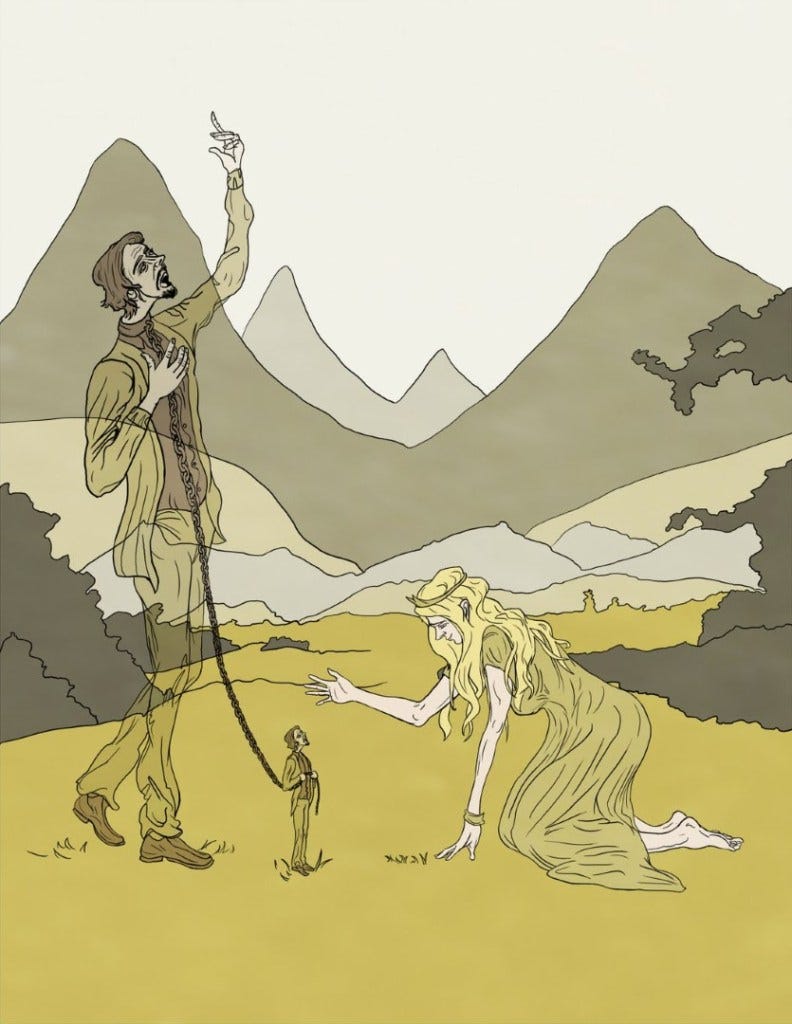
Some example conversations:
The unruly boss too prideful to apologize to his old employee
The overbearing mother who cannot “forgive,” God for her son’s death
The Bishop who’d rather speculate about God in Hell than meet him face to face
Each conversation reveals the ultimate desire of the human heart, and how it went astray:
The boss preferred being “right,” in Hell, than “humbled,” in Heaven
The mother loved her son more than God (and as such, she made her son a worldly idol which corrupted her love)
The professor loved philosophy itself, but lost his love for God
Therefore, this book becomes a meditation in misguided desire. Each of these souls we meet are archetypes for the greatest desires of the human heart as such. In other words, a careful inquiry suggests you might find yourself in some of the souls of perdition.
This is not cause for despair, but self-knowledge — an opportunity to correct your love to grow in sanctity, virtue, and blessedness.
Unfortunately, our narrator grows discouraged. He witnesses one soul after another turn away from God, and begins to wonder whether there is any hope for the inhabitants of the Grey Town.
If Hell is locked from the inside, can anyone ever choose to leave?
But in his lowest moment, Lewis encounters his own guide. It’s a dear friend who helped inspire Lewis himself to become a Christian.
He arrives to reveal the true nature of Heaven, the mystery of salvation, and what it truly takes for a pilgrim to complete his journey to beatitude with God...
