

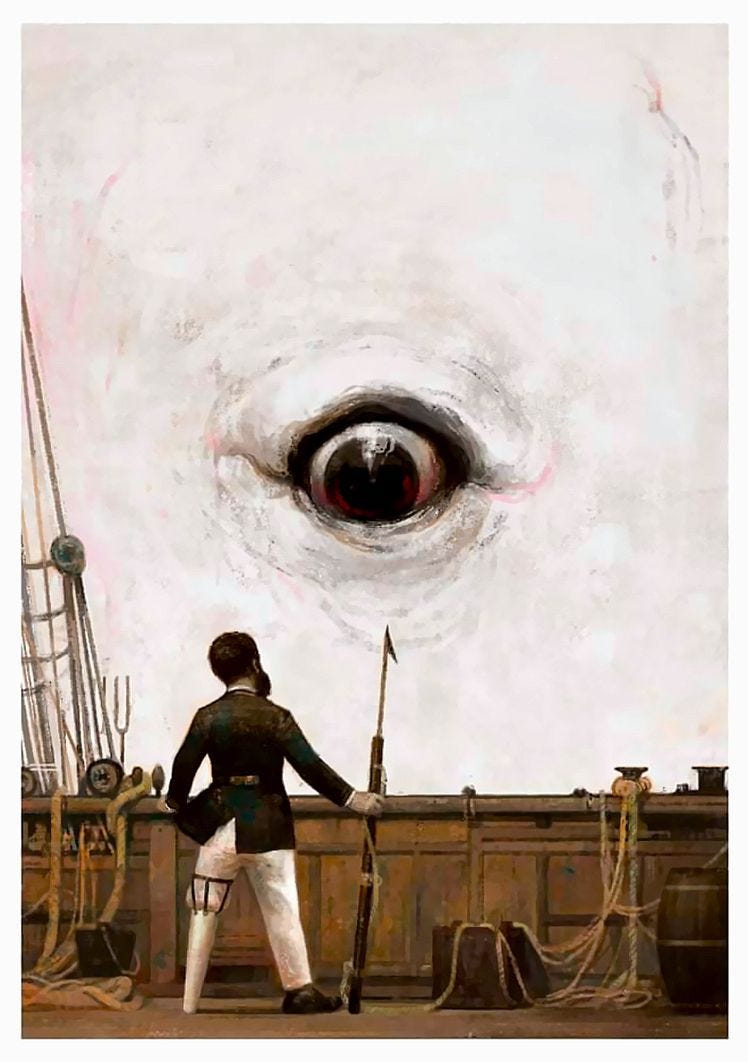
If you ask me, Moby Dick is THE great American novel.
Others are notable (The Great Gatsby, East of Eden, Blood Meridian), but no other work of American literature comes close to Moby Dick’s ambition, scale, and literary accomplishment.
This work is far more than a mere nautical adventure, but a sprawling masterpiece that combines epic, tragedy, sermon, philosophy, theology, and even whaling encyclopedia.
And while the wisdom you can draw from this work is nearly limitless, the heart of this novel is moved by one of its deepest ideas:
The monomania of vengeance and self-destruction.
This monomania warns us of a terrifying reality — that the most brilliant minds can become the greatest engines of destruction when their hearts are ordered toward the wrong end.
Understanding the Hunt
This “monomania of vengeance” is found in Captain Ahab, who is arguably a protagonist, villain, or anti-hero depending on how you read him.
He’s enigmatic, and therefore dangerous, precisely because he’s a man of remarkable talents and virtues who blurs the line between traditional heroism and vigilante chaos.
Ahab’s MO is simple: he lost his leg to Moby Dick, and has made a lifelong vow of revenge.

But this isn’t just a sea creature. Ahab believes that Moby Dick is the incarnation of “original sin,” or evil itself. Hence his quest is both that of a hero seeking to conquer evil, and that of a prideful maniac trying to don the role of God — redefining good and evil on his own terms.
Thus, this novel’s great hunt for the whale is really the war of a man’s soul.
The plot asks whether or not Ahab will succeed in killing the whale, but the moral theme asks a deeper question:
What is the fate of the war within Ahab’s soul?
Will he seek to “destroy evil” in accordance with traditional Christian morality — to serve God — or will he usurp the natural moral order and don the role of God as judge, jury, and executioner?
We can glimpse the truth of Ahab’s heart in his own confession:
Ahab’s Confession
This singular line from Ahab sheds light on the truth of his heart:
“All my means are sane, my motive and my object mad.”
In other words, Ahab is not a cartoonish madman. His intellect is remarkably intact. He may be insane, but he’s not irrational. Instead, he is remarkably cruel and calculating in his obsession with vengeance.
Therefore, the danger is not Ahab’s intellect, but his heart.
What has gone fundamentally astray is his love. His greatest love is not serving goodness, but destruction in the name of defeating evil.
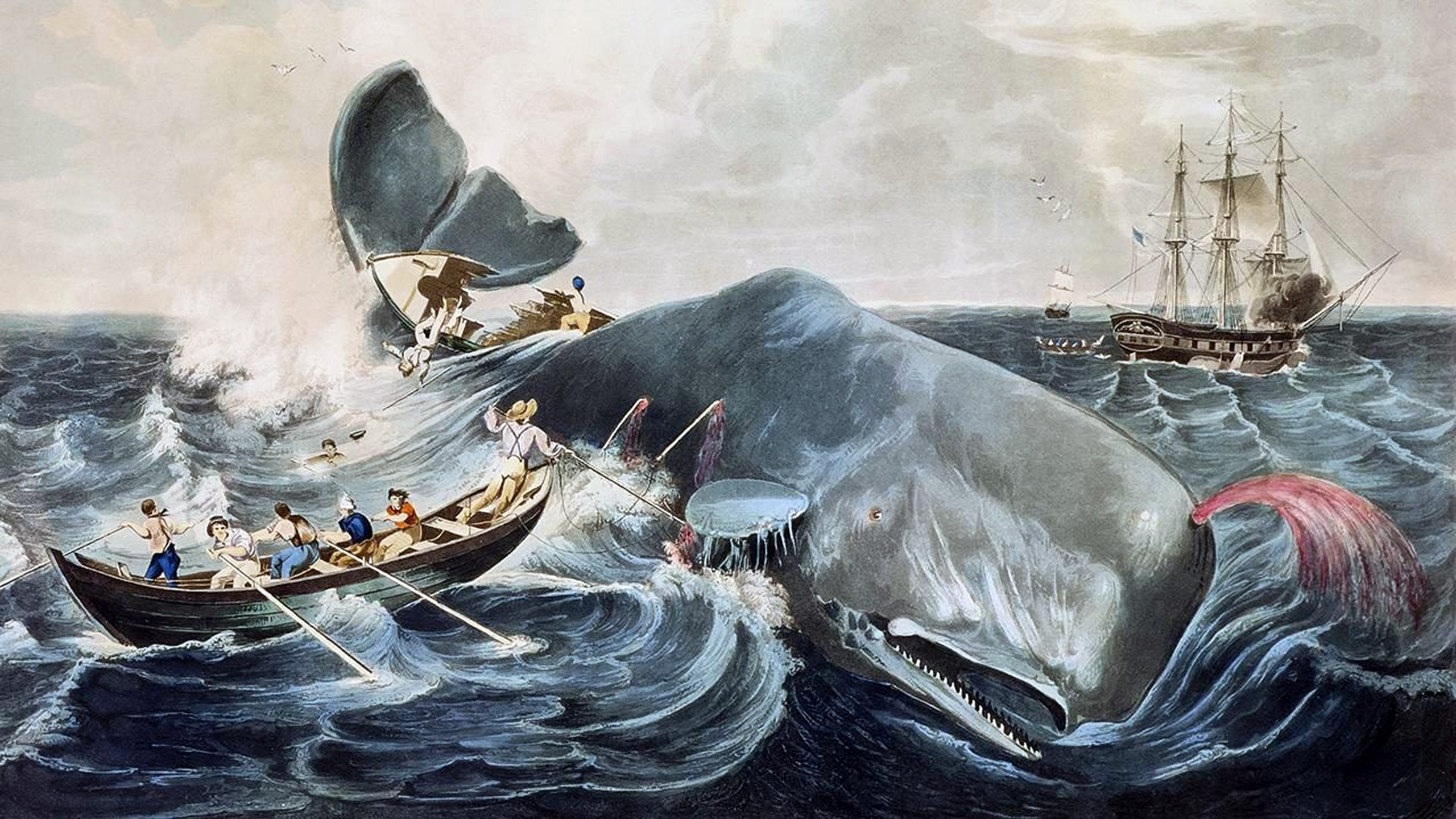
The whale becomes an emblem not merely of evil incarnate, but of everything that thwarts Ahab’s perception of the cosmos, fate, and even God himself.
Ahab’s war on Moby Dick risks becoming a war on God.
We witness this war through the level-headed narrator, Ishmael, who asks:
What is behind Ahab’s mask? What is his true passion?
If a man’s ruling passion determines his destiny, then nothing can save a ship, a crew, or even a nation from a captain who loves the wrong thing with total conviction — and a crew who follows him because they are loyal to his steadfast vitality.
Ultimately, Moby-Dick is Melville’s attempt to wrestle with some of the deepest questions we can ask about the human condition:
What happens when a man makes his grievance his personal god?
Can man learn to love the abyss of self-destruction?
How far will a loyal crew follow a self-destructive leader?
Can a monomaniacal man like Ahab escape the dangers of his self-destructive obsession?
Is there room for divine meaning in Moby-Dick’s universe, or is it merely a bleak realm of chaos, despair, and death?
What is the difference between seeking truth and being consumed by it?
Melville’s answer is a warning, and it may be more urgent now than when he wrote it.
And if you want to understand what obsession does to the human soul, there may be no better place to begin.
If you are looking for a place to put that approach into practice with others, we just crossed 60,000 readers over at the Athenaeum Book Club.
Our discussions offer a depth you can’t find anywhere else online. We don’t read books to check them off a list, but to train the soul — and Moby-Dick is one of the great trainers of the soul in the English language.
We are about to begin our read of Moby-Dick over the next six weeks, and I’ll personally be leading the discussions.
It is a demanding book, and it is far better read in company than alone.
Our first discussion, covering Chapters 1–40, is on October 13 at 12pm ET.
And remember: all sessions are recorded if you can’t make it live.
Note: You don’t have to have finished the book by then, but the more you’ve read, the more you’ll get out of the session.
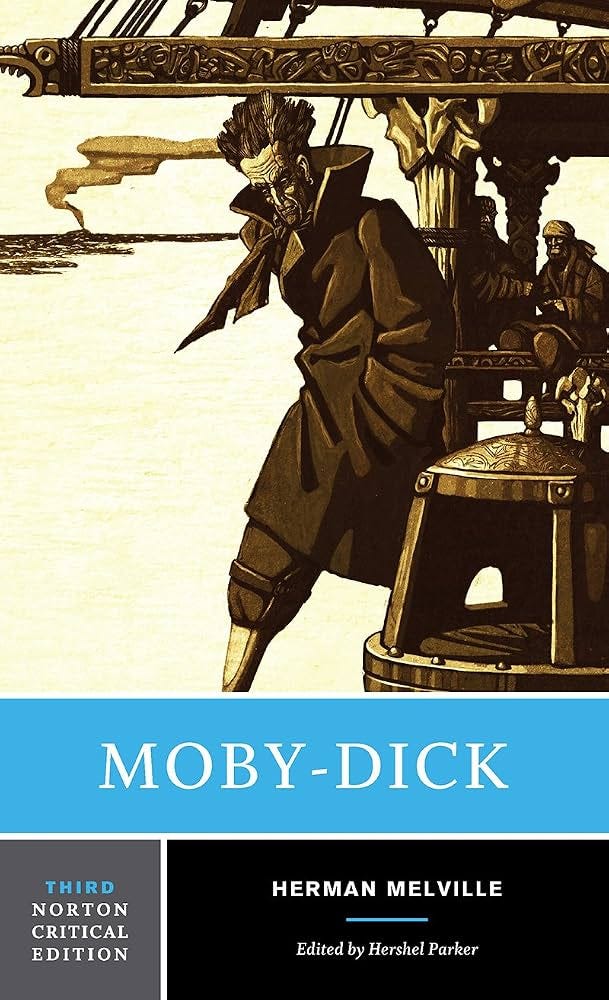
Thanks to every one of you for being here and making it possible for us to do this work.
If you’re new here, definitely join our book club discussions if you can. They take place biweekly, and have been nothing short of electric of late. And if you can’t make it, everything is recorded!
I have been following from a distance. I think it is incredible what you are doing. There is so much content online much of it is turning people’s brains to mush. Praise God for men that want to grow their souls and make the world they lived in for a short time a better place. The good the true and the beautiful. Thy kingdom come Thy will be done on Earth as it is in Heaven
Just ordered!