

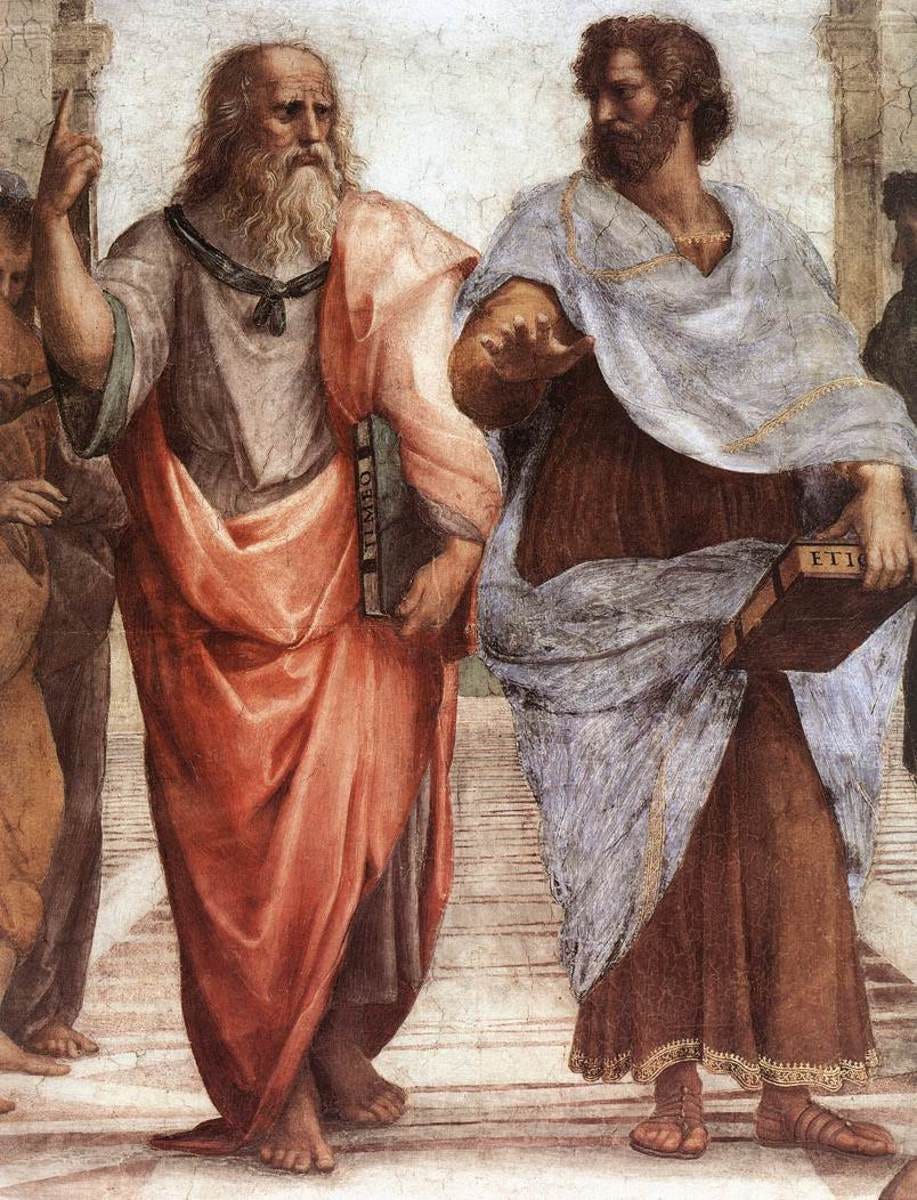
Plato’s Republic is the greatest political treatise ever written.
Yet comically, it has little to do with politics in the modern sense, and everything to do with the education of your soul.
Most people live in a constant state of civil war with themselves, a kind of “disintegration” of the soul. Throughout the Republic, Plato’s exhortation is that political civilization is saved through the proper education of its citizens.
In other words: you save the world by saving your soul. That process begins with understanding yourself so you can form yourself to virtue. Plato explains how to do this brilliantly through a single concept — the tripartite soul.
Today we’ll explore Plato’s theory of the tripartite soul, what it reveals about human nature, and how it can help you form your soul in accordance with truth, virtue, and goodness.
If you want to take these lessons deeper and actually train your soul to love truth, beauty, and goodness, my 12-week Great Books Formation Cohort only has 3 more seats.
Doors close tonight!
What is the tripartite soul?
Plato’s discussion of the tripartite soul appears in Book 4 of the Republic.
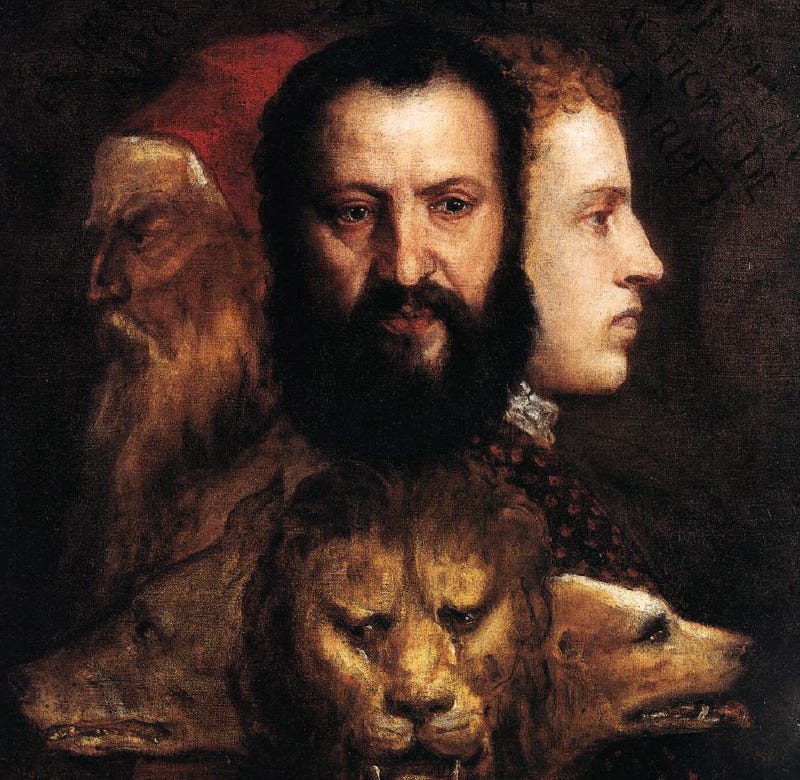
Through Socrates, he explains that the human soul consists of three principal parts:
Reason — the thinking part of the soul that loves truth and virtue, and desires to seek them
Spirit — the spirited part that can whirl you into rage, but also fuel ambition and courage
Appetite — the instinctive part that desires food, pleasure, sex, and more
This framework shows that human beings are a mixture of will and rationality, comprised of competing desires.
For example, if you want to get on a diet, your head may tell you to go to the gym, while your appetite urges you to rest and eat cake. The chief concern of becoming a virtuous soul, then, is learning how to integrate these competing desires.
Plato’s solution to this is brilliant.
The charioteer
Plato uses a simple allegory — a charioteer — to explain how to integrate your soul to love wisdom.
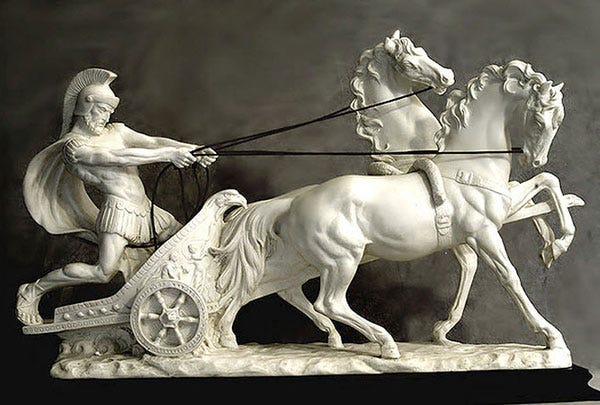
Imagine a chariot led by two horses, driven by a charioteer. The horses represent spirit and appetite, while the charioteer represents reason.
If the horses are stronger than the charioteer, the chariot is out of control, in grave peril, and likely to crash. In other words, if spirit (ambitions, passions, emotions) or appetite (desire for pleasure) dominate reason, a person risks living a life of vice, suffering, or unfulfilled potential.
Of course, to be ruled by reason is easier said than done. As in our fitness example: everyone knows how to get fit, yet many struggle to follow through. In many ways, modern appetites are far stronger than reason.
The key, surprisingly, comes down to the spirit.
Spirited to Truth
The spirit channels passions and strong emotions.
Man should never be led chiefly by spirit toward vainglory or hubris, but he cannot live a virtuous life without it.
The key to virtue is not just knowing it rationally, but loving it. The spirited part is morally neutral: if you primarily desire worldly gain, pride will swell before a fall.
But if reason channels the spirit to love virtue and truth above all, the spirit becomes an ally. The horses — far more powerful than the charioteer — are now guided by reason in fervent pursuit of goodness.
A truly integrated soul doesn’t just know virtue — it loves virtue.
This process is simple in concept, though sadly long forgotten. Plato wrote an entire dialogue explaining how to train the spirit to love truth, beauty, and goodness.
Those who learn this do not just live virtuously, rather they move closer to the highest form of the Good and the fullest potential of the human soul.
