

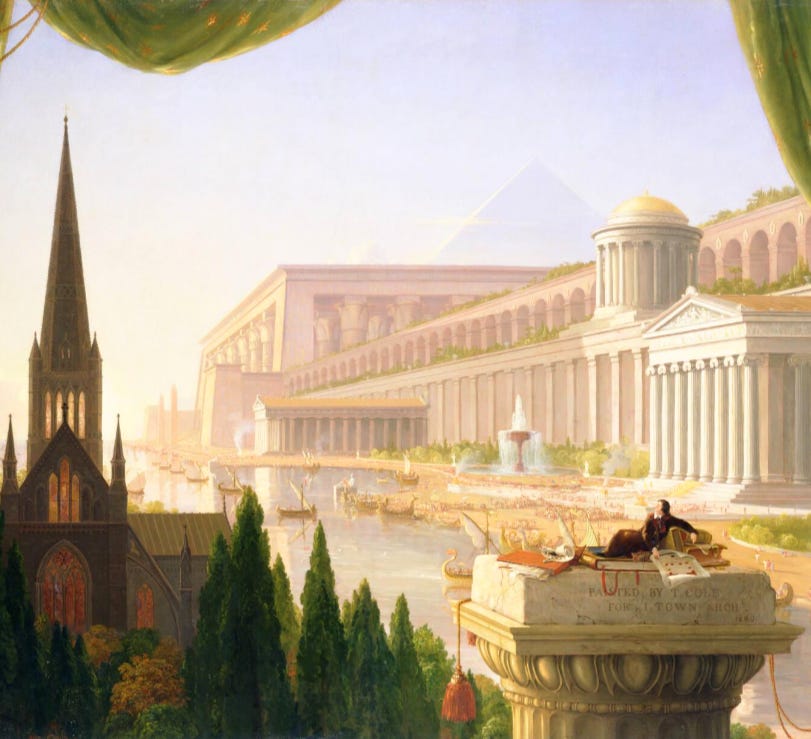
Few lies are as popular as the myth of progress. Earlier, we discussed the founding myth of modernity, which suggests mankind is gradually ascending from ignorance to enlightenment and rationality.
Progress, in this sense, is defined as gradual improvement in both morality and technological capability, so that mankind may eventually become fully rational and live in a kind of utopia.
Not only is this belief wrong, but it turns out the opposite may be true — technological progress not only fails to guarantee moral progress, it can even become a sign of civilizational degradation.
This warning is nothing new. It was first sounded by Plato over 2,500 years ago, and later echoed, quite intentionally, by Tolkien in The Lord of the Rings.
Today, then, we’ll look at what Plato warned us about human nature, how that warning is unfolding in real time, and what we can do to save ourselves from the myth of blind progress.
The Myth of Progress
At the risk of redundancy, I’ll restate the myth of progress with maximum clarity:
Modern man is a product of evolution, descended from apes, and steadily ascending toward rational enlightenment. Religion, myth, and superstition were merely primitive stages of mankind learning to reason and gain mastery over his environment.
Over time, through rationality and science, man will master both nature and morality, and use this mastery to usher in a utopia free of suffering.
As we’ve stressed before, the problem with this myth is not science, nor whether one affirms evolution. The problem is the unsound philosophical assumptions quietly smuggled in under the authority of science.
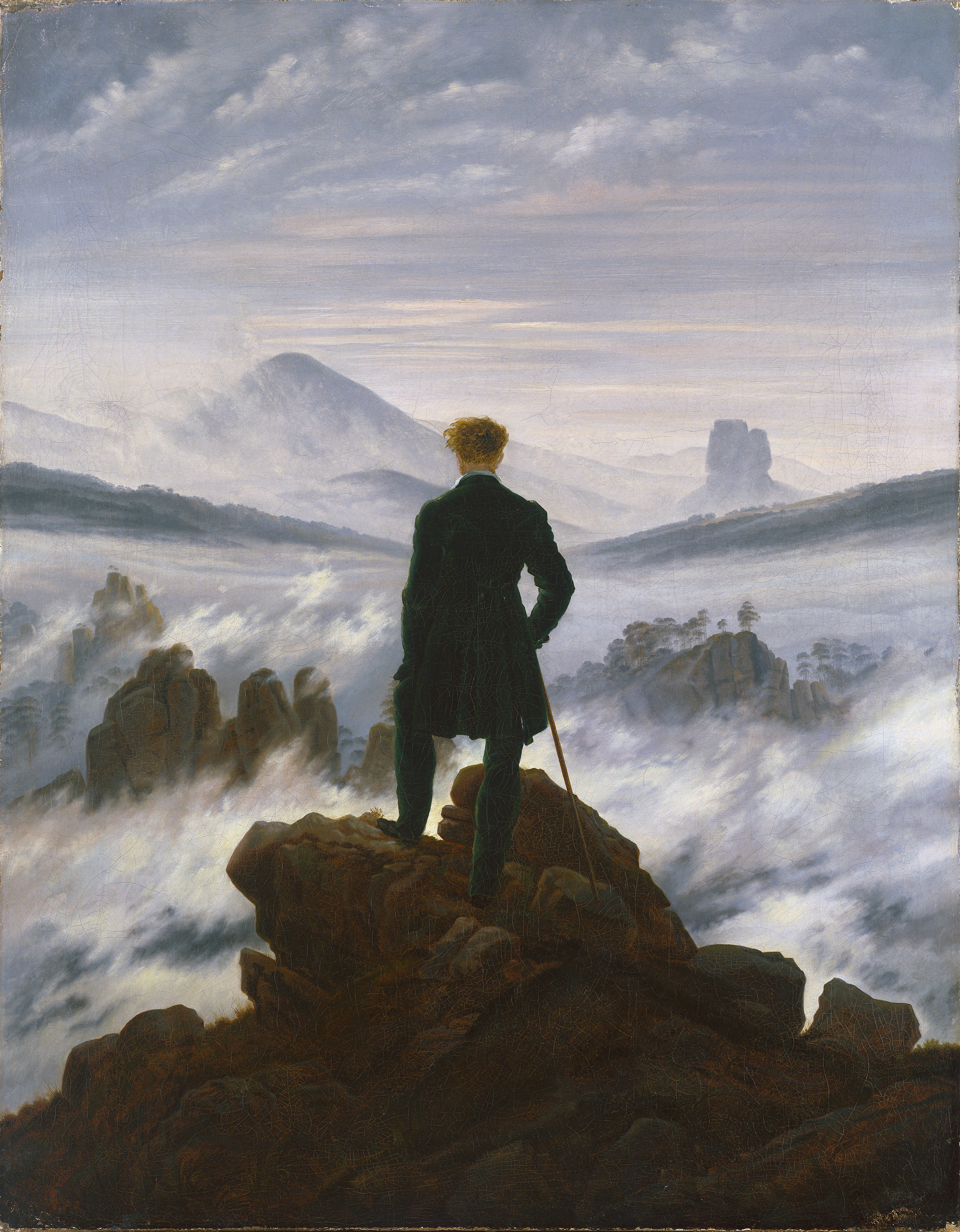
Evolution alone does not account for human consciousness, the origin of existence, nor the fullness of human nature. It is therefore not “scientifically sound” to assert that man is a creature of pure rationality — especially when nearly all philosophers agree that man is a mixture of reason and will.
The result is this: it is not guaranteed that mankind is becoming more moral, nor that technological advancement implies an improved understanding of the human good.
Plato, in fact, argues the opposite. Progress can be dangerous — even a warning sign of decay — when it reshapes the soul without reference to virtue.
Plato and the Decay of Regimes
In The Republic, Plato argues that excessive innovation — especially in education, culture, and moral norms — destabilizes societies. Civilizations, he says, do not endlessly advance; they tend to cycle and decay.
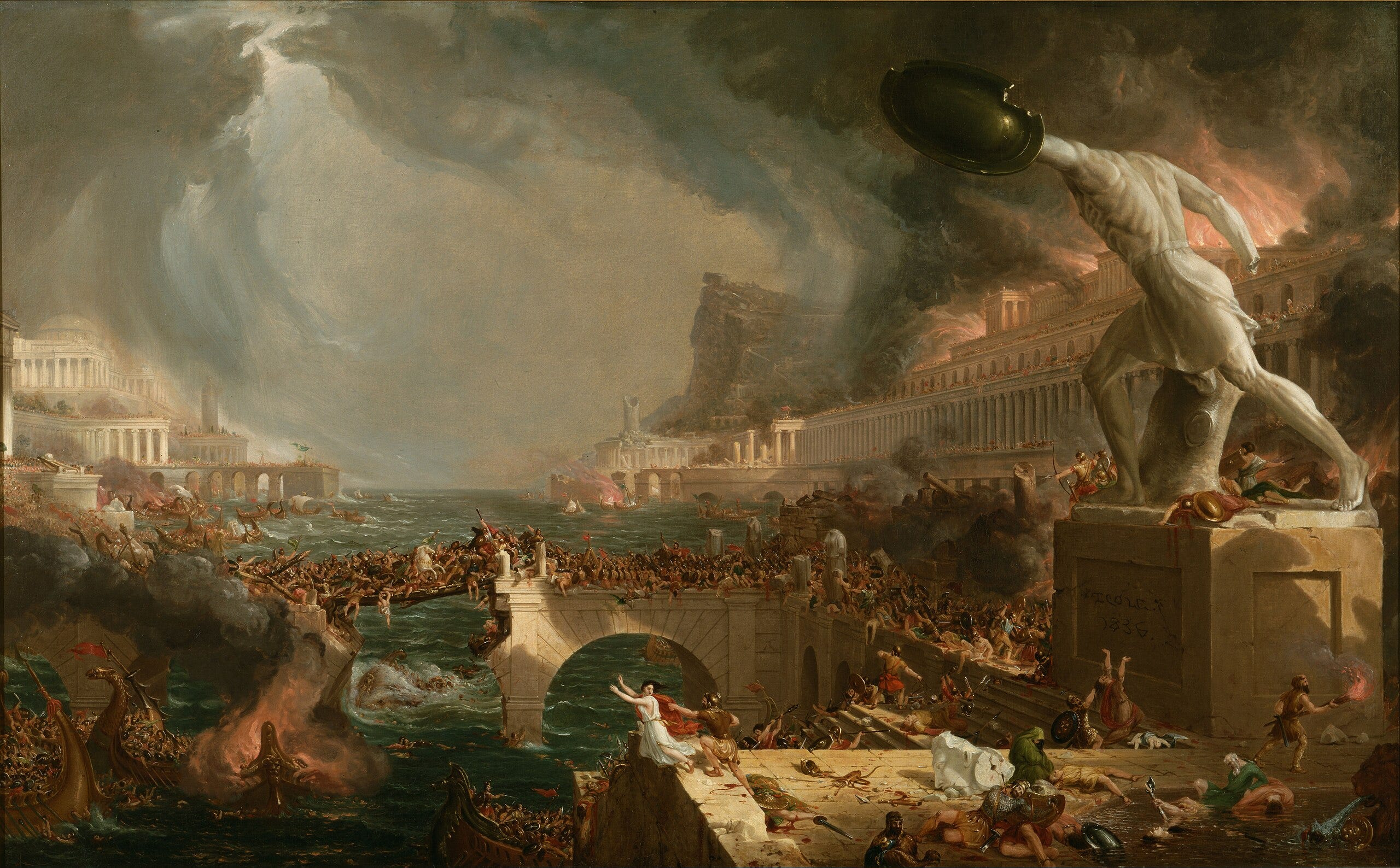
Famously, Plato identifies five political states any society can inhabit.
Aristocracy
This is the first and greatest state for Plato. An aristocracy, as Plato defines it, is ruled by Philosopher-Kings, or benevolent rulers with a perfect philosophic knowledge of justice. They’re self-sacrificing and will goodness onto all their subjects.
Timocracy
This is the second best state. It decays from aristocracy through miseducation of philosopher-kings. The rulers are still noble, but they begin to prize glory and honor over wisdom and virtue. You can think of Ancient Sparta and their warrior ethos of fitting this motto.
Oligarchy
This state is where society begins to break down. These rulers are most concerned with commercial and property acquisition. They’re concerned for personal gain, and though the state may grow rich, wealth-inequality and social instability begin to arise
Democracy
Plato (and most classical thinkers) disliked democracy. It arises from the grievances of the impoverished classes of oligarchy, and is defined by mob rule. Charismatic speakers who sway the crowd rise to power. Those who control the masses control “justice,” and force.
Tyranny
The worst and final state — out of democracy emerges a strongman leader who promises the world to the mob. He grabs power, and the state becomes authoritarian — oppressing the many for the explicit gain of the few.
Plato’s point is this — societies rise and fall in accordance with virtue. No civilization flourishes through power alone, and all amoral societies are doomed to die.
A civilization driven by modern “progress,” defined primarily by material wealth and mastery over nature, is therefore oligarchic in spirit. Though it may flourish externally, Plato warns that such a society is already sliding toward tyranny — not necessarily under a single villain, but through systems of domination that are more familiar, bureaucratic, and impersonal.
This is the concrete horror Tolkien witnessed a century ago, and it lies at the heart of The Lord of the Rings.
What Tolkien saw — and why it still matters now — is the key to understanding both our decay and the narrow path out of it.
