

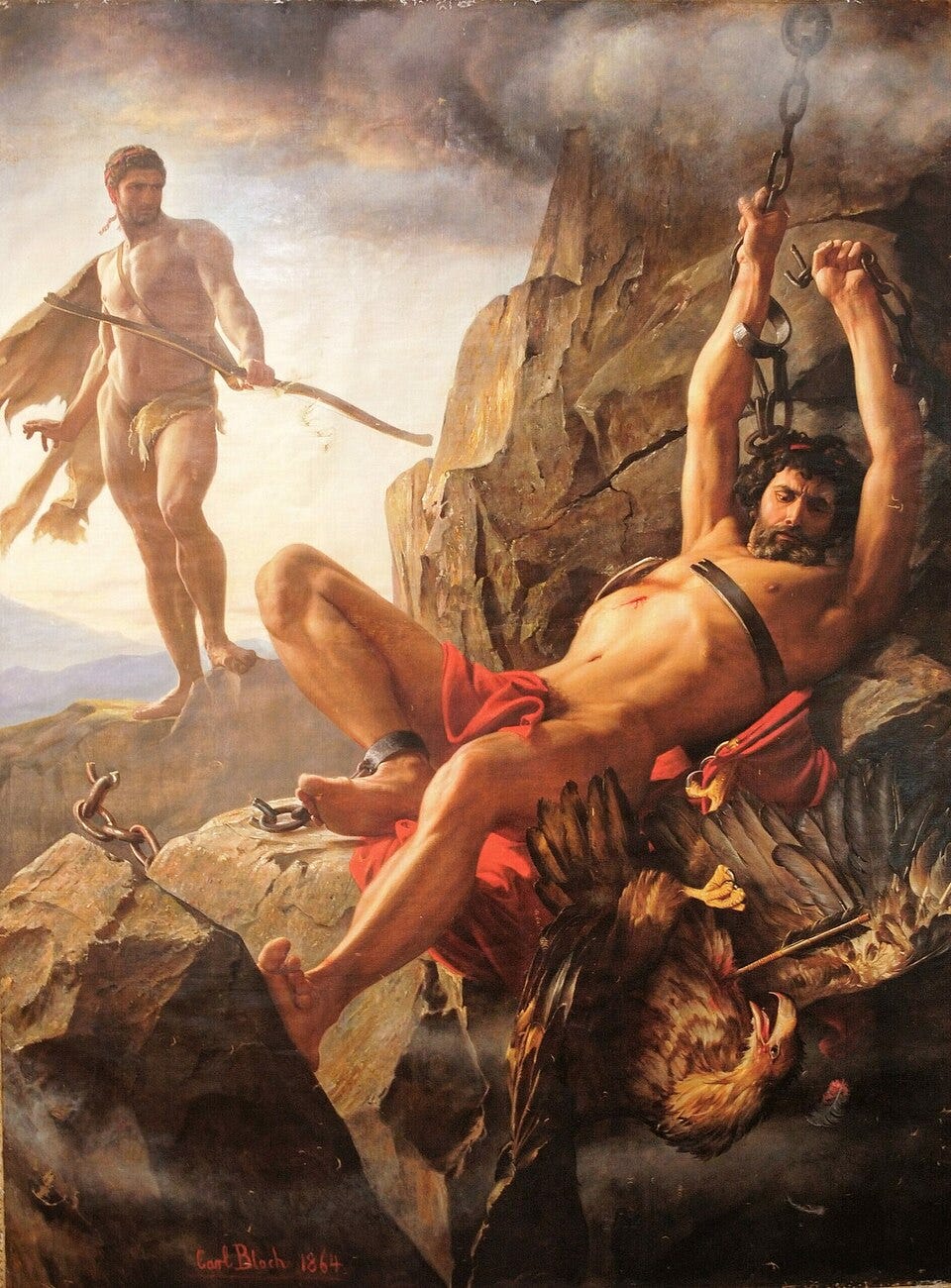
Prometheus is perhaps the most psychologically complex figure in literary history. To this day, critics cannot decide whether he figures as a Christ-like savior of mankind, or a Satanic rebel seeking to defy the cosmic order of reality.
He’s most powerfully dramatized by the Ancient Greek playwright Aeschylus, in his work Prometheus Bound.
On the surface, this play is a lamentation on Prometheus’ suffering, and the plight of mankind who was nearly slaughtered by Zeus. Yet beneath the surface lies a wonderful boon of wisdom — read carefully, this play doesn’t just dramatize the psychological complexity of good and evil, but teaches you the single piece of wisdom that helped primordial man survive the harsh “iron age,” build civilization, and discover a path to live with authentic meaning.
Reminder:
Subscribe, if you’d like to support my mission of restoring Truth, Beauty, and Goodness to the West, subscribe below!
Paid members get an additional members-only email each week!
Rebel
First, let’s recap Prometheus’ story.
Prometheus was a titan in ancient Greek myth, who gave sound counsel to Zeus in his war on the Titans. With Prometheus’ help, Zeus became ruler of Olympus.
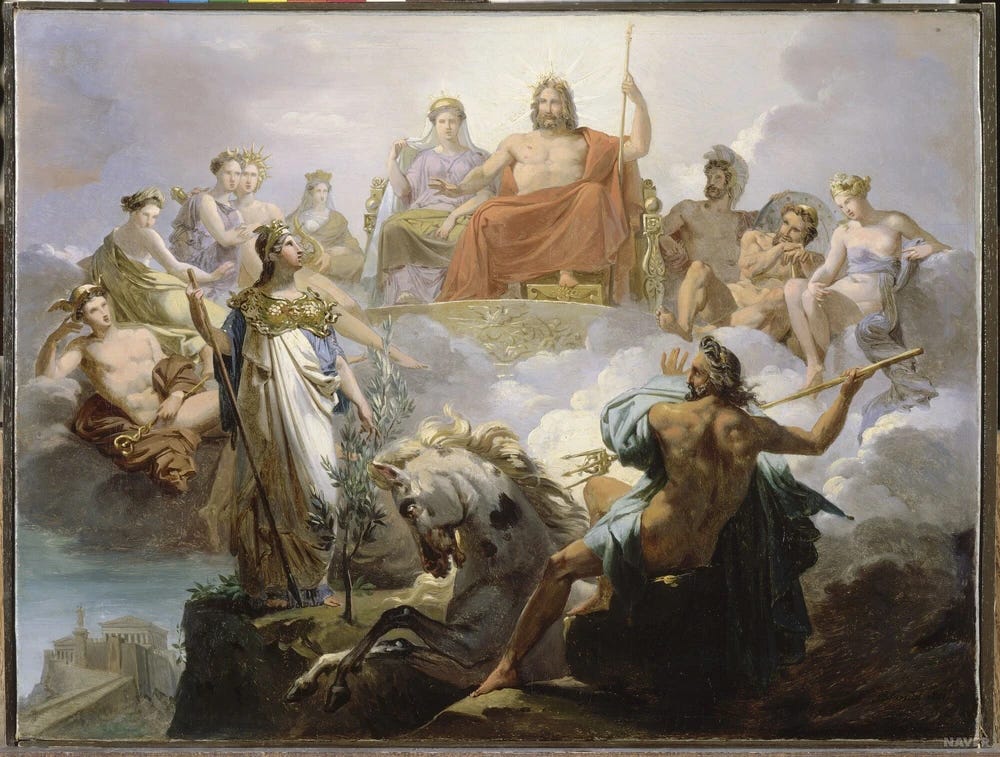
Zeus would bring order to a chaotic reality, yet he decreed that mankind (still primitive and tribal) must die. Prometheus, however, defied this decree and saved mankind by giving them fire and arts.
Through these boons, mankind survived and built thriving civilizations. As punishment, however, Prometheus was bound and chained to a rock, where he would suffer for eternity. Most notably, an Eagle would tear out his liver — which regenerated each night — every day without end.
The play begins with Prometheus freshly chained to a rock.
Early on, we garner an understanding of his “Satanic,” characteristics. Prometheus, while suffering unjustly, proves to be vainglorious. He revels in his suffering, and affirms he is more righteous than all.
He laments the permanence of his torture too, and his fall from grace. This dramatization of a permanence of suffering, divorced from the gods, will be the framework that inspires many later depictions of Satan in future literary works, such as Milton’s Paradise Lost.
Above all, Prometheus announces himself “an enemy of the gods.” He knows of a prophecy in which Zeus and all Olympus will fall to chaos, yet he refuses to share this prophecy. He would, understandably, prefer to see the gods and the cosmic order of the world be destroyed than save the ungrateful king of Olympus.
And so, while Prometheus indeed draws the figure of a “romantic rebel,” as Satan will later be portrayed, we must remember this is only one half of Prometheus
Bringer of Light
On the other hand, Prometheus is the “bringer of light,” who saves mankind from death. In his own words:
“I prevented mortals from foreseeing their doom! I caused blind hopes to dwell within them… all arts among the human race are from Prometheus.”
What’s interesting is that Prometheus didn’t just save them from extinction, but also offers them an extra divine gift, namely, blind hope. He didn’t just help them survive, but saved them from existential despair.
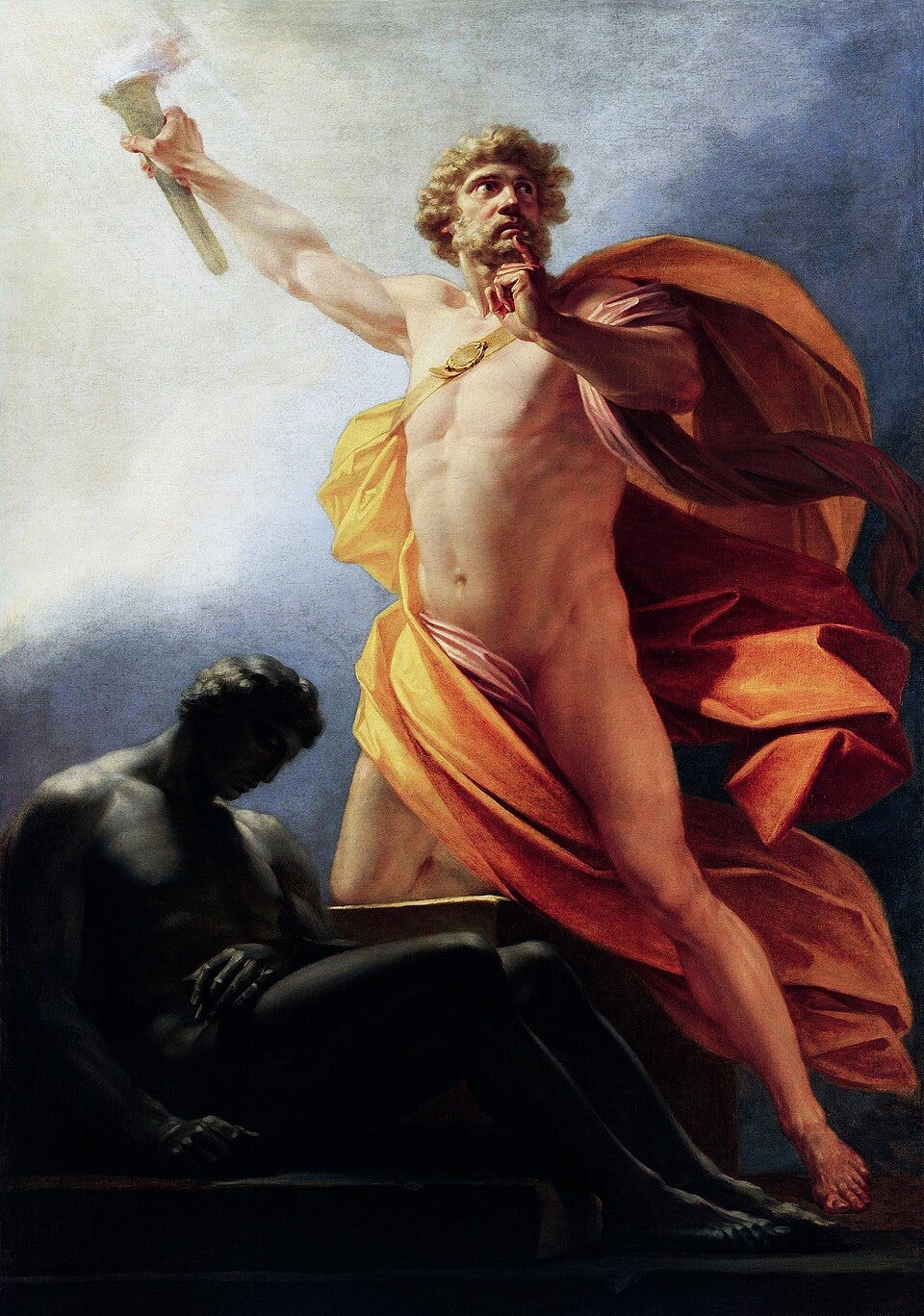
While it wouldn’t be right to call Prometheus a Christ-figure — it’s not clear how much he actually loves man, rather than hates Zeus — we do recognize in his story an ancient but long forgotten truth:
Man cannot live off bread alone.
The blind hopes Prometheus offers are spiritual nourishments. High civilization, wealth, and material goods are not enough to sustain mankind. They need the arts — which includes not just technical crafts and trade, but painting, poetry, architecture, mathematics, science, philosophy, etc. They don’t just build civilization, but instill a fire in mankind’s soul.
Prometheus’ gift helped the Ancient Greeks grasp a primordial truth:
That they carry a spark of the divine in their soul.
It was this very spark that gave mankind blind hope — and yet, that was not its final effect.
The paradox of Prometheus is this: though he saved man from extinction, his gifts were never meant to complete a salvation story. Fire and art could help man endure life, but they could neither answer nor escape the problem of death.
Man’s plight, then, was to live by blind hope… and still die. Yet, in time, a true hope did appear.
Most readers miss it, but Prometheus offered mankind one final gift. It’s only implicitly revealed by Aeschylus, but once you see it, the gift illuminates the form of true hope that would inspire all the greatest thinkers in history.
