

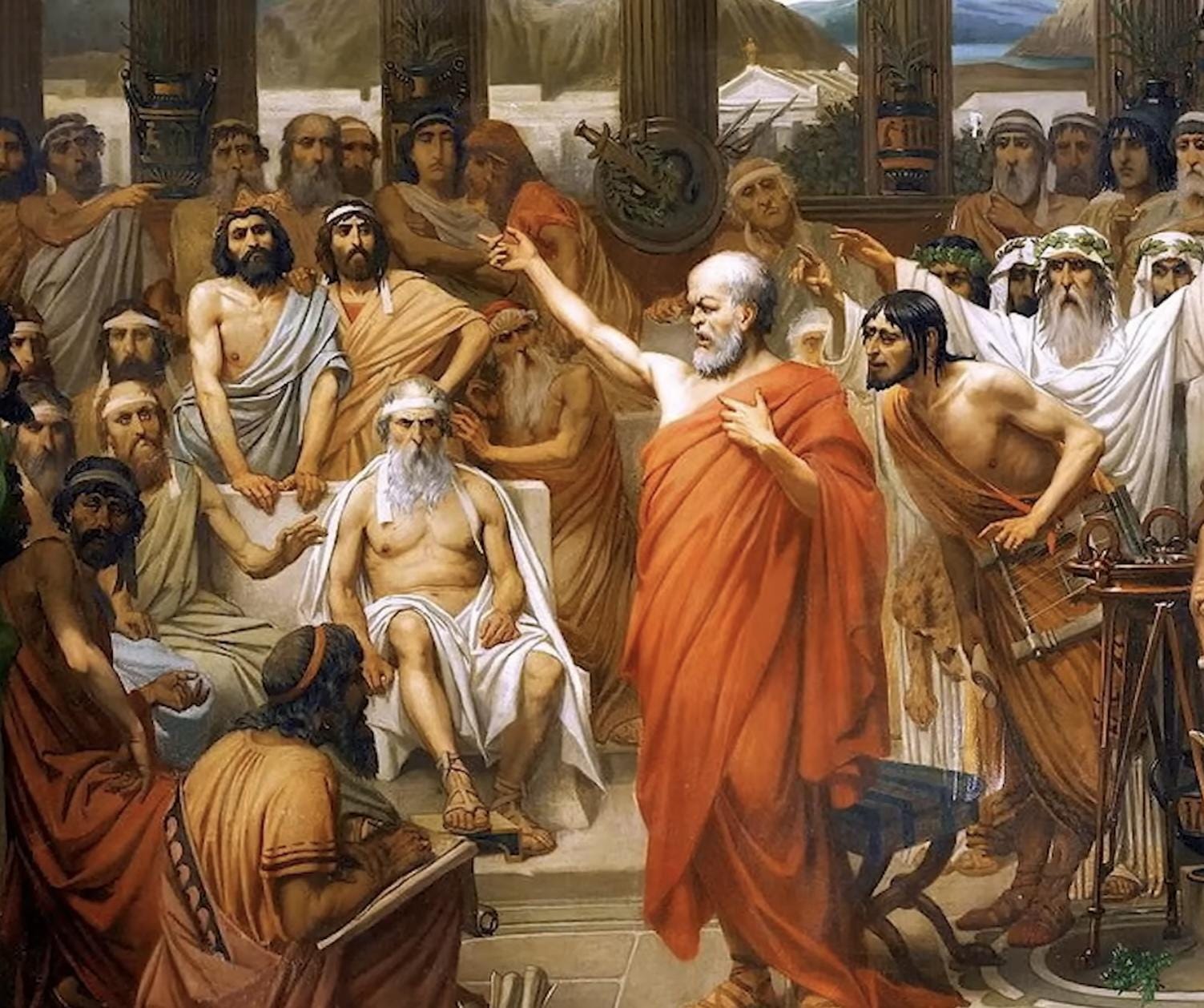
For the past 2,500 years, Western philosophy has treated self-examination as indispensable to the good life. In fact, these were among Socrates’ last words before his death-sentence:
The unexamined life is not worth living.
It’s a blunt but prescient assertion. Self-knowledge is the means to a virtuous and meaningful life.
But how exactly do you learn this self-knowledge? How do you truly know yourself?
It’s a task far easier said than done. Worse yet, our culture today has fundamentally redefined, and lost, our true sense of self. In other words, without careful guidance through the great books and classical wisdom, most modern souls will live their entire lives unexamined — lives that Socrates would say are not worth living.
Thankfully, one great thinker wrote the entire manual and playbook of how to live an examined life, discover your true self, and live well.
Today then, we’ll seek to rediscover the roots of self-examination in the classical tradition, to understand how you can truly “know yourself,” and lead a good life.
Reminder:
Subscribe, if you’d like to support my mission of restoring Truth, Beauty, and Goodness to the West, subscribe below!
Paid members get an additional members-only email each week!
On Modern Therapy
First, why don’t we know how to examine our lives today?
I would posit modern therapy has confused what a true self-examination looks like. First, let the record show I’m not going to make a blanket critique of therapy as a practice — there are good therapists who indeed can help change lives — rather my goal is to give a framework on when therapy can be helpful or harmful to the human soul.

The controversial aspect of therapy, sometimes labeled as “toxic therapy culture,” is due to modern therapy’s agnosticism.
Modern therapy practitioners are supposed to be agnostic to moral truth — they’re trained to listen to their patients, rather than judge them. Because they lack a substantive account of the human good, they cannot meaningfully inquire into whether a patient’s life is ordered or disordered. Instead, they can only judge whether a patient’s account is internally coherent.
In practice then, a patient with a sound moral framework who earnestly seeks to “know themselves,” can have effective dialogues with a counselor… but the reverse is also true, unfortunately:
A dishonest patient with an unsound moral framework will merely be affirmed in their immoral ways of being.
The point is, a true and classic self-examination goes far deeper than mere expression of one’s subjective feelings. The goal is not to be merely affirmed, rather it’s to inquire into the state of your soul so that you can seek to discern and repent of vices. In practice, this leads to virtue and lasting transformation that makes life meaningful.
Arguably no human being did a better job at this in history than St. Augustine, through his legendary masterpiece Confessions.
A Brave Descent
Augustine believes the path to self-knowledge begins with memory rightly interpreted under God. Confessions then, is not merely the recollection of his personal life, rather it’s a demonstration of how one must judge their memory if it is to yield them a path to Truth.
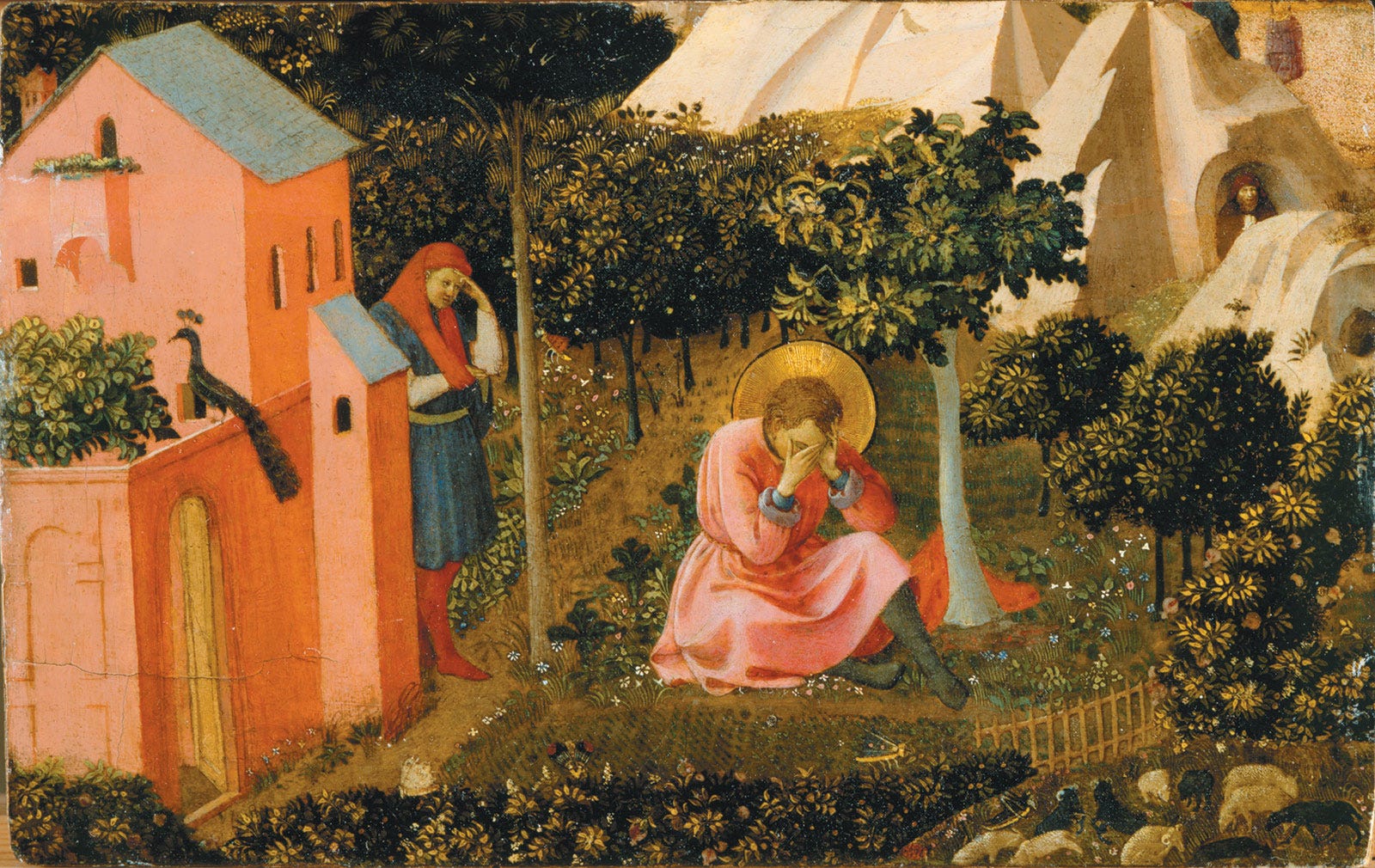
The narrative itself follows St. Augustine’s journey from depravity and vice toward conversion, sanctity, and wisdom. What matters, however, is not merely that St. Augustine revisits his past memories, traumas, vices, and evils. The genius arrives in how he interprets them.
He makes his intentions on how to do this clear in the opening passage of the book, in which he offers a prayer to God:
“Grant me, O Lord, to know which is the soul’s first movement toward Thee — to implore Thy aid or to utter its praise of Thee; and whether it must know Thee before it can implore”
So his autobiography is a meditation on how the soul can move towards God, or ascend to enlightenment. It’s not merely expression of his feelings, but an inquiry into his human nature through past events, which can guide him to a more virtuous future.
And now, we see that a profound paradox arises:
Augustine’s path forward — to God, Truth, and the Heavenly cosmos — is found by looking backwards, into the very abyss of his life of evil. This paradox was done quite intentionally.
Indeed, memory is the key forward, but one must look backwards first — and not just to the past, but particularly to the darkest recesses of your memory that you are most scared to gaze upon. It’s in this very abyss, as Augustine will teach us, that self-knowledge and salvation are to be found.
From Hell, to Heaven
Augustine’s autobiography is, in short, a list of “Confessions.”
He meditates on his past, but particularly his evils, vices, and countless mistakes.
But why would he devote an almost exclusive emphasis on his sins?

Augustine is not merely saying, “my nature is depraved,” rather he’s exercising the now timeless act of wisdom — that meditation on the evils of one’s soul is the pre-requisite to enlightenment, because evil reveals where one’s desires are disordered.
This simple meditation — a confession and reflection of vice — is the pathway to heaven (figuratively or literally). The process of such an examination is not just self-knowledge, but a transformation of heart. The goal is to have a realized fear and hatred of the vice inside you, which inspires a renewed love, or faith, in the Good.
Once Augustine makes this reflection, he ends Confessions with a masterful theological exegesis that explains how a contemplation of God/heavenly truth helps the soul ascend to heaven. It leads to Augustine’s famous framework for enlightenment:
Outward -> inward -> upward.
An inquiry of nature leads to an understanding of morality and natural law, which then invites a turn inward — a descent into the darkness of the soul — that allows a personal transformation before a soul can “ascend,” towards truth, beauty, goodness, and grace.
It’s worth noting Dante Alighieri would copy this exact structure of Confessions in composition of The Divine Comedy — in which protagonist Dante must descend “inward,” to the Inferno, to know himself, before he can ascend to heaven.
Carl Jung, a 20th century psychologist, still agreed with Augustine’s framework (albeit in a secular sense) with this popular one liner:
“No tree can grow to Heaven unless its roots reach down to Hell”
Indeed, a true self-examination goes much deeper than sharing personal feelings. It requires the courage to brave hell, or a dark night of the soul, that precedes true and lasting enlightenment.
Conclusion
So how are we to practically master the art of living an examined life?
For one, I’d start with reading Augustine’s Confessions, particularly the F.J. Sheed translation.
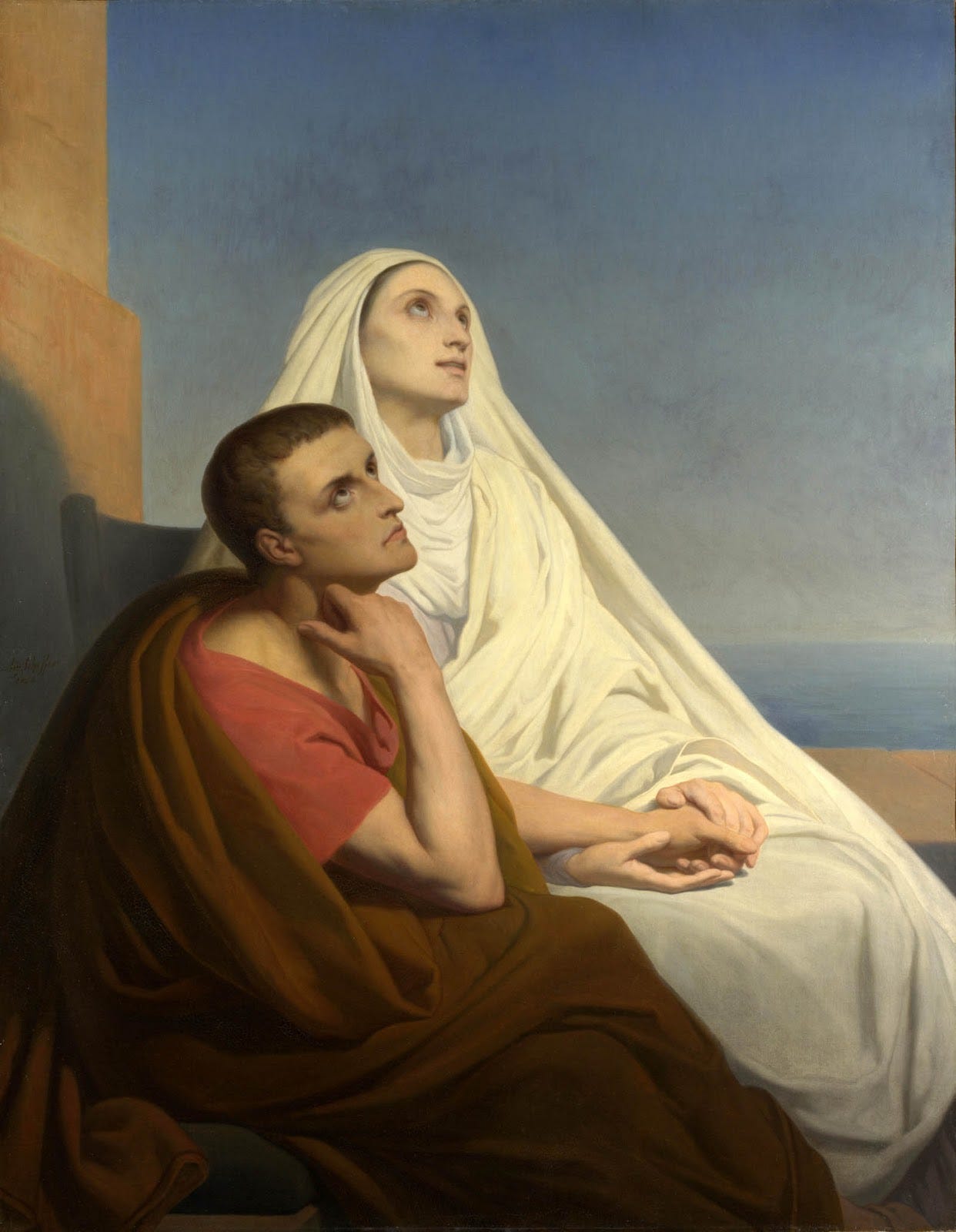
Beyond that, I would look to journaling, confession for my Christian readers, or counseling from a trusted friend for a general audience (so long as you follow Augustine’s framework).
It’s of note that Confession itself follows this exact framework — searching the soul for wrongdoing, bringing it to light under the guidance of a spiritual director, and affirming a genuine repentance that adjudicates a sincere love for the Good. CS Lewis himself attended weekly confession.
We see then, that true self-examination is but a courageous inquiry. If you dare to descend the Inferno like Dante, and plumb the depths of your soul, on the other side lies a light that endures the deepest recesses of human darkness. What follows then is self-knowledge, and an examined life that is truly worth living.
Reminder:
Subscribe, if you’d like to support my mission of restoring Truth, Beauty, and Goodness to the West, subscribe below!
Paid members get an additional members-only email each week!
Very good. In my experience what seems to happen is a complete clash between two approaches: one that starts from an objective moral order and higher values (cultivation of character), and another that starts from epistemological neutrality in which only the patient’s well-being matters, understood in a strictly psychopathological key.
And the result of the spread of a therapeutic mentality in society is that the dimension of the cultivation of character and spirit (which, as Socrates said, is learning how to die; it involves knowing how to deal with suffering in such a way as to triumph over it through a formed and strong character) ends up being eclipsed in the name of well-being at any cost.
It’s no coincidence that we no longer tell someone who has committed a moral failing to “grow up/mature”, but rather “go get treatment/go see a therapist."
Do we need to ask for grace to become self aware.it is a special grace to examine ones life honestly and with true humility,It is not easy by yourself.