


Alexander Solzhenitsyn gave the most controversial speech, or polemic attack, of modern Western Civilization in the 20th century.
The man was adored by Western Intellectuals — he survived the horrors of Russian Gulags in the Soviet Union, and later published The Gulag Archipelago, which made a global mockery of the communist ideology.
In 1978, at the heigh of the Cold War, Harvard invited him to give a commencement speech. They expected Solzhenitsyn to praise the hallmarks, achievements, and wonders of Western Civilization as the global enemies to communism. Instead, Solzhenitsyn gave a speech that can only be chalked up as career suicide.
What followed was a scathing, but prophetic, critique of the West, and a mournful promise that it was doomed to fall if it didn’t change course.
Here’s what Solzhenitsyn warned the world, why it fell on deaf ears, and how we can heed his warning today…
Reminder:
Subscribe, if you’d like to support my mission of restoring Truth, Beauty, and Goodness to the West, subscribe below!
Paid members get an additional members-only email each week!
Commercialism and Cowardice
Solzhenitsyn begins by noting a decline in courage in the West. He blames modern man’s cowardice on materialism and the welfare state:
“The constant desire to have still more things and a still better life and the struggle to this end imprint many Western faces with worry and even depression, though it is customary to carefully conceal such feelings.
This active and tense competition comes to dominate all human thought and does not in the least open a way to free spiritual development.”

He claims the commercial spirit of the West — which has placed material goods, GDP, and prosperity above God and the moral law — has led to spiritually impoverished, cowardly men.
Rather than “one nation under God,” united by a love of virtue, America specifically has backslid into division, individualism, and legalism… we are to respect one another’s autonomy and personal freedom at all costs, with no concern for virtue or vice:
“destructive and irresponsible freedom has been granted boundless space. Society has turned out to have scarce defense against the abyss of human decadence, for example against the misuse of liberty for moral violence against young people, such as motion pictures full of pornography, crime, and horror”
Thus far, Solzhenitsyn’s argument makes sense, but he might be accused of moralizing — is it really a big deal to let everyone do whatever he wants, so long as he harms no one else? Is Solzhenitsyn not sounding obtuse, or too morally uptight?
We’ll see that his moral critiques are not “ivory tower moralizing,” but have real world consequences.
Let us remember that he blamed the horrors of USSR communism on spiritual immorality and lying above all.
Beyond Politics
Solzhenitsyn stresses that the West enjoys a false sense of security, blind to an impending civilizational doom.
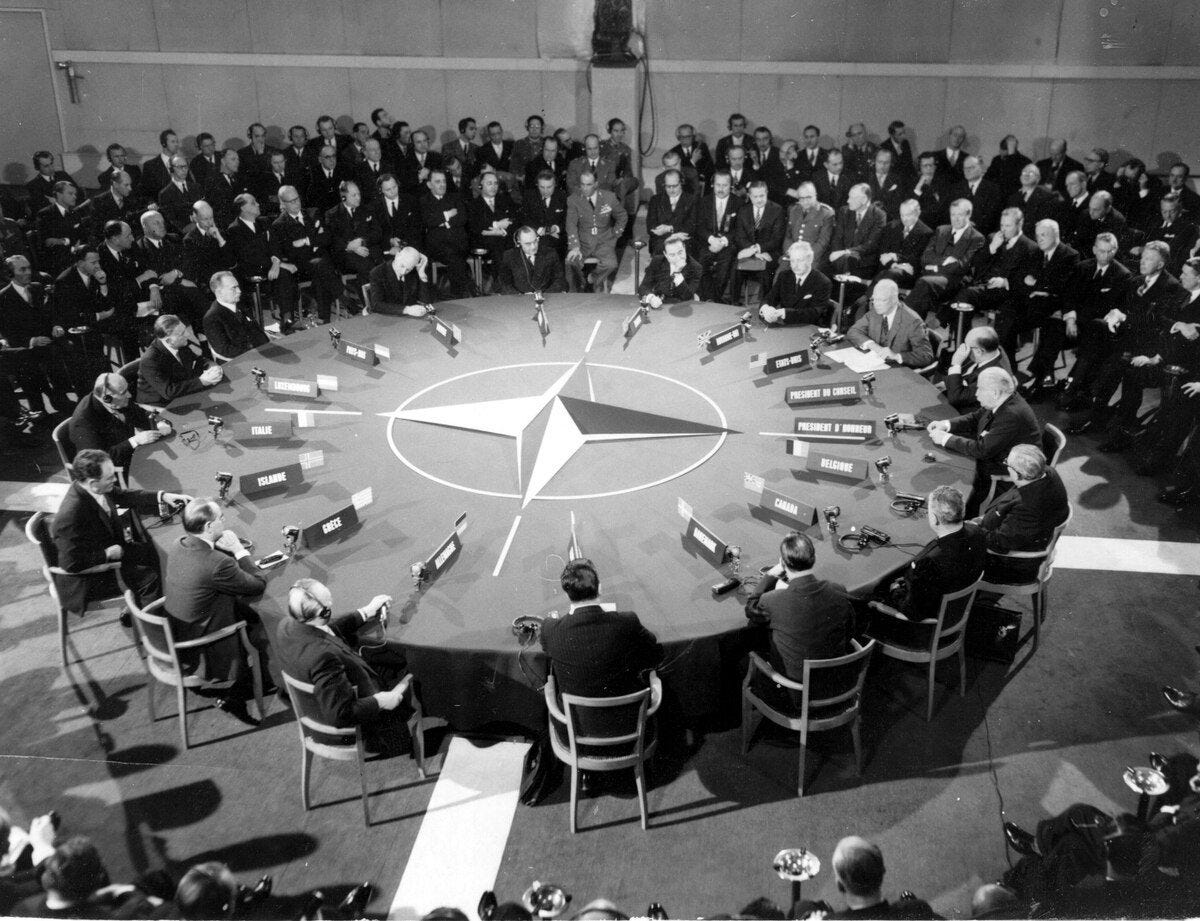
The problem is, the consequences of their amorality, vice, and spirit of cowardice are delayed by their hegemonic power. For the time being, the West is sheltered from foreign invaders behind its weapons of mass destruction. Yet he warns not even atomic bombs can save them from their internal vices:
“No weapons, no matter how powerful, can help the West until it overcomes its loss of willpower. In a state of psychological weakness, weapons even become a burden for the capitulating side. To defend oneself, one must also be ready to die; there is little such readiness in a society raised in the cult of material well-being. Nothing is left, in this case, but concessions, attempts to gain time, and betrayal…
The next war (which does not have to be an atomic one; I do not believe it will be) may well bury Western civilization forever.”
Solzhenitsyn contrasts the West with the communist East — though its people suffer under many evils, they have become spiritually fortified through their sufferings. If one considers the cliche “strong men make good times, good times make soft men, soft men make bad times,” then Solzhenitsyn laments that the East is filled with strong men, the West with soft men.
What exactly was the core of the rot? Where did everything go all wrong?
Solzhenitsyn addresses it with precision. It goes back to a grave ideological mistake the West made 500 years ago, and is still poisoning society to this very day. Whether or not the West can rediscover and fix this mistake, or not, determines whether or not the civilization will survive, per Solzhenitsyn.
