

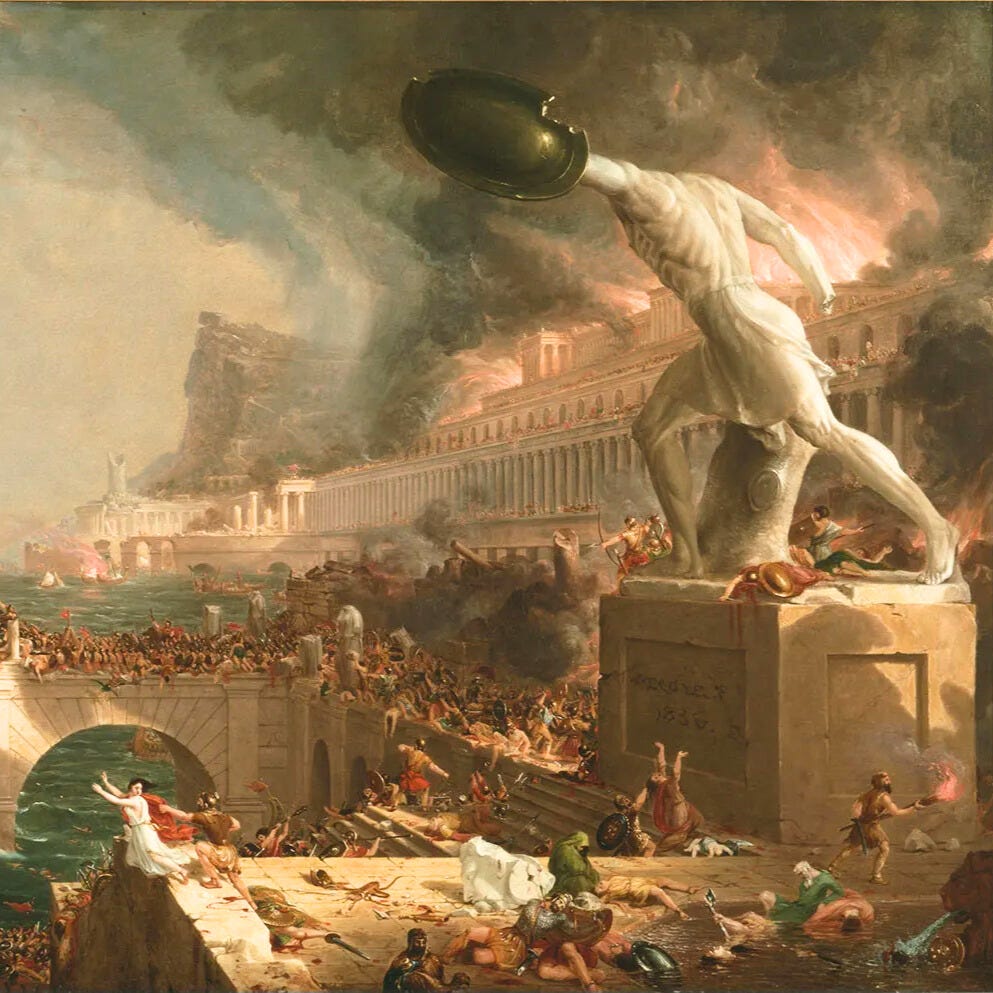
Few men understood the Great Books of Western Civilization like Leo Strauss.
He spent a lifetime studying, lecturing, and writing about the profoundest narratives, thinkers, and ideas of our civilization. But he didn’t study from an ivory tower:
His teachings carried clear political and philosophical implications to help you know yourself, live well, and understand the world. Perhaps the greatest message of his work was this:
Civilization is in crisis because man has embraced modernity and rejected the central idea behind the Great Books.
He argues that you can trace this decline through three stages in history, which he calls “The Three Waves of Modernity.” Each wave introduced a new, “modern,” belief that further eroded the foundations of society.
Today we’ll explore these three waves of modernity, how they helped deconstruct civilization, and what the Great Books can teach us about its renewal.
I offer private mentorship in the Great Books for those seeking clarity of vision and depth of soul. Inquire here.
If you’d like to support this work and receive future writings, you can subscribe below.
What is the Good?
Strauss outlines his warning in an essay The 3 Waves of Modernity.
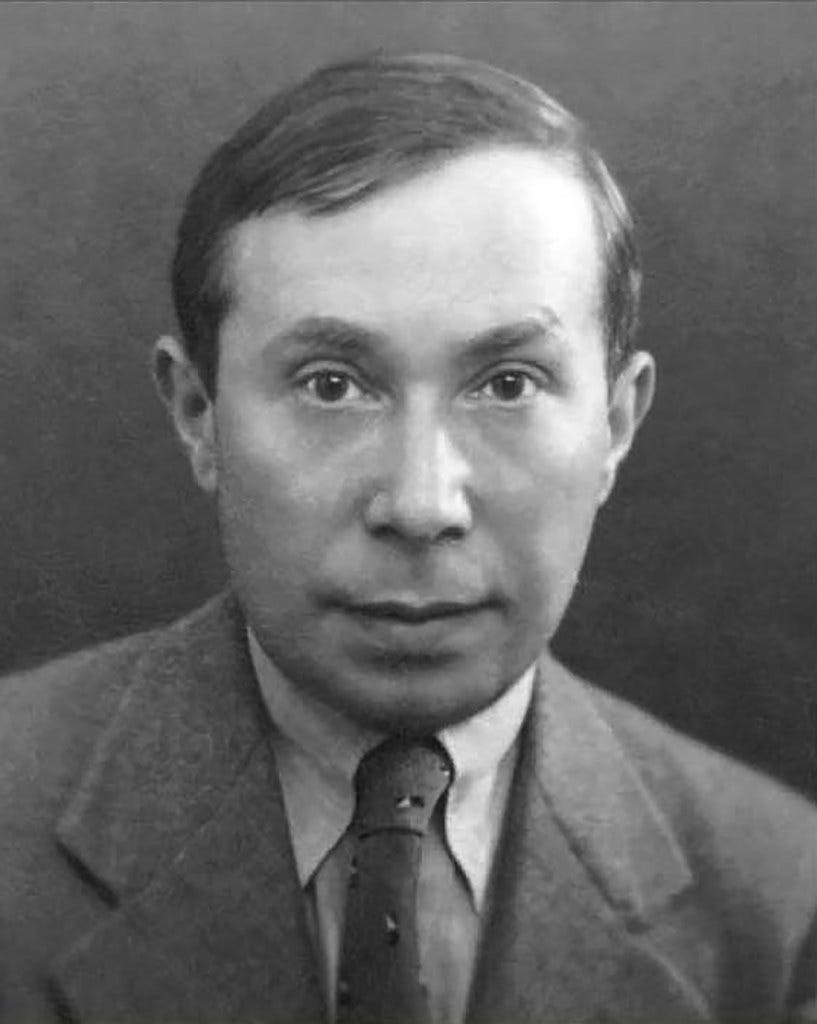
From the opening lines, he describes the key idea driving civilizational rot in the West today:
“The crisis of modernity reveals itself in the fact that modern western man no longer knows what he wants-that he no longer believes that he can know what is good and bad, what is right and wrong.”
Agnosticism is the definitive feature of modernity — that man cannot know truth, good, or evil with certainty. For Strauss, an agnostic society is a dying society:
A civilization divorced from morality is divorced from knowledge of Truth, Good, and Evil. To put it simply, you cannot be good if you don’t know what goodness is. Such is true too for civilization — if you cannot know, nor agree upon, the Good, then mankind cannot be united.
Instead, modern agnosticism gives rise to political ideology (liberalism, communism, fascism), divisive individualism, and increasing polarization.
But if we’re to diagnose the root of modern rot, we have to go back 500 years in time, to an unexpected thinker who begins the first wave of modernity.
Machiavellian Politics
Most thinkers point to Descartes as the founder of modernity, but Strauss suggests someone else:
Machiavelli.
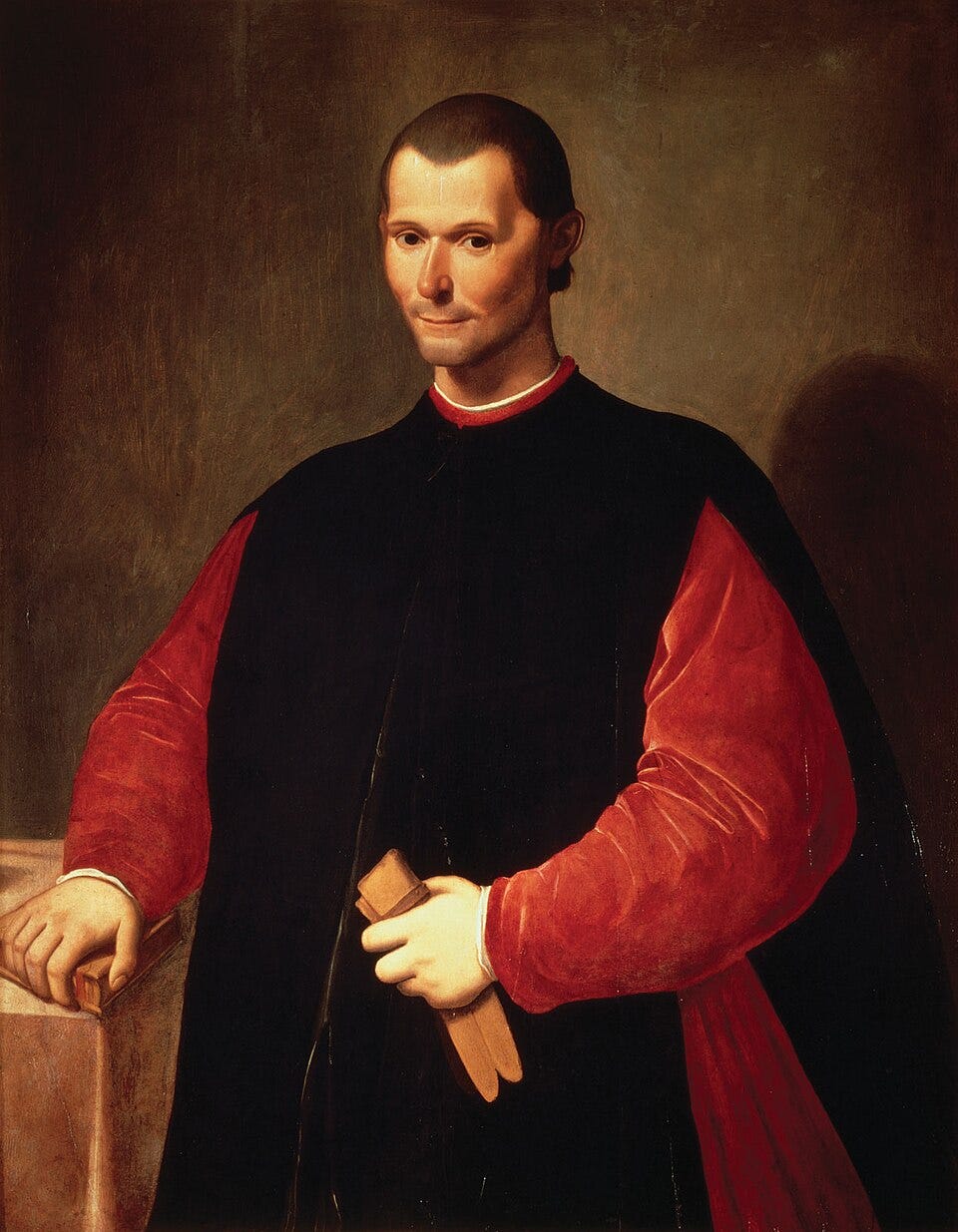
He points out that, prior to Machiavelli, all politics was based on the question, “What is the good life?”
Classical politics was aimed at knowledge of virtue to be in harmony with the Good. Plato says politics aim at harmony of the community through justice. Aristotle says mankind flourishes by taking virtuous action in accordance with the Good. Christian politics agrees, grounding the Good in God.
Machiavelli uproots all of this.
He divorces politics from morality, arguing man was not meant to pursue the good, but maintain power. In The Prince, he argues a prince should know both “how to be bad and how to be good.”
The enlightenment thinkers like Hobbes take Machiavelli’s philosophy a step further. Hobbes argues man only does politics to protect individual rights and security. So modern politics abandons the good and becomes about social engineering. As Strauss laments:
“The political problem becomes a technical problem”
Notice how this shift seems subtle, but drastically lowers the aim of politics.
It’s no longer a practice for building community, practicing virtue, and helping human flourishing. It’s now devolved into a “dirty,” morally ambiguous realm of chaos, power, and manipulation.
So Machiavelli ushers in the beginning of modernity, but it will be the second wave that induces dramatic change in the individual.
Interiority is King
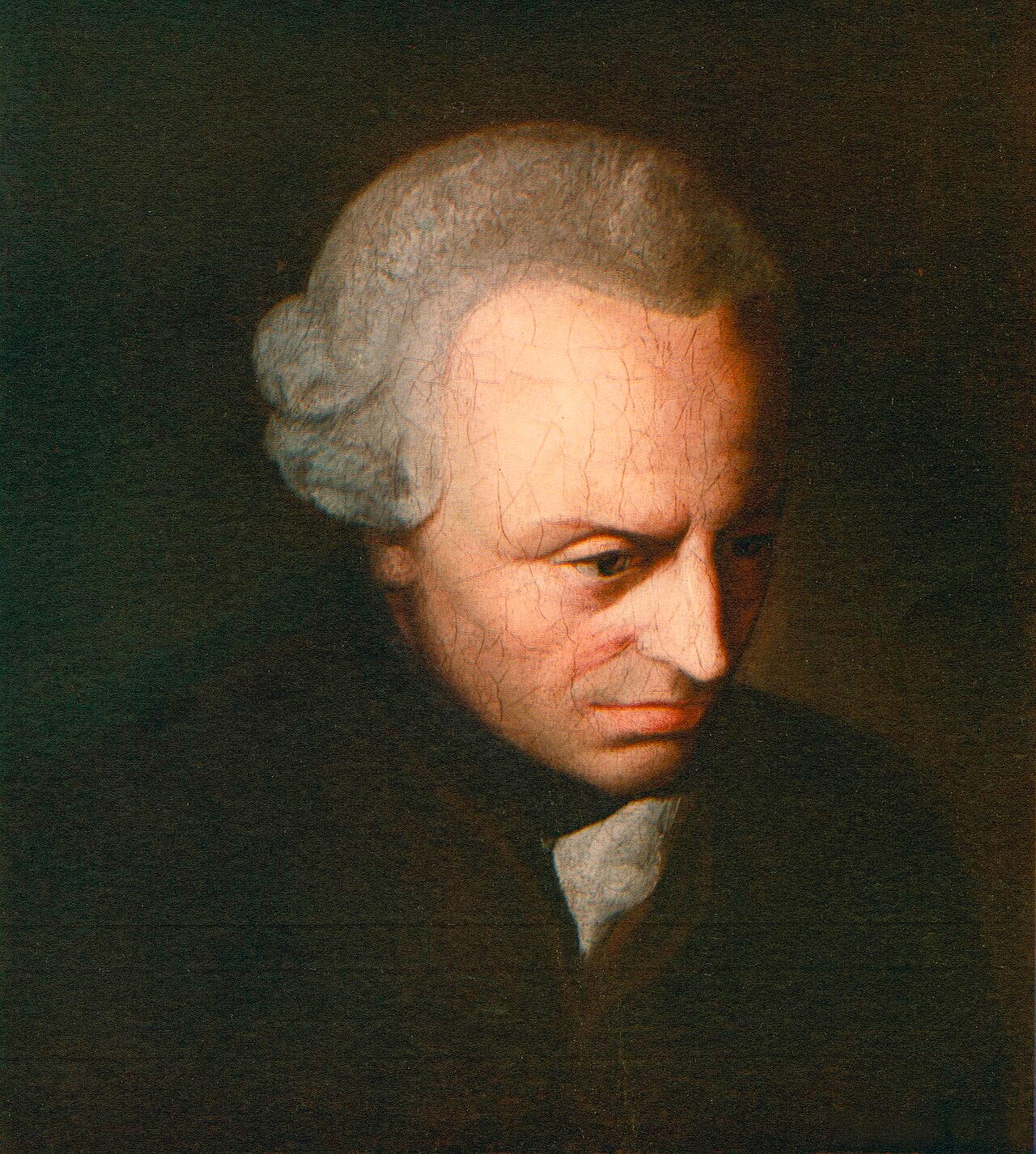
The second wave of modernity is spearheaded by Kant and Rousseau.
Kant argued that morality is grounded in rationality. He held that moral laws are universal — but that they are known through human reason, not derived from nature or external authority.
In other words, the standard of morality is no longer embedded in nature, the cosmos, or the divine, but located in man’s rational will.
This shift away from nature as the standard plants the seeds for what will become modern agnosticism — the belief that we cannot know good or evil as something objective and given. As moderns, we speak of “living our truth,” grounding moral claims in conscience and inner conviction.
Hence, grounding morality in man, rather than in a fixed natural order as classical and Christian thinkers held, begins to dissolve our confidence in objective moral truth.
Rousseau advances this turn inward by emphasizing the primacy of inner experience over external standards. He believed man is naturally good, but corrupted by society.
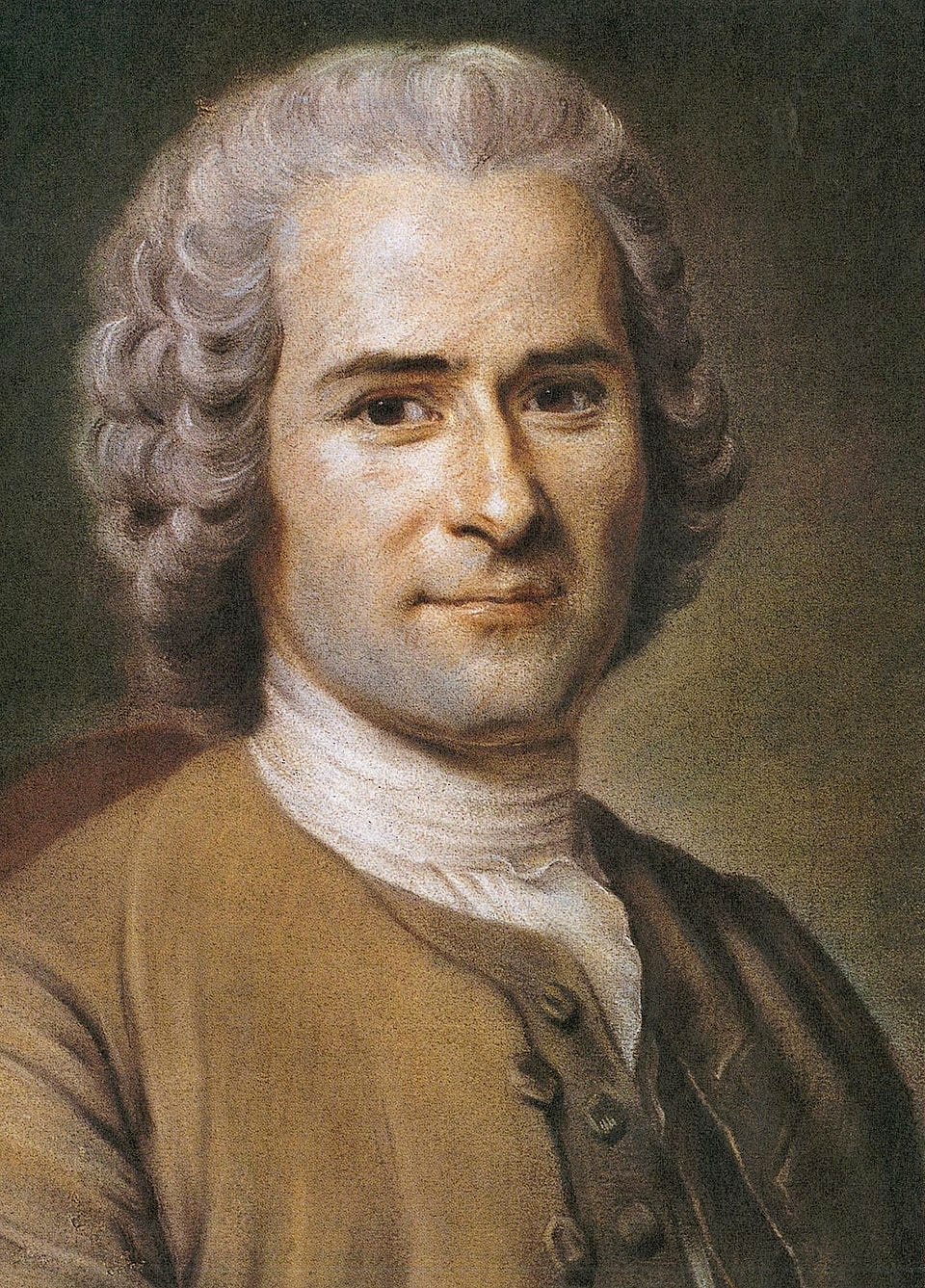
In his own words:
“Man is born free, but is everywhere in chains.”
Where the premodern view exhorted man to cultivate virtue in accordance with a higher order, Rousseau suggests that man’s deepest aim is not toward virtue as conformity to nature, but toward freedom and self-expression. The problem is no longer vice in man’s nature, but constraint imposed from his environment.
We get the sense that Truth, and anything that constrains one’s authenticity or freedom of choice, is oppressive. Anything that is oppressive is inauthentic, and therefore, bad.
Here, we recognize the new, modern morality:
An exhortation to live one’s personal truth.
And finally, we have one last wave of modernity, which Strauss calls the deathblow that finalized the ruin of the West.
He traces it to one thinker who sent the West to ruins, but also hints at the one solution that can save civilization…
