

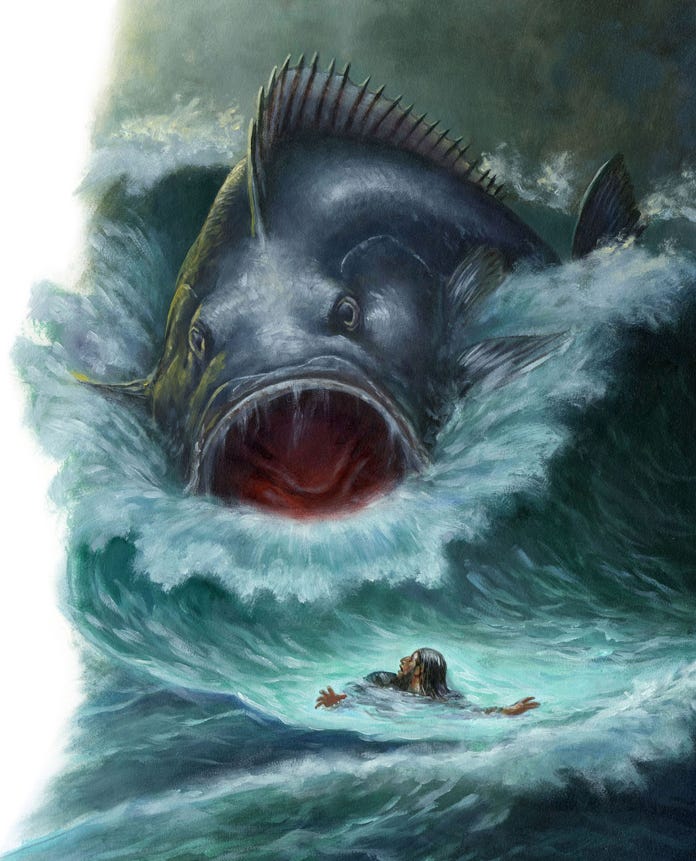
The Leviathan is one of the most infamous symbols in the history of Western civilization.
It inspired Moby-Dick — the greatest American novel ever written.
It’s the namesake to The Leviathan, the magnum opus of Thomas Hobbes, which helped birth liberalism and the modern political order.
And perhaps most famously, The Leviathan is central to the Book of Job in scripture, where God invokes it to confront the problem of evil, suffering, and death itself.
But what, exactly, is the Leviathan? Where did it come from, what does it represent, and why does its image impress itself so deeply upon the human mind across history?
Believe it or not, this beast is more than a mythological figure — it’s an archetype marking the limits of human nature. It suggests that the good life requires recognizing and confronting the monsters in your life.
To understand the Leviathan is to learn the wisdom to live well. To neglect it is to spell out ruin, for not just yourself, but even society at large. Here’s why.
I offer private mentorship in the Great Books for those seeking clarity of vision and depth of soul. Inquire here.
If you’d like to support this work and receive future writings, you can subscribe below.
Beast of the Sea
As stated, the Leviathan’s origins begin in the Book of Job.
Recall that Job was an innocent man, and God allowed Satan to torment him as a test of faith. Job loses his family and livestock, and is struck with severe illness. He maintains his faith, but after months of suffering, he cries out to God in anger, demanding an account of his affliction.
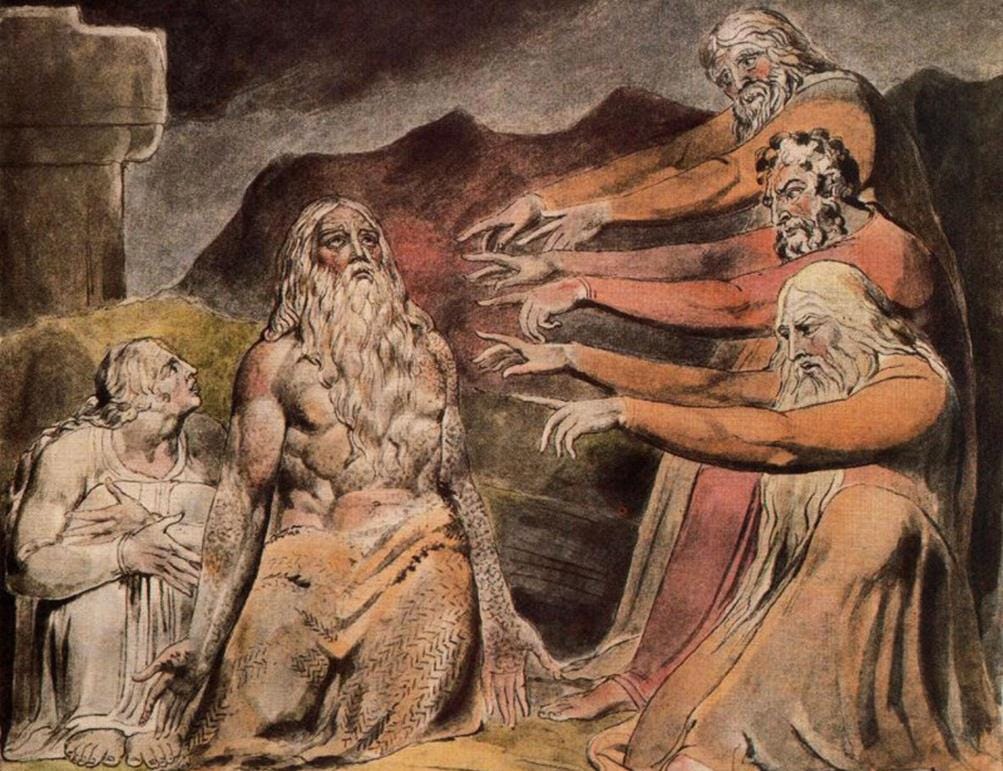
God answers Job’s questions with questions:
Where were you when I created the world? The sun? The stars? The oceans of the deep?
And it is here that God invokes Leviathan:
“Can you pull in Leviathan with a fishhook
or tie down its tongue with a rope?
Can you put a cord through its nose
or pierce its jaw with a hook?”
Leviathan was understood as a vast, serpent-like sea beast. Its origins likely draw from a range of sources — Near Eastern mythologies, and perhaps real encounters with massive sea creatures — but its literal existence is not an essential topic here.
What matters is why God invokes Leviathan as an answer to the problem of evil.
God continues:
“Any hope of subduing it is false;
the mere sight of it is overwhelming.
No one is fierce enough to rouse it.
Who then is able to stand against me?
Who has a claim against me that I must pay?
Everything under heaven belongs to me.”
The point is that man has neither the physical power nor the intellectual capacity to master or comprehend Leviathan.
In other words, Leviathan stands as a symbol of both the forces of nature, and the realities in the universe beyond human control. Man is a finite and temporal creature, created by an infinite being who transcends the cosmos itself.

Such a creature cannot fully grasp the justice, intelligence, or goodness of the infinite. Wisdom, then, consists in recognizing these limits, and entrusting oneself to the Good beyond comprehension.
This is not only wisdom, but the ground of faith — the kind that endures suffering and affirms the grandeur of existence.
Seen in this light, Leviathan is not simply an evil beast, but a symbol of chaos that calls man to humility… but it’s also a warning.
If you do not fear the Leviathan, it will destroy you.
The War on God
If Job represents humility before Leviathan, Captain Ahab represents its opposite.
The novel Moby-Dick follows Captain Ahab’s monomaniacal quest to destroy Moby Dick — the great white whale who took his leg.
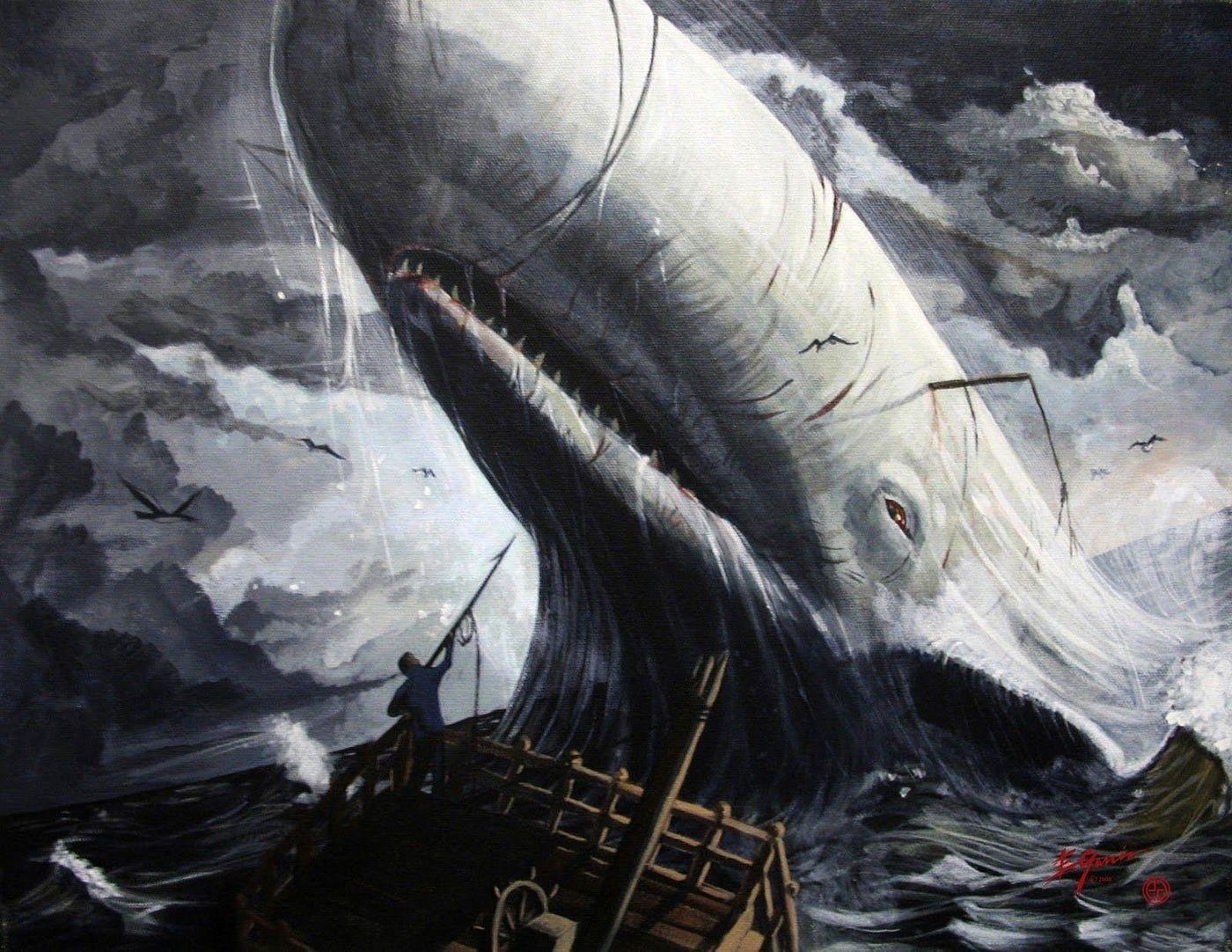
This novel is rife with Biblical allusions, and the whale itself represents The Leviathan.
Ahab’s reaction to his first near death experience is not gratitude, but vengeance:
“Towards thee I roll, thou all-destroying but unconquering whale; to the last I grapple with thee; from hell’s heart I stab at thee; for hate’s sake I spit my last breath at thee. Sink all coffins and all hearses to one common pool!”
Ahab doesn’t see the whale as a force of God’s creation to be respected. Instead it’s an object of hatred. His war on the whale then, is actually a war against nature, reality, and even God itself.
Narrator Ishmael has an interesting musing before Ahab’s ultimate showdown with the whale. His thoughts sound as if he were God warning Job himself about Leviathan:
“Consider the subtleness of the sea; how its most dreaded creatures glide under water, unapparent for the most part, and treacherously hidden beneath the loveliest tints of azure. Consider also the devilish brilliance and beauty of many of its most remorseless tribes, as the dainty embellished shape of many species of sharks. Consider, once more, the universal cannibalism of the sea; all whose creatures prey upon each other, carrying on eternal war since the world began.
Consider all this; and then turn to the green, gentle, and most docile earth; consider them both, the sea and the land; and do you not find a strange analogy to something in yourself? For as this appalling ocean surrounds the verdant land, so in the soul of man there lies one insular Tahiti, full of peace and joy, but encompassed by all the horrors of the half-known life. God keep thee! Push not off from that isle, thou canst never return!”
Just as God told Job he cannot reel in Leviathan, so does Ishmael assert that Ahab cannot slay Moby Dick.
He recognizes the limits of human nature, and learns humility for underneath God.
Captain Ahab does not. His war against Moby Dick becomes an explicit war on God:
“Talk not to me of blasphemy, man; I’d strike the sun if it insulted me.”
Ahab scoffs at God, because he wants to become his own God. Rather than find harmony in the world order, he wants to create his own world order.
And so Leviathan now emerges as a symbol of self-knowledge — the limits of human nature — which Ahab himself scoffs at. Sadly, history does not look kindly upon men who scoff at their limits, seeking to be like gods…
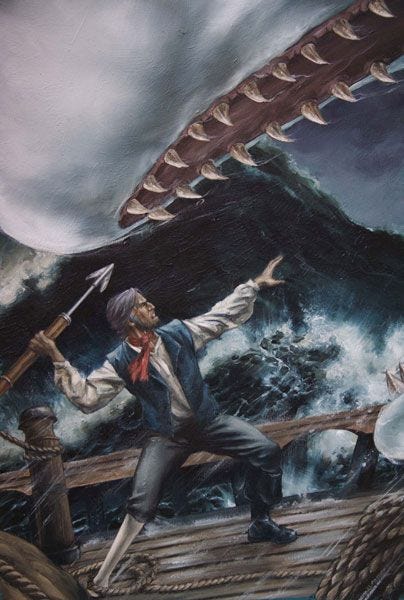
And yet the significance of the Leviathan does not end there.
Thomas Hobbes looked into the eyes of Leviathan and drew a radically different conclusion.
Essentially, he asked:
What if man was not meant to humble himself before chaos, but conquer it? What if man’s safety required the creation of an earthly god? What if man is not meant to seek Heaven, but create it on Earth?
These are core ideas of Hobbes’s Leviathan — a vision of politics that would redefine human nature, reshape the purpose of government, and lay the foundations of the modern political order we inhabit today.
And yet, if Hobbes is mistaken, then mankind has not tamed the Leviathan, but created a new one.
The Leviathan of old represented unmoored chaos. Hobbes’s Leviathan represents totalitarian order — centralized power and the imposition of order upon mankind.
This New Leviathan is far more dangerous than the old, and risks spelling out the ruin of civilization itself.
Here’s why, and what you can do about it.
