

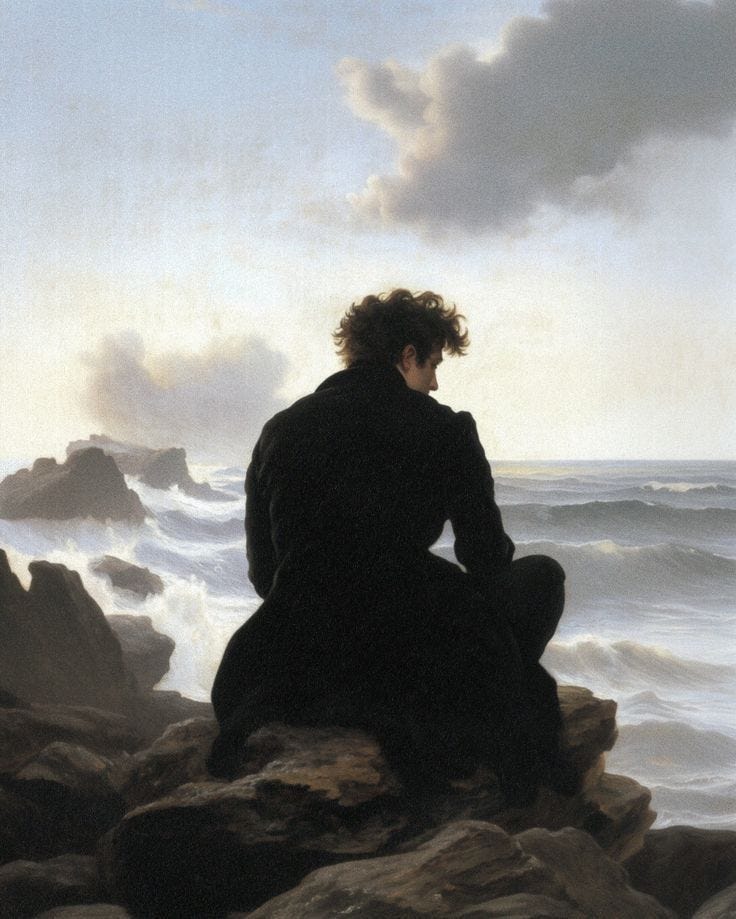
Moby-Dick has the greatest opening line of all American literature:
“Call me Ishmael.”
This three-word sentence — brief as it is — has captured the attention of critics, scholars, and the general reading public for more than 170 years now.
But what exactly is so profound about this simple sentence? Taken in isolation, it’s a mere statement of fact, as simple as an acquaintance introducing themselves… but when you understand the literary context behind this simple affirmation, and Melville’s corresponding genius, you’ll see this simple sentence is far more than a character introduction.
In totality, it becomes a meditation on the Bible, the condition of modern man, and the plight that modern man finds himself in, living in a world defined by skepticism, tension, and uncertainty.
Here’s how…
I am 100% reader-supported. This newsletter is free, but if you’re able to support, please consider a paid membership — it helps my mission of sharing Truth, Beauty and Goodness with maximal reach
As a paid member, you’ll get:
Two full essays a week
Access to all recordings (past & future) of my Great Books lectures on this publication
Eternal gratitude from me
Biblical Roots
As you’d probably guess, there are several layers of meaning stacked on top of the sentence, “Call me Ishmael.”
The simplest layer is that this is the protagonist of Moby-Dick introducing himself. His name is Ishmael, and he’s planning to go on a whaling vessel in search of adventure, hoping to instill meaning into his life and cure his suicidal depression.
But the first layer behind the sentence “Call me Ishmael” reveals itself in its genealogy. “Ishmael” was the name of Abraham’s son in the book of Genesis. He was born to Hagar, Abraham’s slave woman (rather than Sarah, his wife), and was thus born outside the line of the promise, which ran through Isaac, but Ishmael shall be accounted as favored by God nonetheless, on behalf of Abraham.
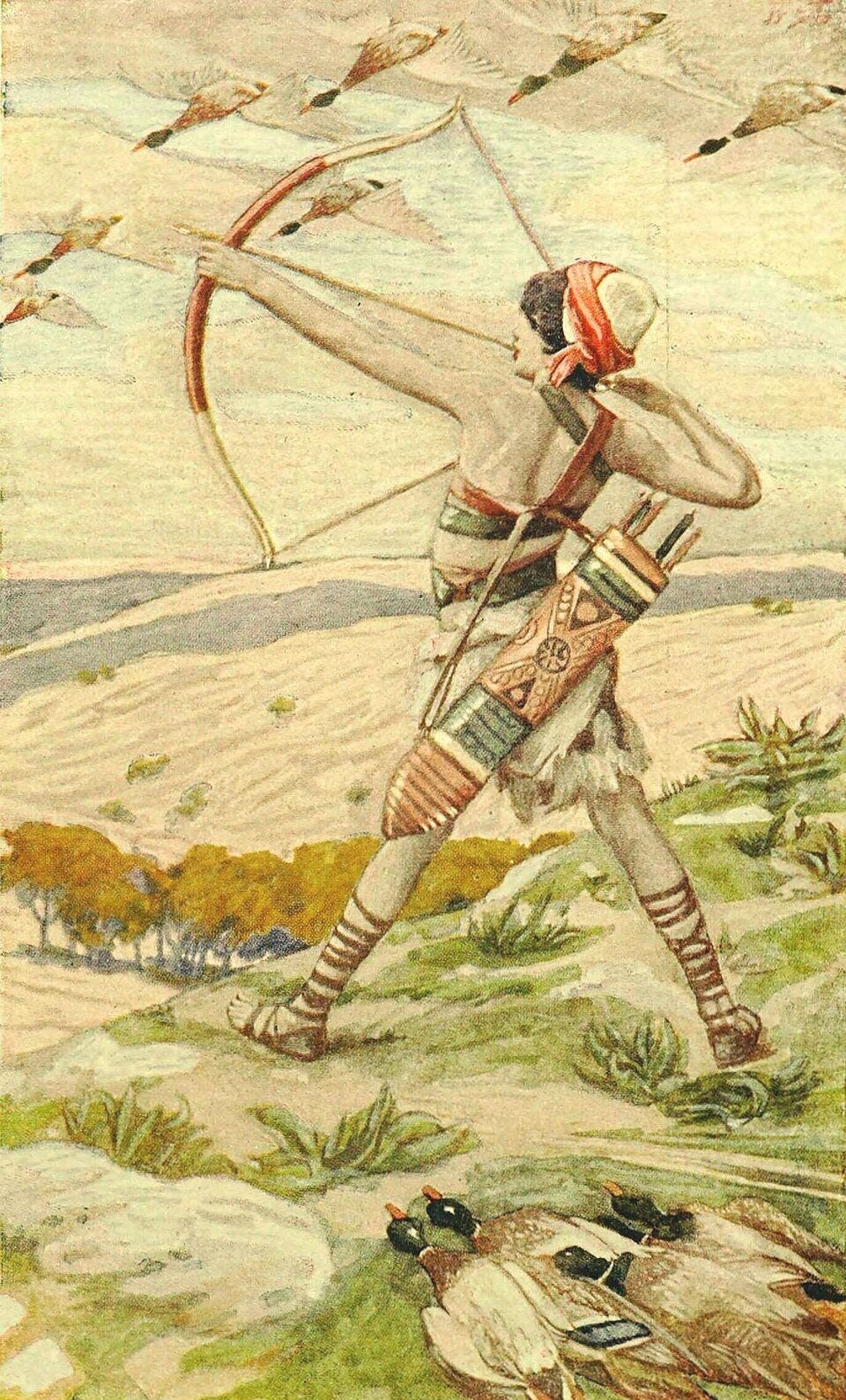
Thus Ishmael goes on to become a “wild man,” who lives in the wilderness. His descendants, the Ishmaelites, will be both friends and foes to the Israelites at various times in biblical history. Therefore, Ishmael and his people inhabit this tension as wild, unmoored, morally ambiguous, yet favored by God nonetheless.
Our protagonist of Moby-Dick — named Ishmael — is donning this lineage for himself. He can’t bear living the banal life of 19th-century Manhattan, and the spiritual malaise of office work or alienating labor. He muses that the “wilderness” of the sea has an enchanting power of meaning:
“Why is almost every robust healthy boy with a robust healthy soul in him, at some time or other, crazy to go to sea? Why did the Persians hold the sea holy? Why did the Greeks give it a separate deity?
Surely all this is not without meaning. And still deeper the meaning of that story of Narcissus, who because he could not grasp the tormenting, mild image he saw in the fountain, plunged into it and was drowned.
But that same image we ourselves see in all rivers and oceans. It is the image of the ungraspable phantom of life; and this is the key to it all”
Not only does he affirm the sea as a place of adventure, but he calls upon the myth of Narcissus — the man who fell in love with his own image in the water, and stared at his ungraspable image all day.
Ishmael — and modern man who shares in his misery — seeks the ocean and its wilderness waters as not just a means of escaping civilization, but uncovering his true identity. In this discovery lies hope for finding a newfound meaning and love of life.
Thus, Ishmael is both the biblical wanderer in the wilderness, detached from civilization, and the man who believes modern man’s hopes for a renewed vitality come in a return to the wrestling, chaotic, uncivilized waters of the sea.
And yet still, we have just touched the surface of the original sentence’s meaning: “Call me Ishmael.”
The Self-Made Modern Man
Where do we go from here? What more can we draw from such a sentence?
Next we have to consider the strangeness of its wording. “Call me Ishmael” is an odd way to introduce yourself.
Rarely do we say “call me X” when introducing ourselves. Oftentimes, that denotes a nickname: “My name is William, but you can call me Bill.”
The implication is that Ishmael may not be our protagonist’s birth name, but a name he gave himself to speak to his new identity as a sailor, wanderer, and sojourner.
What’s also notable — we know nothing of Ishmael’s past. The story begins in the present, with Ishmael traveling from Manhattan to Nantucket, but we never learn of his background, lineage, or upbringing, besides a few vague references to having an educated background.
The idea is that Ishmael becomes a paradigm of “modern man.” Arguably, this paradigm of modern man was made famous through Don Quixote — colloquially known as the first novel, and the first “modern” book written. Don Quixote was innovative because we know nothing of the protagonist’s past. He’s simply a Spanish hidalgo who goes crazy from reading chivalric books, claims he’s a knight named Don Quixote, and goes off on insanity-laden quests of heroic chivalry.
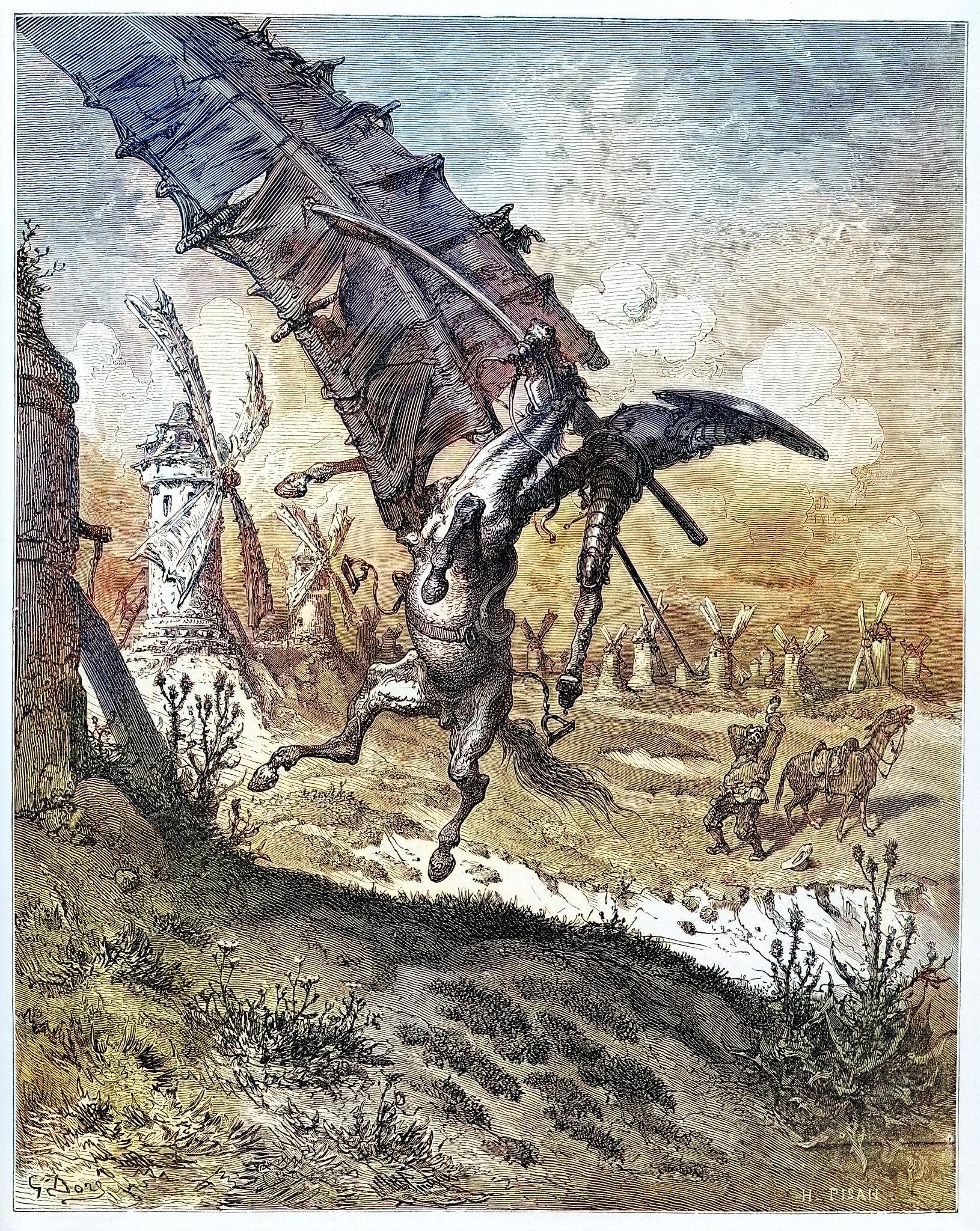
Don Quixote claims the title of modern novel because its character is self-invented. Whereas premodern man understood himself as a man who inherited a civilization from his fellow man, and a cosmos from God, he thus found his identity through piety to his family, country, and his creator. Modern man, by contrast, is the man of self-invention. He has no theological roots, minimal recourse to patriotism, and constructs his own meaning by forging his own path.
This parallels Ishmael — self-created, self-named, and going on an adventure at sea to forge his own life’s meaning. This sounds exciting, but it comes with a catch, namely, Ishmael is suicidal. He’s not alone; rather, this is the burden of the “self-made man.” If man must make his own meaning, then his meaning is subjective, and if it’s subjective, then it may be meaningless.
To rephrase it, the modern man of self-invented autonomy finds himself alone in a chaotic and dangerous universe, left to solve the problem of existential despair for himself.
“Make your own meaning, or perish,” is perhaps the slogan of this modern man. Ishmael takes this proposition seriously — inventing his own identity — and to his credit, it seems to be at least temporally effective, on account that he’s still alive to tell us his story.
Whether Ishmael became fulfilled, however, remains an open question.
Rediscovering the Restless Heart
The final step that makes “Call me Ishmael” a brilliant sentence is that it soon becomes apparent Ishmael’s story is not unique to himself.
There is an invitation, perhaps deliberately designed by Melville, for the reader to step into Ishmael’s shoes. We too are “modern men,” who thus inhabit the same universe — if not an even more modernized one — than Ishmael did.
This suggestion can be both triumphant and tragic, perhaps simultaneously.
On the positive side, “Call me Ishmael” becomes an invitation for us to choose our own adventure, forge our own path, and create our own destiny. Rather than be bounded by tradition, we have the opportunity to live how we shall choose, and proclaim on our deathbeds, “I did it my way!” as Frank Sinatra once sang.
On the other hand, this invitation invites us into the existential tension of our age — an age that has lost faith in theology, philosophy, and man’s place in the cosmos. We lack certainty in understanding our nature and life’s purpose. The modern instinct is to merely hide this angst with the rushes of “modern life,” and its thrills, pleasures, and demands. To rest with the uncertain skepticism of our times is to invite discomfort, fear, and perhaps existential suffering, as it did Ishmael. And yet, this is a courageous act, and perhaps the act that sets you on a life towards adventure, as it also did Ishmael.
This final idea of the opening sentence should rest on our minds as an invitation — into the world of Moby-Dick, the mind of Ishmael, the tensions of Melville, and the identity of the “modern man.”
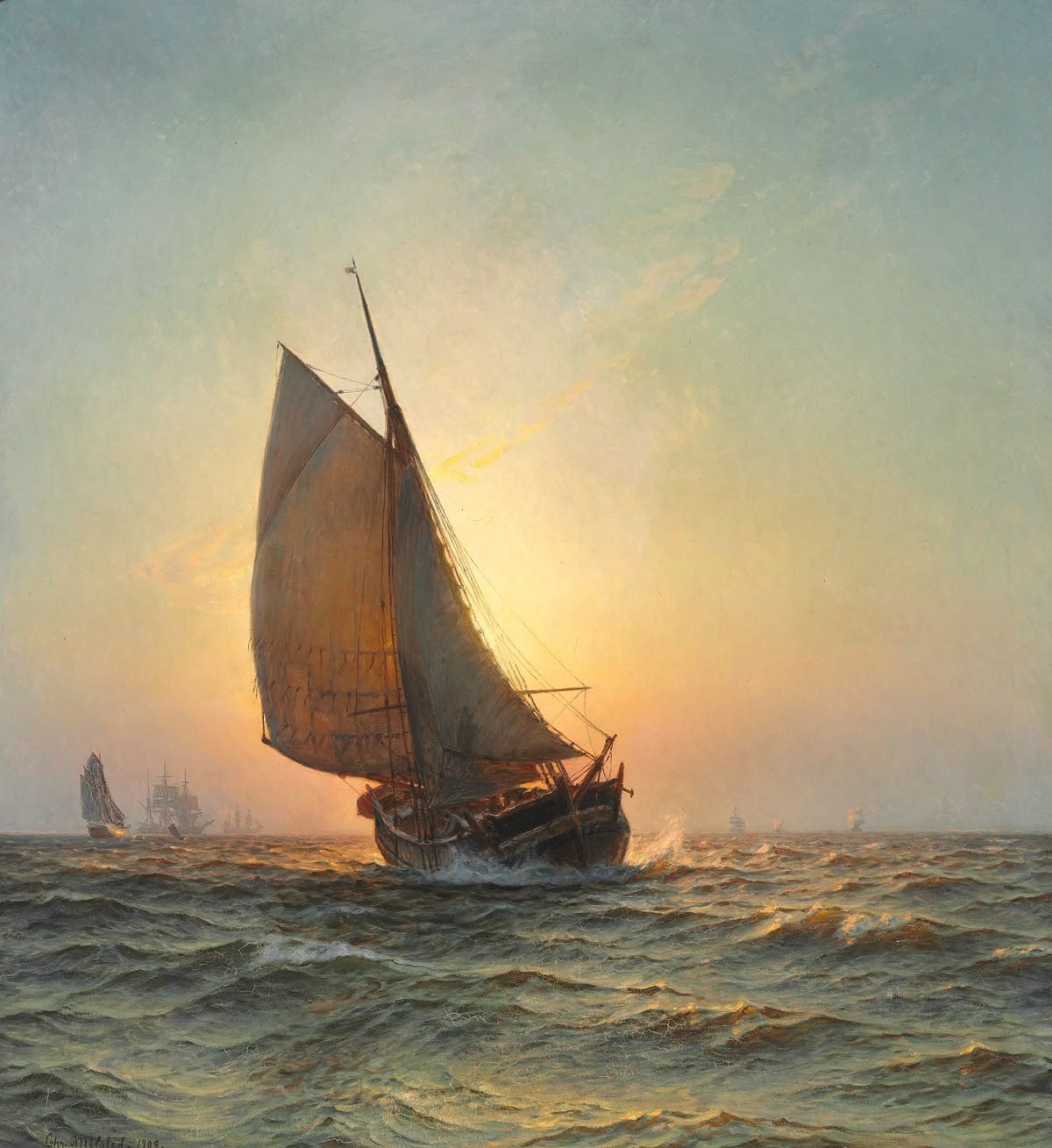
In such an invitation comes a certain restless yearning for life, as Ishmael affirms:
“I am tormented with an everlasting itch for things remote. I love to sail forbidden seas, and land on barbarous coasts.”
Such is Ishmael’s plight — a restless itching, yearning for truth and discovery in the remote areas of life, yet seemingly never satiated. This is the final tension of the modern man — liberated to do whatever he desires, but fundamentally dissatisfied and forced into a perpetual striving without rest.
That is Ishmael’s irony: he is free to do anything but rest in leisure. Free to become anything he wants, but not free to merely rest and be.
And this is Melville’s final question, which he never seemed to answer himself, namely, what is the secret to life that brings man peace?
Augustine’s famous answer was that the restless human heart remains so until it rests in God, but that was a premodern solution for premodern man. Modern man has lost his faith in God, and thus continues staring into the horizon of the sea like Ishmael, tormented by desires with no end in sight. Not strong enough to abandon his faith in life, nor strong enough to maintain his faith in God.
Perhaps this is the closing image — all men reach the same crossroads as Ishmael did, and have a choice to make. When asked of life’s meaning, they can respond in faith, or they can respond in despair, but their response is required. And the response is the most important decision that will define man’s life.
I am 100% reader-supported. This newsletter is free, but if you’re able to support, please consider a paid membership — it helps my mission of sharing Truth, Beauty and Goodness with maximal reach
As a paid member, you’ll get:
Two full essays a week
Access to all recordings (past & future) of my Great Books lectures on this publication
Eternal gratitude from me