

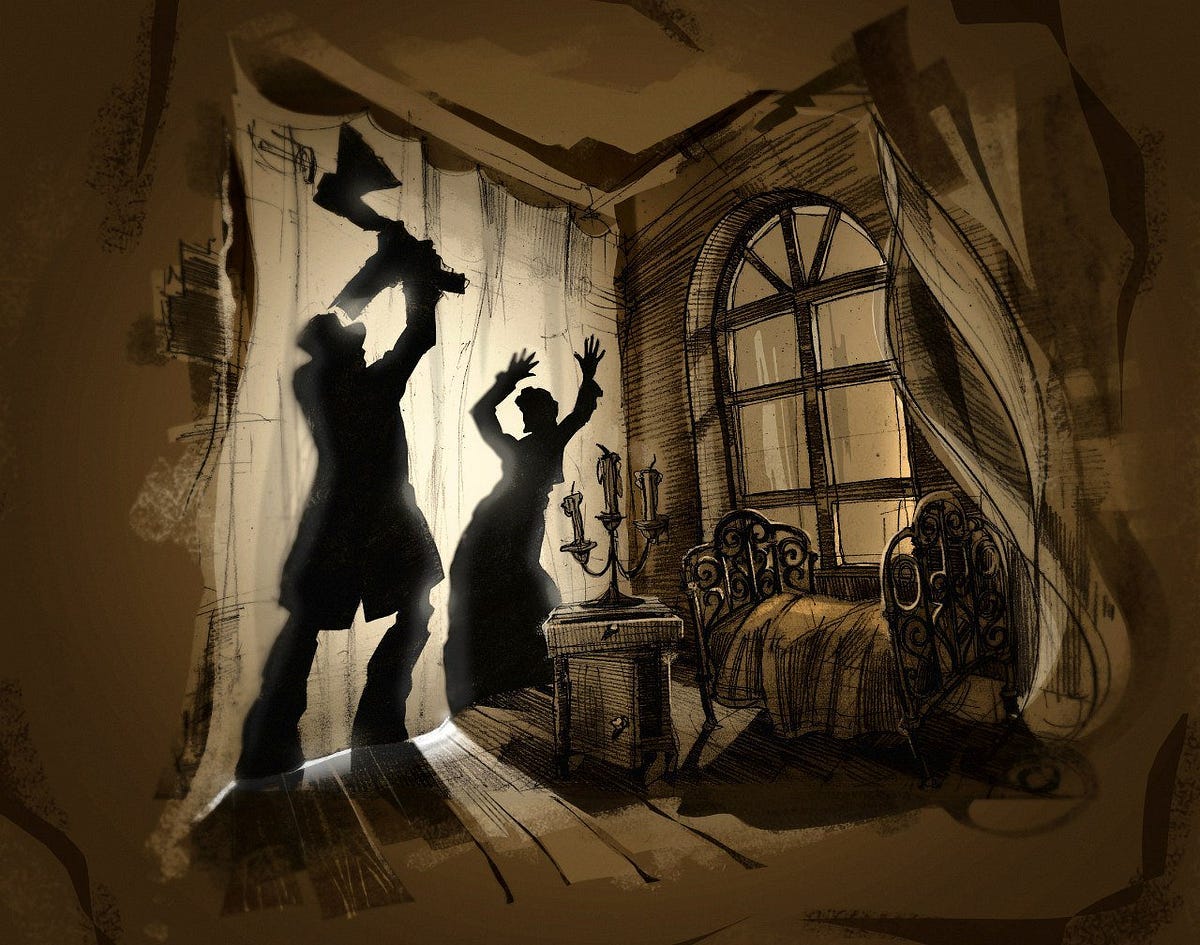
Dostoevsky’s Crime and Punishment is perhaps his most famous work.
It follows protagonist Raskolnikov and his attempt to become an “extraordinary man” — someone strong enough to liberate himself from traditional morality.
He famously commits a gruesome murder, and the book traces his mental deterioration thereafter.
Most people understand this novel as a discourse on the natural moral law and the human condition — that morality is objective, and man cannot transgress it without suffering.
But what’s often overlooked is this:
What turned Raskolnikov into a murderer in the first place?
Dostoevsky’s genius shines brightest here. He grasped a key truth about the human condition, and foresaw dangerous ideas from modern philosophy taking shape across Europe.
It was these ideas that not only made Raskolnikov a murderer, but helped pave the way for Russia herself to become a genocidal communist state a few decades later.
Here’s what Dostoevsky saw, what it reveals about the human condition, and the antidote to the murderous spirit of Raskolnikov.
I offer private mentorship in the Great Books for those seeking clarity of vision and depth of soul. Inquire here.
If you’d like to support this work and receive future writings, you can subscribe below.
Dostoevsky’s Enemies
First, if you want to understand Dostoevsky, you have to know his ideological opponents.
His four great novels (C&P, Idiot, Demons, and Brothers Karamazov) are all in part polemics against 19th century European philosophy.
Broadly speaking, this philosophy was grounded on secular humanism, liberalism, and technocratic optimism. To put it simply, mankind began to reject Christianity at scale, and envisioned a new anthropology which suggested this:
Human nature is malleable, and mankind creates his own morality. Humanity ought to be properly educated to create rational, selfless individuals, so that we can be liberated, happy, and live in highly developed, utopian-like civilizations.
Dostoevsky believed that this philosophy was disastrous.
He demonstrates through his books that those who believe such ideas can commit human atrocities in the name of “rationality,” (and be logically consistent in doing so).
Dostoevsky’s ultimate mission — if not to get Russia to re-embrace Orthodox Christianity — was to at least convince man that his nature is fundamentally flawed and fallen.
And nowhere does he argue this better than through Raskolnikov of Crime and Punishment.
The Making of A Murderer
As previously stated, Raskolnikov is the protagonist who plots (and follows through on) becoming an axe murderer.
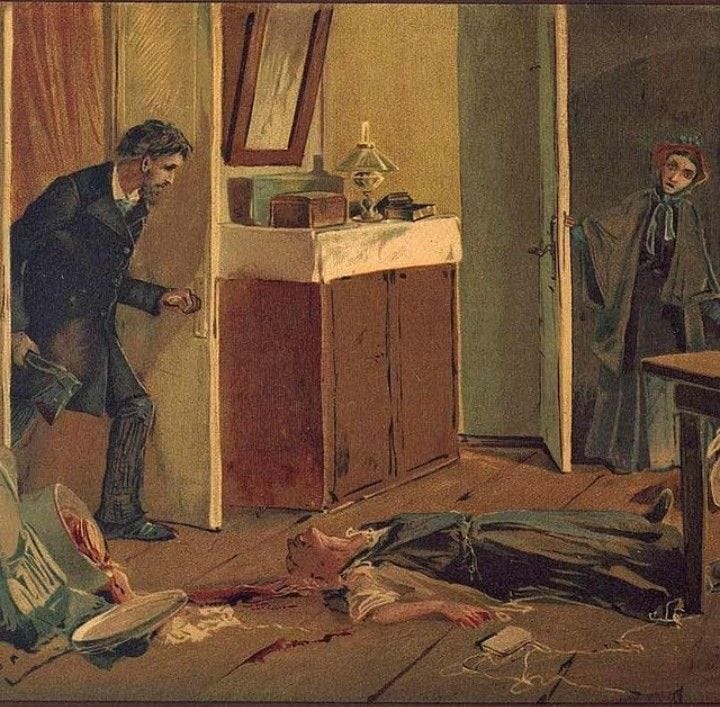
He murders an old woman — a nasty pawnbroker — rationalizing that he can use her wealth for the betterment of humanity.
So his surface goal is “humanitarian,” but his deeper goal is ideological — that he wants to rewrite morality itself. He wants to commit murder and call it righteous. He’s not merely waging a material war against poverty, but a spiritual war against the moral order of reality.
But how exactly did he become so depraved?
The novel makes it clear that he was mentally poisoned long before he committed the murder. The beginnings of his corruption are summed up in one word:
Isolation.
Raskolnikov lives not just in poverty, but alone in St. Petersburg.
To be more specific — he’s been separated from his family, has dropped out of college, and distanced himself from all his friends (and rejects them when they reach out). He spends his time festering alone in his impoverished apartment, cut off from the public.
It’s no accident that his isolation makes him wicked. The classical tradition has always held that man’s nature is fulfilled in community.
Aristotle himself put it best:
“He who does not live in a city is either a beast or a god.”
Aristotle’s point is that human beings are political by nature — we are meant to live in communion with others. A man who lives in isolation becomes either bestial or godlike (neither of which is to be praised), because his nature is corrupted. He is, quite literally, dehumanized.
In ordinary life:
Friendship teaches us regard for others.
Marriage and parenting teach selfless love.
Work teaches sacrifice and civic duty.
A man divorced from society — living in isolation — festers.
As Scripture reminds us, “it is not good for man to be alone.”
This is not to say that man has no place to withdraw from society. The monastic tradition, for instance, finds grace in a sacrificial retreat in pursuit of God. But such withdrawal is ordered toward love, not rejection — unlike the antisocial isolation of Raskolnikov.
But Dostoevsky goes even further.
He doesn’t merely show that isolation corrupts Raskolnikov — he shows exactly what evils arise from it.
He writes them out through Raskolnikov’s manifesto, “On Crime,” where he lays out his entire philosophy of human nature.
It’s the philosophy that made him an axe murderer — and the ideology that would later lead Russia into destruction and mass murder under the USSR.
Here’s what Raskolnikov says…
