

Aristotle said that he who cannot live in a city is either a beast or a god. And when you understand this quote, you’ll understand Homer’s Odyssey like never before.
And if you want to fully appreciate both Aristotle’s wisdom and Homer’s genius, then there’s a single concept to learn that is central to both — xenia.
This term becomes a running theme throughout the entire Homeric epic. On the surface, the term simply refers “guest-friendship,” or the practice of a host welcoming strangers into his home.
But we’ll see that both xenia, and Homer’s Odyssey, are both about far more than mere hospitality.
In totality, xenia not only teaches us about the Ancient Greek world, but also enrichens our understanding of human nature, our connection to the divine, and the very practice that makes human civilization possible.
I offer private mentorship in the Great Books for those seeking clarity of vision and depth of soul. Inquire here.
If you’d like to support this work and receive future writings, you can subscribe below.
What is Xenia?
First, let’s fully explain the process of xenia.
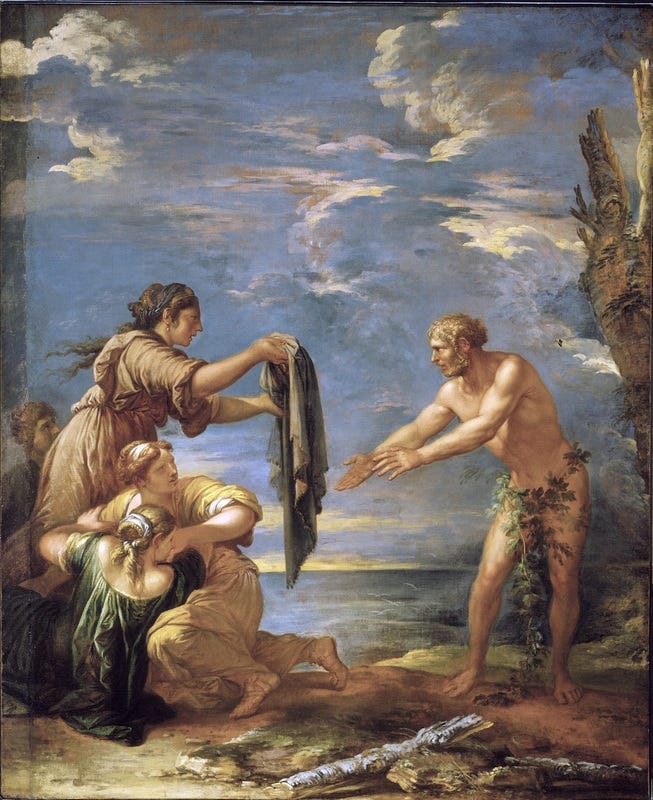
If you were a travelling guest in Ancient Greece, and approached a strangers home, xenia would require this:
The host would welcome you into their home, providing you food and shelter. Then, they would ask you where you come from
Then you as the guest would explain your travels — a form of both entertainment and information exchange
Finally, material gifts were exchanged in the conclusion, creating a material bond of friendship between you and the host
What’s more interesting is this bond was hereditary. Your father’s guest-friend was your guest-friend, and vise versa.
In other words, this practice of xenia created friendship and social bonds that transcended politics, nationality, and even generations.
Now this seems like a socially pragmatic tool to build trust in Ancient Greece, but xenia was arguably the very lifeline of human civilization itself.
To fully appreciate xenia, we have to zoom out and understand the brutal reality that was life in Ancient Greece in the Bronze Age.
Bloody and Lawless
To be blunt, life was brutal in the Bronze Age.
The country was composed of city-states constantly at war with each other. Many lived with the expectation they would have to fight and die at a relatively young age.
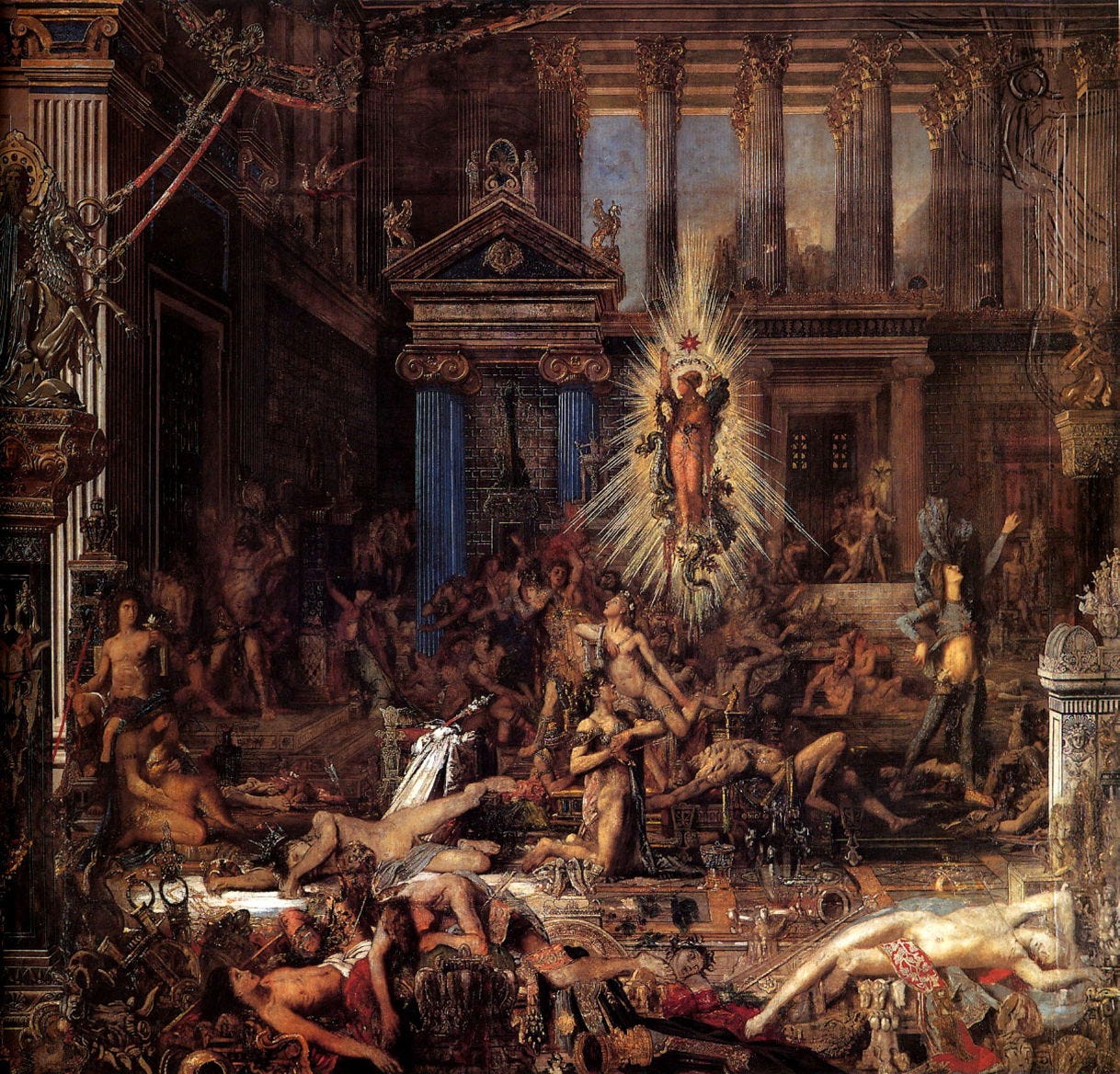
Lawlessness dominated the realm as well. There was no centralized police force, nor government, that can mandate law and order — which means the moment you left your polis, you were basically in the wild with no rights… and it was quite dangerous to leave the polis:
Pirates dominated the seas, bandits dominated the roads.
Life out of the city was something of a Hobbesian nightmare, where might makes right, and justice is the will of the stronger.
Therefore, men were incentivized to stay at home, making travel, trade, and transmission of information impossible. In other words, so long as lawlessness dominated the wild outside of the city, civilization would never develop beyond this bloody and tribal warfare amongst city-states.
How exactly then, could mankind rise beyond this brutal world?
In comes xenia as the solution.
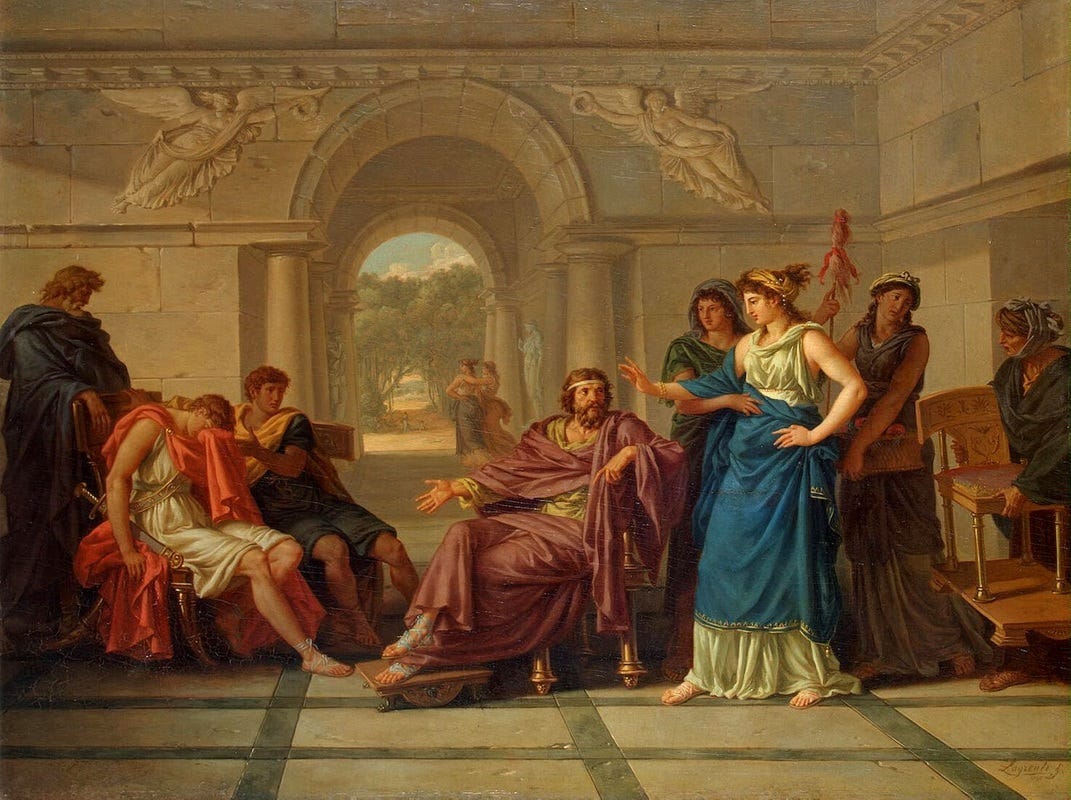
Xenia became one of the few universal moral norms agreed upon throughout Greece — that any time a wandering travel arrived at the door of a host, that host was obligated to take him in and entertain him. Pragmatically, as explained above, this made travel possible, and built trust that transcended the polis.
Yet a closer examination shows that Xenia doesn’t just help individual travels. It becomes the bone marrow of high-trust civilizations.
Consider again that xenia was hereditary — trickling down from generation to generation — and even friends could be sent to another’s house on behalf. This meant that, as you traveled, you could reasonably build social networks throughout the realm, that would be open to you and even friends sent on your behalf.
To get a sense of how serious Xenia was — Homer’s Iliad showcases Diomedes and Glaucus refusing to fight each other after realizing their father’s shared guest-friendship. Instead, they share gifts and part ways in the middle of battle… Xenia even transcended war itself.
The final question, however, is how was xenia made possible? How was this a universally agreed upon moral norm in a world that was largely lawless?
The answer is piety. Xenia was made possible because it was not just a mere social custom, but a decree of the divine. It was stated that Zeus was the patron of xenia, meaning anyone who violated guest-host friendship, risked incurring the wrath of the gods themselves.
This set the basis for centuries of political thought hereafter — that if politics and civilization is to arise, and thrive, it must be a pious civilization who respects the divine. In fact, Plato’s Laws goes so far to argue that atheism is a political crime that threatens to undermine the stability of civilization itself!
So now, we understand that xenia is a divinely mandated custom that builds the very trust that makes civilization possible.
Finally, as we return to the Odyssey, we can understand the grave threat the suitors pose…
Slaying the Suitors
As a reminder, The Odyssey is not just a story about Odysseus’ return home, but also his stand off with the wicked suitors.
Recall that Odysseus is king of Ithaca. The suitors were the boys who were too young to accompany Odysseus and his men to war.
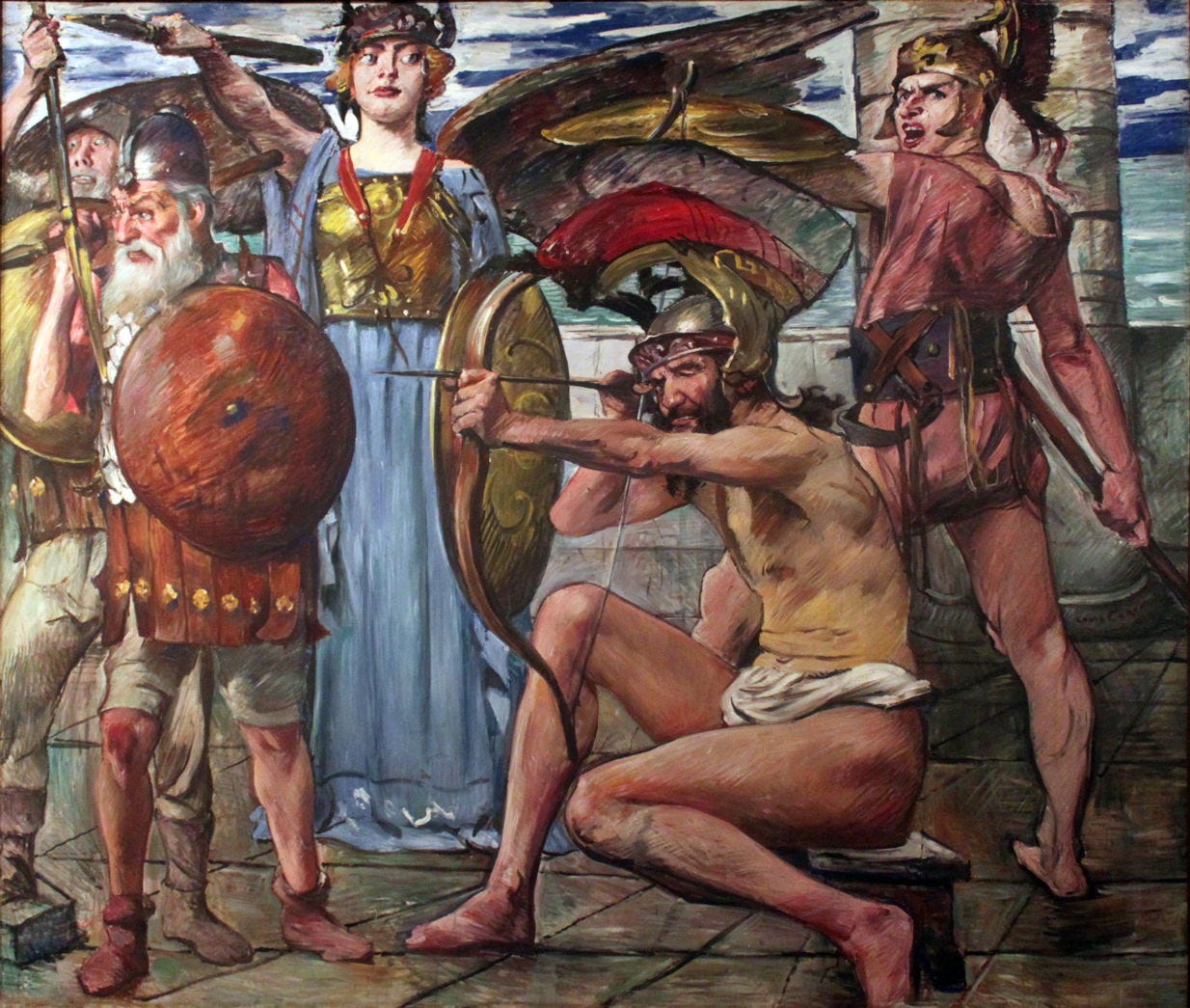
It’s now been 20 years, however, meaning the suitors are full grown men who were raised without fathers. They are vicious, and stand uncontested as the most powerful men in the kingdom.
They also believe Odysseus to be dead, and have been vying for Penelope’s hand in marriage by abusing xenia:
They arrive everyday as guests and consume Odysseus’ livestock/supplies, without offering any reciprocal gift-exchange. It’s a parasitic relationship that shirks the natural philosophy of xenia that is built on mutual good will and friendship between guest and host.
This means that these suitors are not only trying to steal Odysseus’ wife, nor consume his wealth, but are effacing the divinely instantiated code that makes civilization possible. If they succeed — if one of the suitors marries Penelope and takes the throne of Ithaca, the kingdom will be subject to tyrannical rule that shirks good will, trust, and the divine.
In other words, Ithaca will become bloody, violent, and vicious, razing itself or its neighbors to the ground.
When Odysseus returns, the conclusion is indeed bloody and jarring, but it’s a divinely sanctioned slaughter because it goes beyond personal revenge. Odysseus is not just protecting his wife, nor his wealth, but the very code of morality that established the kingdom of Ithaca.
The fate of xenia is none other but the fate of civilization itself.
Beast, God, or Man
This theme of xenia takes on a whole new meaning once we recognize a final truth:
Odysseus is an allegorical character of mankind.
He represents you, me… or effectively what it means to be human.
How so?
We can recall that Aristotle famously said that “he who cannot live in a city is either a beast or a god.”
He meant that man is political by nature, and therefore his nature reaches its full purpose when he learns to live in harmony with his fellow man.
To live outside the city is to be bestial or god-like (and god-like in Ancient Greece means wrathful and cruel, not virtuous in the Christian sense).
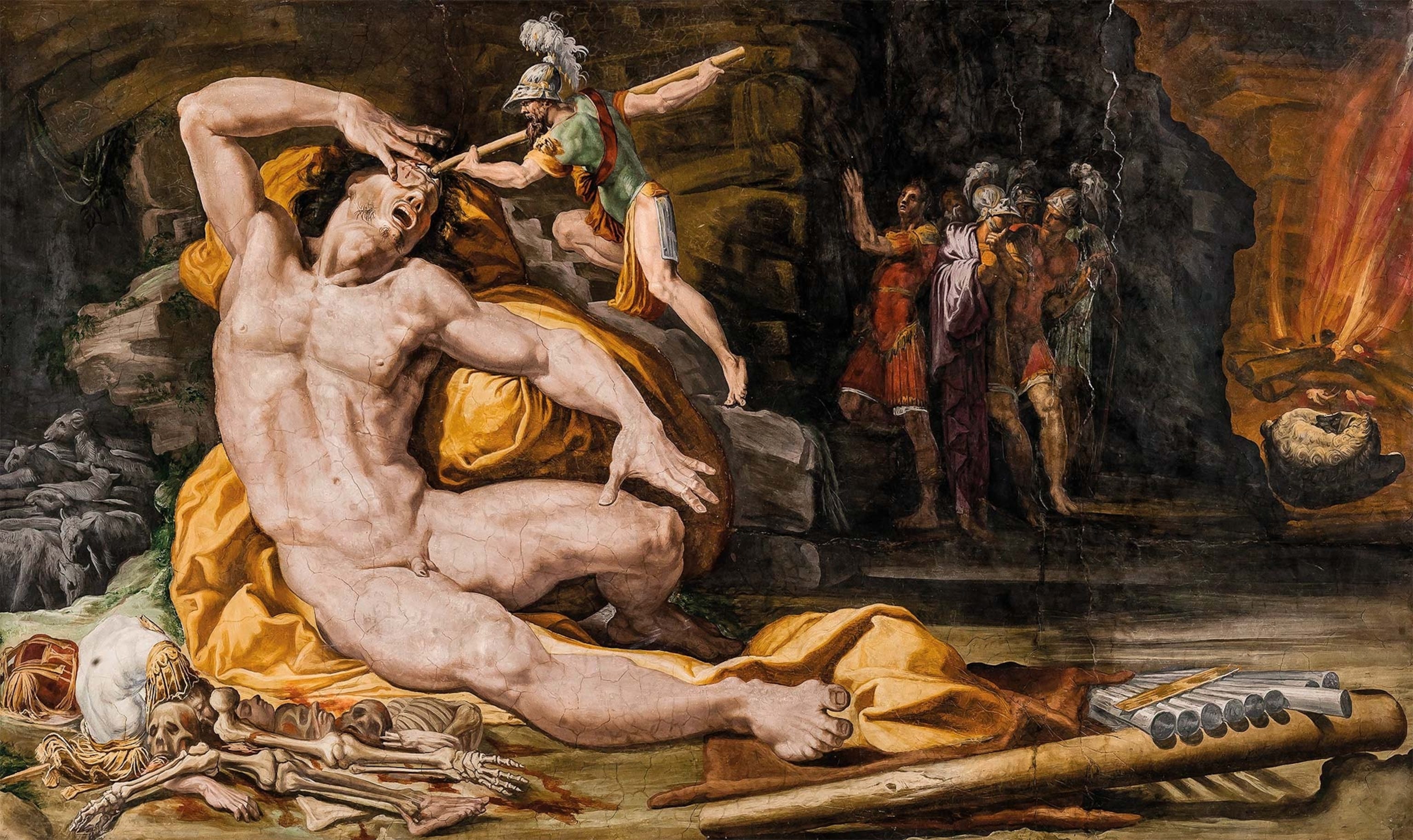
This is precisely what Odysseus encounters on his journey home. He constantly encounters gods, goddesses, and bestial creatures, but no human beings. The threats posed on his journey threaten not just his life, but even his humanity — that he may become god-like or bestial (a corrupted soul). Only when he arrives in Ithaca does Odysseus reunite with his family, and find his soul flourish in virtue.
Thus, Odysseus’ quest to defend his house, and his kingdom, is also a quest to defend his own humanity. If Ithaca falls, he and his fellow man will be forced to be bestial or god-like due to necessity. It’s only the peace, stability, and virtue of the polis that helps instantiate man to be virtuous himself.
And as an allegorical character, Odysseus’ epic reminds us that we too face a similar reality. That civilization is a fragile thing — hard to build and difficult to maintain — but to maintain it is to keep our own humanity intact. The trial of Odysseus then, is nothing but the trial of xenia, or the trial of mankind itself!
To fully appreciate the Odyssey is to recognize that you too are Odysseus — that you’re not just searching for home, but have a duty to build, maintain, and protect the very home you’ve built.
Such duties demand much from us, but also give us the promise of both a meaningful life and a just civilization. And a life devoted to preserving civilization is a life well-spent indeed.
I offer private mentorship in the Great Books for those seeking clarity of vision and depth of soul. Inquire here.
If you’d like to support this work and receive future writings, you can subscribe below.
This framing is so crucial for the text. Seeing how it is betrayed not just by the suitors but in the scene with the Cyclops are pivotal moments in The Odyssey.
It reminds us too that though this text speaks to us, it is deeply rooted in Greek culture. I wonder what Nolan will do.
Another elegant post that communicates deep to deep.
One comment:
At a time when men were expected to die so young (30’s?) if Penelope’s suitors were 20 years her junior they were either more con artists than Romeo’s or she dined on ambrosia of the gods.