

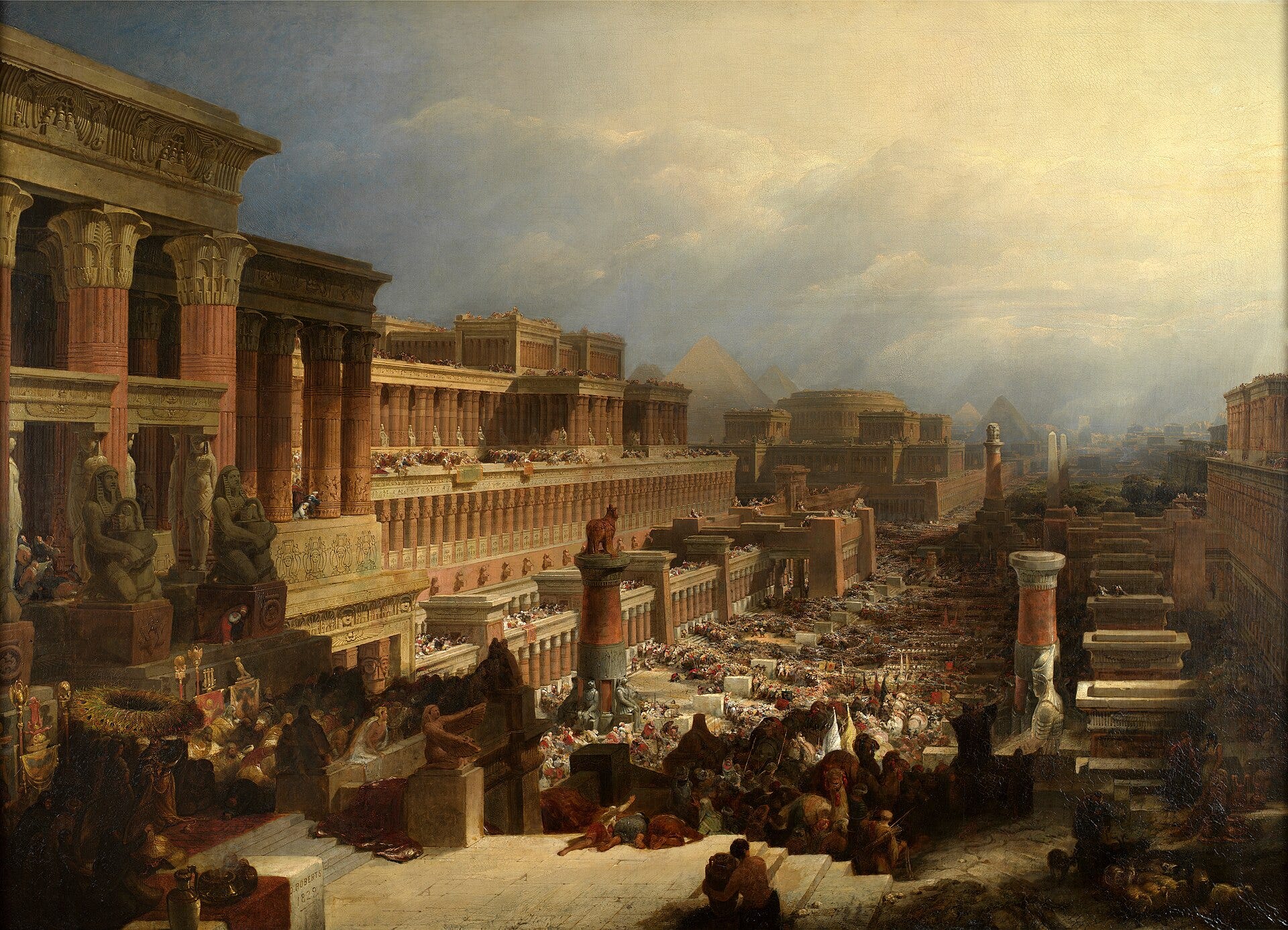
The Book of Exodus is of immense importance to understanding both the Biblical narrative and the intellectual development of Western Civilization itself.
This is the book that recounts Moses’ story as God’s chosen prophet, who leads the Israelites out of slavery in Egypt and into the wilderness where they form a covenant with God and become a nation.
To this day, this story comprises the very heart of both Rabbinic Judaism, and is also foundational to the Christian understanding of the messiah Jesus Christ. As such, it’s the foundational story that established monotheism as the theological paradigm of Western Civilization, and becomes crucial to understanding our own human nature.
And perhaps the most important detail that accomplished this is Moses’ famous encounter with the burning bush. This simple event is the revolutionary turning point of man’s comprehension of the divine.
Today, then, we’ll analyze it to discern the very wisdom that built the rich theological traditions of Western Civilization.
I offer private mentorship in the Great Books for those seeking clarity of vision and depth of soul. Inquire here.
If you’d like to support this work and receive future writings, you can subscribe below.
An Exiled Aristocrat
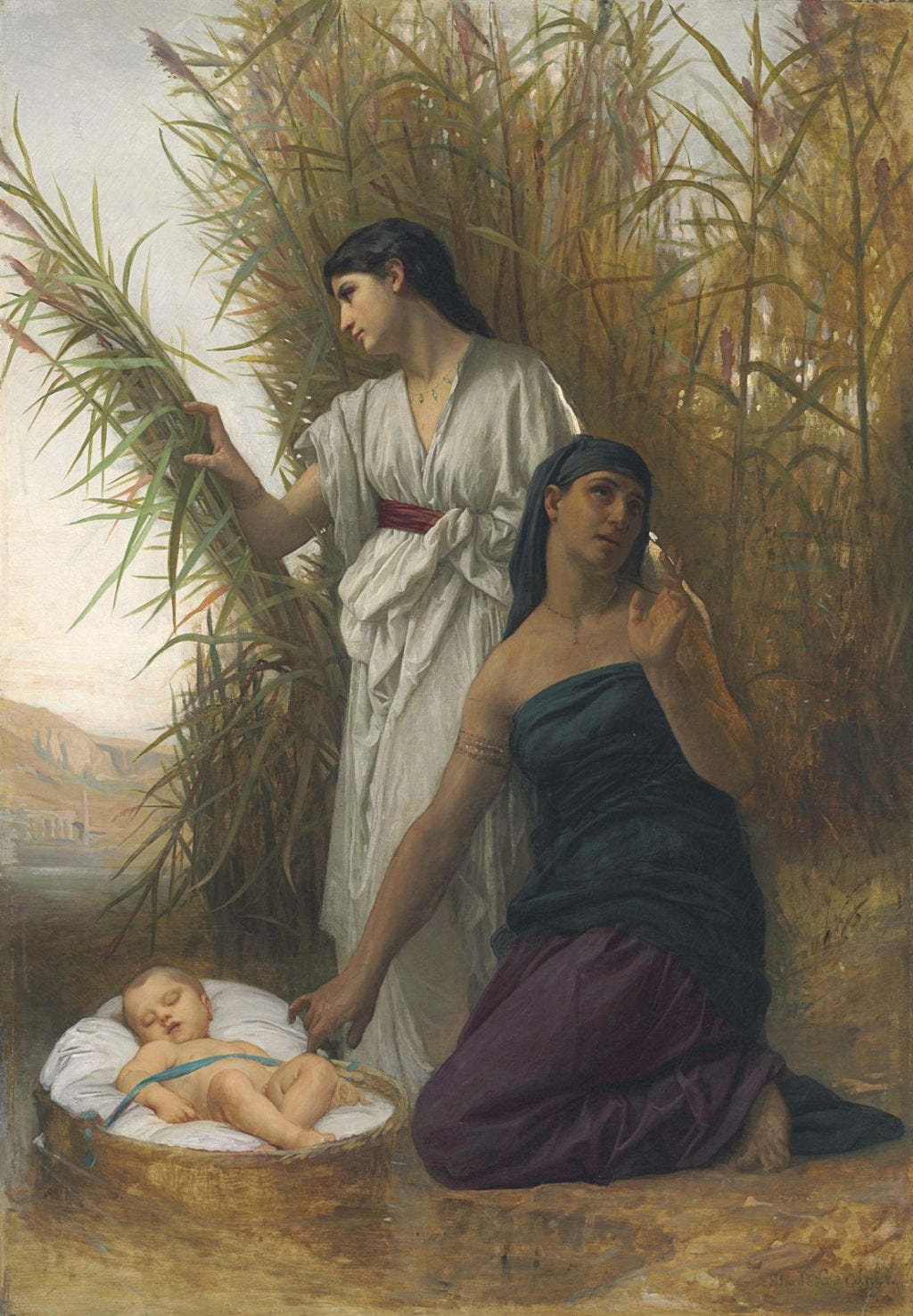
If we recall Moses’ beginnings, he was an Israelite who survived the Pharaoh’s purgings of Israelite sons. He was rescued and adopted by the pharaoh’s daughter, and raised as an Egyptian aristocrat.
As an adult, he witnessed an Egyptian beating a Jewish slave, and Moses murdered him, which forced him to flee to the desert lands of Midian on account of his crime.
He lived for years in humility as a shepherd, which follows a precedent of Biblical heroes — they’re called into the desert/wilderness where they endure trials and tribulations with patience. The experience is often grueling, yet it becomes the means by which their character is refined and molded in accordance with virtue.
In the case of Moses — the once prideful, murderous aristocrat has now been humbled and made low as an exile.
And its precisely in this lowliness that his character is made ready for one of the most decisive moments of revelation in Biblical history…
The Burning Bush
After years of shepherding in Midian, Moses one day ventures with his flock to Horeb, on the western side of the country’s wilderness. Here, he’s stunned by a strange vision — a burning bush, ablaze in flames, yet not consumed.
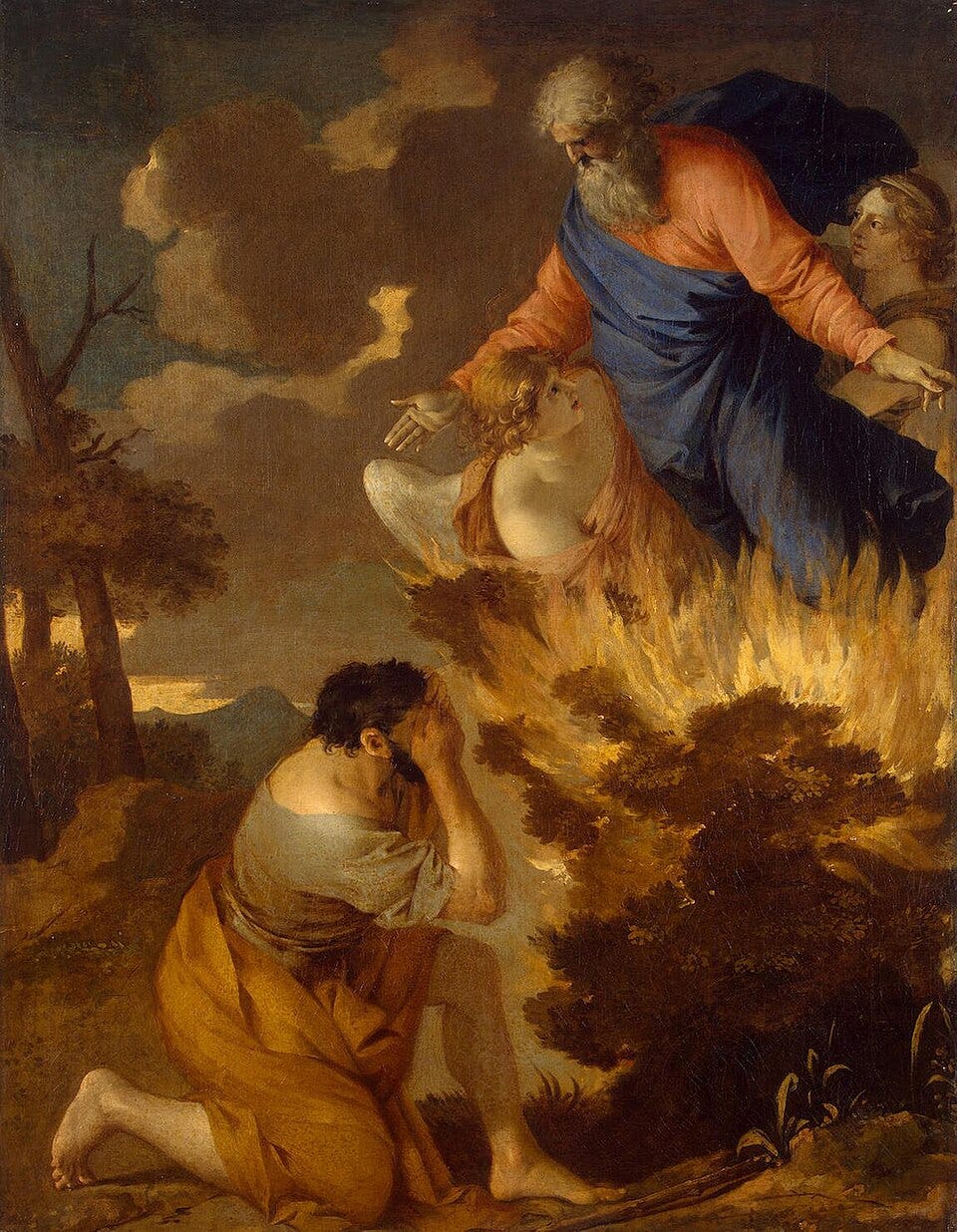
This fire is revealed to be the presence of the Lord. Already, this narrative is teaching an important element of God’s nature — and what makes him distinct from pagan deities — namely God’s presence does not destroy creation, rather it perfects and makes it luminous.
Compared to pagan deities like the Greek gods, whose intervention often leads to death and destruction, the presence of God leads to radiance, and a purifying flame that perfects that which comes into contact with it.
Strange as this sight is to Moses, however, it gets stranger as he approaches the bush. As Moses closes in, God gives him a strange decree:
“Moses! Moses! Do not come near; put off your shoes from your feet, for the place on which you are standing is holy ground.”
The removal of sandals is not just about “good manners,” in the face of a deity. It’s a deeply pedagogical gesture. To understand, let’s first look at the meaning of “holy ground.”
In Hebrew, the word holy means “set apart.” This means the holy ground that Moses walks on is “set apart,” from the rest of creation — what Moses is about to encounter here has no precedent in the wisdom of human traditions or religion. It implies God is also “set apart,” from other pagan deities of the day. He’s not just another God among many, but an ontologically distinct God — the “true God,” as the Israelites will later proclaim.
So we can appreciate the significance of this holy ground that Moses walks on, but why remove his sandals?
We must consider that the desert terrain of Horeb was not friendly to bare feet. The ground was littered with rocks and blazing hot sand that would make bare foot travel grueling, if not impossible.
In other words, the bare footed Moses is now approaching God in a state of dependency. This becomes the understanding of Israel’s relationship with God.
Compared to pagan deities, who had a transactional relationship — you sacrifice for personal gain, or to escape their wrath — the God of Israel says your fundamental existence is dependent on God himself. Sacrifice to God is not transactional, but an efficacious sign of man’s relationship to the divine; all being itself is contingent upon God, and a pious life is total surrender.
Through the introduction, we can appreciate God’s claim to holiness and dependence, but the greatest revelation is to come.
Moses asks God his name, and God famously replies:
“I AM WHO I AM”
At first, the answer seems almost like a refusal to answer at all. But within this simple name lies one of the most consequential revelations in human history — one that molds Israel’s identity, anticipates the coming of the Messiah, and defines the proper Christian understanding of God.
Here’s the meaning of God’s name…
