

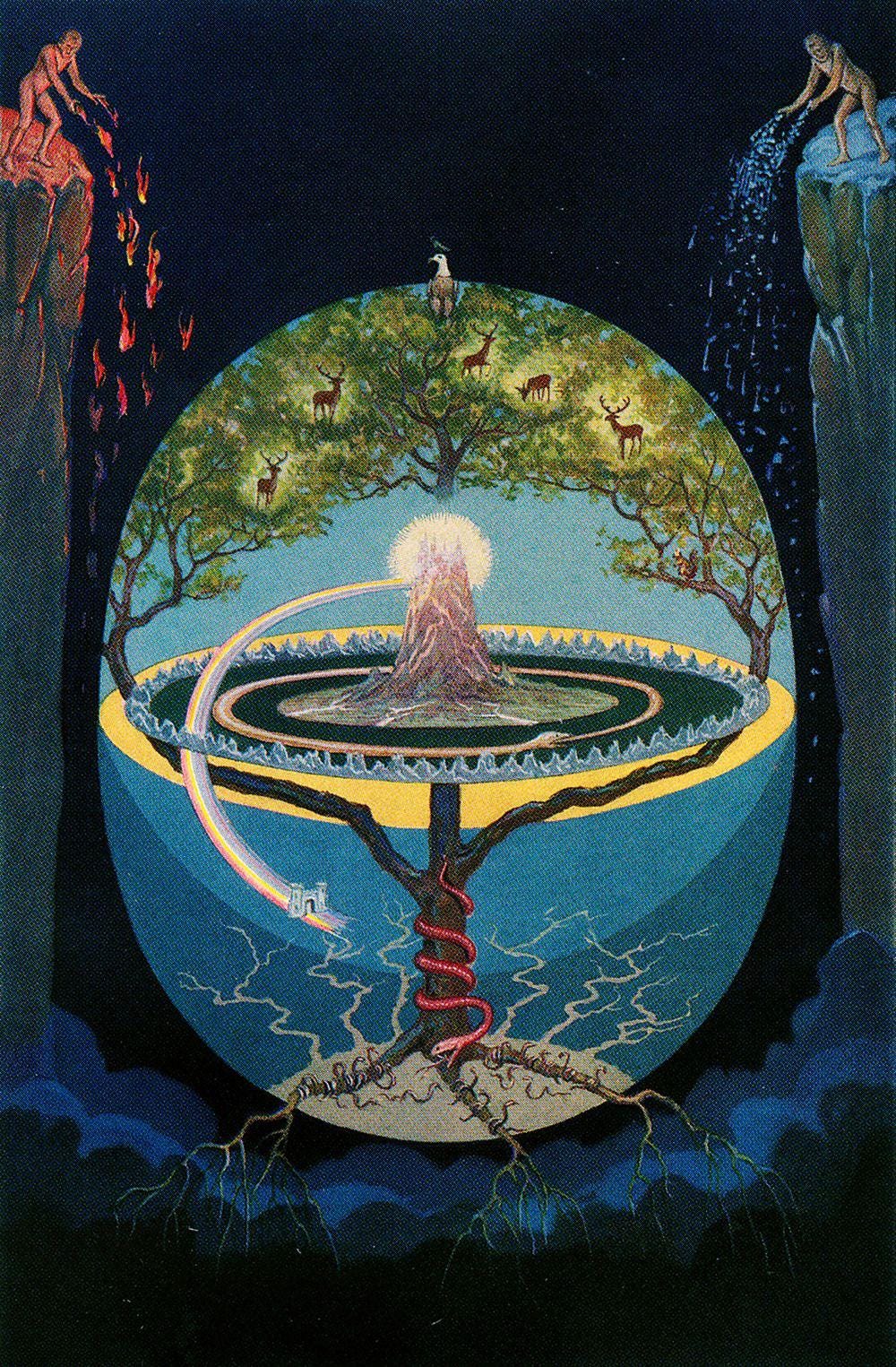
The Ouroboros is one of the most infamous and haunting images mankind ever created.
If you’re unfamiliar, the Ouroboros is the symbol of a serpent in a circle, eating its own tail.
This symbol traces back to the deepest roots of Ancient Egypt — meaning for our purposes as human beings, the Ouroboros is nearly as old as civilization itself.
But what exactly does the Ouroboros represent?
Ultimately, it represents both the brilliance and the limits of the pagan mythological imagination. It shows how the wisest minds of the ancient world understood reality prior to Christianity, but also reveals the inescapable doom of the human condition when man lives without transcendence beyond the world itself.
Today, then, we’ll look at the ancient symbolism of the Ouroboros — to understand both the genius of mythological man, and why mankind ultimately needs the divine if he is to live a truly fulfilling life.
I offer private mentorship in the Great Books for those seeking clarity of vision and depth of soul. Inquire here.
If you’d like to support this work and receive future writings, you can subscribe below.
The Serpent and the Sun-God
As stated, the Ouroboros appears as far back as Ancient Egypt.
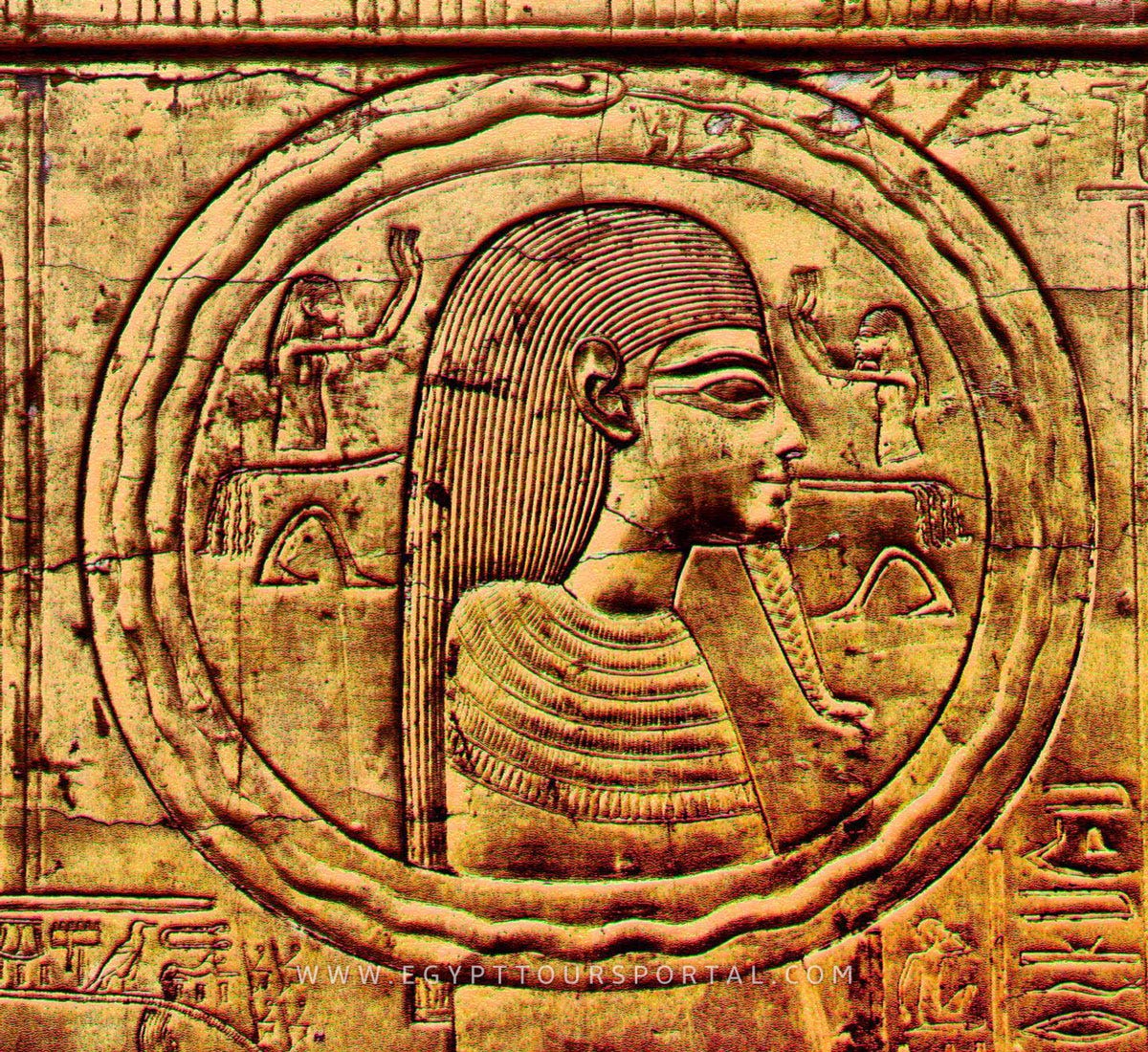
The Egyptian Book of the Dead depicts the sun-god Ra-Osiris encircled by a serpent eating its own tail.
This symbol represented the sun’s journey through the underworld during the twelve hours of night before returning again to day. In other words, the Egyptians saw reality itself as a self-enclosed circle containing both life and death.
Why does this matter?
Because it reveals how pagan mankind grappled with the problem of death in a pre-Christian world without revelation.
Where Christianity teaches that reality was created — that it has a beginning and an end, sustained by a benevolent God — pagan man often conceived of the cosmos as eternal and self-contained.
The Ouroboros suggests that death is not an ultimate catastrophe, but part of a recurring cycle within an eternal world.
For pagan man, this was a remarkable mythological achievement because it gave meaning and vitality to life despite suffering and mortality. To see the world as an eternal circle was to inhabit a reality rich with wonder, mystery, and grandeur.
Life, for pagan man, was filled with adventure.
But while the Ouroboros was indeed a profound achievement, it was also a fragile one… containing a grave danger that would later be picked up by Norse Mythology.
World Serpent and Ragnarok
The problem of Ouroboros — of believing that reality is self-sustaining without assistance from the divine — is that it’s an unsustainable view.
This is proven true in Norse mythology. Like the Egyptians, the Norse mythology supposes that reality is sustained by a serpent eating its own tail, circling the world.
The problem, however, is that unlike Ancient Egypt, Norse mythology was not confident in its cosmology. Whereas the elder Egyptians confidently believed reality was an eternal closed circle, the new Norse mythology was tragic and fatalistic.
Norse mythology says that the universe is doomed to destruction via the apocalypse called Ragnarok. Part of this destruction includes the serpent ceasing to bite its own tail, and instead turn its fangs upon creation itself.
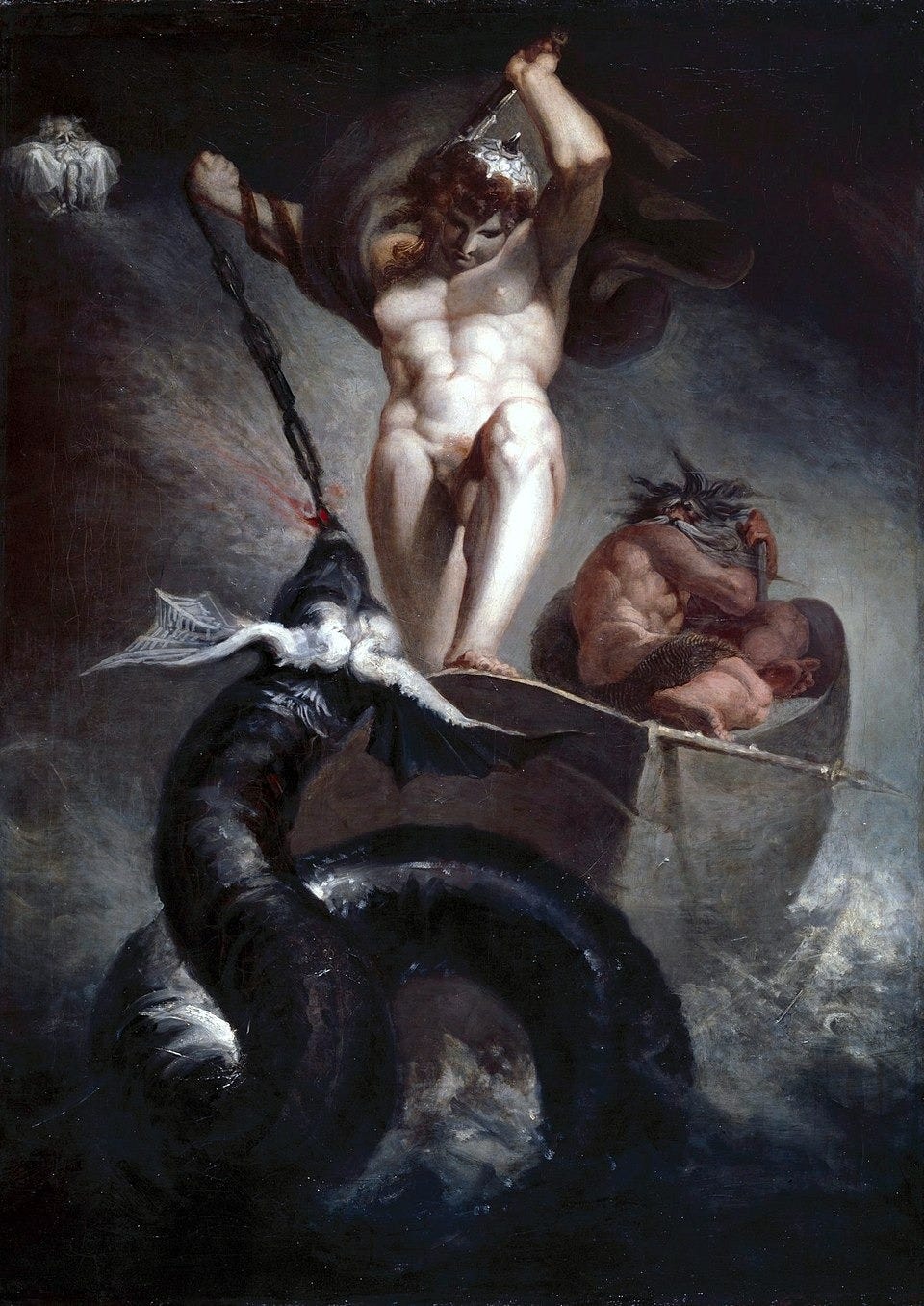
Though Thor defeats this serpent, he, the other gods, and creation itself ultimately collapses. This apocalypse wasn’t meant as a mere fantasy, rather it reveals the natural and fatal flaw of mythology itself:
A self-sustaining world is doomed to collapse and destruction:
If reality is self-sustaining — if the divine is just part of the world rather than the source of it — then the world is ultimately accountable only to itself. There is no external guarantor of meaning. No one outside the circle to say this matters, this is real, this is good.
As the mythological imagination exhausted its own internal logic, two replacements filled the vacuum in ancient history — escapism and nihilism.
Chesterton himself points this out in The Everlasting Man:
By the late 1st century BC, the Roman Empire dominated the West. What’s noteworthy about Rome at this time, however, was its culture was becoming increasingly materialistic (and therefore, nihilistic).
The self-sustaining circle of Ouroboros — of mankind attempting to live without God — culminates in the spiritual grandeur of reality and the human soul being sapped altogether. In time, reality itself becomes a prison. The Western solution was nihilism. The Eastern solution escapism.
In both cases, the Ouroboros shows the peak of human imagination, and the self-defeating limits of man who believes he has no God to answer to.
So how then, could mankind escape from such a prison? How could man discover a truthful way of living that made life meaningful, and restored the fallen beauty back into reality itself?
The answer is simple — the circle must be made broken by the sword.
But not just any sword, rather one that would crucify the very man who came to wield it…
