

You don’t understand Lord of the Rings until you understand the Scouring of the Shire.
This was the penultimate chapter of the novel that was omitted from the movies. And yet, Tolkien himself considered it crucial to understanding the full scope of Lord of the Rings.
In fact, the Scouring of the Shire is one of the most politically prophetic writings of the modern era. Tolkien warned of several dangers that have since become realities in England today, 70 years later.
Today, we’ll do a deep dive on the Scouring of the Shire, to understand Tolkien’s warning on what creates a tyranny, how it relates to England today, and what it takes to restore a crumbling civilization…
I offer private mentorship in the Great Books for those seeking clarity of vision and depth of soul. Inquire here.
If you’d like to support this work and receive future writings, you can subscribe below.
An Unhappy Homecoming
The Scouring of the Shire is considered an anticlimax in LOTR.
At this point, the ring has been destroyed, Sauron defeated, and Middle-Earth is saved.
But when Frodo and his friends return to the shire, they’re shocked at what they find:
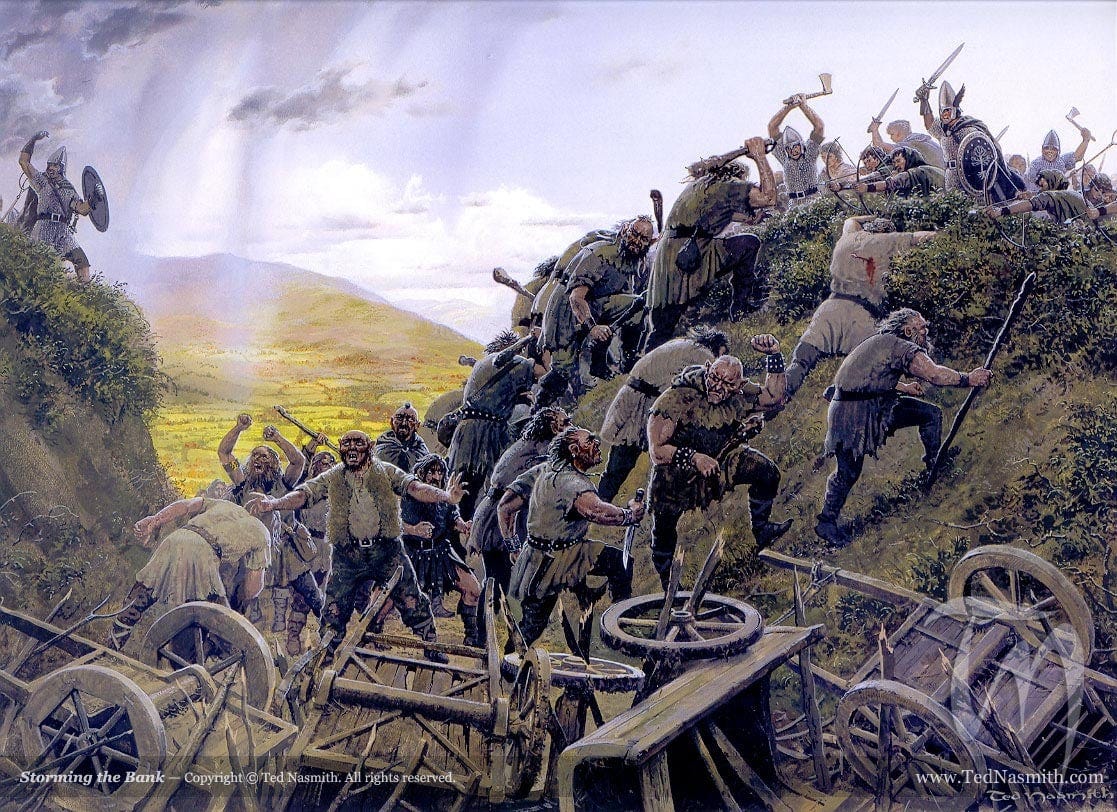
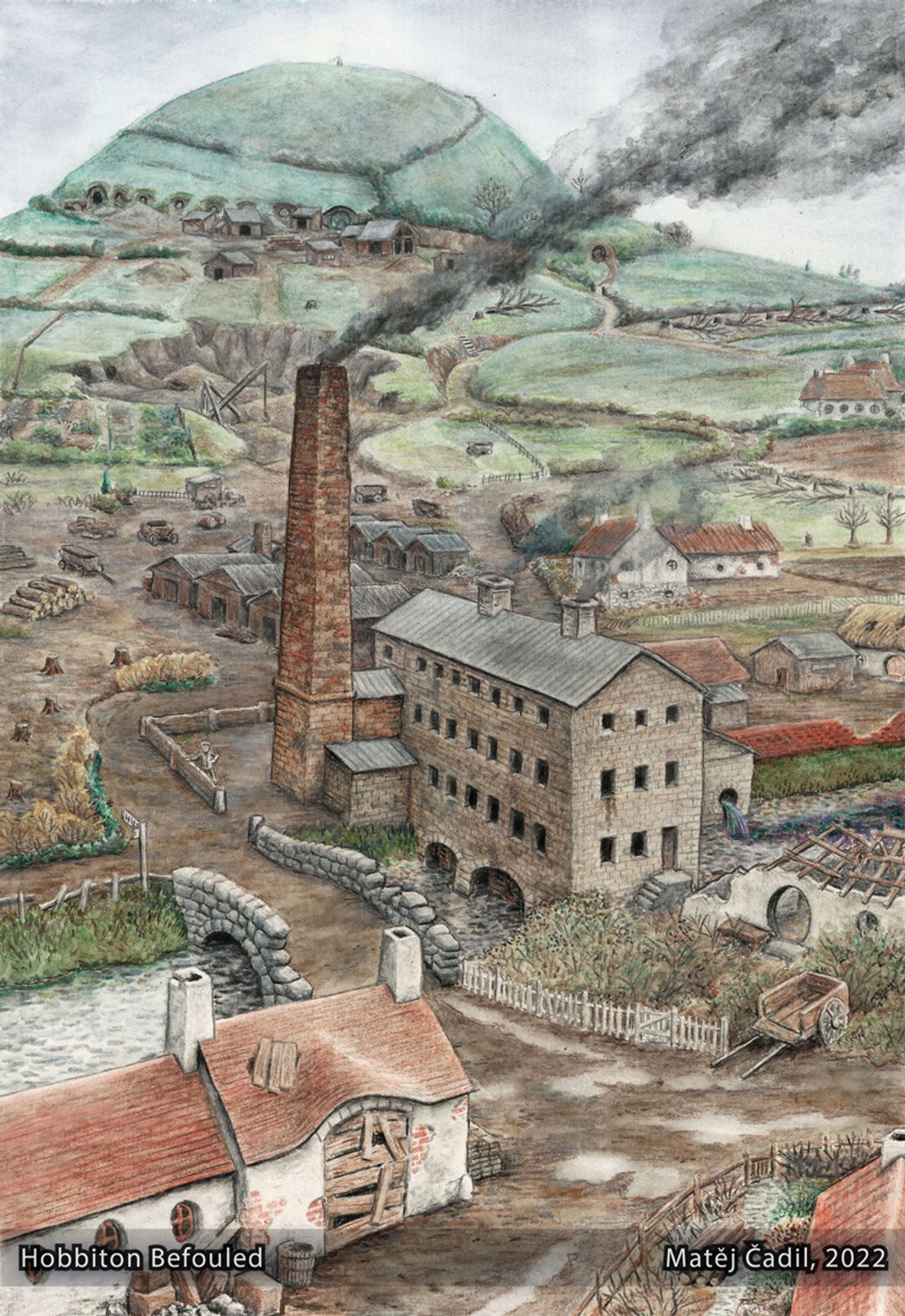
The country has been overrun by ruffians — spearheaded by Saruman — in the name of industrialization. The populace of Hobbiton has been enslaved to feed this centralized machine of commerce.
What’s interesting, however, is discussing how the Shire fell so quickly. It wasn’t as simple as Saruman and his men marching in and announcing a hostile takeover. Instead, it was a defeat of slow and steady compromises that traces back to one figure:
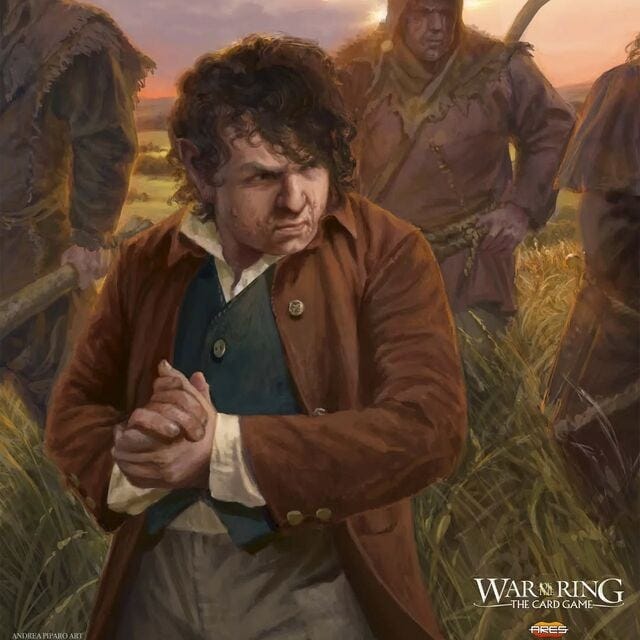
Lotho Sackville Baggins.
This character is a distant relative of Frodo’s, who is driven by greed and acquisition. And it will be his very amoral greed that compromises the Shire and leads it to destruction.
Here’s how.
Lotho’s Rise to Power
Lotho — already a wealthy businessman — begins buying up all the land in the Shire. Over time he amasses great wealth and begins to have a monopoly on the realm’s real estate.
The result is a growing wealth inequality in which he becomes a sort of oligarchic robber-baron. In due time, shortages begin to run amok and public grievances arise. Lotho initially uses his wealth to cover his neighbor’s losses and debts, but the result is that they merely become dependent upon him. Soon enough, Lotho withdraws his support, and hires ruffians — men foreign to the Shire — to protect him.
As such, he becomes a centralized figure who controls the land, wealth, and police force, while the hobbits stay indebted to him. Soon enough, his ruffians begin committing crimes, and the hobbits are powerless to stop them. The few who speak out against these crimes, like Mayor Whitfoot, get imprisoned.
It’s precisely at this point that the Shire succumbs into a tyrannical state of commercialism.
Lotho rules with an iron fist, and destroys the beautiful countryside in order to create industrialized factories to continue expanding his wealth and empire. Yet it’s precisely this moment when the true leader of the Ruffians — Saruman — emerges, recognizing that the Shire is now ripe for the taking.
The Shire and Modern Day England
Now before we get to Saruman’s reign, it’s important to analyze the political warnings Tolkien shared through Lotho.
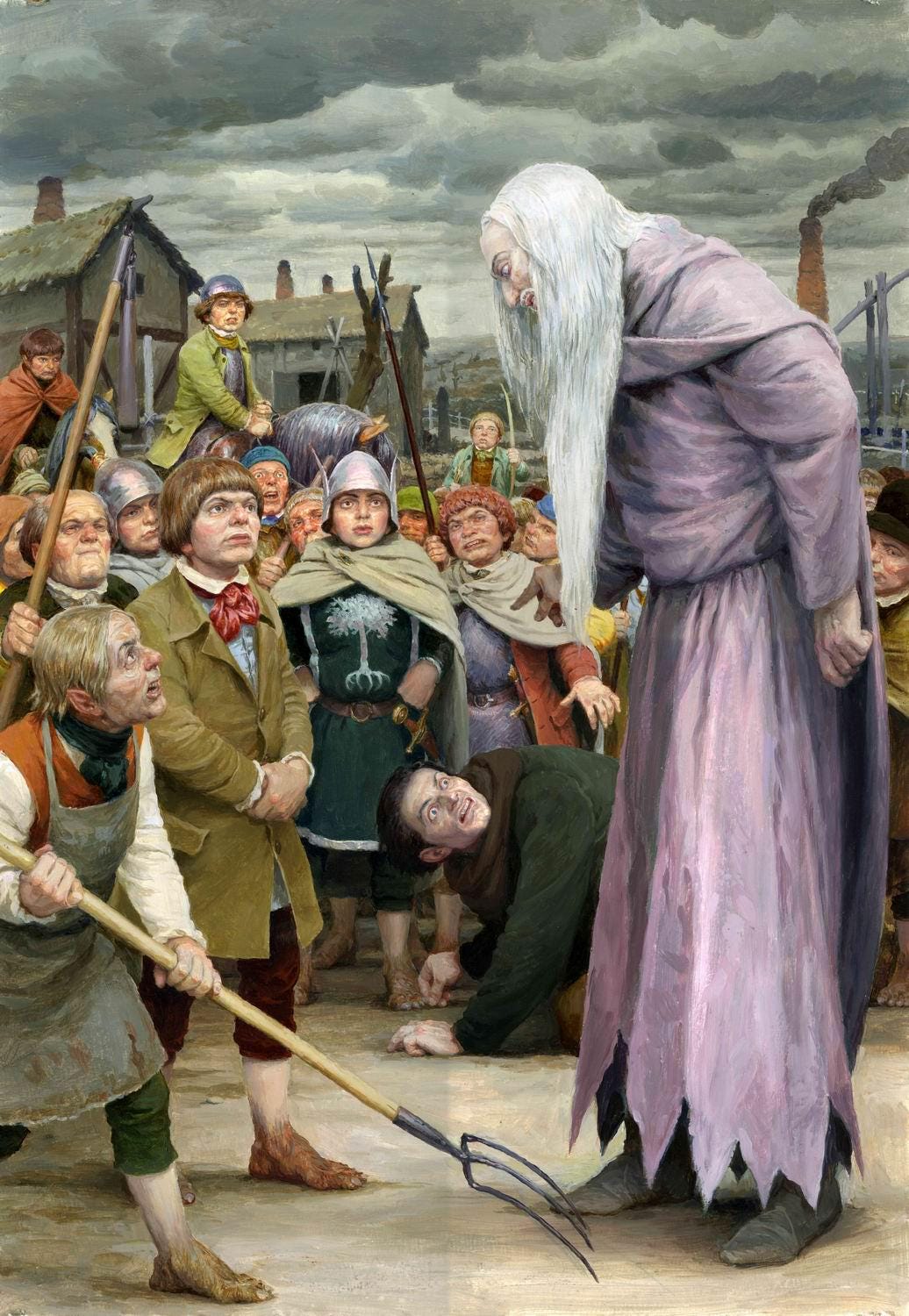
The first issue with the Shire is the complacency of the Hobbits. Though we often celebrate “life in the Shire,” Tolkien was also critical of hobbits:
They had grown soft, sheltered, and naive. The Shire was only peaceful due to the rangers of the north — who slaughtered the many beasts who would otherwise descend on the realm — while the Hobbits lived in blissful ignorance.
And it’s this lukewarm ignorance to evil, and apathy to virtue, that precedes tyranny.
Out of this slothful culture arises Lotho’s greed.
Lotho himself isn’t explicitly malicious — but his insatiable greed drives him to commit great evils. In other words, the spirit of tyranny is preceded by the commercial spirit of wealth, detached from morality.
It’s worth noting that the Shire parallels England.
For one, the Shire was inspired by Sarehole — Tolkien’s hometown. It was once beautiful and idyllic, but eventually ravaged by factories and industrial expansion, much like Lotho’s empire did to the Shire.
And just as the Hobbits grew dependent on Lotho’s welfare, so too did Tolkien fear the English people becoming dependent on the “modern welfare state,” of England.
The same can be said of property ownership — as owning real estate is now a luxury afforded to the wealthy few, but unattainable to the common man.
And perhaps the most dangerous precedent was the influx of ruffians sent in by Lotho. This echoes the precise grievances no politician in modern day England wants to discuss — immigration, censorship, and the rise of the police state.
Yet Tolkien foresaw it all — both how these issues would arise, why they’d become grave risks, and how to solve them.
Here’s what he says…
