

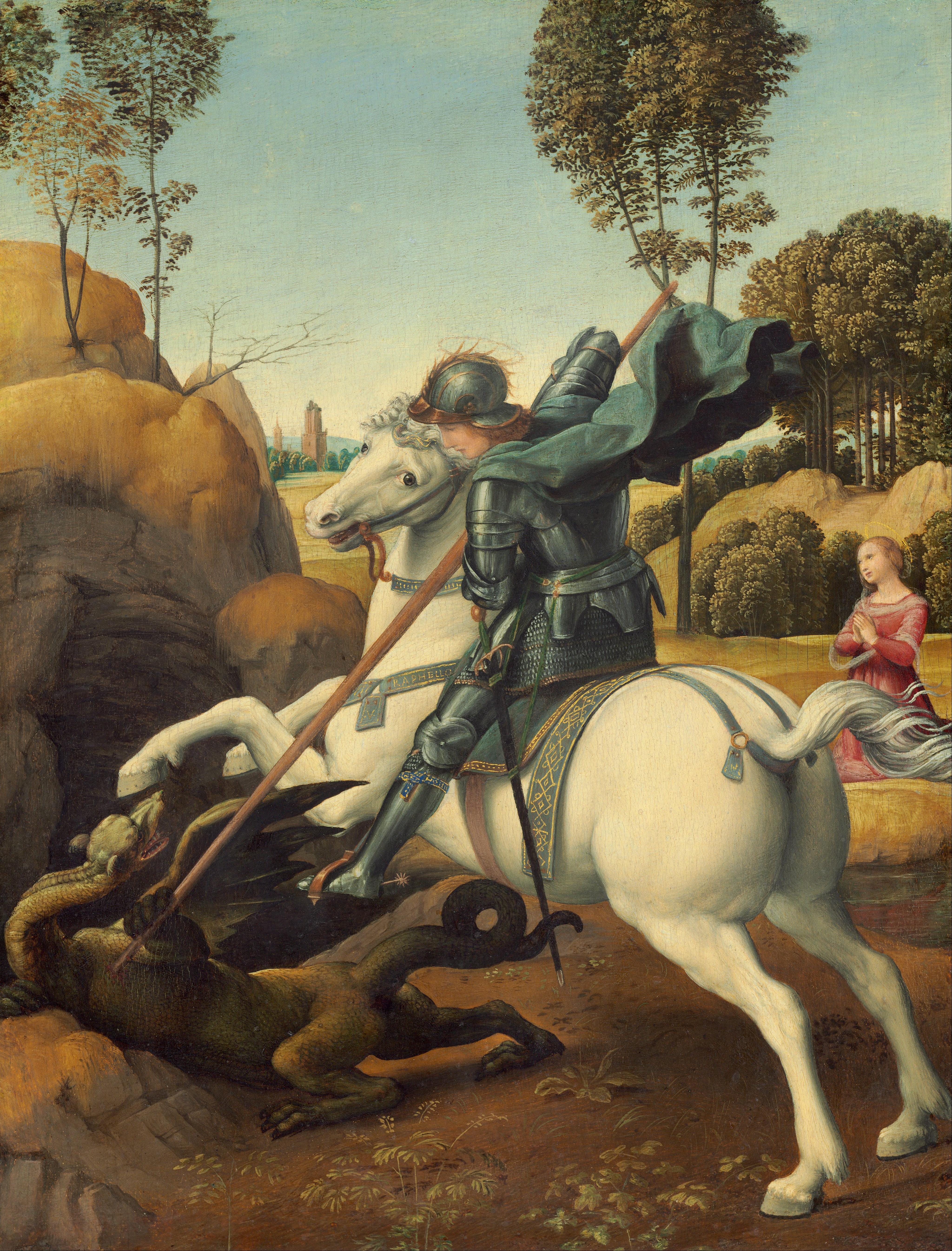
It’s an all too popular adage today that “chivalry is dead.”
The saying is often invoked to lament the poor manners of men who lack the qualities of a gentleman, whether that means holding a door open or offering a lady their seat on the bus.
But chivalry had begun to die long before the saying became commonplace, and far more has been lost than the simple courtesies of a civilized society.
In fact, CS Lewis wrote an entire essay lamenting the death, and subsequent need, of chivalry.
His argument is that the abandonment of chivalry means more than the death of the virtuous man, but the destruction of civilization itself.
Today, we’ll revisit this argument to rediscover the full meaning of chivalry, and why its the life-blood of a healthy, functioning civilization.
I am 100% reader-supported. This newsletter is free, but if you’re able to support, please consider a paid membership — it helps my mission of sharing Truth, Beauty and Goodness with maximal reach
As a paid member, you’ll get:
Two full essays a week
Access to all recordings (past & future) of my Great Books lectures on this publication
Eternal gratitude from me
Remembering Sir Lancelot
Lewis begins his essay, The Necessity of Chivalry, by positing a simple question:
“What, you may ask, is the relevance of this ideal to the modern world?
It is terribly relevant. It may or may not be practicable — the Middle Ages notoriously failed to obey it — but it is certainly practical; practical as the fact that men in a desert must find water or die.”
This imagery is not hyperbole — Lewis maintains that recovering chivalry (or not) is a matter of life and death.
But what does the perfect ideal of chivalry look like?
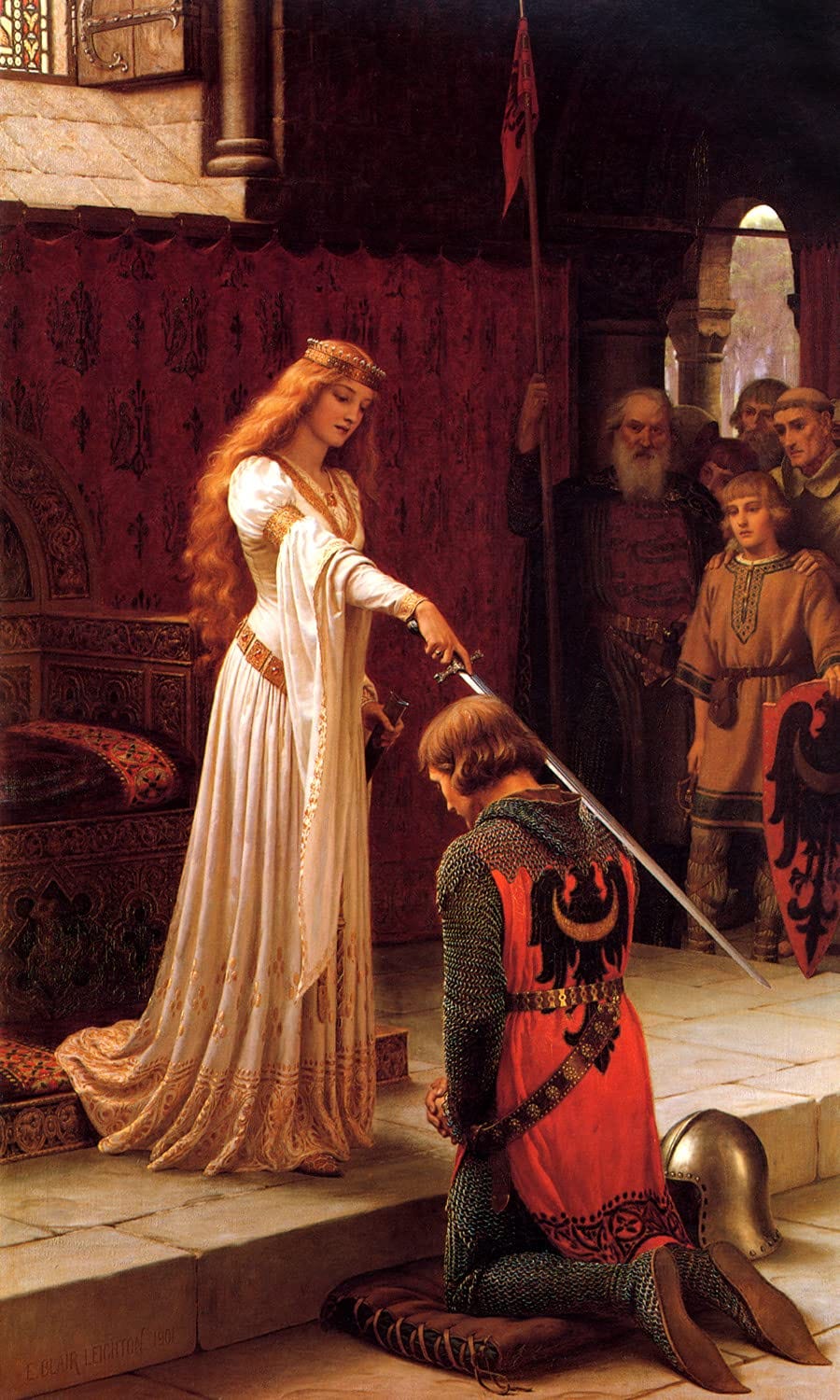
Lewis says Sir Lancelot, of Arthurian Legend, manifests this ideal. Malory’s description of Lancelot presents the ideal of chivalry as a beautiful paradox:
“Thou wert the meekest man that ever ate in hall among ladies; and thou wert the sternest knight to thy mortal foe that ever put spear in the rest.”
This is the ideal of chivalry — the marriage of perfected meekness corresponding to the wrath of the stern warrior.
Lewis himself makes echoes this very idea:
“The important thing about this ideal is, of course, the double demand it makes on human nature. The knight is a man of blood and iron, a man familiar with the sight of smashed faces and the ragged stumps of lopped-off limbs; he is also a demure, almost a maidenlike, guest in hall, a gentle, modest, unobtrusive man.”
This is a strange but striking ideal, but importantly, it is a dead ideal.
The next question then, is how did it die?
The Meek Shall Inherit the Earth?
There’s many answers to the question of what killed chivalry, but one of them has to do with our understanding of the term meekness.
All too often, modern definitions of meekness mistake it for timidity. One might think of a fearful child made frightened at the prospect of confrontation.
Yet the traditional Christian understanding of meekness would emphatically reject this definition! Christian meekness was not a call to timid weakness, but restraint.
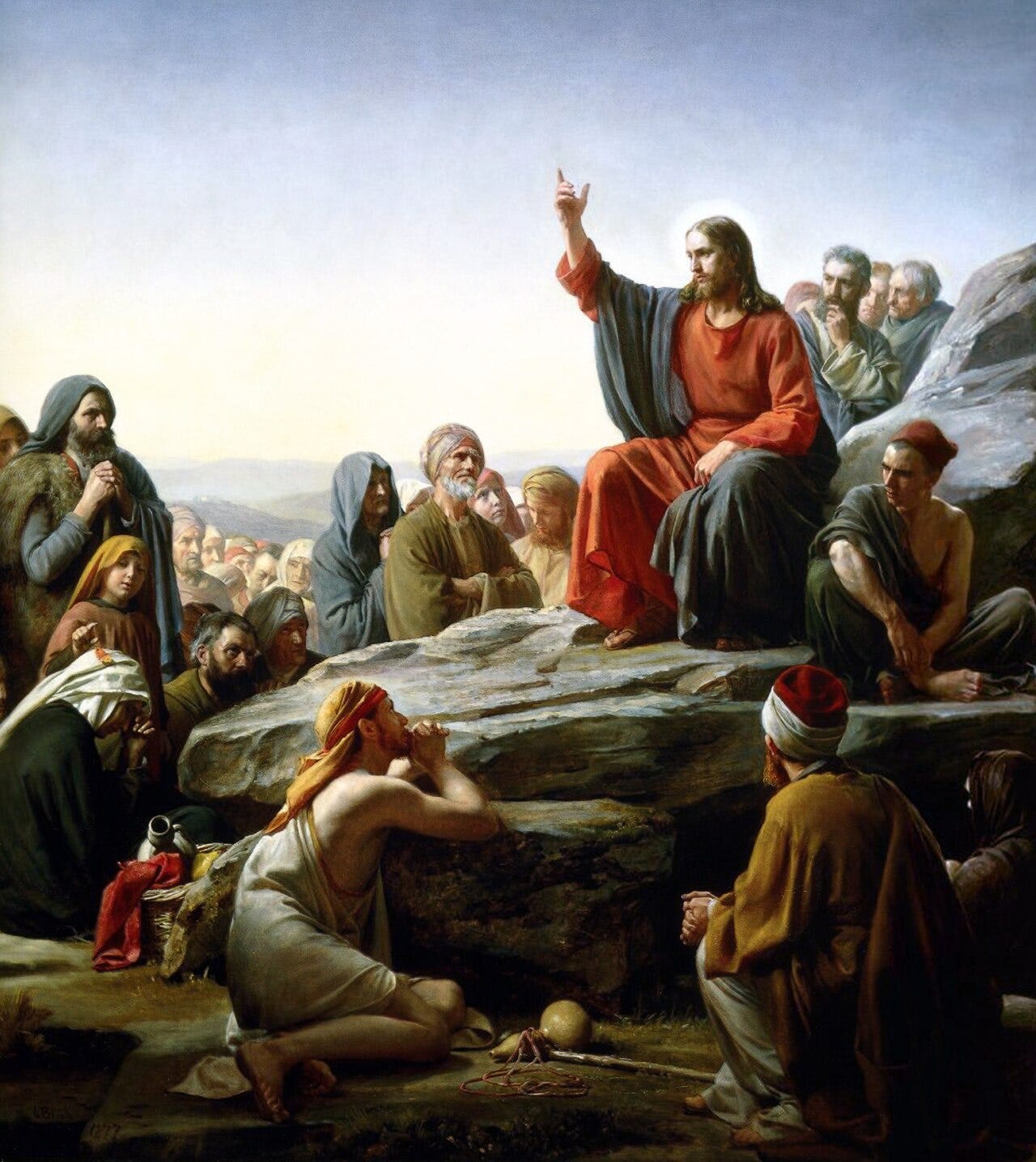
When Christ proclaimed, “the meek shall inherit the Earth,” he was speaking to a people under Roman occupation, for whom the desire of violent retaliation was deeply inscribed in their hearts, and justified by every code of honor that defined their people’s history.
Christ was not telling them, “become weak, harmless men!” rather his call to meekness was closer to, “keep your sword sheathed, but carry it with you just in case.”
Lewis says modern man has, instead, redefined meekness as weakness, and chastised all forms of violence as inherently evil:
“Most of us, having grown up among the ruins of the chivalrous tradition, were taught in our youth that a bully is always a coward. Our first week at school refuted this lie, along with its corollary that a truly brave man is always gentle.”
There’s a reason why men and women alike are turned off by the, “nice guy syndrome,” of a man who masks his timidity behind the veil of an alleged “virtuous pacifism.”
The truly virtuous man is not a weak man, but a strong man in control of his passions.
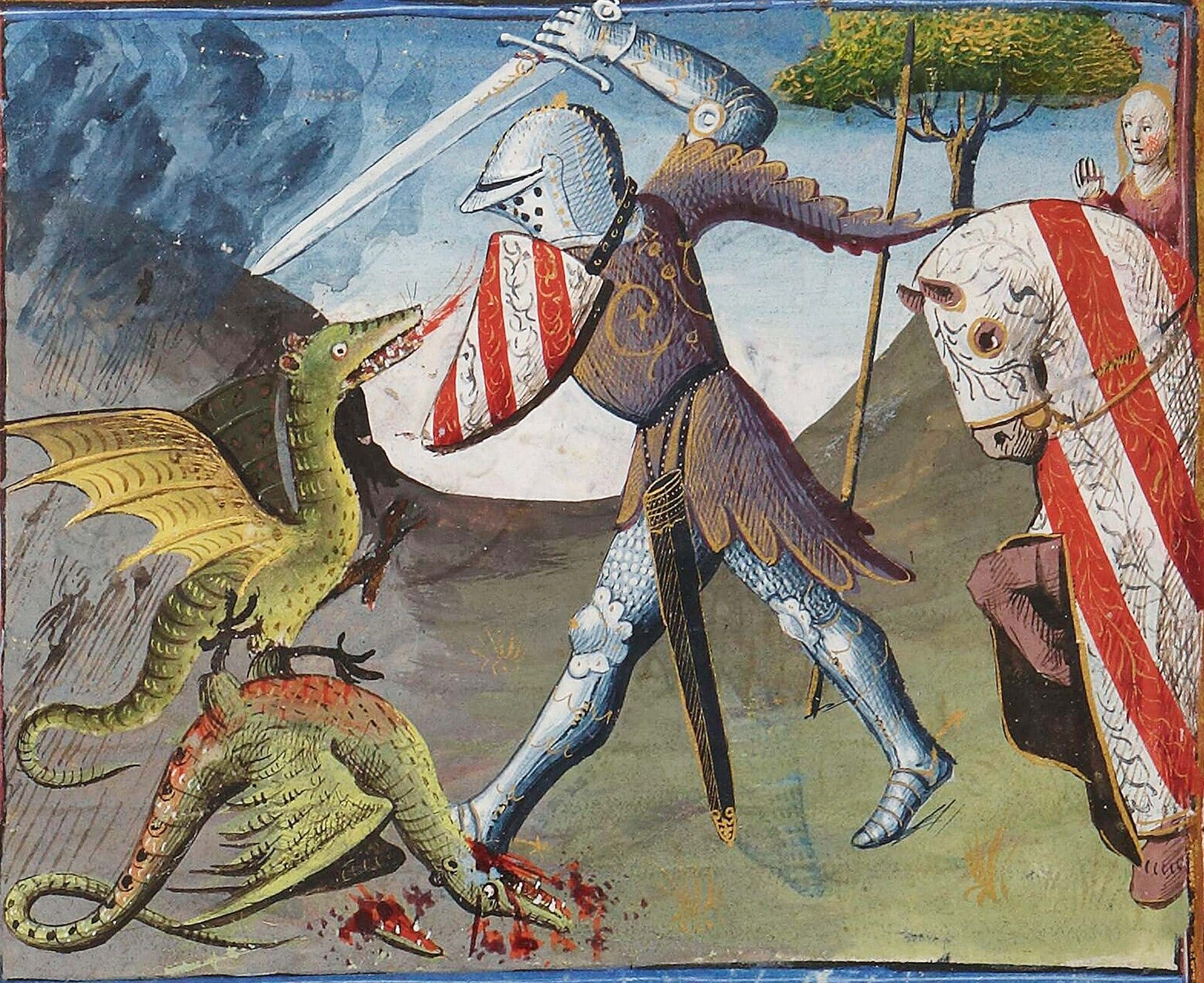
Indeed, Lewis says the rejection of the ideal of chivalry — its call to make men violent but meek — is not the abolition of vice, but rather the expansion of vicious, wicked men:
“If we cannot produce Launcelots, humanity falls into two sections - those who can deal in blood and iron but cannot be ‘meek in hall,’ and those who are ‘meek in hall’ but useless in battle - for the third class, who are both brutal in peace and cowardly in war, need not here be discussed.”
The death of chivalry is but the destruction of man, because without a deal man will simply favor either bias of the extremes of his nature — namely cowardice or recklessness, or even reckless cowards.
Colloquially, we can understand this today as the crisis of masculinity. Men have no positive vision of manhood to pursue, and thus depending on the occasion, are all too often decried for their brutish “toxic masculinity,” or scorned for their inability to “be a man.”
It comes as no surprise then, that the great escape for these young men is a retreat to the video games and the online world — which functions as not just a form of entertainment, but a passive “checking out,” from a society offering them no clear accommodation to their masculinity, strengths, or talents.
And this leads to our conclusion, in which Lewis warns this death of chivalry does far more than merely leave young men jaded…
The Lifeblood of Civilization
What are the final fruits of chivalry’s death?
According to Lewis, nothing short of civilizational collapse:
“When this dissociation of the two halves of Launcelot occurs, history becomes a horribly simple affair. The ancient history of the Near East is like that. Hardy barbarians swarm down from their highlands and obliterate a civilization. Then they become civilized themselves and go soft. Then a new wave of barbarians comes down and obliterates them. Then the cycle begins over again. Modern machinery will not change this cycle; it will only enable the same thing to happen on a larger scale.”
Lewis invokes the now common cliche of hard times make strong men, strong men make good times, good times make soft men, soft men make hard times.
But notice that for Lewis, his argument is far more substantive than a mere pop-culture saying. One not need to even debate the particularities of his argument. A brief look at pre-medieval history (pre-chivalry), shows an antiquity marked by the mere rise and fall of Empire.
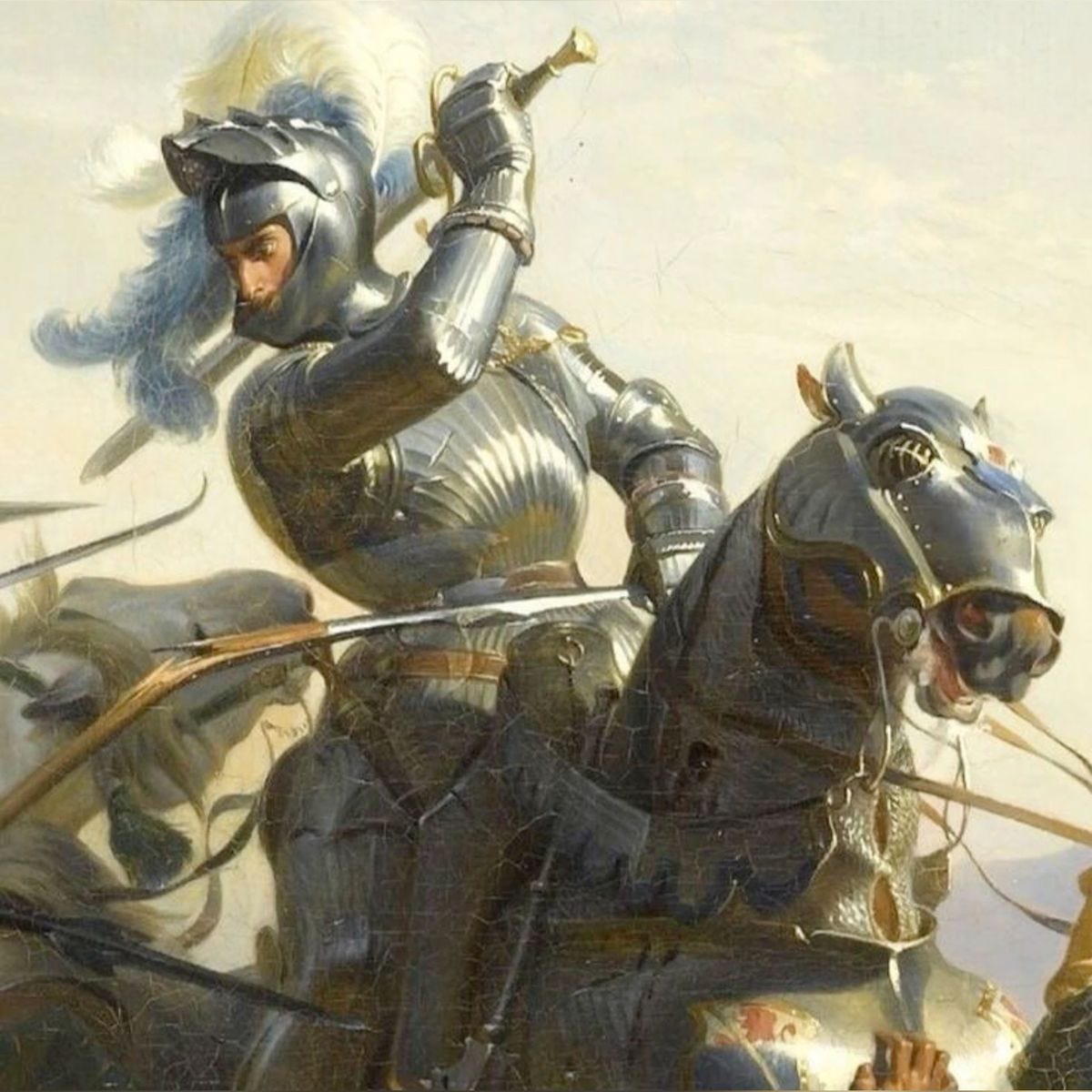
This is not to say that the medieval era was free from war — far from it — but what was unique was how humanizing the chivalric code was on knights at the time. Prior to chivalry, knights were cutthroat mercenaries that were just as likely to plunder, murder, and rape the very civilians there were contracted to protect. They were the “vicious men without meekness,” left to their natural appetites.
Chivalry, however, is not a natural appetite, but an ideal that aspires man to hte perfection of his nature in accordance with virtue:
“The man who combines both characters- the knight- isa work not of nature but of art; of that art which has human beings,instead of canvas or marble, for its medium.”
Quite literally chivalry helps make man a work of art; a work of art that draws the “beautiful paradox,” of marriage between his inclinations towards recklessness or self-serving cowardice. Lancelot was “as meek as a maiden,” but his virtue was bolstered on a bedrock of bloodied swords and fallen villains.
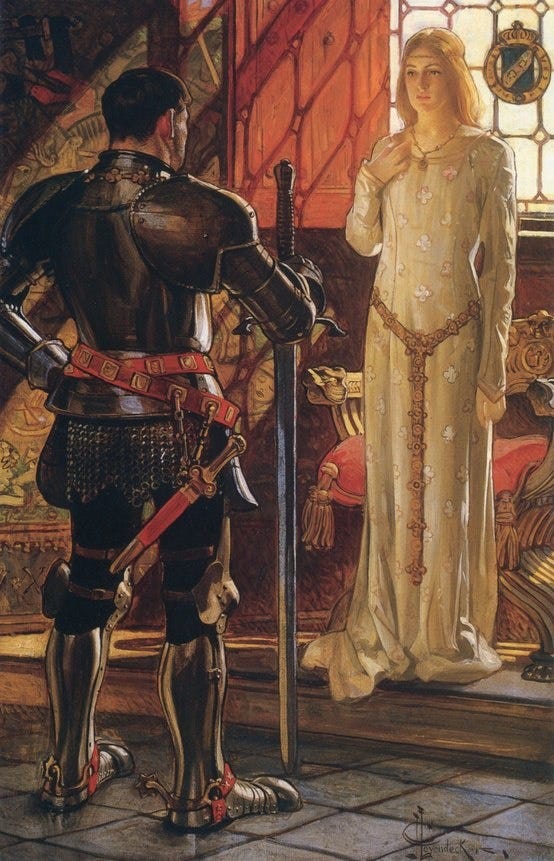
Such a man devoted his life to a maiden — and, by extension, to the civilization that kept her secure. Though the relationship between maiden and knight belongs to the particular world of the Middle Ages, its underlying principle remains unchanged: civilization lives or dies, in part, by its ability to cultivate dangerous men who voluntarily lay down their lives for the good.
If Lewis is correct, chivalry is not an either-or proposition for society to consider, but is a fundamental question of whether civilization will flourish or perish.
Though today chivalry may be far out of fashion, the question of whether or not it has perished remains an open-ended question. The very answer depends particularly upon the choice of today’s Western man. Indeed, the proverbial hard times may soon return, and what matters is whether or not such times create the strong man necessary to preserve civilization, or if the gates remain open to the proverbial barbarians of history.
If history has imparted any lesson for the modern man to rediscover, it’s that he’s the descendant of a resilient lineage that never remained complacent in mediocrity for too long. History may repeat itself, but not every repetition need end in ruin — perhaps too, it can repeat itself for the better.
I am 100% reader-supported. This newsletter is free, but if you’re able to support, please consider a paid membership — it helps my mission of sharing Truth, Beauty and Goodness with maximal reach
As a paid member, you’ll get:
Two full essays a week
Access to all recordings (past & future) of my Great Books lectures on this publication
Eternal gratitude from me
“Such a man devoted his life to a maiden — and, by extension, to the civilization that kept her secure.” This is really interesting, and it makes me think of another framing; a knight’s devotion to his maiden means devoting it to her capacity for motherhood, and thus his devotion is also to the continuity of the human race through her. A knight’s meekness in the “hall among ladies” protects women emotionally while his sternness on the battlefield protects them physically, protections that are necessary not because women are weak and fragile but because they have their own profound and demanding job to do (without which there is nothing to fight for or protect).
Great work. You have defined the issue very well. My next question is how is the modern man to adopt this dual persona of gentle warrior? I have considered some pathways and one is the restoration of monasteries. I think the monastic order needs revising, EG reverse a ban on marriage. From the monastery should be a path for a man to obtain knighthood, where he proves he has mastered combat and the arts. Combat and arts are two signs he is the gentle warrior, the warrior poet.