

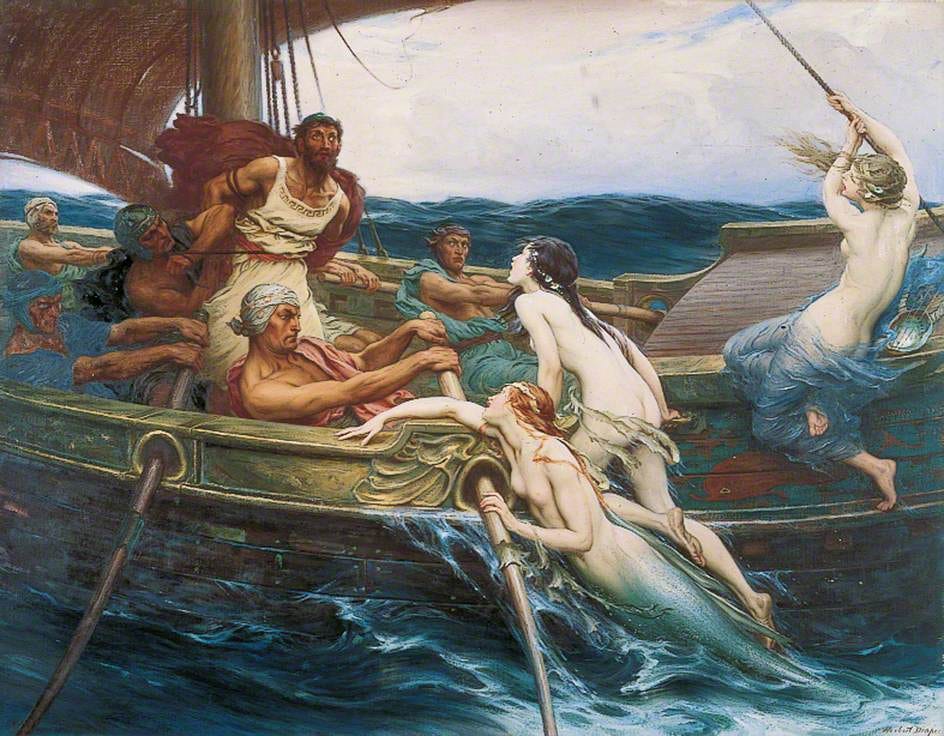
Odysseus is one of the greatest and most famed heroes of all Western literature.
And yet he’s burning in Hell.
While the Ancient Greek world celebrated Odysseus’ wisdom, wits, and cunning to defy his enemies, Dante Alighieri saw it differently.
He believed Odysseus was the most dangerous kind of hero:
A brilliant man who lacked humility and reverence for the divine. For this charge, Dante condemns Odysseus to the lowest pits of Hell, not far from the clutches of Satan himself!
What did Odysseus do to deserve such a fate?
According to Dante, not only did he commit a grave moral error, but made a mistake all too common even amongst men today.
Here’s Dante’s warning against Odysseus’ grave evils, how to avoid them, and what Dante’s idea of a true hero looks like.
I offer private mentorship in the Great Books for those seeking clarity of vision and depth of soul. Inquire here.
If you’d like to support this work and receive future writings, you can subscribe below.
The Homeric Hero
As a reminder, Odysseus first appears in Homer’s poems, The Iliad and The Odyssey.
Unlike Achilles, who’s celebrated for his might, Odysseus is celebrated for his wits and cunning nature.
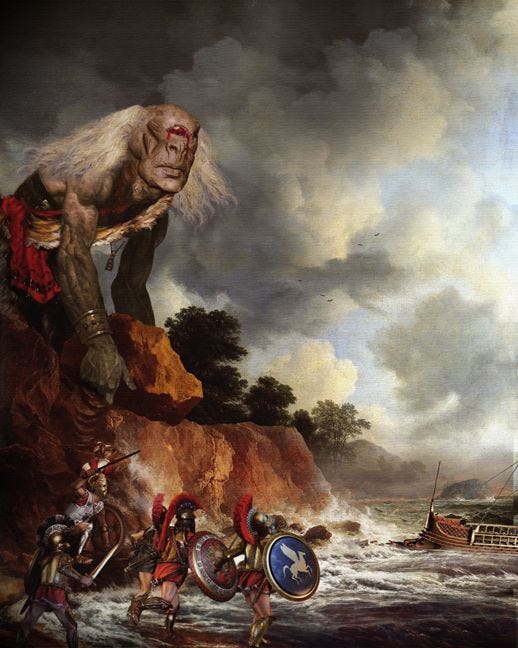
He’s the mastermind behind the Trojan Horse trick that sacked Troy, and in the Odyssey, he outwits kings, gods, and beasts alike.
He’s arguably the greatest Greek Hero — even greater than Achilles — because intelligence overpowers brawn in Homer’s eyes. This perhaps explains how Homer primed the soil for the philosophy of Socrates, Plato, and Aristotle — who exhorted man was made for moral virtue through rationality.
So in this sense, Odysseus seems heroic, and perhaps even a net positive on mankind.
How then, does he get put in Hell?
Let’s now turn to Dante’s Inferno to see where it all went wrong.
Tongues of Fire
If we recall Dante’s Inferno, Hell is made up of 9 circles. The worst sinners are found in the 8th and 9th circles.
We find Odysseus here, particularly in the 8th ditch of the 8th circle. Here are sinners of fraud who gave evil counsel.
In this circle, Dante discovers Odysseus (named “Ulysses,” in the poem) who suffers an eternity in a ball of flames.
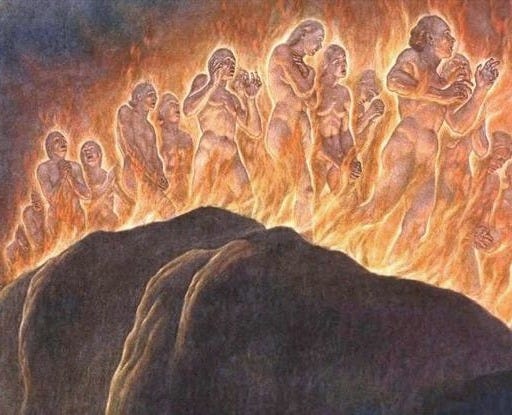
Dante’s guide Virgil explains why Odysseus is in Hell:
“That flame tortures Odysseus and Diomedes,
And as two they meet
God’s vengeance, as they sinned and met His wrath.
They bemoan their ambush in that flame,
Their wooden horse in Troy, which was the gate
Through which the noble seed of Rome first came”
So Odysseus, with his friend Diomedes, suffer perdition because of the Trojan Horse trick, and other deceitful counsels, which led to untold evils as Troy was pillaged.
Still one might ask, why are these crimes especially evil?
Dante doesn’t just treat Odysseus as any sinner, but one who is borderline Satanic!
In fact, he’s even lower than the mass murderers like Genghis Khan and Attila the Hun!
This brings us to a stunning revelation of Dante’s Inferno, and what true evil looks like.
Sins of Malice
Dante says lying is worse than murder.
The murderers and violent are in circle 7 of Hell.
Lower Hell — circles 8 and 9 — are reserved for the fraudulent and the betrayers, like Odysseus and Judas respectively.
Why is this the case?
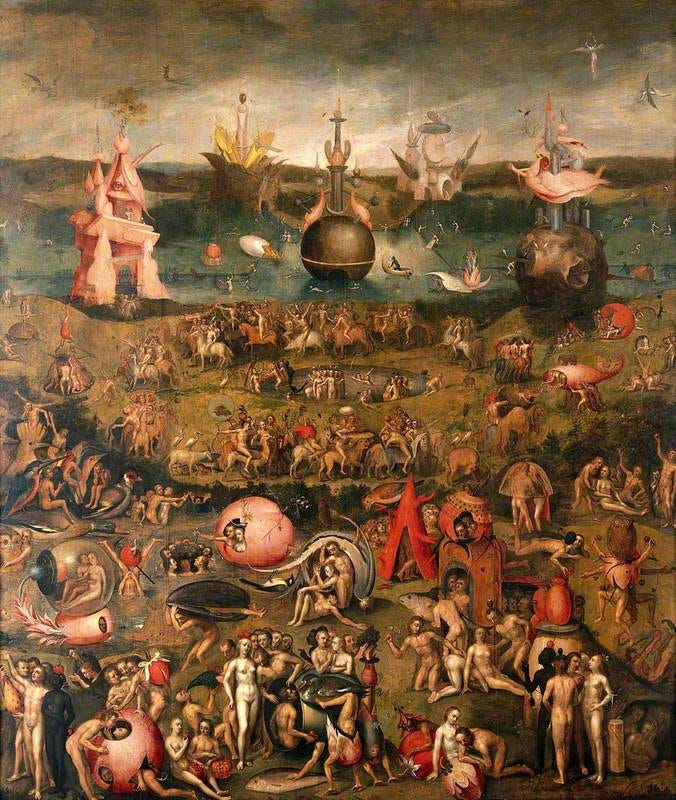
For Dante, fraud is worse than murder because violence corrupts the spirited part of your nature, but fraud corrupts the intellect — the rational part of your nature that separates man from beast.
Man is made in the image of God, and so to corrupt one’s intellect is to make oneself both an enemy to God, and lower than the beasts themselves.
From this angle, we understand why Dante puts Odysseus in Hell:
The Trojan Horse was a fraudulent trick, and throughout the Odyssey, Odysseus survives through deception and lies. Some scholars even argue that his crew ultimately dies because of his own cunning and selfish decisions.
But Dante isn’t finished.
In the Inferno, Odysseus reveals one final story — a tale which is not found anywhere in Homer.
And in this story, Dante exposes the root sin that led to Odysseus’ downfall.
The truth, Dante suggests, is far worse than a simple act of deceit.
