

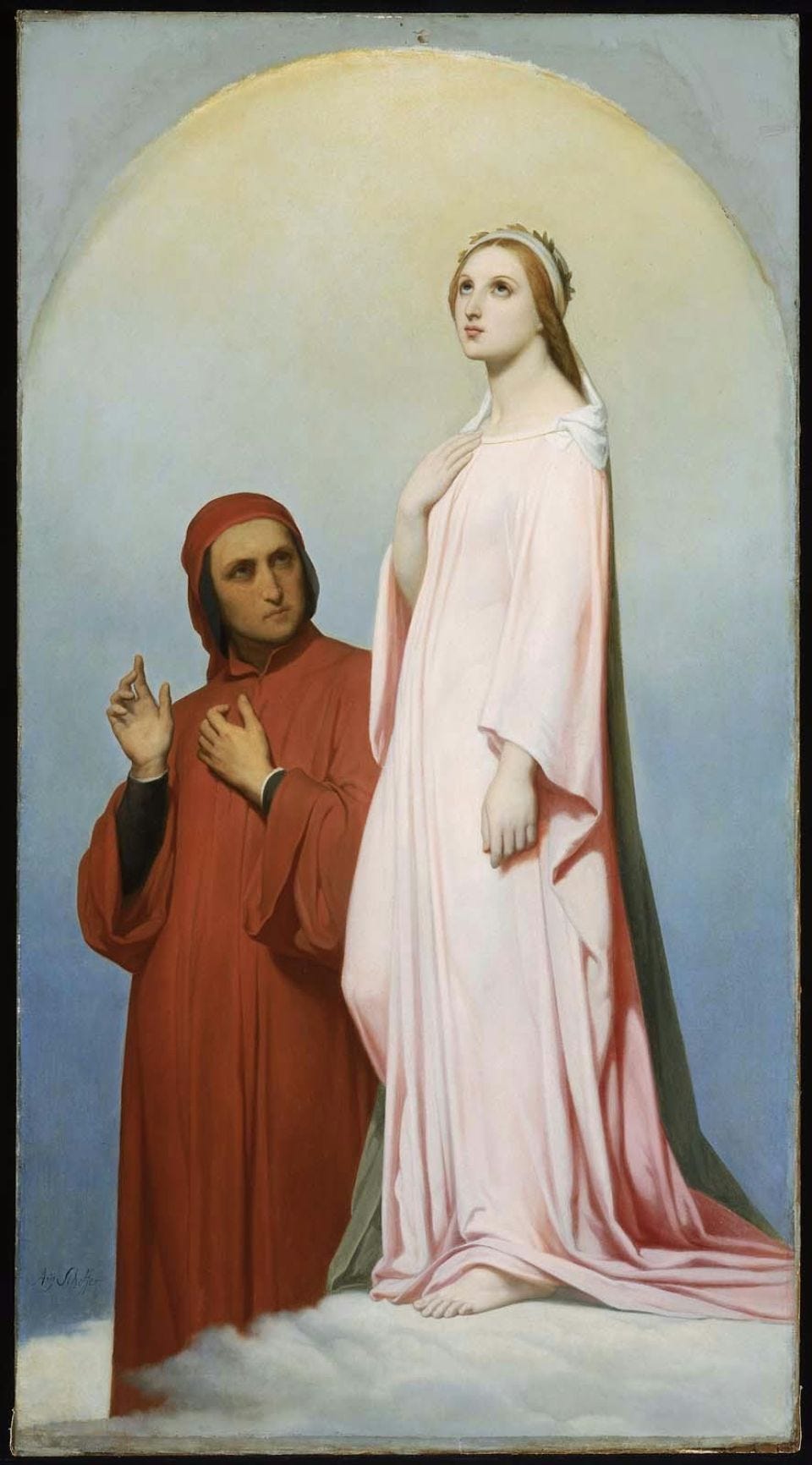
Longtime readers know that I have often celebrated Dante Alighieri’s genius. The Divine Comedy is perhaps the most complete work of the premodern age, reigning as the apotheosis of medieval thought.
And while there are endless depths to this glorious poem, Dante has a second, less famous masterpiece that is equally worth our attention — The Vita Nuova.
This earlier work, translated as “The New Life,” acts as a kind of precursor to The Divine Comedy. It’s both an autobiographical and poetical inquiry into the life of Dante, his greatest love, and the roots of his artistic genius. And yet there’s an extra dimension to this work that makes it a philosophical masterpiece:
The Vita Nuova is one of history’s earliest and most serious poetical-philosophical inquiries into the nature of love.
While today, the notion that “love is the meaning of life” is almost a commonplace, banal saying, Dante was one of the first thinkers to take this proposition seriously:
He argued that love — specifically erotic love — is a spiritual force of man’s nature that is meant to guide his soul toward beatitude itself.
Today, then, we’ll analyze The Vita Nuova to understand erotic love, its proper end, and how to direct it so that you can follow Dante’s pilgrimage to gaze upon the ultimate “love that moves the sun and stars.”
I am 100% reader-supported. This newsletter is free, but if you’re able to support, please consider a paid membership — it helps my mission of sharing Truth, Beauty and Goodness with maximal reach
As a paid member, you’ll get:
Two full essays a week
Access to all recordings (past & future) of my Great Books lectures on this publication
Eternal gratitude from me
Dante’s Beloved
As stated earlier, The Vita Nuova is primarily autobiographical, with poetic gloss. Yet it follows a singular thread:
Dante’s discovery of his beloved Beatrice Portinari.
Lovers of Dante know that Beatrice was Dante’s muse — the woman who inspired The Divine Comedy, and Dante’s decades of toil to study, imagine, and write this masterpiece.
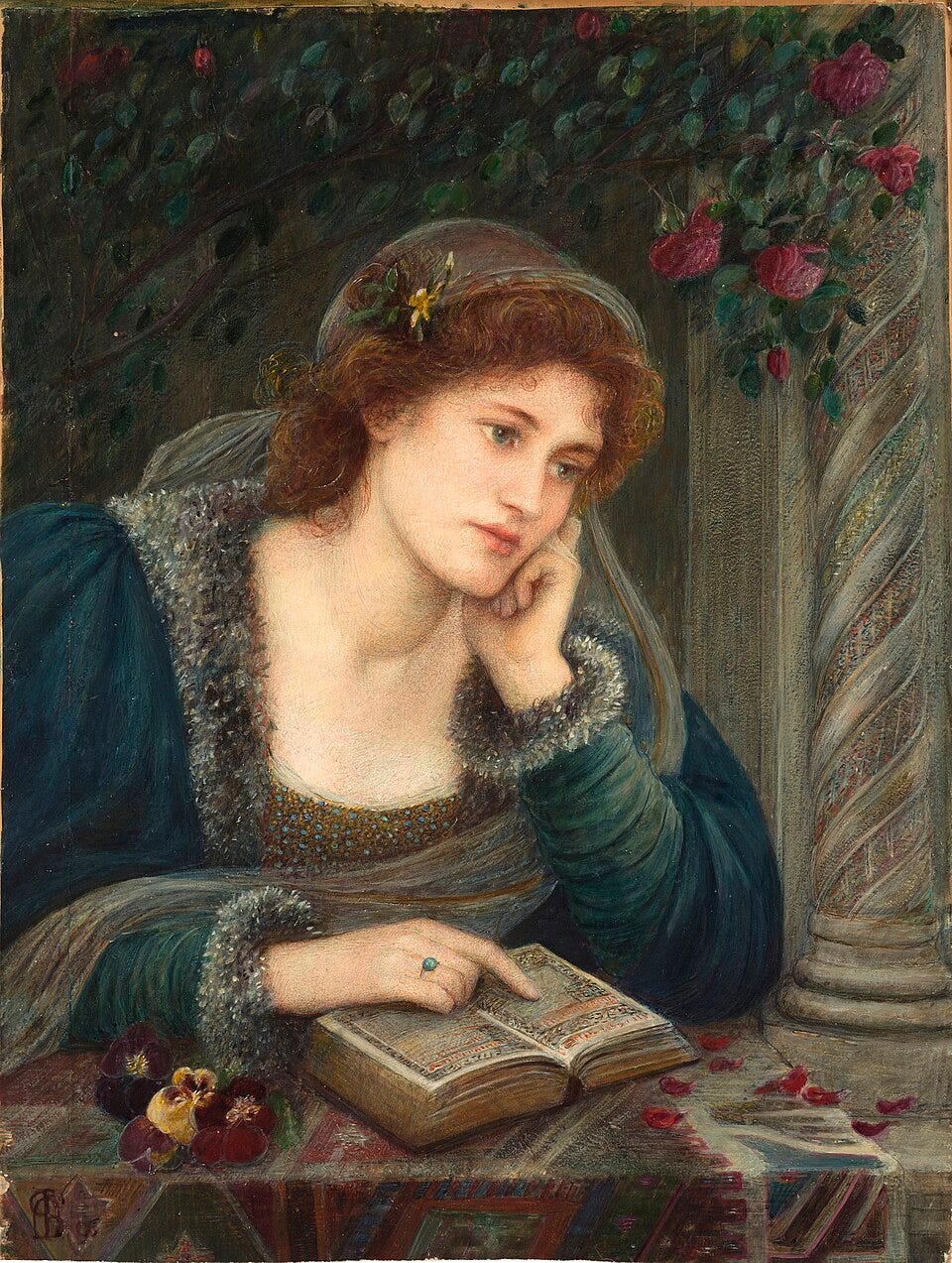
What’s surprising, however, is that Dante hardly knew Beatrice. According to his account, he only encountered her on two occasions, though they never formed a substantial relationship with each other.
But this adds only to the mystery of Dante:
How can a woman he barely knew inspire a lifelong devotion of love, loyalty, and toil in her honor?
This is the first question, and beginning, of The Vita Nuova.
The Roots of a New Life
Dante opens his Vita Nuova with a Latin inscription — incipit vita nova — or “here begins a new life.”
This opening line sets the theme of the story:
Dante’s erotic love, devotion, and desire for Beatrice instill within him a fundamental transformation so radical that he feels his life has been made new.
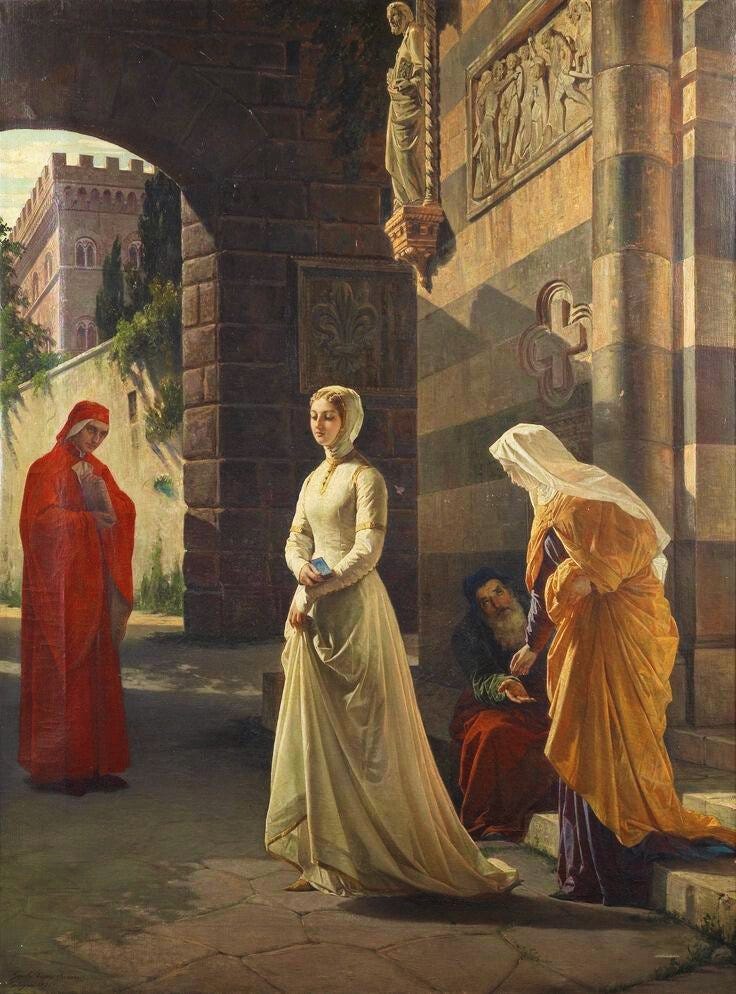
He confirms this in the following paragraph, recounting the beginning of his life:
“Nine times since my birth had the heaven of light revolved in its orbit, returning almost to the same place, when before my eyes there first appeared the glorious lady of my mind, called Beatrice…
At that moment I say in all truth that the vital spirit dwelling in the most secret chamber of my heart began to tremble so strongly that its violence could be felt even where the pulse is weakest; and trembling it said these words:
Ecce deus fortior me, qui veniens dominabitur michi
[Behold a god stronger than I am, comes to rule over me]”
In simplest terms, Dante’s autobiography begins at nine years old, when he first lays eyes on Beatrice and falls madly in love. Notice, then, that Dante says his “new life” begins in erotic love. Furthermore, notice the strange mystery of this love — it’s almost a form of madness, insofar as a trembling desire enthralls him against his will.
This is the mystery of Dante’s love — and erotic love as such — that it’s not rationally built, nor willed, but often received in one’s soul beyond one’s control.
For the rest of his life, a “god stronger than Dante” will rule over him. Namely, the god of erotic love, or his insatiable desire for Beatrice.
Thus the beginning of Dante’s new life begins in the mystery of love and devotion… but where does it take him?
Grief, Mourning, and a New Calling
The beginning of Dante’s new life is surprisingly undramatic.
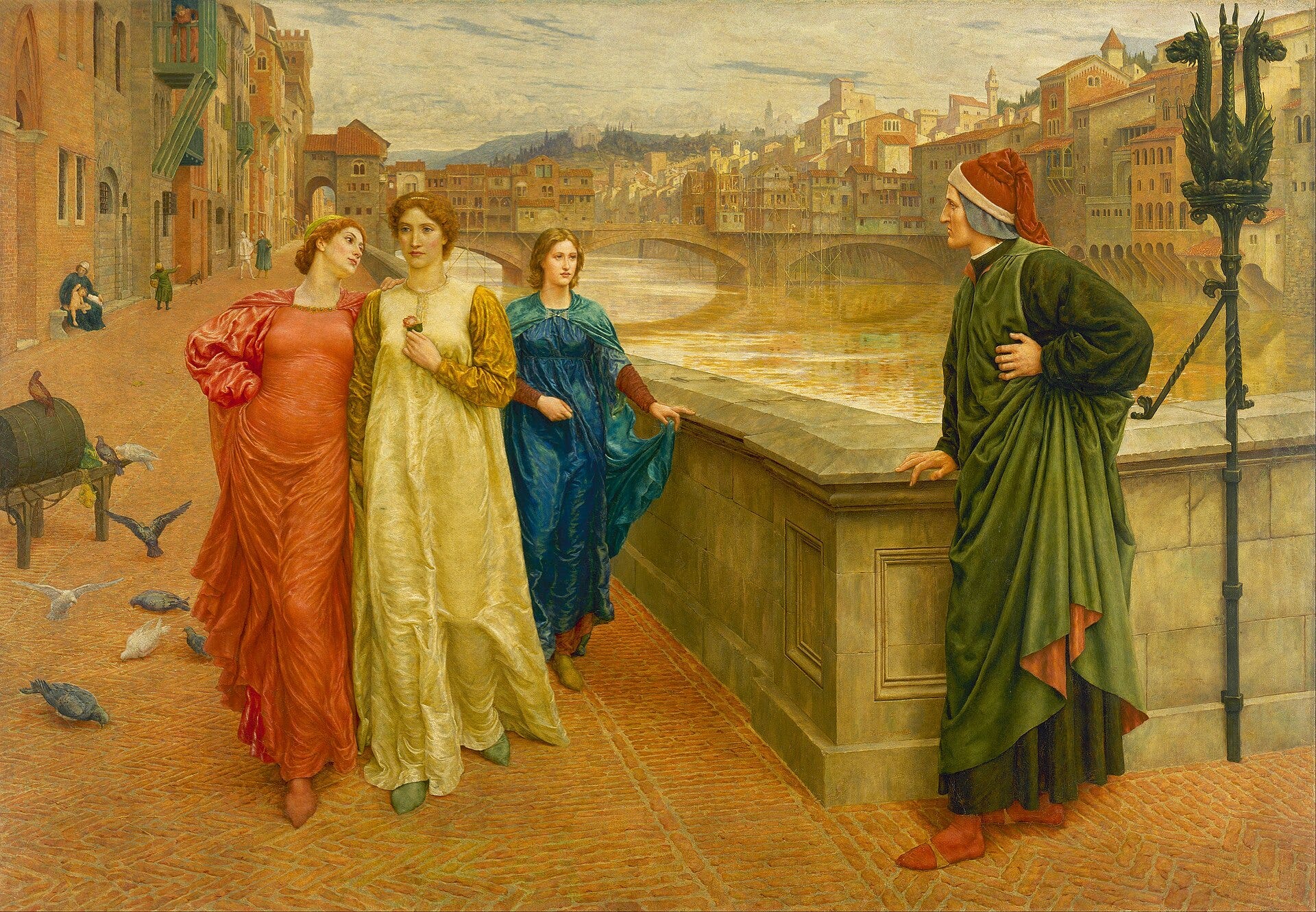
There’s no romantic pursuit, amorous love affair, or secret trysts between the lovers. In fact, there’s hardly a conversation between the two. Dante writes that upon meeting Beatrice at nine, he never spoke to her again until a passing greeting in the street nine years later, when he was eighteen. And yet, this god of love still ruled over his soul.
His days were filled with longing, dreaming, and celebrating the beauty and virtue of his beloved. He wrote countless love poems in her name, and shares anecdotes of how secretive he was about this love — never daring to share it with another soul.
You get the sense that this “new life,” grounded in erotic love, is for Dante a sacred mystery to be kept secret. His bashfulness is not merely timidity; rather, he feels there’s a divine mystery behind this longing, not meant for the common eye. It’s a personal mystery that he must nourish himself, as behind this passion for Beatrice seems to be an incomprehensible passion for, and promise of, beatitude.
And yet, much as Dante nourishes this passion, he’ll face the worst of fortunes at age 25 — Beatrice will die.
He shares his affliction over her death in poetry:
“These eyes that see the heart in pain and grieve
Are so afflicted by the tears they shed
That now they are exhausted and run dry.
Thus if I seek some other way to give
Vent to the grief that draws me on to death,
It is in words that I must learn to sigh
Was glad to speak, when she was yet alive…
She has gone up to heaven suddenly,
And left Love here below to mourn with me”
Notice how even in Beatrice’s death, Dante is still left with “Love here below,” to mourn with him. In other words, Beatrice’s death doesn’t end Dante’s new life — his love has turned to grief, but this grief remains a mystery to be solved. Even behind Dante’s deepest pains, there’s a felt sense of a heavenly mystery guiding him to an unforeseen destiny.
After many such weeks of mourning, Dante shares a stunning vision that appears to him in his darkest hour:
“I was lost in sorrowful thoughts that my deep distress could be read on my face.
I raised my eyes to see if anyone was watching me, and I saw a gentle lady, young and very beautiful, who was looking at me from a window with an expression that seemed to contain the very sum of pity”
This lady’s identity is somewhat ambiguous. She remains unnamed in the Vita Nuova. Later, in the Convivio, Dante will associate this lady with Philosophy, although her precise identity and significance in the Vita Nuova remains uncertain.
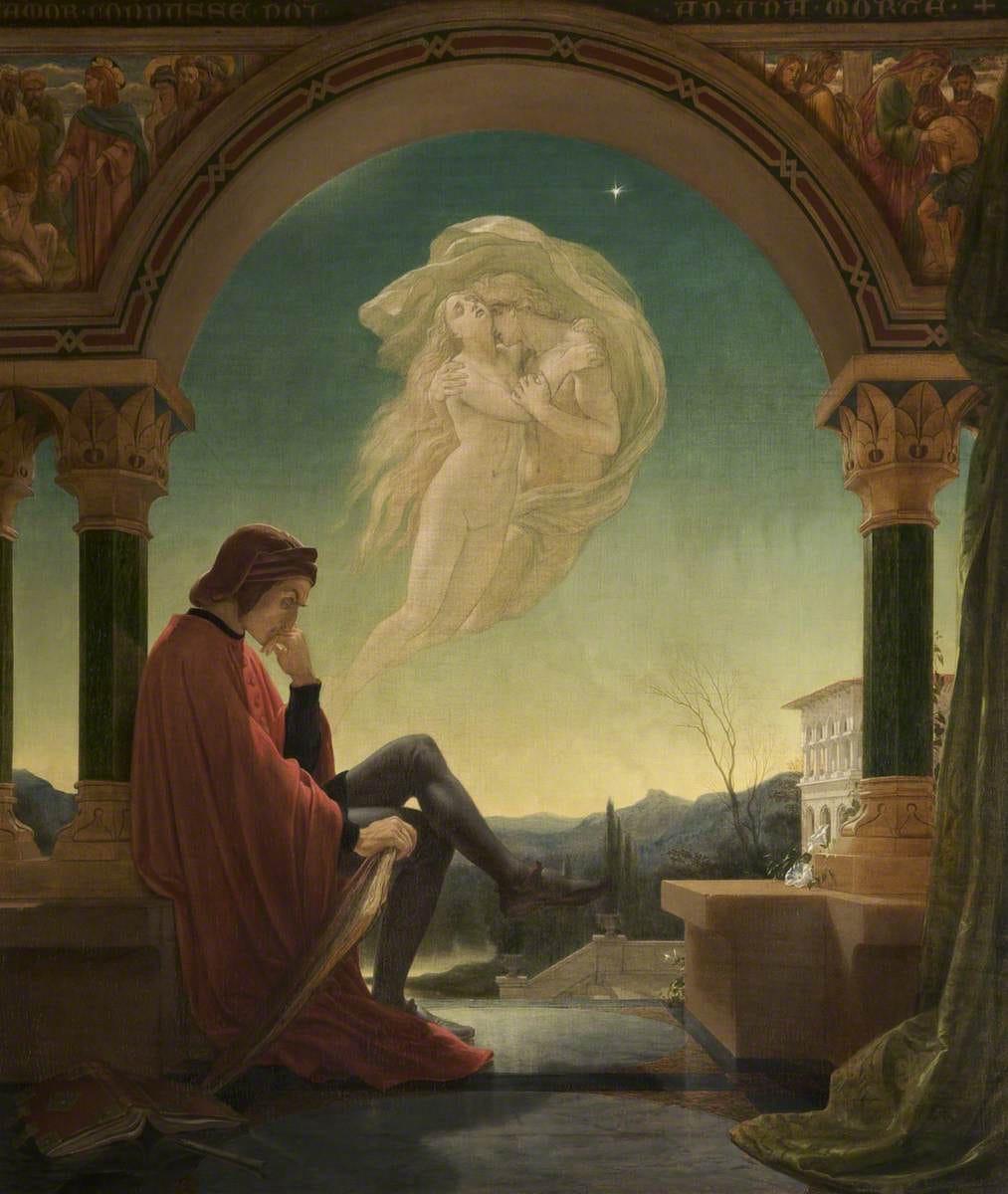
Nonetheless, Dante is clear that the vision of this gentle lady becomes, in hindsight, an important turning point in his recovery.
The lady’s compassion comforts Dante in his grief and draws him toward a deeper inquiry into the mysteries of his pain, love, and despair.
What follows is a period of intensive study in philosophy and theology:
Love has driven Dante so mad that he seeks to know — not just the mysteries of his pain, but the heart of his nature, the cosmos, and the identity of his Creator.
And such an impassioned study will begin the process of healing his wounds… but it will also do much more. It will set Dante on an entirely new path of understanding his “new life.”
And better yet — this new path of Dante’s is universal.
When you understand the insights of his studies, and their relationship to love, you’ll learn not only how Dante soared to find the face of God, but also discover the blueprint for you to do the same…
