

The Divine Comedy is perhaps the apotheosis of all Western Literature.
This trilogy of poems — the Inferno, Purgatorio, and Paradiso — seamlessly blend 2,000 years of Christian theology, Greek philosophy, politics, and mythology into the ultimate allegory of human life.
To put it simply, this is not just a story, but your story:
The Comedy is a map that teaches you the worst of human depravity, yet also the means to discovering redemption, joy, and beauty.
Yet one question often baffles readers:
Why did Dante enter the Inferno in the first place?
Why would a Christian pilgrim, seeking God, begin his journey by descending the nine layers of Hell to gaze into the jaws of Satan himself?
It’s non-intuitive at first, but the Inferno is a testament to Dante’s genius — as he teaches us that everyone must enter the Inferno before they can be ready for Paradise.
Today, we’ll explore why, and how a proper fear of Hell prepares the soul to pursue Truth, Beauty, and Goodness.
Reminder:
Join me on Dec 10 for a live discussion where we’ll explore how to recover the education modernity stole from us.
Seats are limited — reserve your spot now and start rebuilding your intellectual foundation:
A Pilgrim in Exile
As a recap, the poet Dante made himself the protagonist of the Divine Comedy. The plot begins with Dante, the protagonist lost in the woods because he “wandered from the straight and true.”
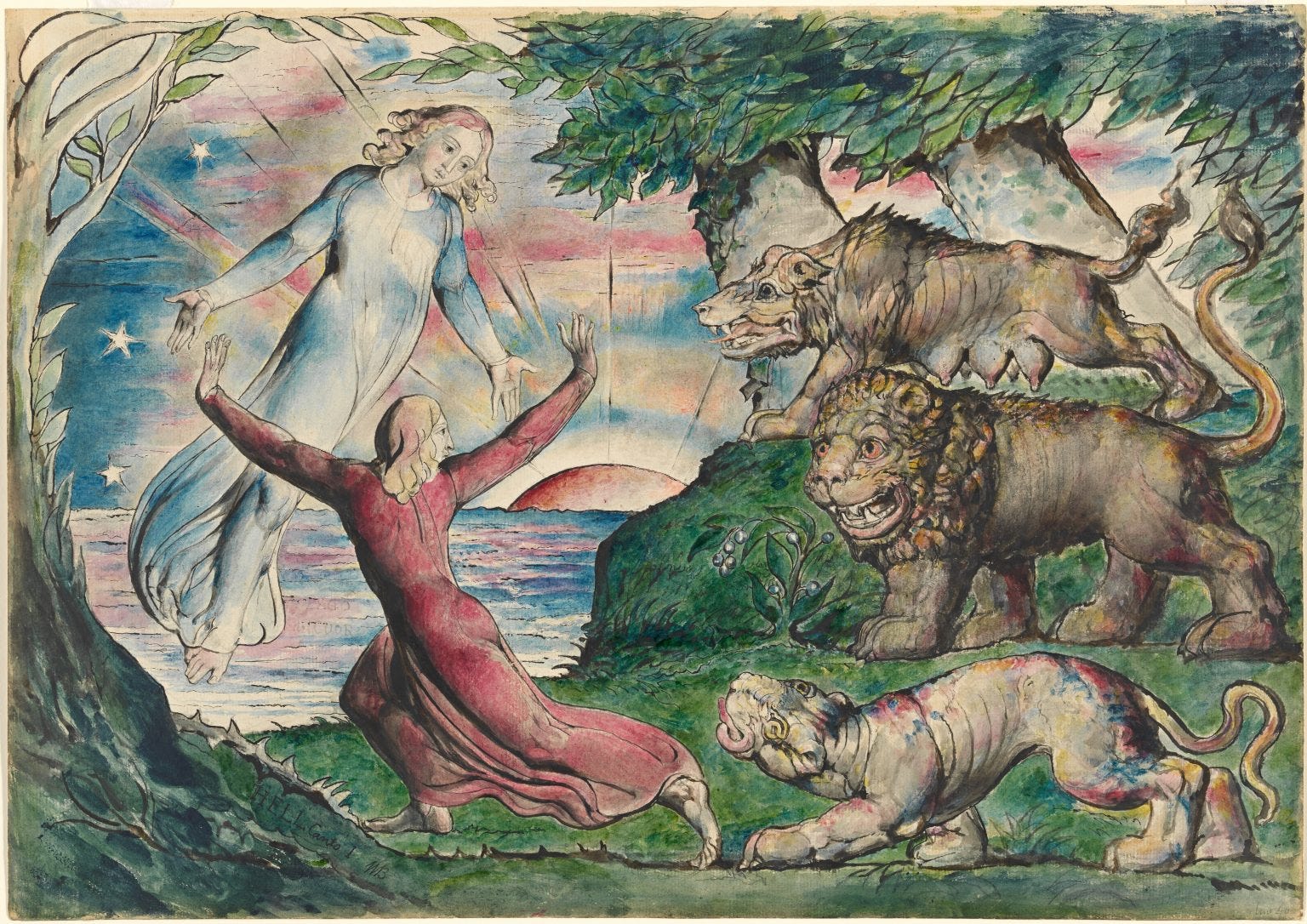
He’s nearly accosted by three beasts in the wild before the deceased Roman poet Virgil appears, and rescues him. He comes bearing good news and bad news for Dante:
The good news — Virgil has been sent from heaven to rescue Dante from this wilderness and guide him to heaven. Providence wants to lead him to paradise.
The bad news — the road to heaven begins by descending the nine layers of Hell.
Dante is horrified at this fate, but reluctantly accepts, trusting the good will of Providence to guide him through the valley of the shadow of death…
Entering the Inferno
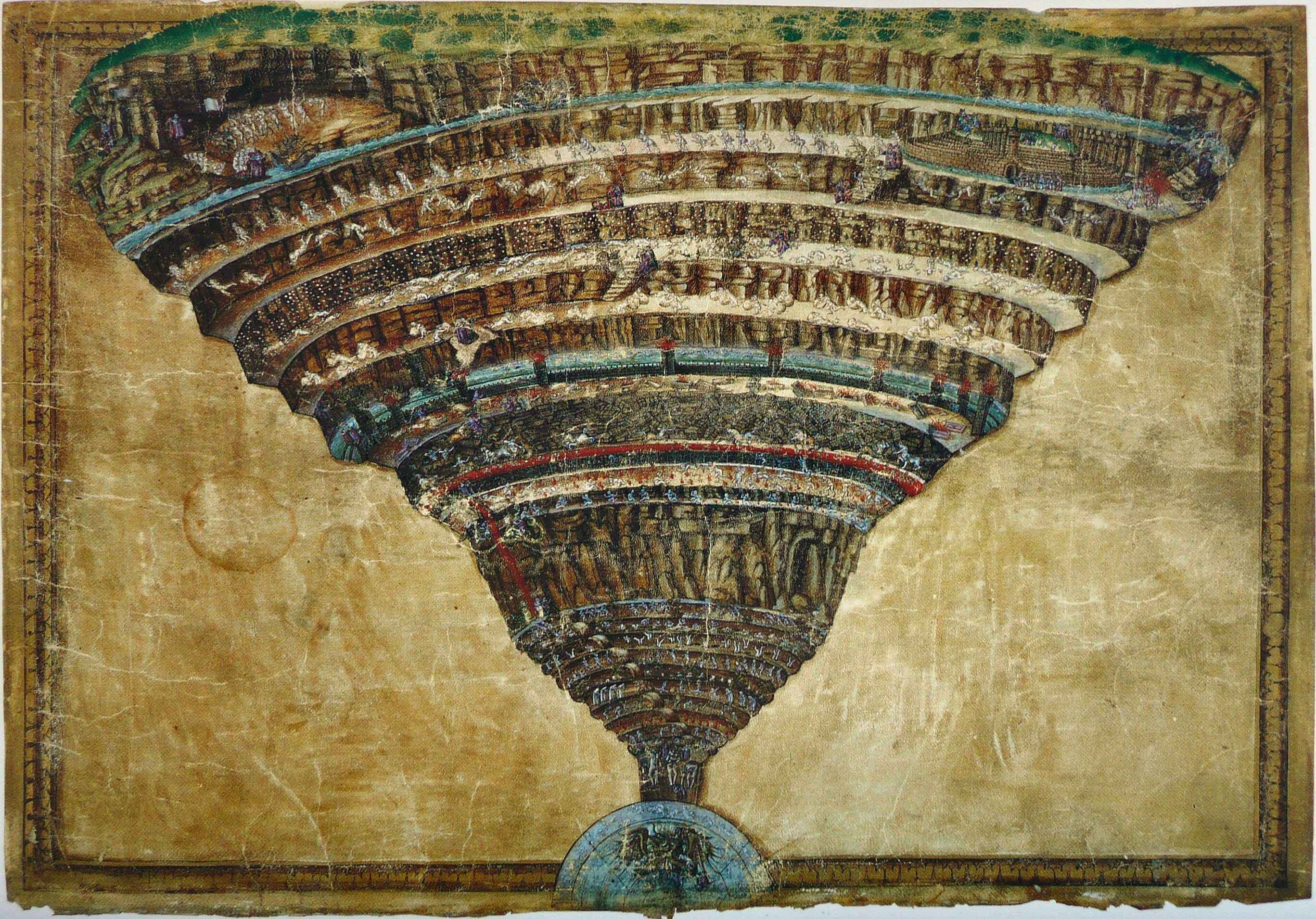
Dante’s imagination of Hell is fairly straightforward. It consists of nine descending layers, each housing increasingly heinous sinners.
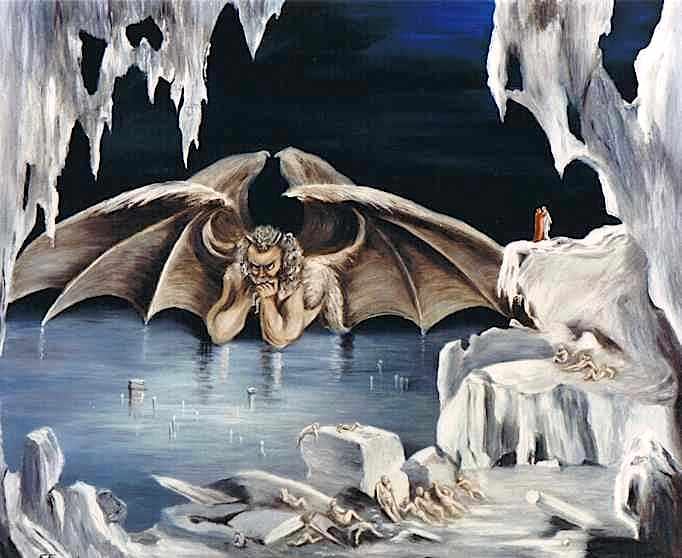
The upper layers hold the nonviolent (lust, gluttony), the middle the violent (murderers, heretics), and the bottom those guilty of fraud, deceit, and betrayal (like Judas).
Plotwise, the poem shows Dante descending through Hell and witnessing the evils of man — but that’s only the surface. A deeper reading reveals that Dante himself begins to change as he endures Hell’s horrors.
How so?
At first, Dante is terrified — he literally faints at the sight of evil. He lacks the fortitude and purity of soul to withstand it.
Worse yet, he questions God’s justice. A Christian should trust God’s omniscience, recognizing that Hell’s punishments are not hatred, but a fitting judgment for the unrepentant. In fact, the only good the damned ever receive is justice — the only goodness that resides in Hell.
But Dante distrusts God. He mourns the lustful and then takes too much pleasure in the wrathful — misaligning with divine justice on both sides.
Virgil rebukes him twice, and in those reprimands we discover the very purpose of the Inferno:
Dante must go to Hell because he lacks a proper fear of God. His misplaced pity or excessive hatred toward the damned reveals a heart still confused about sin. Recall that at the poem’s start he was lost in the wilderness because he “wandered from the straight and true.”
The Inferno, then, is necessary for healing. Dante must undergo his own “dark night of the soul.” Hell teaches him the darkness of humanity — and the darkness within himself.
By the poem’s end, he can endure Hell without fainting, he truly rejects evil, and he humbly repents of the sins that led him astray.
And here, at the Inferno’s close, Dante prepares us for the true genius of the rest of the Comedy.
