

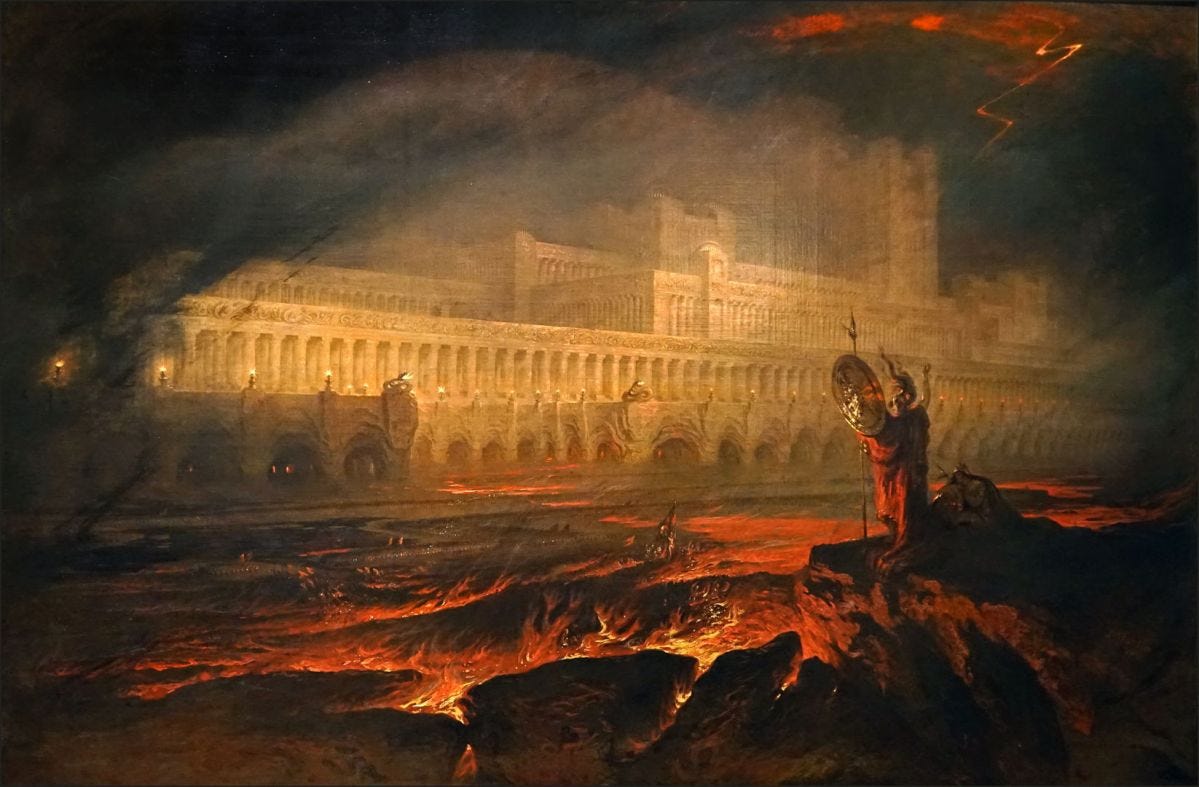
Hell has captured the imagination of novelists, poets, theologians, and artists for centuries. Since as early as Dante’s Divine Comedy, artists have sought to understand its nature and how it fits into the providential plan of the Christian God.
Atheists also partake in the conversation, albeit from the reverse direction, asking:
How can a good and loving God sentence his creatures to an eternity of damnation?
Believe it or not, one of the best answers comes from the 19th-century Russian novelist Dostoevsky. His work The Brothers Karamazov asks this very question through the staunch atheist Ivan Karamazov, yet provides perhaps one of the richest answers ever. The discovery is not merely that Hell is compatible with a loving God, but that without Hell, love, morality, and the meaning of life itself risk being extinguished.
Here, then, is Dostoevsky’s take on the necessity of Hell.
I am 100% reader-supported. This newsletter is free, but if you’re able to support, please consider a paid membership — it helps my mission of sharing Truth, Beauty and Goodness with maximal reach
As a paid member, you’ll get:
Two full essays a week
Access to all recordings (past & future) of my Great Books lectures on this publication
Eternal gratitude from me
Introducing Ivan
Before we jump into Ivan’s argument, let’s remind ourselves of his background. He’s the middle child of the three Karamazov brothers. He’s highly intelligent, but an undecided atheist. He’s rejected God due to the “problem of evil”: he cannot reconcile wanting to spend eternity with a God who allows innocent children to suffer.
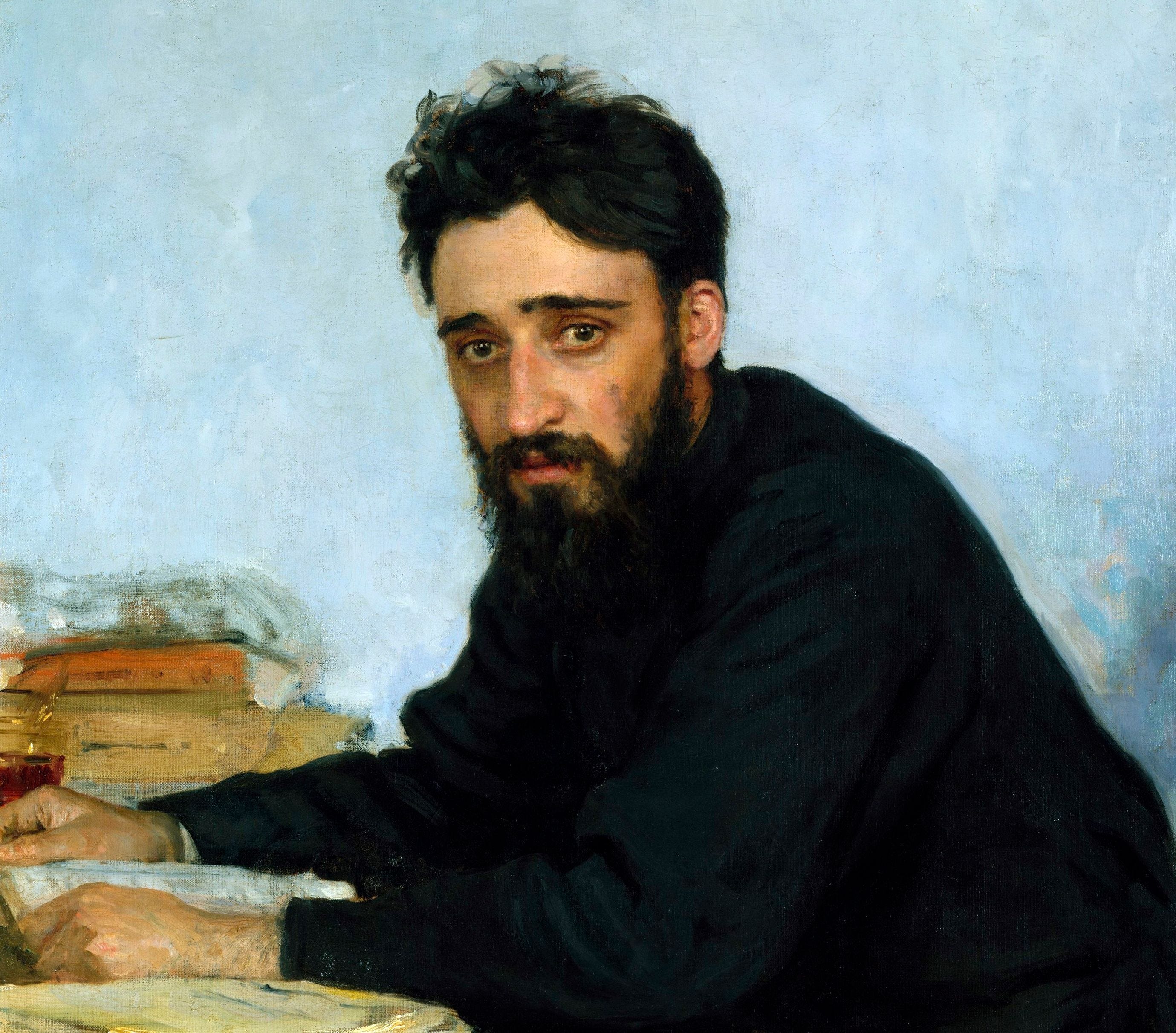
While Ivan presents strong logical arguments against the faith, he also has an artistic streak. Some of his best attacks on Christianity come through poetry and narrative fiction, like his famous “Grand Inquisitor” story, in which he argues that the Catholic Church has rejected Christ and human freedom in favor of the Satanic temptations of power, control, and totalitarian unity.
But where does his critique of Hell enter the picture?
Near the novel’s conclusion, Ivan meets the Devil himself, and the two engage in one of literature’s most famous meditations on cosmic justice.
A Date with the Devil
The conversation takes place near the novel’s end, when the Devil appears to Ivan alone in his sleeping quarters. It’s unclear whether this apparition is a hallucination or the actual demon in the flesh, but for simplicity, we’ll treat him as real.
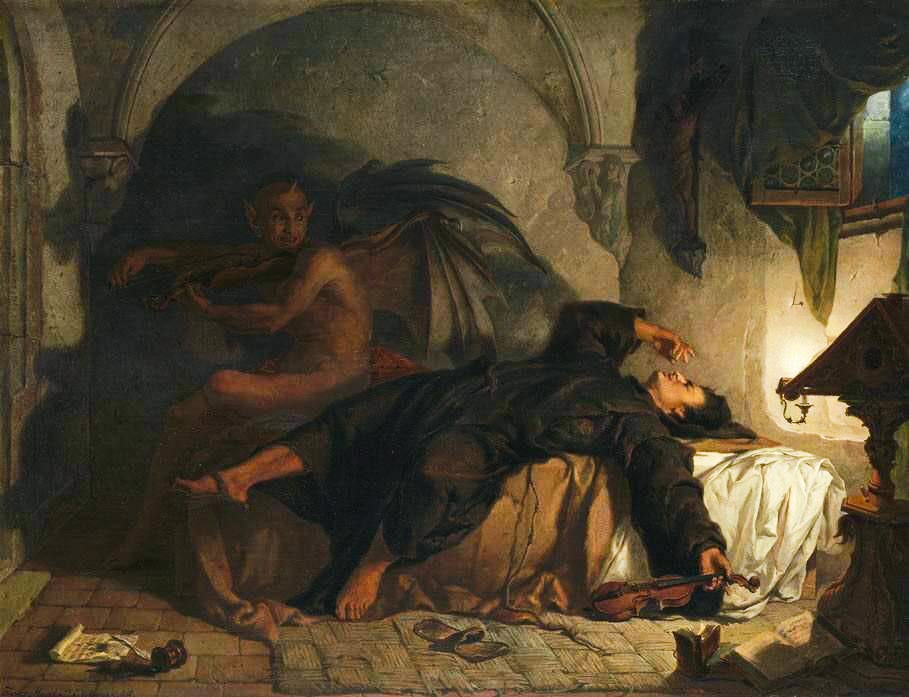
The Devil’s goal is simple: to prevent Ivan from repenting and turning to the faith by mocking him over his disbelief.
And how does he accomplish this?
By reminding Ivan of a story he wrote as an adolescent, one that gets to the heart of his crisis of faith.
To recap, Ivan’s story goes as follows:
An atheist dies and discovers in the afterlife that God is real. The gates of Heaven open to him.
Yet he is offended by Heaven’s existence, which contradicts his deeply held convictions of atheism. In protest, he refuses to enter and lies prostrate for a quadrillion years.
Eventually, for an unexplained reason, he gets up and decides to give Heaven a try. But God says, “Not so fast.” As punishment for his defiance, he must walk a quadrillion miles in darkness, a mile for every year he protested.
The man agrees and walks the quadrillion miles, paying his debts. Upon entering Heaven, he weeps with joy and declares that two seconds of Heaven were worth the quadrillion years of darkness.
The story ends triumphantly, but remember: a young Ivan wrote this as an expression of his rejection of the faith.
The problem, as Ivan sees it, is that a world where everyone is saved makes life meaningless. All suffering, whether a minute or a million years, is ultimately abolished, and no one’s choices can change the outcome. Everyone, righteous and wicked alike, will eventually be saved.
His story makes this clear — the atheist was free to protest Heaven, but never free to reject it. Whether he waited one year or a quadrillion, his only eventual option was an eternity of paradise.
He thus asserts that a world where everyone is saved is ultimately a world of nihilism. Everyone reaches the same eternal destination, and everything that came before becomes a meaningless dream.
This is precisely what Ivan cannot justify. When he hears of a twelve-year-old boy viciously mauled by a malicious general’s hunting dogs, or parents who lock their child in an outhouse to freeze to death, he refuses to say that their suffering is meaningless or justified by Heaven.
It’s a strange paradox in which Ivan accuses God of cruelty through kindness. God’s all-encompassing mercy is too agonizing for his pained heart, which demands justice.
It’s quite a powerful attack on the faith, but a closer look reveals a fatal flaw in Ivan’s conception of the afterlife: without Hell, the very possibility of love, justice, and even human freedom collapses.
Here, then, is why Hell is necessary for God’s love to be real…
