

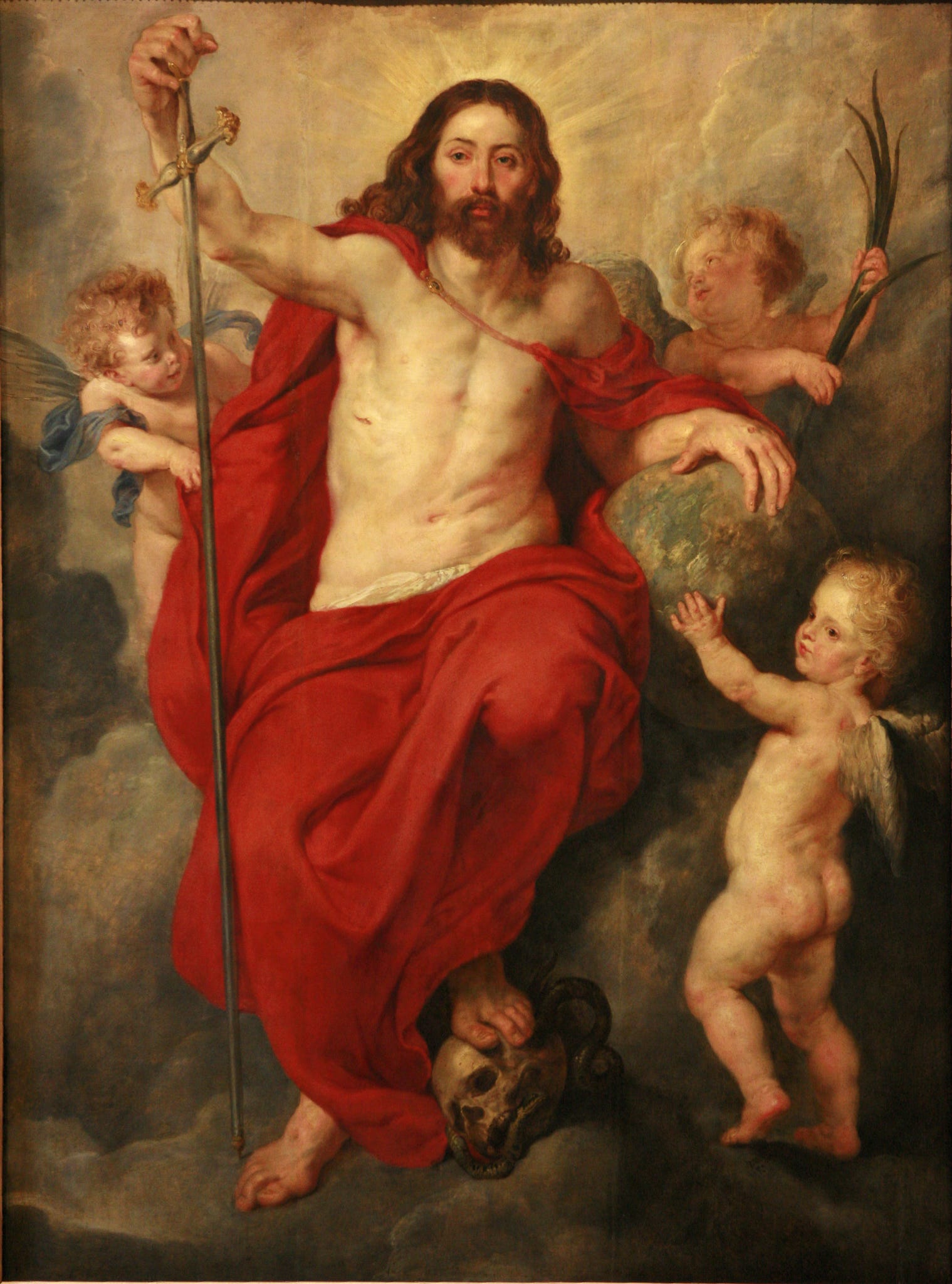
What does it mean to be a hero?
What first appears as a simple question is much harder to answer in reality.
From the beginnings of antiquity—and the Western literary tradition—writers have turned to heroism to ask: how do you live well in the face of death?
Given that man must die, he must learn how to live meaningfully—and heroism became the path to do so. To be a hero was to live with adventure, and ideally, to die with contentment, or at least with the hope of an immortal name.
Yet from Homer, to Virgil, Augustine of Hippo, and even up to Friedrich Nietzsche, we are given different visions of what heroism looks like.
And though there is vast disagreement, there is also a growing wisdom as this dialogue passes from thinker to thinker.
Today then, we will trace what heroism looks like through the literary tradition—to understand what it meant to be a hero in different ages, and ultimately, to discover what the apotheosis of a heroic life actually looks like.
To follow this thread is not just to learn heroism in the abstract, but to discover how you can be the hero of your own life’s story.
I offer private mentorship in the Great Books for those seeking clarity of vision and depth of soul. Inquire here.
If you’d like to support this work and receive future writings, you can subscribe below.
Sing Muses!
The beginning of the Western literary tradition begins with Homer’s Iliad.
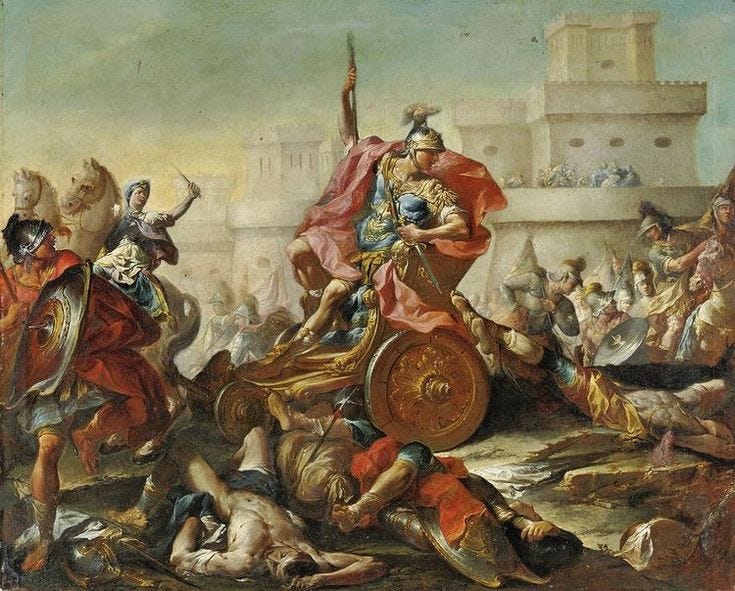
More interestingly, the Iliad itself begins with an exhortation to sing of the poem’s great hero:
“Rage—Goddess, sing the rage of Peleus’ son Achilles,
murderous, doomed, that cost the Achaeans countless losses,
hurling down to the House of Death so many sturdy souls,
great fighters’ souls, but made their bodies carrion,
feasts for the dogs and birds,
and the will of Zeus was moving toward its end”
Remember the Iliad is about the Trojan War, and Achilles is famous for his rage. He’s the greatest hero of the war, and also the greatest killer of men.
To modern eyes, this conception of heroism sounds bleak and brutal — and perhaps it is — but there’s deep wisdom in understanding why Achilles was celebrated.
Recall that to live in the Bronze Age of Ancient Greece was no fun time. City-states were constantly warring, and men suffered and died without explanation, with no hope for life after death.
One of the most pressing concerns then, was, how can you live meaningfully in light of such a cruel destiny?
The answer was glory. Men found meaning by seeking glory on the battlefield, hoping to have an immortal name that endured after death.
In this case, Achilles was the most glorious and most famous hero — not because he was morally exemplar — but because he gave men a reason to strive, endure, and seek meaning in a hostile world.
Yet modern readers would be fair to critique that Achilles is not a great hero by today’s standards. We need further developments in the tradition to refine what heroism looks like.
Now, we jump ahead 800 years in history.
Roman Piety
After Homer, the Roman poet Virgil takes the next great leap in explaining heroism to mankind. He does so in his poem The Aeneid, which is like a sequel to Homer’s Iliad.
The plot follows Aeneas, a survivor of the Trojan War, who escapes Troy after his city gets sacked. He’s called by the gods to travel to the distant land of his ancestors where he shall found a legendary new city (the Roman Empire).
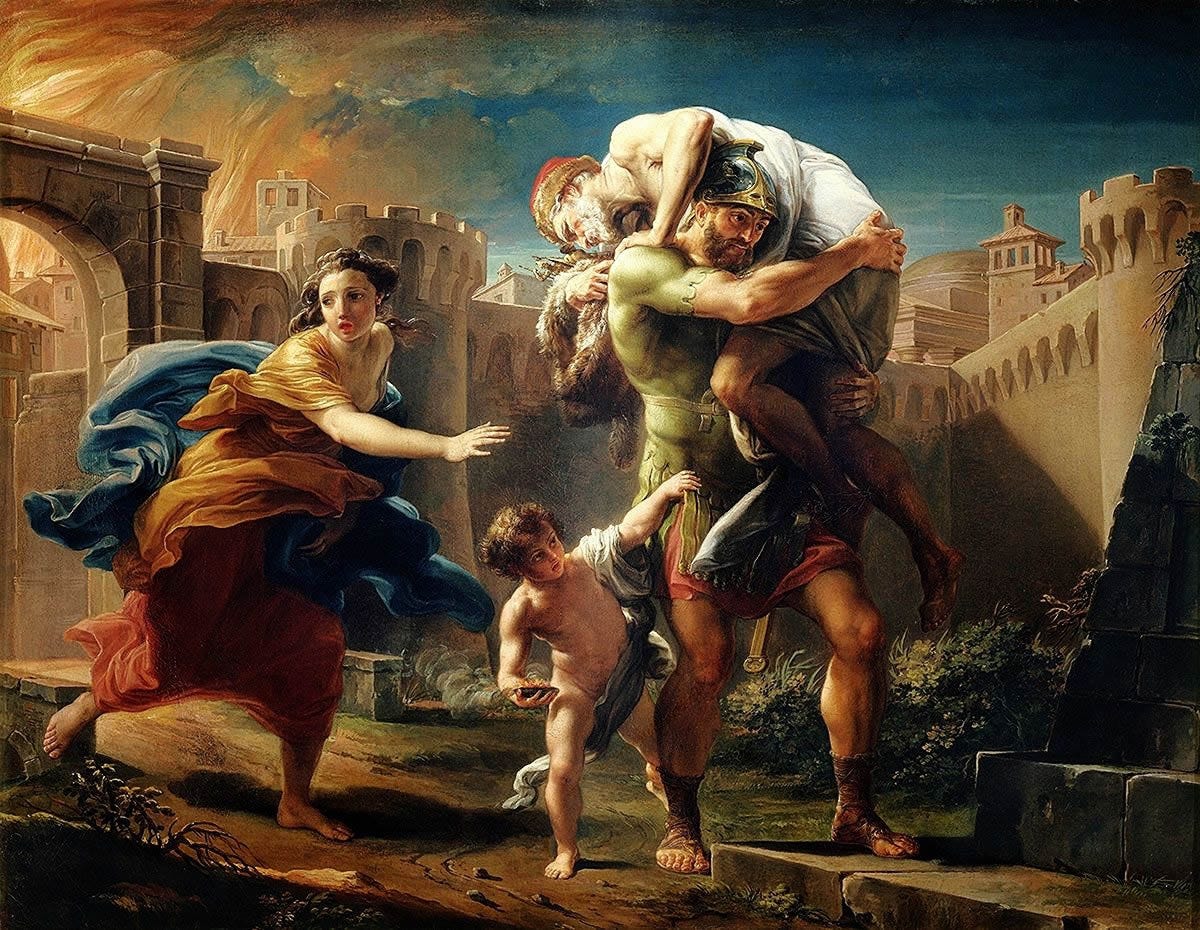
Whereas Homer’s Achilles is celebrated for his martial prowess, Virgil’s Aeneas is celebrated for a different virtue — piety.
His nickname is “Pious Aeneas,” as he surrenders his will, destiny, and desires to the decrees of the gods.
Virgil doesn’t strictly reject Homer’s conceptions of heroism — Aeneas is still a fierce warrior like Achilles, and a longsuffering leader like Odysseus — but he adds piety as a new and more foundational virtue to his Roman hero.
In other words, Virgil’s hero is a maturation of Homer.
If Homer tells us that a hero ought to be strong, brave, and formidable like Achilles, Virgil says, “yes, but he must be pious too. He must respect the gods, his city, and his family more than his own life.”
So Roman heroism is about loving family, civilization, and the gods. It’s about becoming a man of self-sacrificial duty for the harmony and well-being of your fellow man.
We see then, how Virgil proves a giant leap forward into heroism — including morality and religiosity as important features to becoming a hero — and yet, even now the full picture is not completed.
Some issues still remain, namely Aeneas’ life — while noble — isn’t joyous. Some critics argue his piety is too severe, and imperfect, that it destroys his own life, agency, and soul… an imperfect sacrifice.
Also, famously, this poem too ends in bloodshed that echoes the hells of the Iliad, implying that Aeneas’ heroism is not enough to conquer death and the agonies of existence…
But where can heroism go from here?
We see that Aeneas perfects duty, but not yet love.
And because of that, his heroism — however noble — still ends in death.
But in Book VI, Virgil leaves behind something unexpected:
a descent into the underworld that quietly points beyond pagan heroism altogether.
It is here that we begin to see what true, perfected heroism actually looks like.
