

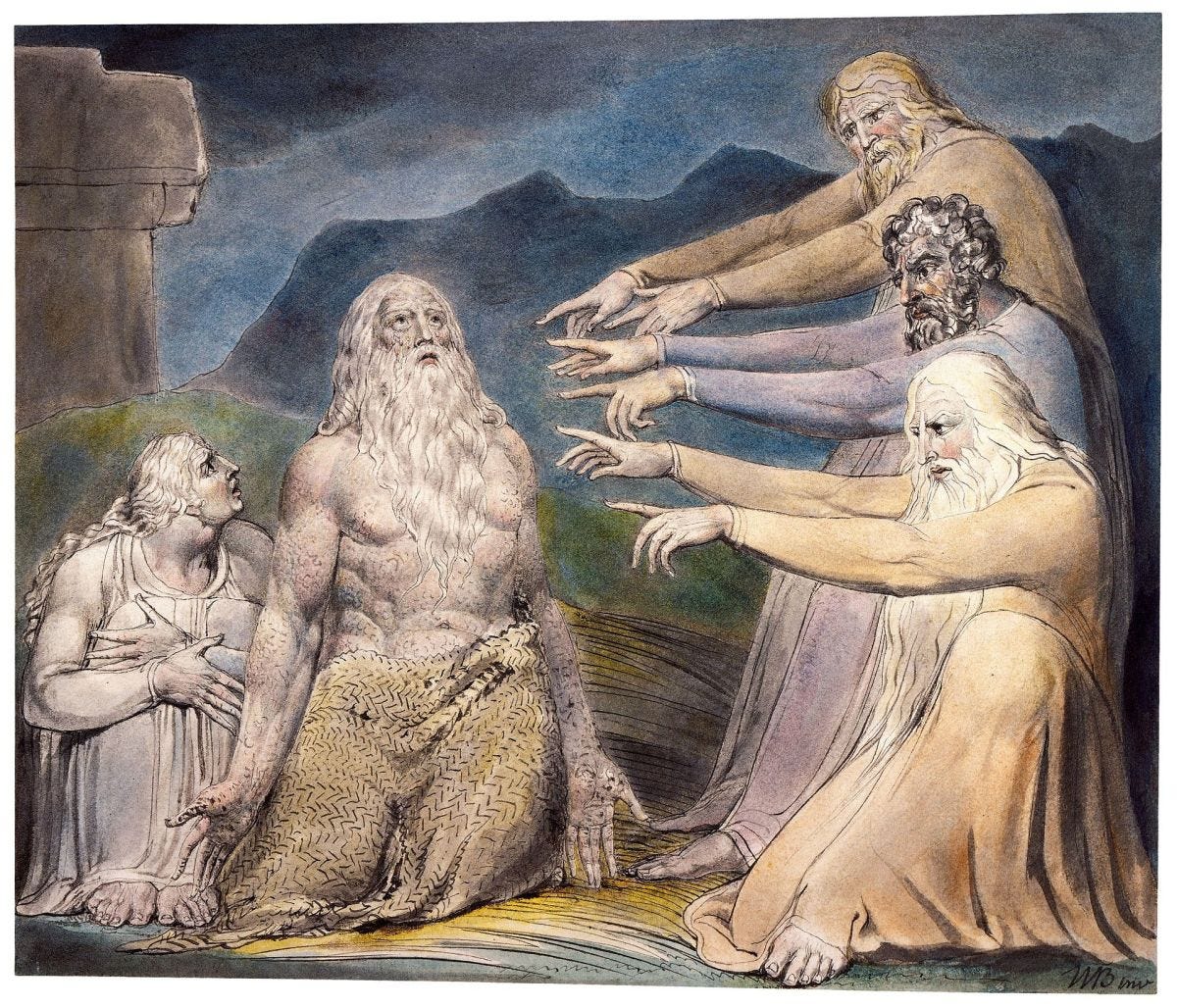
The Book of Job is amongst the most challenging books of the Bible.
This is the famous story of the righteous man, Job, whose life is ruined by Satan as a test of faith under God.
It challenges readers by asking one of the most universal questions of the human condition:
“Why does a just and loving God allow suffering to the innocent?”
Bleak as this story may sound, the Book of Job has been celebrated in history as masterpiece — perhaps the apotheosis of the Wisdom tradition of Scripture — and the broader answer to man’s comprehension of evil, suffering, and a justice that endures even as it defies comprehension.
Today then, we’ll take a closer look at the story of Job to see what wisdom it can teach us about finding faith, meaning, and fortitude in the face of inexplicable suffering…
I am 100% reader-supported. This newsletter is free, but if you’re able to support, please consider a paid membership — it helps my mission of sharing Truth, Beauty and Goodness with maximal reach
As a paid member, you’ll get:
Two full essays a week
Access to all recordings (past & future) of my Great Books lectures on this publication
Eternal gratitude from me
The Historical Job
This story takes place in the Land of Uz, believed to have been historically set around the era of the patriarchs.
In other words, the historical Job may have been a contemporary of Abraham, but was born outside the promised land — and thus not an Israelite.
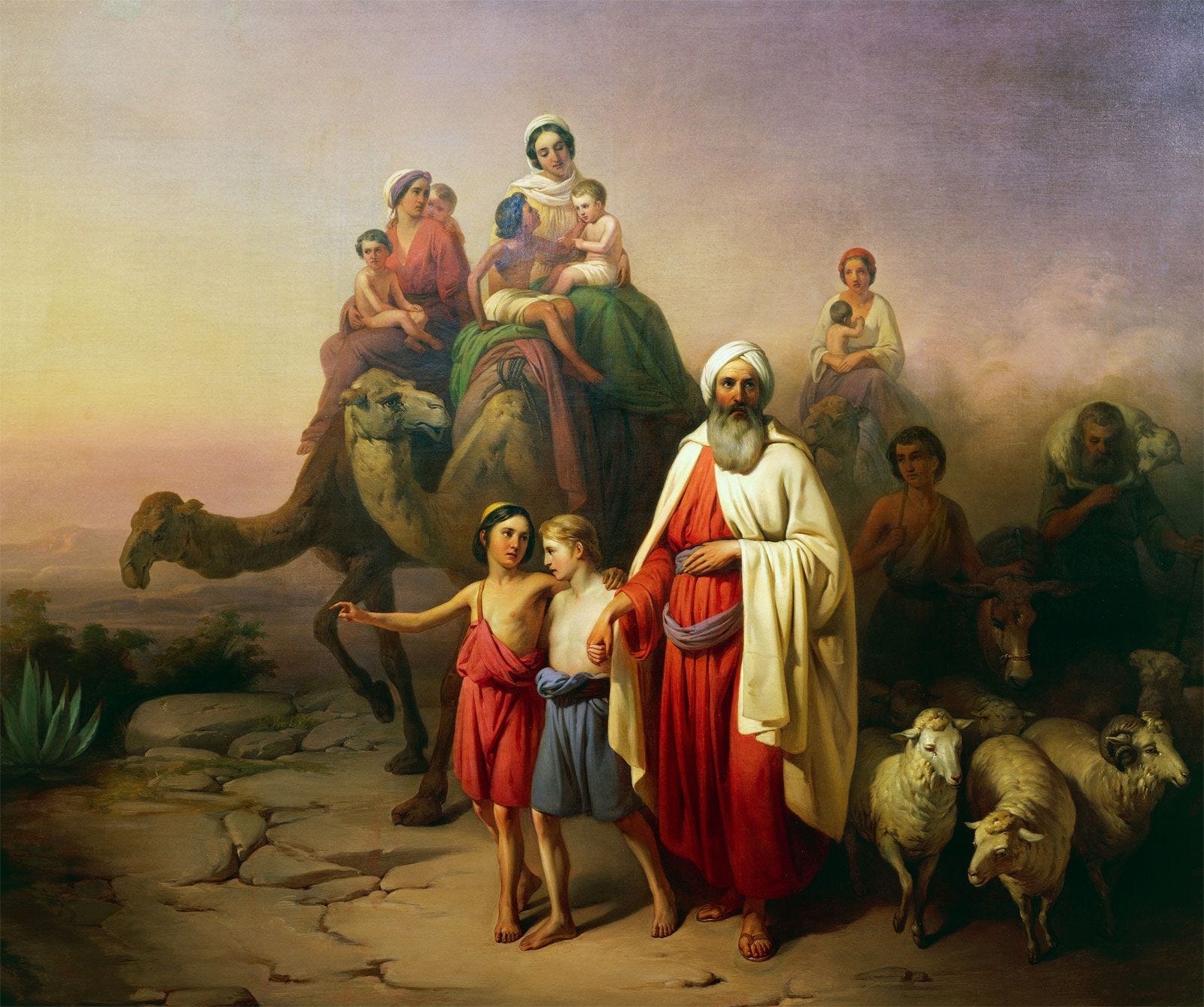
This detail alone is intriguing. Recall that a key detail of the Old Testament is the foundation of the nation of Israel — God’s chosen people — who were called to holiness, which literally translates to “set apart.” The Israelites then, prided themselves on being “set apart,” from their pagan contemporaries by practicing the law divinely revealed by God in Leviticus.
It’s all the more interesting then, that the primary wisdom book of scripture features a non-Israelite protagonist. Indeed, Job would be celebrated as the bedrock of faith for all to follow. Thus, even the mere introduction to the book of Job hints that God’s justice surpasses human understanding, and often defies the rationalistic expectations of his people.
Job as the protagonist hints at God’s universal love and justice — that he created all of mankind, and dearly loves the entirety of his creation.
And yet, this very love will seemingly be called into question…
A Clash with Satan
Job is introduced as a “blameless and upright,” man. This is not to say he’s without sin, but it stresses the virtuous conduct of his character. He has not committed any grave moral transgressions that would warrant punishment.
After Job’s introduction, the narrative turns to heaven where God convenes a council with the “sons of God,” or angels.
Amongst one of those in this council is Satan — and his name is important to stress.
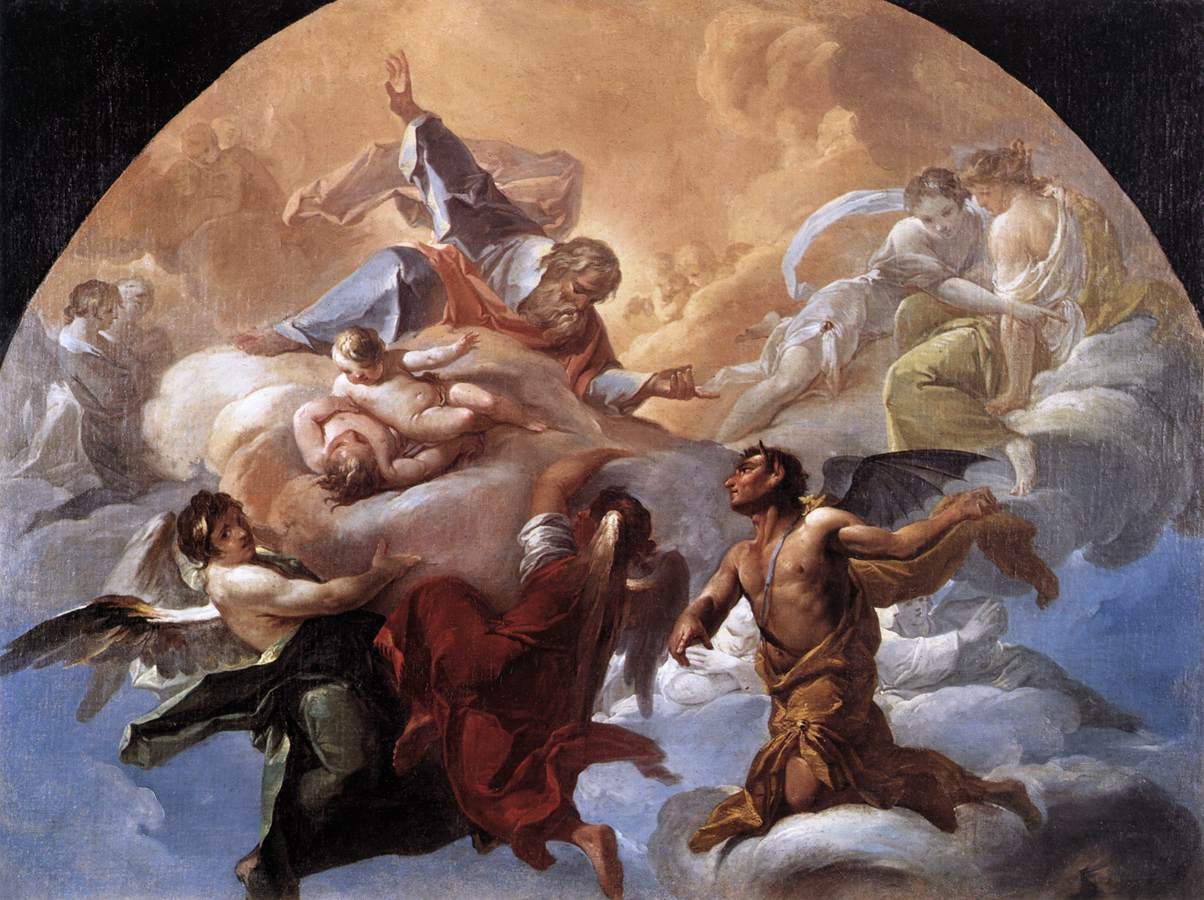
While today Satan refers to Lucifer — the devil — the name Satan takes a slightly different connotation within the book of Job. Satan literally translates to “the enemy,” or “the accuser.” So technically, Satan in this story could be the Devil proper, but he may also be a lesser demon or rebellious figure. Nonetheless, he is an enemy of God who is subordinate to God’s authority.
This “accuser,” lives up to his name, as Satan challenges Job’s faith, exclaiming to God that Job is only faithful on account of his prosperity. If Job was poor and afflicted, Satan claims, he would curse God.
God takes Satan up on this accusation, allowing him to inflict any torment on Job shy of death.
And indeed, the torments will follow…
The Suffering Begins
Just about every evil imaginable befalls Job:
— raiders steal his livestock and murder his servants
— a giant storm collapses a house and kills Job’s children
— Job is inflicted with illness and skin disease
Despite his ruin, Job holds to his faith, crying out in lamentation:
“Naked I came from my mother’s womb, and naked shall I return; the Lord gave, and the Lord has taken away; blessed be the name of the Lord”
This show of faith is admirable, but sadly, temptations will continue to strike Job.
First, his embittered wife urges Job to curse God:
“Do you still hold fast your integrity? Curse God, and die”
Harsh as Job’s wife’s words are, you can understand her grief — they are now impoverished and mourning the death of their children and servants.

This story is depicting to the reader the disturbing power of grief, in which suffering itself can be so great that man fundamentally loses the will to live. Several other figures of the Old Testament will echo this claim too (1 Kings 19:4; Tob 3:6; Jonah 4:8).
Even Christ himself will question his own existence on the cross:
“My God, why hast thou forsaken me?” MT 27:46
This book emphasizes the deepest reality of suffering head on. It teaches man one truth about his condition — namely, every human being of a fallen nature will be subjected to suffering, and face a temptation of total despair — including even Christ the God-man himself!
Job too, falls in line. After one week of suffering he curses the day he was born and wishes for death as an end to his pains. But notably, he still refuses to curse God and his creation itself… He’s still holding strong.
But if you think things will get better now… think different.
Job’s Outrageous Cry
Eventually Job’s friends come to visit him as comfort.
They even appear noble at first — sitting in silence beside him for an entire week, sharing in his suffering, tears, and grief.
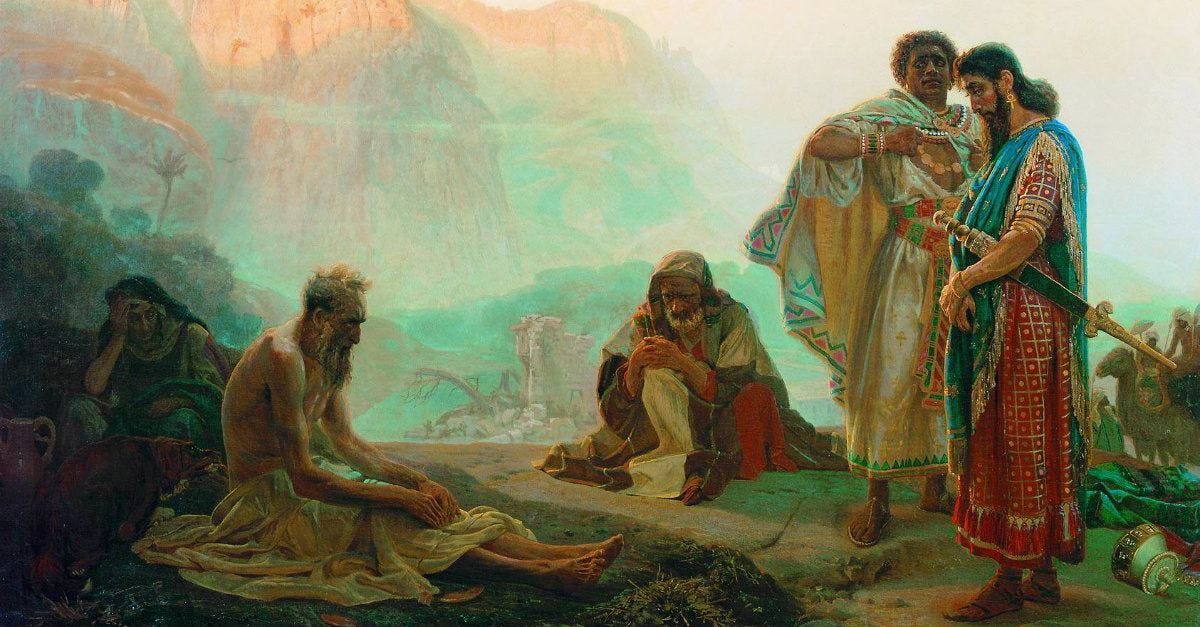
Yet after Job’s outcry, they begin to share unsolicited counsel, rather foolishly.
The friends’ counsels are many, but they are united by one foundational belief:
Innocent suffering is impossible.
They believe God rewards the innocent and only punishes those who committed injustice. Thus they urge Job to repent of his sins, yet Job maintains his innocence:
I’ve done nothing wrong!
The narrator confirms Job’s cries — he is indeed innocent. This is a test of faith administered by God.
Notice the next striking lesson that the Book of Job is teaching its readers — it maintains God’s goodness and justice, but says within the domains of his providence innocent people will still suffer nonetheless.
But how is this so? Why do innocent people suffer, and how can that be reconciled with a good, loving, and just God?
Well, this becomes Job’s very question.
After weeks of suffering he reaches a breaking point:
He doesn’t curse God, but instead calls upon Him in rage, demanding that He appear and give an account of Himself for allowing Job to suffer.
And it turns out, Job will get exactly what he asked for, and more…
