

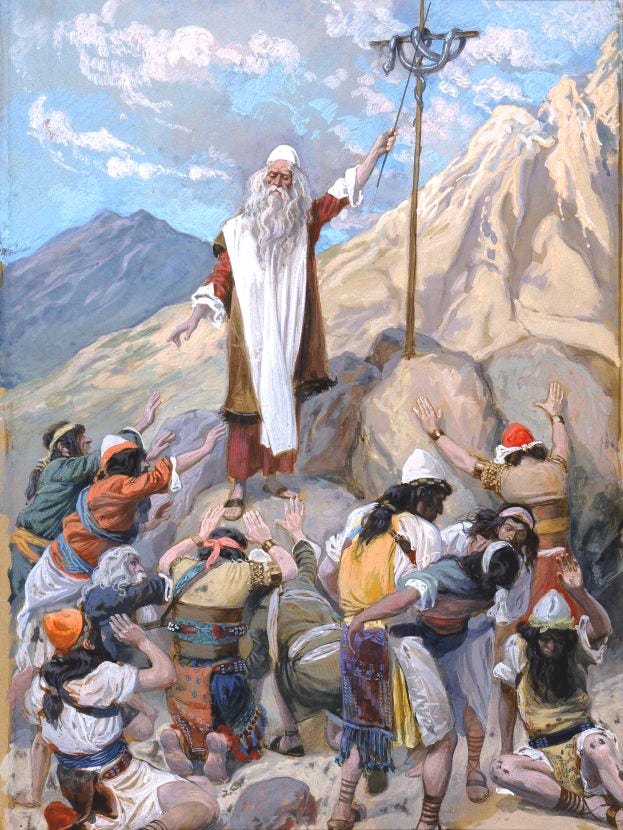
Moses and the Bronze Serpent is one of the great mysteries of scripture. It appears in the book of Numbers as a strange means of salvation. The Israelites, while wandering in the desert, incur God’s wrath through their infidelity. As punishment, God plagues the people with venomous snakes, and can only be saved if they gaze upon a Bronze Serpent hoisted on a cross by Moses.
Behind this mystery is a prophecy that not only foretells Christ’s passion, but also reveals a magnificent truth of the human condition, along with the path that leads to redemption and salvation.
Today, we’ll analyze the imagery of the Bronze Serpent to understand its lessons about human nature, and how fallen man can welcome a life-changing grace into their lives.
Reminder:
I offer one on one coaching for men, focusing on faith, fitness, and the Great Books. More info here.
Additionally, if you’d like to support my mission of restoring Truth, Beauty, and Goodness to the West, subscribe below!
Grumbling in the Desert
First let’s recap the Biblical narrative.
The Bronze Serpent story takes place in the Book of Numbers. It follows the Israelites, led out of Egypt by Moses, wandering in the desert. By now, they’ve made a covenant with God and have received the 10 Commandments, yet they remain unfaithful.
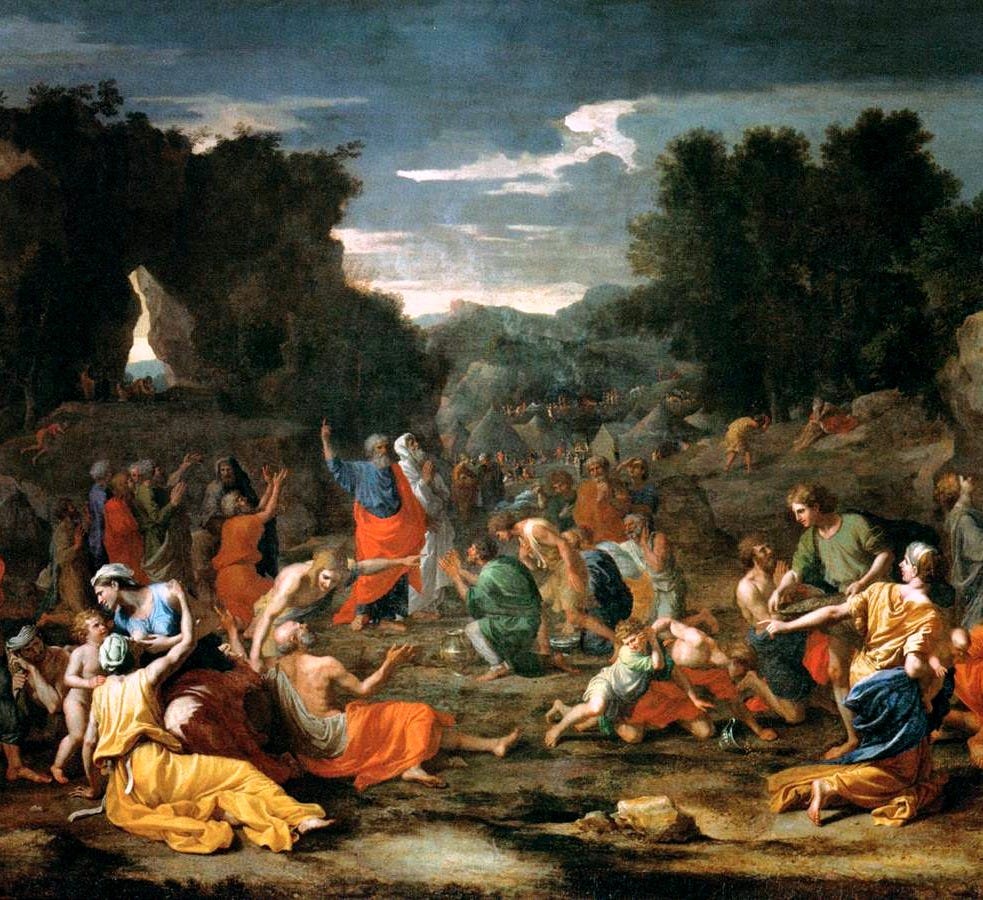
They grumble in the desert, lose faith in God, and even curse the day that God freed them from slavery:
“The people spoke against God and against Moses, ‘Why have you brought us up out of Egypt to die in the wilderness? For there is no food and no water, and we loathe this worthless food.’
Then the Lord sent fiery serpents among the people, and they bit the people, so that many sons of Israel died.” — Numbers 21: 5-6
At first this punishment seems strange, if not harsh, yet God’s decrees are not accidental. There’s a deeply allegorical symbolism behind this death of the serpent. A closer look reveals that the Israelites’ deaths are not arbitrary, but a re-enactment of the Fall of Man in Eden itself.
Wounded Nature
Let’s unpack this imagery of the Fall of Man.
The Israelites’ sin is not merely grumbling, but accusing Moses and God himself. It’s effectively a rebellion against God that denies the plan he has for them to become his chosen people.
How does this pertain to Eden?
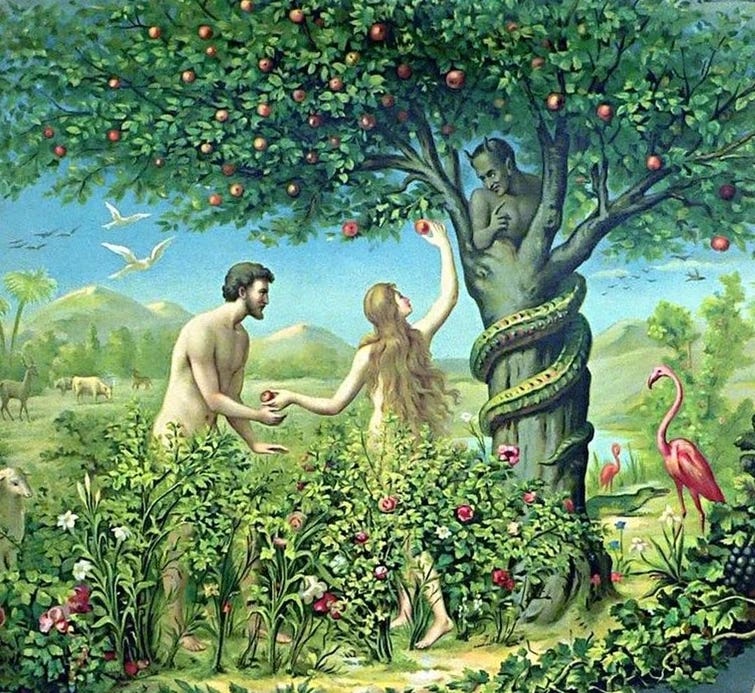
We might consider that Adam and Eve’s rebellion firmly rejected God’s plan and culminated in their death, via the treachery of the serpent.
It’s no accident then that God sends serpents on the Israelites. Their rebellion comes through the tongue, which was the same instrument by which the first serpent deceived mankind. The liar of the tongue brings death once again, and only by a new word (the Word made flesh) can man be healed.
This re-enactment of the Fall of Man is especially significant given that the Israelites are God’s chosen people, who were not only freed from slavery, but have borne witness to countless miracles (parting of the Red Sea, manna from Heaven, etc.)
The point is that not even God’s direct intervention could make them faithful and obedient. What this story teaches, then, is a deepened affirmation of the human condition. Fallen Man, through the sin of Adam, suffers a corrupted nature and is insufficient to embrace grace by himself. Salvation cannot come from works nor obedience alone, for man shall always rebel.
So how exactly can the Israelites be saved?
Though we’re still thousands of years away from the coming of Christ, Moses will be shown a solution that suggests Christ is far closer than the Israelites ever imagined.
A Sign of Grace
Moses’ solution, given by God, is rather simple.
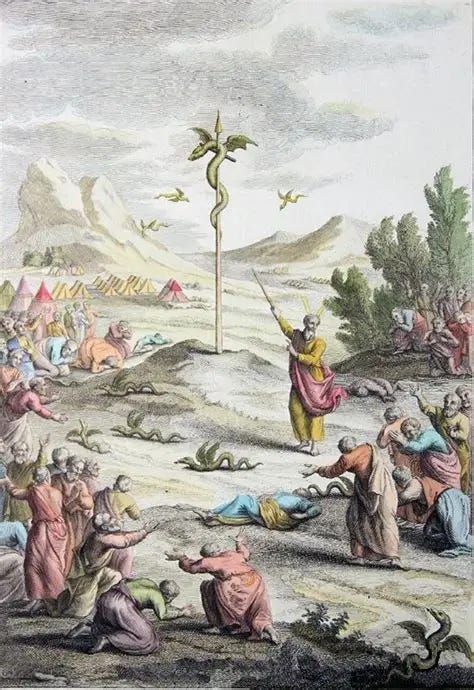
First, Moses prays an intercessory prayer on behalf the Israelites:
“So Moses prayed for the people. And the Lord said to Moses, ‘Make a fiery serpent, and set it up as a sign; and every one who is bitten, when he sees it, shall live.’
So Moses made a bronze serpent, and set it up as a sign; and if a serpent bit any man, he would look at the bronze serpent and live.” — Numbers 21: 8-9
Fairly simple solution — anyone who looks upon the sign of the Bronze Serpent shall live. This concludes the narrative in Numbers, but it leaves the reader with a sense of mystery.
Why did God instruct Moses to stare at a bronze serpent? How is this a means of salvation from snake bites?
The answer isn’t revealed until well over 1,000 years later, at the coming of the Messiah. In the Gospel of John, Jesus states:
“No one has ascended into heaven but he who descended from heaven, the Son of man. And as Moses lifted up the serpent in the wilderness, so must the Son of man be lifted up, that whoever believes in him may have eternal life.” — John 3:13-15
What does Christ mean?
He asserts that the sign of the Bronze Serpent was a prefiguration of his passion on the Cross. Just as the Israelites were saved from death by looking upon the serpent, so is mankind saved from death and brought onto life by looking upon Christ, raised up on the cross.
So the Bronze Serpent story was a prophecy of Christ, which reaffirms the fallen state of human nature:
Fallen man, left to his own devices, will always rebel even if God intercedes on their behalf. The only escape is grace, an ongoing meditation on the Cross which heals the soul.
But the story doesn’t stop here. This typological imagery is just the beginning of understanding human nature and the roots of salvation.
Conclusion
A closer look at the Bronze Serpent and Crucifixion imagery shows that the Christian argument of salvation is not static, rather a truly dynamic process. True repentance is not a passive gazing upon the cross, but contemplation… a contemplation that changes the disposition of your spirit.
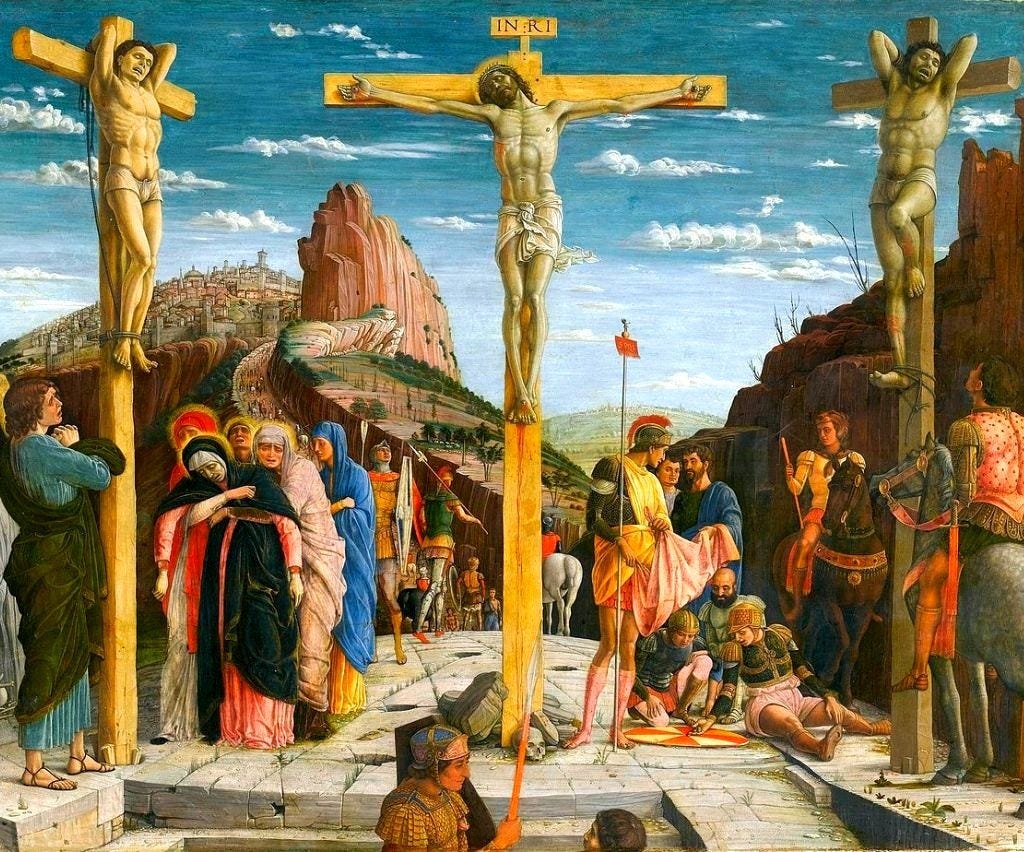
Such contemplation leads to a transfiguration of soul — a love that inspires one to “carry their own cross,” or bear the necessary sufferings that come from a life of pursuing, loving, and defending the Good in the name of God.
There is no greater love than he who lays down his life for his friends, and this is why meditation upon the cross is the salvation of death. It’s the only means to cure the inward rebellion expressed in the Fall of Man in Eden. True salvation is not that of works, but of humble acceptance and cooperation with grace. It’s preceded by a love of he who laid down his life, but expressed by those who carry the cross in emulation.
For only those who lose their lives, shall find it, and perhaps an eternity far greater than words can express.
Thank you for reading!
If you’d like to go deeper:
I offer one-on-one coaching for men on faith, fitness, and the Great Books. More info here.
Subscribe for free to receive weekly emails exploring the Great Books and their lessons on Truth, Beauty, and Goodness.
Paid members get an additional members-only email each week!
Wow, I just saw an exhibition of Giordano's 'Brazen Serpent' . In my ignorance, I initially interpreted it as Satan crowing upon the Cross that crucified Christ. Had no idea about this bizarre prelude from Numbers.