

One of the greatest warnings of the Western tradition is simply this: do not be lukewarm.
It’s the haunting warning among the closing words of the Bible itself, yet we hear this warning echoed across countless thinkers in the great literary tradition.
But what does it actually mean to be lukewarm?
How do you know whether you’re living a lukewarm life, and how do you guard against slipping into one?
Today, we’ll look at some of the most famous examples of lukewarm souls throughout the Western tradition to understand this sin, the true gravity of its crime, and what the antidote to lukewarm living looks like.
I offer private mentorship in the Great Books for those seeking clarity of vision and depth of soul. Inquire here.
If you’d like to support this work and receive future writings, you can subscribe below.
Origins
As a reminder, the infamous warning against lukewarmness comes in Revelation 3:16:
“So, because you are lukewarm—neither hot nor cold—I am about to spit you out of my mouth.”
This is the great warning to all souls in light of the judgment to come.
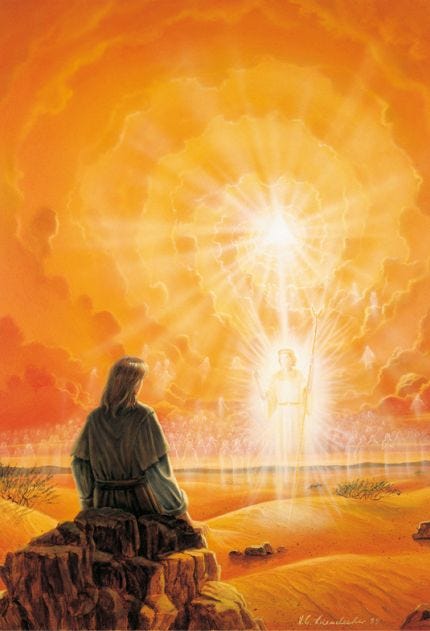
Instinctively, we understand lukewarmness to mean indecision — but what does that indecision actually look like?
To first give a concrete explanation:
Lukewarmness is not just indecision, but a refusal to commit oneself to the highest good.
So it’s an apathy that is an implicit — or even explicit — rebellion against the Good.
But of course, to better demonstrate this, let’s look to the greatest teachers of our literary tradition for clear examples.
Lotus Eaters
One of the clearest examples of lukewarmness, surprisingly, comes from Homer’s Odyssey.
This might seem strange — invoking pagan literature to explain a Biblical ideal — but tradition has long held that pagan myths grasp partial truths that are fully revealed in Scripture.
Here, the lukewarm appear on the island of the Lotus-Eaters.
Odysseus and his men are striving to return home to Ithaca, but they have incurred the wrath of Poseidon and must endure trial after trial.

One of those trials is the fruit of the Lotus-Eaters. Specifically, those who eat it become apathetic. In this case, Odysseus’ men who eat the fruit abandon his quest and choose instead to remain in passive forgetfulness on the island.
It’s worth noting that this is not a life of leisure, nor fear, nor even indulgence in pleasure… it’s simply passive neglect.
So in Homer, we reconcile lukewarmness as a loss of telos, but pay careful attention to how he loses it — by being softened into comfort and complacency.
They do not reject the journey, they simply lose the will to continue it.
It’s abandoning one’s purpose and potential in life in order to settle into what is easy.
So Homer exhorts you to strive, yet his warning is actually just the surface of understanding the full scope of the evils of lukewarmness.
Dante will emphasize the true gravity of such a crime, and how it threatens to ravage your soul.
Blank Banners
In Dante’s Inferno, the first souls he encounters are not actually inside Hell, but just outside of it.
These are the lukewarm sinners, who are stung by wasps for eternity, while they endlessly march and carry a blank banner. Virgil explains that even Hell rejects them for their passivity.
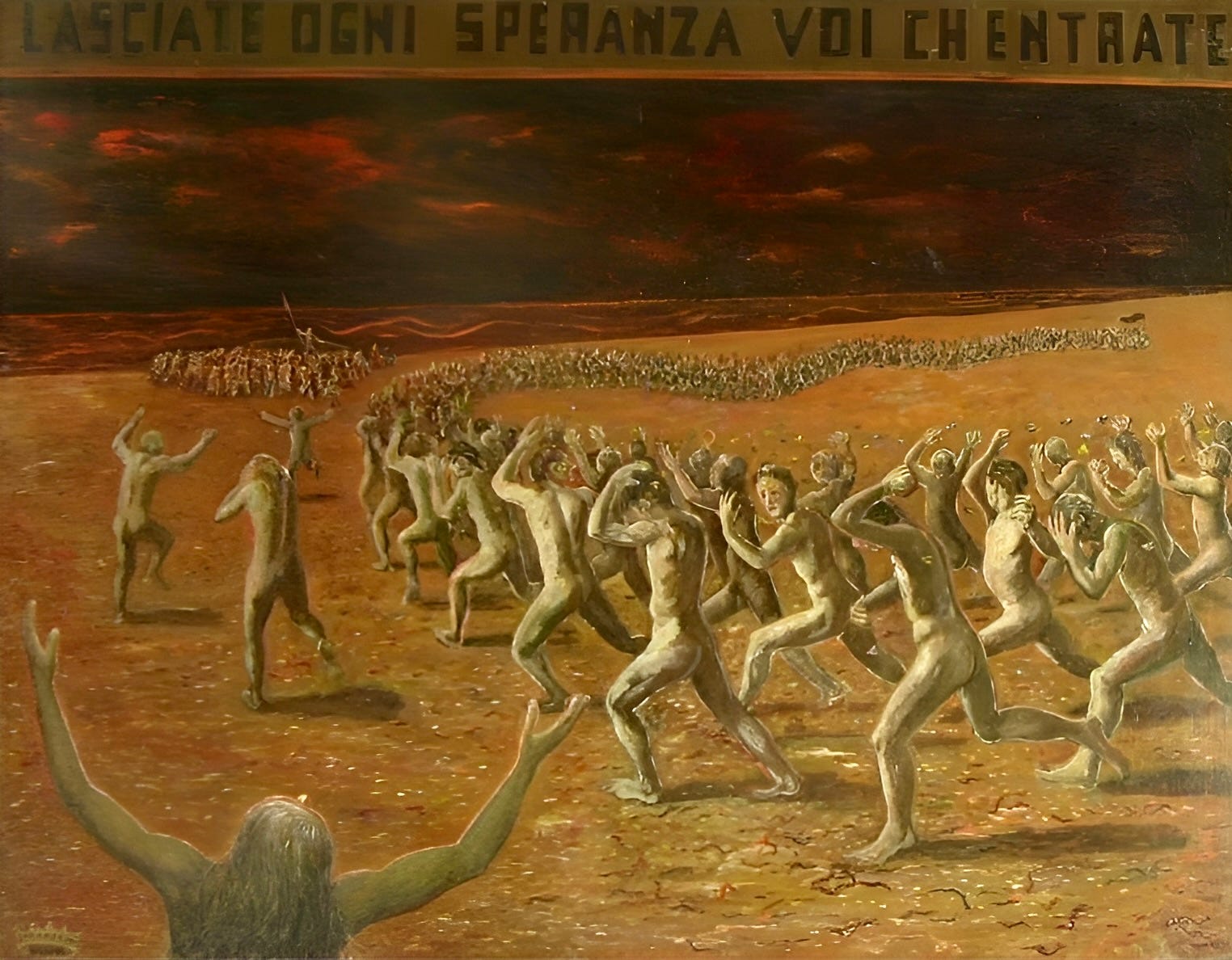
Dante’s point is this:
The lukewarm do not merely live in apathy, but in a form of apathy so contemptible that not even evil desires them.
C.S. Lewis shares this idea in The Screwtape Letters. In the epilogue, the demons celebrate receiving souls in record numbers, but they lament that these souls taste bland; they’re lukewarm souls, who didn’t commit great evils nor even pursue abject pleasures. Simply put, they were just checked out of life.
What Dante and Lewis reveal is this: lukewarmness is an apathy despised by both good and evil alike.
Do you notice how the gravity of this crime has developed from Homer?
Lukewarmness is no longer “living without purpose,” but living without purpose with conscious knowledge — and neglect — of the good. To recognize life is a spiritual battle between good and evil, and refusing to cast one’s hand in either direction.
Ironically, then, the lukewarm are not even granted the dignity of great sinners. Dante has them cast out “lest Hell should glory over them.”
So true lukewarmness is a moral failing that ravages the soul, and yet still, we haven’t comprehended the fullness of its perils.
That’s because the fullness of the lukewarm requires one more piece of understanding — an insight that we’ll find in one of the greatest philosophers of the modern world.
The Aesthetic Man
Soren Kierkegaard, the 19th-century philosopher, argued that man lives in one of three modes:
Aesthetic
Ethical
Religious
Put simply:
The aesthetic man lives for himself.
The ethical man lives for others.
The religious man lives for God.
Kierkegaard insists that only the religious life leads to true fulfillment, but observes that most men remain trapped in the aesthetic life.
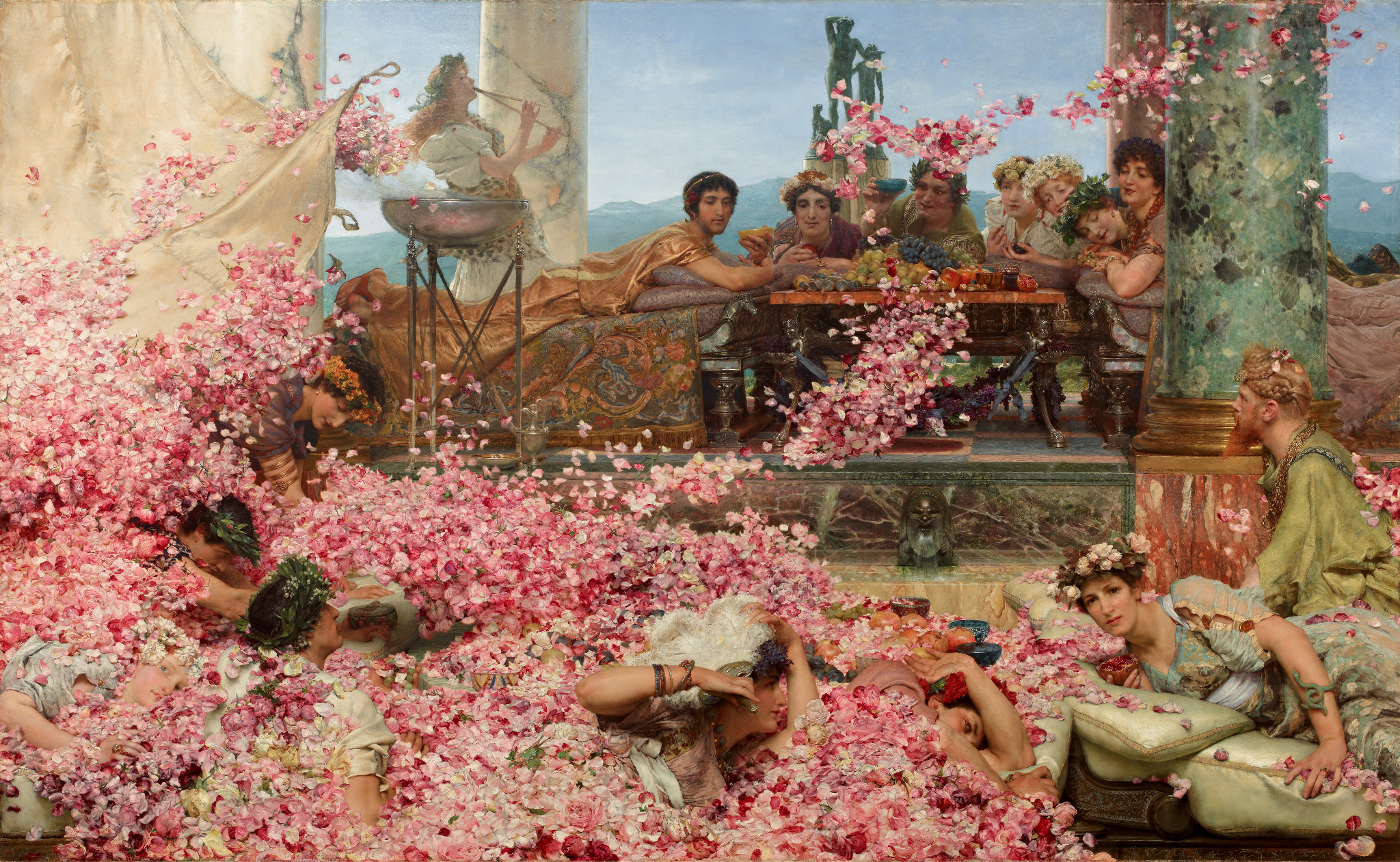
This life is merely defined by pleasure, distraction, and avoidance. Man fills his life with trivialities to escape the deeper questions of death, truth, and life’s ultimate meaning.
In other words, he becomes lukewarm.
And yet, the aesthetic man is the gravest and fullest understanding of the perils of lukewarmness.
Why is that?
Because the aesthetic man intentionally deceives himself. Whereas Dante condemns the lukewarm for refusing to choose between good and evil, Kierkegaard warns that modern man — in masses — is actively hiding himself from the reality of good and evil altogether.
For Dante, the lukewarm says, “I will not choose.”
For Kierkegaard, modern man says, “What do you mean choose? Choose what?”
To make it concrete, we can consider the state of most moderns — who live for pleasure and comfort alone, with no concern for Truth, meaning, justice, or questions of eternity.
Kierkegaard stresses that all mankind feels the pressure of these obligations implicitly — but most actively refuse — living as if to eliminate a reminder that these realities exist. Tragically, it hearkens back to the lamentation of the ancient poet Hesiod, who said “most men live lives fit for cattle.”
Only worse yet, Kierkegaard might lament that “most men yearn to live like cattle.”
As such, the fullness of lukewarmness is not just living without purpose, nor moral failure, but a corruption of spirit that leads man to desire to be like the Edenic “beasts of the field,” rather than the one called to rule and subdue the Earth.
Such are the Times
If the tradition offers a severe indictment of lukewarmness, it also offers hope.
In an age marked by apathy and a lack of zeal for virtue, those who seek the Good have never had a greater opportunity to stand apart.

To live well — to love the Good — is to pursue a form of beauty that makes life itself beautiful. The pursuit of God is, in this sense, the making of one’s life into a work of art. And today, such a life shines all the more brightly against the dullness of lukewarmness.
At the same time, a love of Truth becomes the greatest rebellion against the age, and the surest path to meaning.
The real danger then, is not that we become great sinners, but that we become nothing at all. And in the end, not even Hell desires such a soul.
As Augustine reminds us: there are no good times or bad times — only how we live within them.
To reconcile our duty to live well is to make the times well, and to care for that duty is to ensure not only do we avoid the evils of lukewarmness, but become beacons for our fellow man to follow.
I offer private mentorship in the Great Books for those seeking clarity of vision and depth of soul. Inquire here.
If you’d like to support this work and receive future writings, you can subscribe below.
So many points in here I'd like to jump on and comment on--the biggest that comes to mind is one of the speeches delivered by Fulton Sheen. He describes how, in ancient times, it was fear vs. love, power vs. compassion. Unfortunately today, particularly in the West, lukewarm sentiments pervade the public consciousness. This has led so many of our values to deteriorate over time.
But, if I may inject some good news, it does in fact seem that at least some people are starting to realize this. In an article I wrote the other week on Putnam's Bowling Alone, I found the following quote: "the country is becoming ever more clearly divided into two groups—the devoutly observant and the entirely unchurched…"
It seems today that lukewarmness has gotten so bad that it's actually driving some people to seek the oldest forms of tradition. Obviously, we can only speculate how this will play out, but still, these conversations are fascinating.
Loved the read, Sean.
Have a great week!
This excellent piece reminded me of, “A Letter from Hell,” sent to St. Claire by a friend who had just passed. “As you read it, notice that Annette was not a particularly wicked person. Rather, it was her lukewarm life as a Catholic that ended in disaster.”
https://www.padreperegrino.org/2026/02/helllocution/