

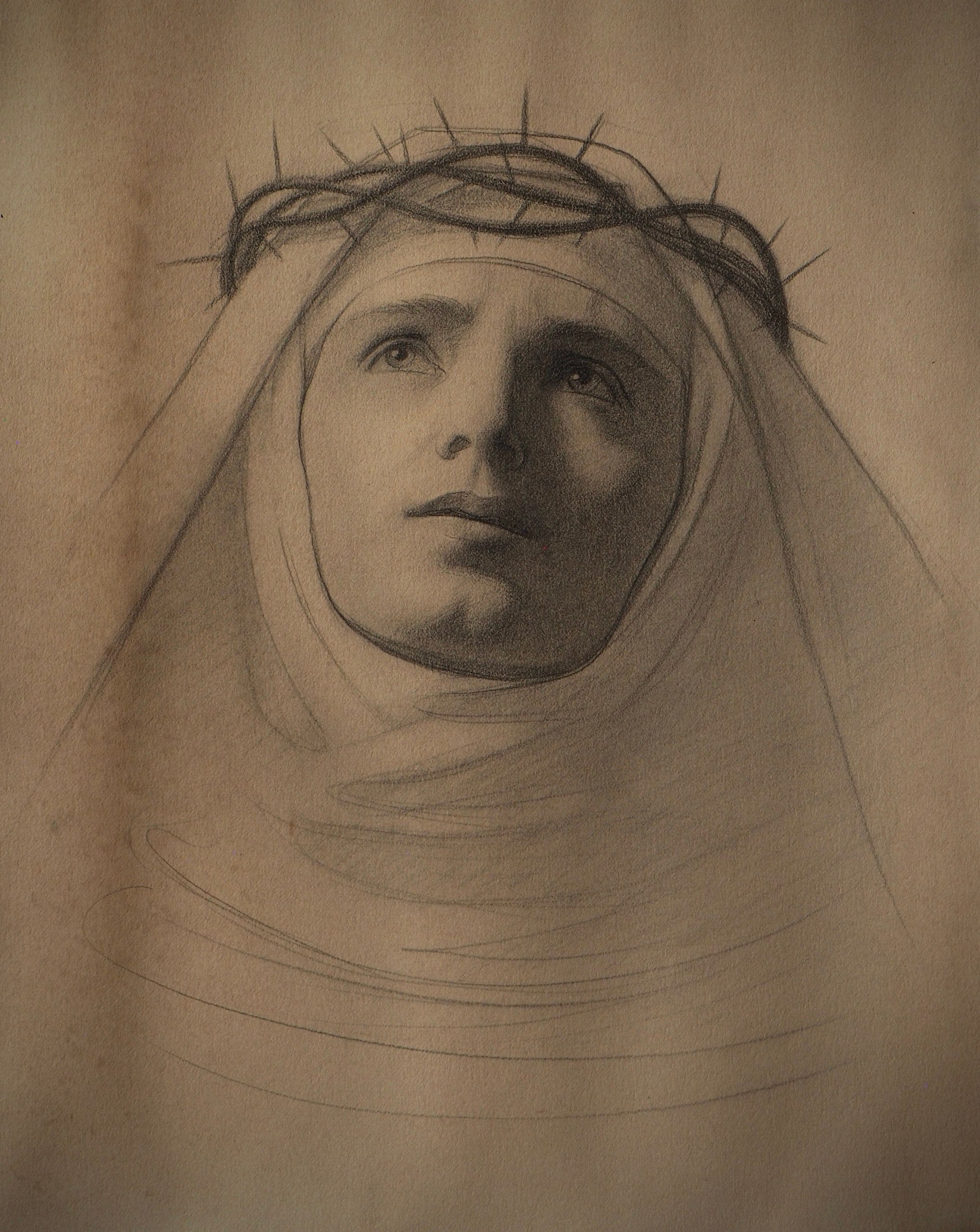
An honest appreciation of the Western intellectual tradition requires a careful inquiry into Church history.
Whether you’re of the faith or not, the Church was the dominant philosophic and theological paradigm of Western Civilization for well over a millennium.
And the best way to understand Church teaching and its influence on civilization is through a careful inquiry into the “Doctors” — the teachers the Church holds up as authoritative.
Here, you’ll find intellectual giants like St. Augustine or St. Thomas Aquinas — whose treatises are among the most influential accounts of God, the human soul, and life’s meaning ever written.
And yet, there’s one particular doctor whose inclusion is surprising at first glance. It was an illiterate, uneducated woman, who strove to live a quiet life of prayer and seclusion.
Instead, she was thrust into the public domain of political life, provided aid to countless souls during the Black Plague, became world-famous for her piety, and even had a personal meeting with Pope Gregory XI — where she helped convince him to relocate the Papal office back to Rome.
This woman was St. Catherine of Siena.
But why was this illiterate woman so celebrated? Why is she venerated by the Church as an equal to the greatest intellectual minds who ever lived?
In short, she understood a truth of the human condition that goes beyond intellectual grandeur. Her life was a living embodiment of spiritual surrender that helps the human soul become what it most truly is — to live a near-perfect life of self-forgetfulness that leads you to find your truest self, and live in harmonious communion with the divine.
Here’s what St. Catherine of Siena taught about the human soul, and how to perfect its orientation to God.
Reminder:
This publication is entirely reader supported.
If you would like to support my work, consider subscribing!
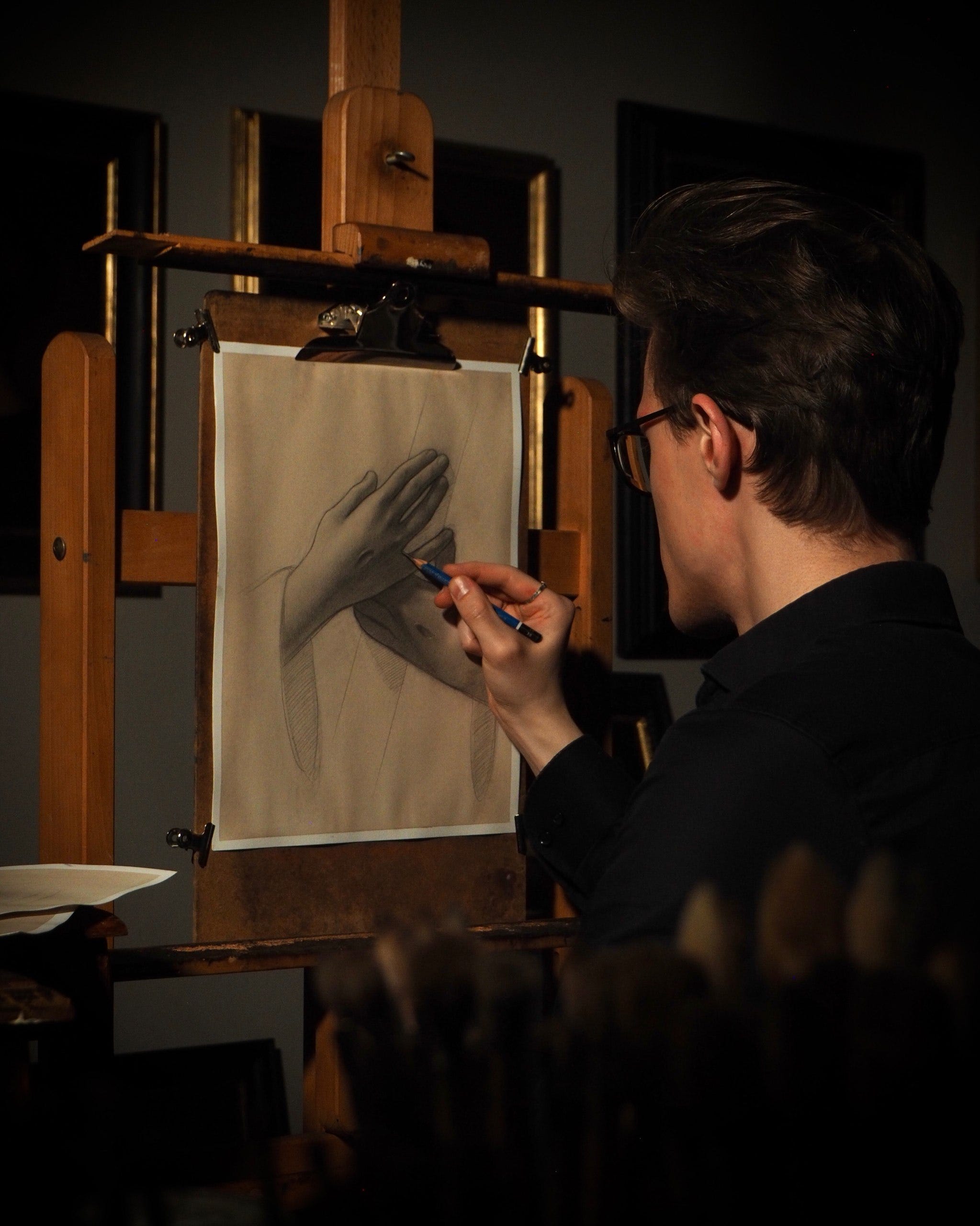
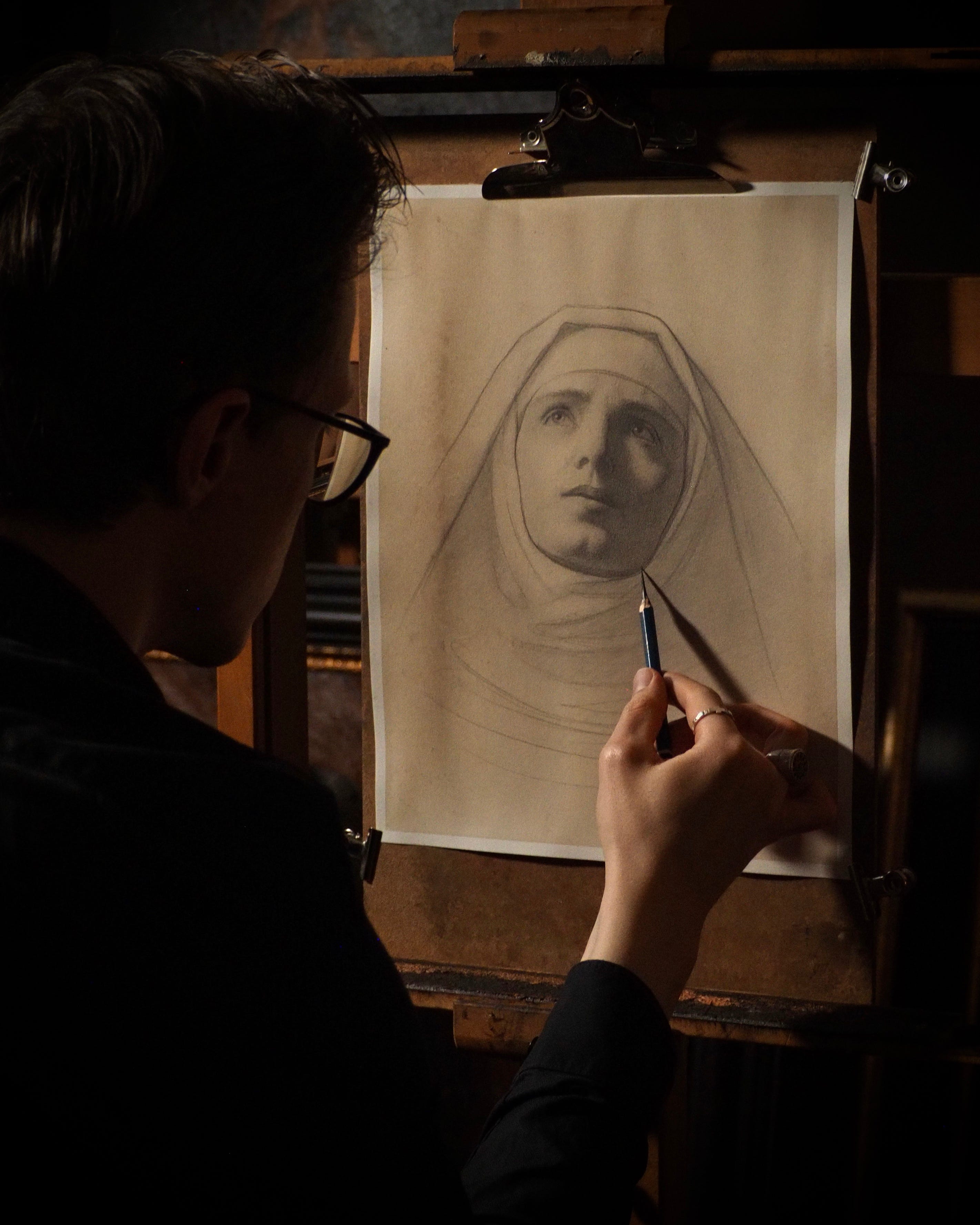
Today’s article has been inspired by an incredible project by Evan Amato and The Culturist to restore classical beauty back into modern civilization.
The Makings of a Saint
St. Catherine was born in 1347, and distinguished herself early by a deep devotion to God and a rich interiority of spirit.
To her parents’ chagrin, she rejected marital arrangements and devoted her life to Christ at 7 years old, following the ways of a lay Dominican.
Her early life followed a strict asceticism of prayer, fasting, and charity. She liked to envision her father as Christ, her mother as Mary, and her brothers as the apostles — humbly serving them — and was quick to give the poor what little food or clothing she had.
Accompanying her piety were frequent visions of Christ which enthralled her into ecstasy. These visions were a constant throughout her life, though Catherine never renounced her worldly affairs, affirming that even an unhealthy attachment to spiritual ecstasy could corrupt the purity of a soul devoted to love.
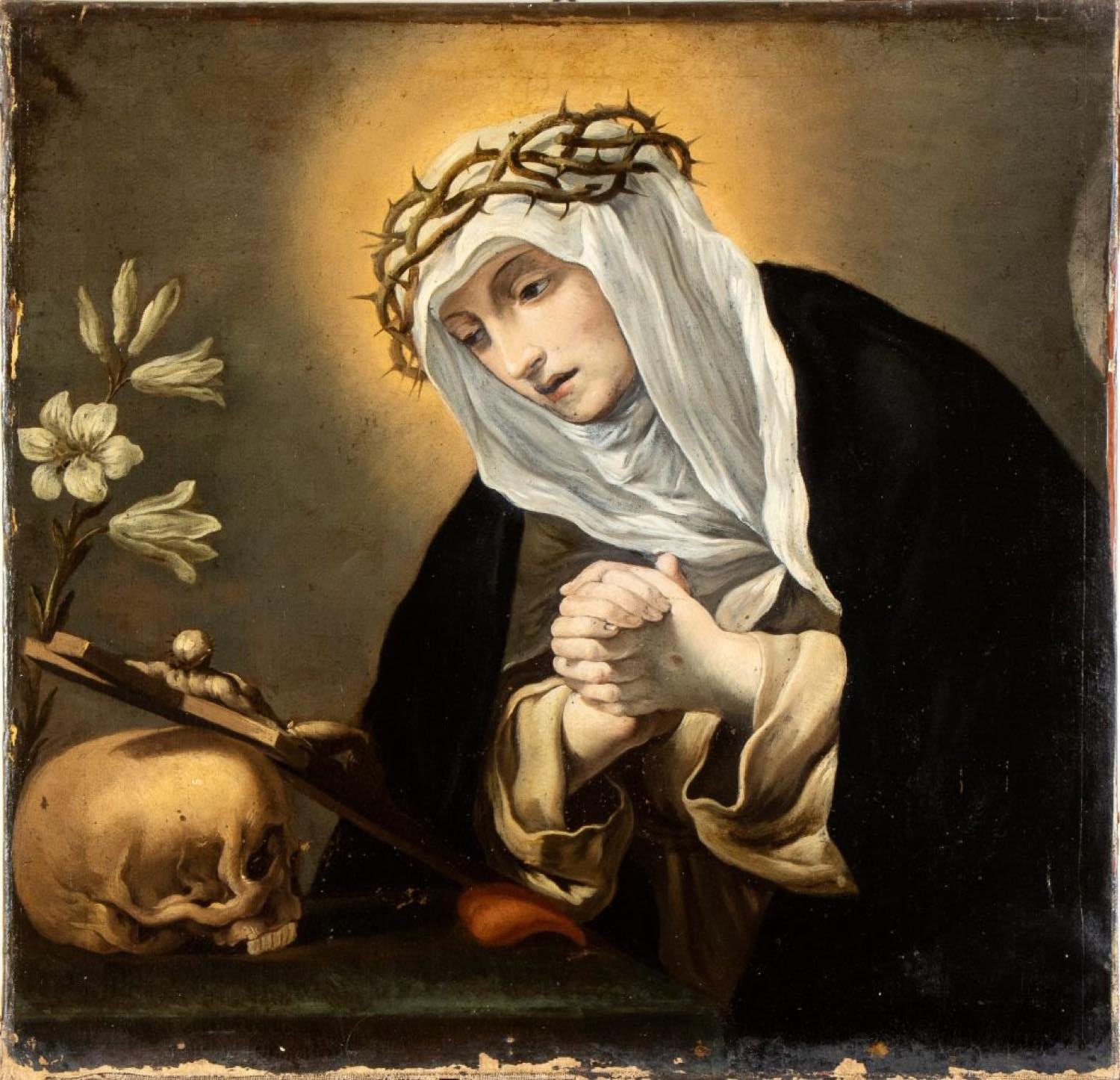
Contemporaries described her in these states as almost unrecognizable, rigid, radiant, sometimes bearing wounds no one could explain. It’s a strange kind of testimony in which those closest to her didn’t just hear her wisdom, but watched her body strain toward something beyond it.
To the skeptic, this mysticism sounds off-putting, but Catherine’s defenders point to the fruits of her life. She did not appear an unstable mystic; her spirit imbued a peaceful joy that attracted all in her presence. She grew a group of followers devoted to her ministry, who faithfully called her “mama,” for her maternal devotion.
The more Catherine humbled herself, the more the world demanded her counsel:
She indefatigably provided aid amid the Black Plague. She advised the Pope to relocate the papacy from Avignon to Rome. She helped negotiate peace in a war-torn, tumultuous Florentine Republic.
This article isn’t meant to stress the significance of her worldly affairs, but to answer why the leading political and spiritual authorities of her day venerated her as a genuine authority.
What exactly did this illiterate woman know of the human spirit, that even the greatest powers of the day bowed to her wisdom?
The Bridge to God
To appreciate Catherine’s teachings, we have to look at her work.
First, recall that her writings were not systematic like Aquinas. They were dictated to a scribe, and read as affective and experiential: closer to an intense love letter than a logical treatise.
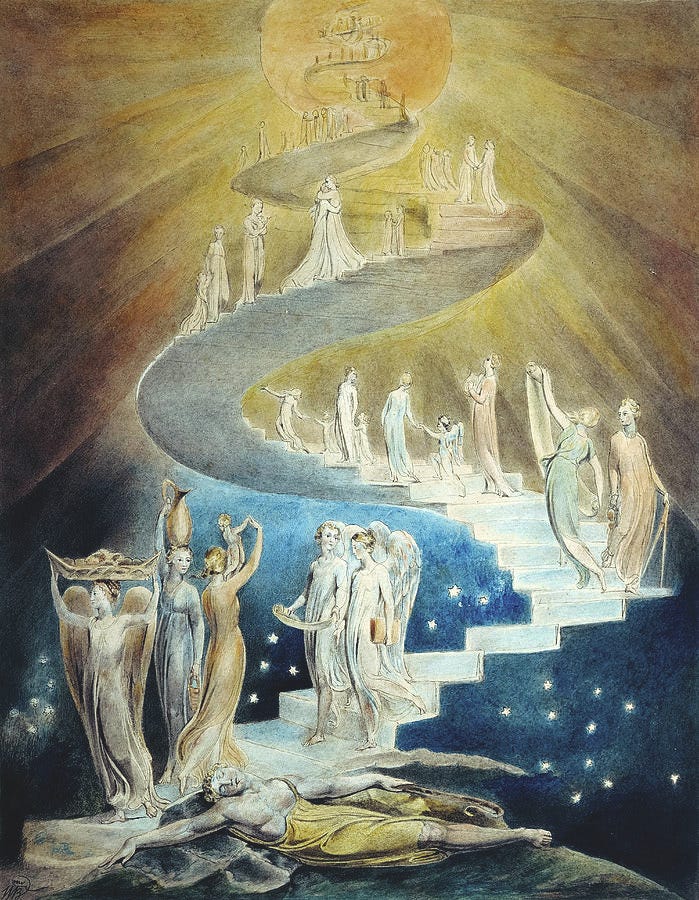
Perhaps the most important metaphor Catherine used to describe her teaching is Christ as the Bridge.
She likens the fallen world to mankind drowning in a river of sin, saved by Christ, who was sent by the Father to be a bridge to beatitude.
The bridge tracks the soul’s ascent to God, and follows 3 steps:
“The feet of the soul, signifying her affection, are the first step, for the feet carry the body as the affection carries the soul…
[The second step] manifests to you the secret of His Heart, because the soul, rising on the steps of her affection, commences to taste the love of His Heart, gazing into that open Heart of My Son, with the eye of the intellect, and finds It consumed with ineffable love…
[Finally] the soul reaches out to the third—that is—to the Mouth, where she finds peace from the terrible war she has been waging with her sin”
Nominally, the 3 steps of the bridge are titled:
the feet
the side/heart
the mouth
But what is the point of this abstract language?
It’s made more clear when we recall St. Catherine’s assertion of the 3 powers of the soul: will, understanding, and memory.
In other words, the bridge can be restated as such:
The Feet = the human will learning to long for God
The Side = the maturation of intellect via contemplation of God
The Mouth = perfection of love by remembering life is a gift freely given by Him
The bridge then, is but the map of the ascent to God via maturation of the three powers of the human soul, perfected by charity.
As she succinctly concludes:
“On the first step, then, lifting her feet from the affections of the earth, the soul strips herself of vice; on the second she fills herself with love and virtue; and on the third she tastes peace”
Most importantly, the bridge is held together by Christ’s blood.
For Catherine, the blood shed on the crucifixion is the pinnacle of charity — a selfless gift for the good of man — and to meditate upon it is to give the soul courage to suffer.
Catherine believed this so fervently that her reported last words were “sangue, sangue” (blood, blood).
The point of the metaphor, it seems, is that the soul ascends to God by persevering in pain and heartbreak for the sake of charity, and that the courage to do so comes from meditating on Christ’s own suffering. Such meditation gives the soul a strength that surpasses understanding, as testified by Catherine’s own life.
The Cell of Self-Knowledge
If the bridge of Christ is the map of ascent, then the Cell of Self Knowledge is Catherine’s tool to perfect the soul’s relationship to the divine.
Surprisingly, it reads as an unwitting maturation of a lesson from Socrates.
Socrates, the wisest man to have ever lived, famously “knew that he knew nothing at all,” and took seriously the Delphic maxim to “know thyself.” Later, in Plato’s Alcibiades I, he asserts that you come to know yourself through knowledge of the soul, and that this is facilitated by gazing into the eyes of a Platonic lover — usually a teacher who selflessly cares for his student.
In other words, self-knowledge in philosophy was reached through a selfless love of two souls united in shared desire for the Good.
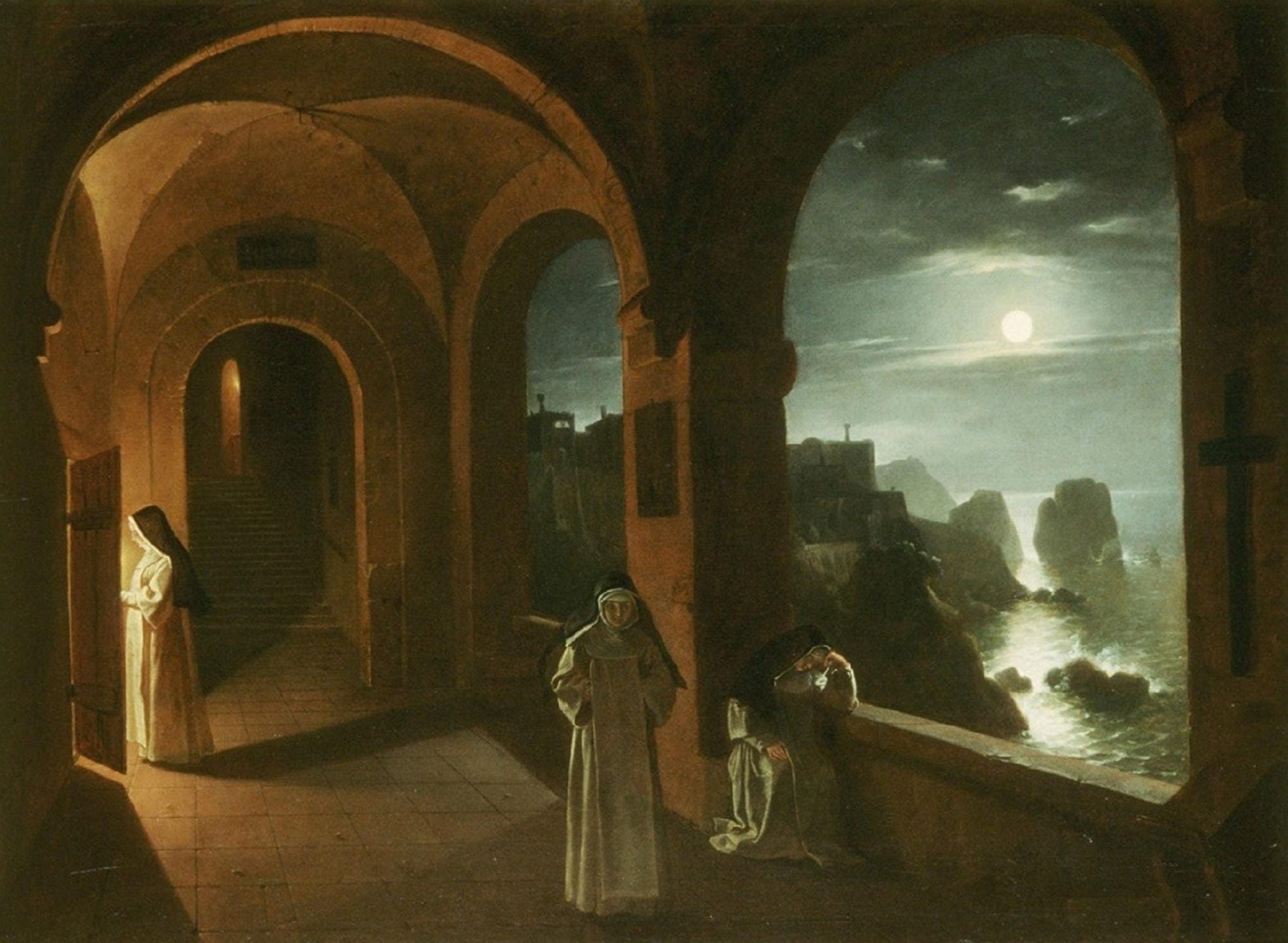
Catherine said the same: self-knowledge comes from love.
Here’s the breakdown of her Cell of Self-Knowledge:
You cannot love your neighbor until you know yourself, and you cannot know yourself until you look into the mirror of God. When you look at God, you realize you are nothing, and God is everything. God is said to have told her: “I am He Who Is; you are she who is not.”
God doesn’t need your love, and so demands you share it with your neighbor instead — as he told Catherine: “I require that you love me with the same love with which I love you. This you cannot do to me... you must give it to your neighbor.”
Notice how self-knowledge again requires gazing into the eyes of a lover. But for Catherine, the true lover is God, and only God’s love gives you true self-knowledge — and only this knowledge of self allows you to fully share love with your neighbor.
This is why the great saints, even humble souls like Mother Teresa, had an indefatigable capacity to love others.
They were not great-souled by their own nature, but through their love of God; their souls overflowed in charity because they sought first the presence of the divine.
As Mother Teresa put it:
“If I didn’t pray to God each day, then my soul would be too poor to help the poor.”
Embodying Sainthood
St. Catherine’s mysticism often sounds off-putting to moderns. We tend to be skeptical of the spiritual life, let alone ecstatic visions of higher realities.
Yet this is precisely why her teaching is valuable to us today. One need not be a believer to discern real truths about the human soul through St. Catherine. She is a living testimony that man cannot live off bread alone.
Not only did she literally abstain from food in her fasting — she nourished her soul with a charity that was desired by all who came into contact with her. Her teachings, then, are not meant to be studied, but practiced.
To begin an active prayer life, and an active service of selfless charity, is to begin contemplating like St. Catherine, to reach a humility so gentle it can move mountains, if not papal offices.
And go check out this amazing project to bring St. Catherine to life in a newly commissioned, life-sized portrait!
Reminder:
This publication is entirely reader supported.
If you would like to support my work, consider subscribing!