

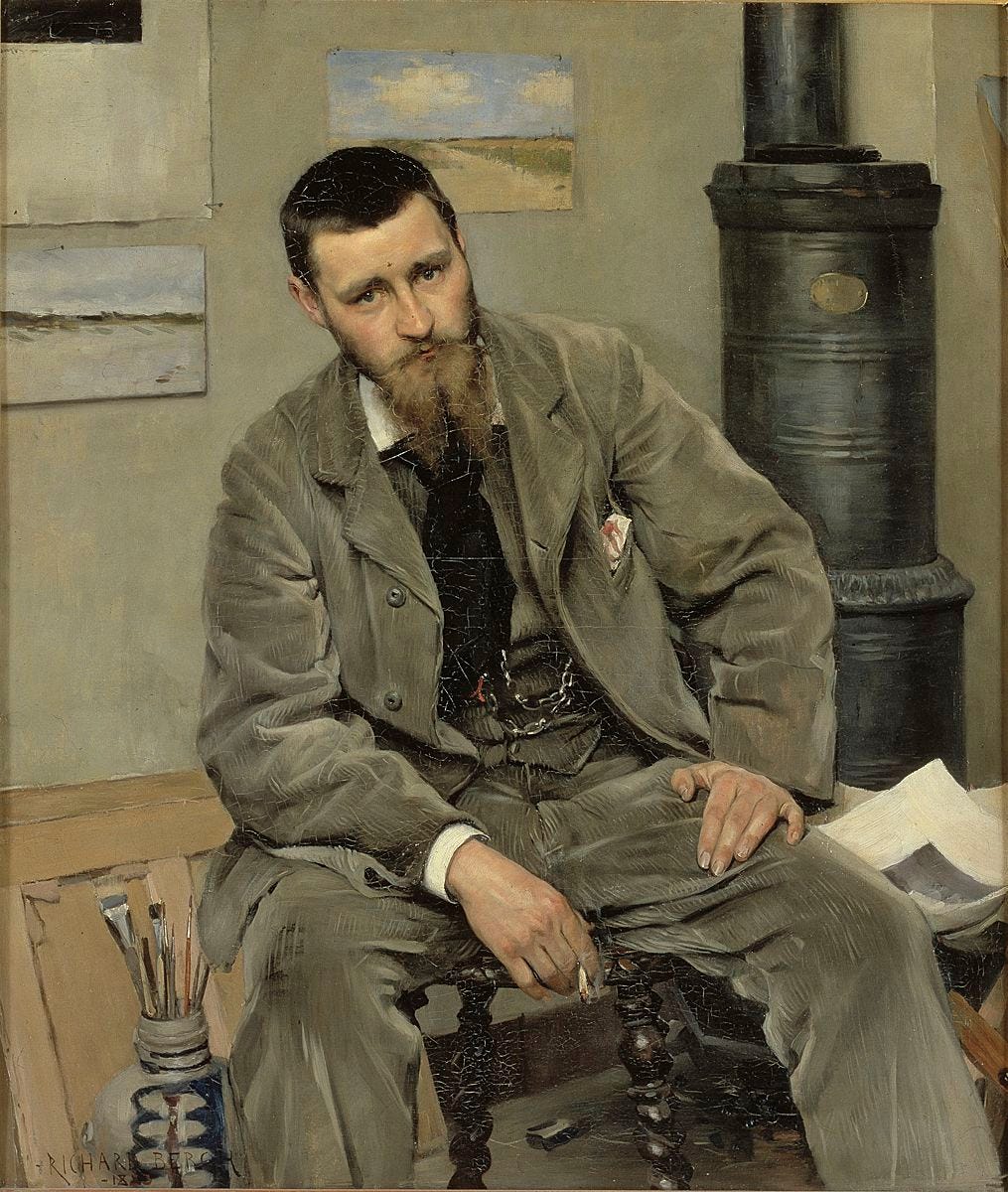
The greatest disaster to befall Modern Civilization was the persecution of the common man.
Chesterton articulates this in his essay aptly titled… The Common Man.
He laments the worst feature of modernity is not its tendencies to chastise tradition, celebrate taboos, or embrace libertine freedom — rather he says it’s our contempt for the ordinary.
Specifically, we’ve not just become apathetic to truth, beauty, and tradition, but we’ve learned a direct contempt for the smallest, ordinary citizens of our country — the common man.
Today then, we’ll see what makes someone a “common man,” why that common man is under attack, and why the common man lifestyle ought to be protected at all costs.
I offer private mentorship in the Great Books for those seeking clarity of vision and depth of soul. Inquire here.
If you’d like to support this work and receive future writings, you can subscribe below.
Uncommon Emancipation
Chesterton begins his essay with commentary on modern emancipation — or freedom from traditional morals and norms.
His thesis is blunt:
“Modern emancipation has really been a new persecution of the Common Man. If it has emancipated anybody, it has in rather special and narrow ways emancipated the Uncommon Man. It has given an eccentric sort of liberty to some of the hobbies of the wealthy, and occasionally to some of the more humane lunacies of the cultured. The only thing that it has forbidden is common sense, as it would have been understood by the common people.”
In short — modern emancipation oppresses the common man.
Before we explain his reasoning, let’s briefly define the common man.
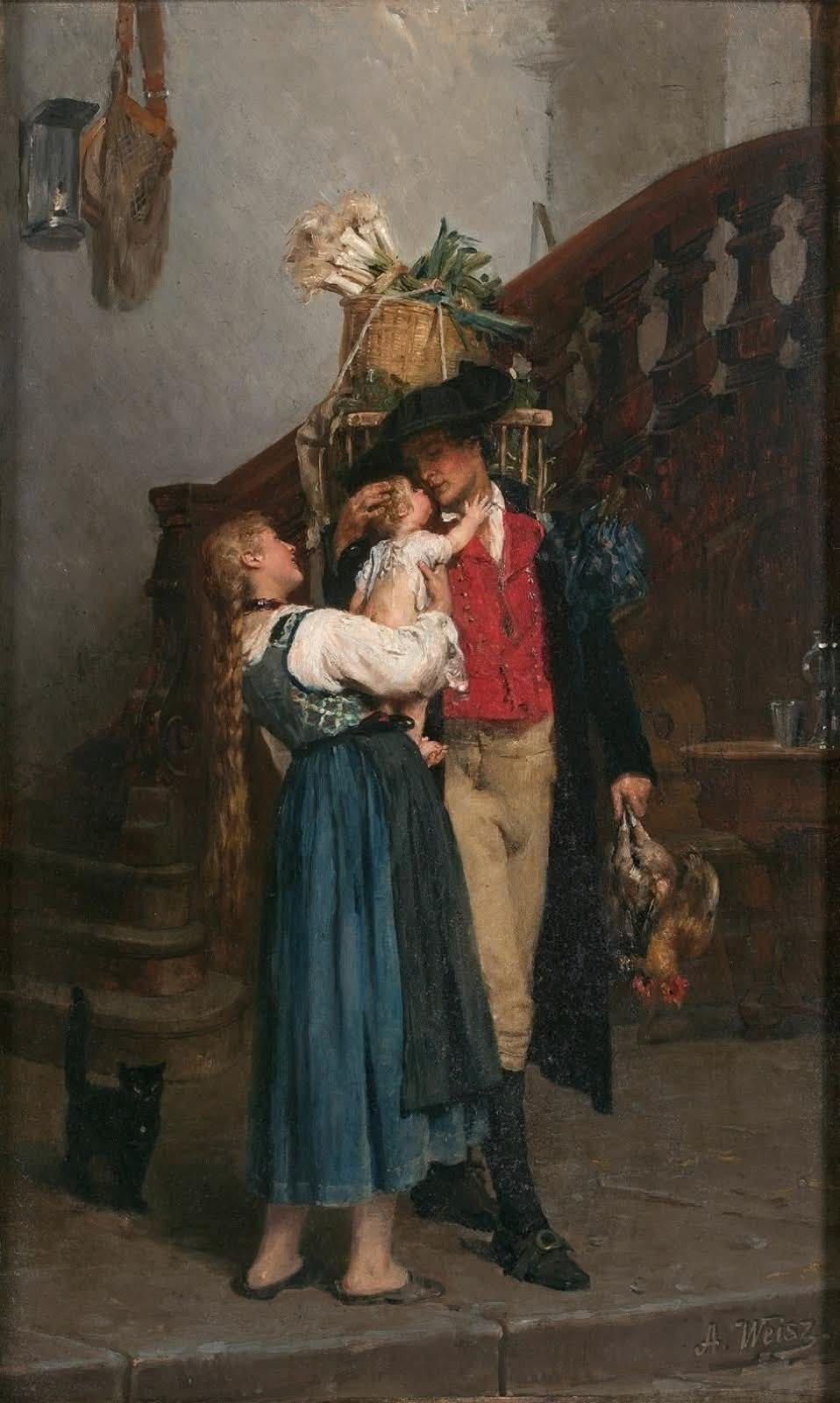
Chesterton says he’s your average working class citizen with normative desires:
Work an honest job
Enjoy leisure with friends
Get married and start a family
Conversely, modern emancipation is not about maximizing the freedom of the common man, rather a celebration of the transgressive and taboo. This traces back to the logic of classical liberalism — which states that the individual is the ultimate reality, and the highest good in life is autonomy.
The golden rule of liberalism as practiced today is, “don’t impede my freedom, and I won’t impede yours.”
This sounds fine on the surface — but how exactly does this oppress the common man?
Well, if autonomy is the highest good, then modernity rejects any values that constrain it — like classical conceptions of morality, truth, and justice.
If the pre-modern view said man is a social animal who is happiest when he has a family — and is both a valued and valuable member of a society — the modern view says such ideas were falsehoods. True happiness is simply the authenticity of embracing your passions and whims — whatever they may be.
We can now further appreciate Chesterton’s defense of the common man:
The problem is not that modern civilization has abolished the common man’s life. The problem is that modernity has abolished all the cultural honor from it. The ordinary desires of the common man — work, marriage, children, friendship, stable community — are no longer the central paradigm for a happy life. Instead, we celebrate the taboo, the transgressive, and the new… anything that exalts the expression of the individual.
Now, we need to get a deeper understanding of the war on the common man.
Freedom No One Asked For
Chesterton goes on to express how modern emancipation persecutes the common man. He lists off 3 examples of oppressive modern freedoms:
“if we begin with the seventeenth and eighteenth centuries, we find that a man really has become more free to found a sect. But the Common Man does not in the least want to found a sect. He is much more likely, for instance, to want to found a family.”
“[today] the form of freedom mostly claimed is the freedom of the Press… Modern emancipation means this: that anybody who can afford it can publish a newspaper. But the Common Man would not want to publish a newspaper, even if he could afford it. He might want, for instance, to go on talking politics in a pothouse or the parlour of an inn.”
“it is the boast of recent emancipated ethics and politics not to put any great restraints upon anybody who wants to publish a book… Yet there is a great deal to be said for song, or even speech, of the old ribald sort, as compared with writing of the new sort”
To summarize:
Man is free to found a sect, but would rather found a family (discouraged today via Malthusianism/anti-natalist rhetoric)
Man is free to publish a newspaper, but would rather talk politics at the inn (discouraged by “old democracies,” and “new dictatorships…” or hate speech laws as we know them today)
Man is free to write a coarse book, but can be arrested for singing a coarse song
The trend is simple — freedoms that nobody wants are imposed on the Common Man, while freedoms the ordinary people want are restricted.
Thus we see that the Common Man is actually under attack by the Uncommon Man.
And that’s because there’s a malicious force at work against him…
In Defense of the Ordinary
If a single word defined the Uncommon Man, it would be contempt:
“It is quite certain that many modern thinkers and writers honestly feel a contempt for the Common Man; it is also quite certain that I myself feel a contempt for those who feel this contempt”
Out of this contempt for the common man arises globalism, and a growing desire for a strong centralized government to rule the masses. The common belief is the experts, the educated, and the elites know better than the common man.

Yet Chesterton muses that this ideology is disastrous:
“It is easy enough to say the cultured man should be the crowd’s guide, philosopher and friend. Unfortunately, he has nearly always been a misguiding guide, a false friend and a very shallow philosopher. And the actual catastrophes we have suffered… are almost invariably due to the highly theoretical people who knew that they knew everything.
The world may learn by its mistakes; but they are mostly the mistakes of the learned.”
What’s implied by Chesterton is this love of autonomy runs breeds a corresponding hatred of classical freedom — the flourishing that arises from loving truth. The celebration of autonomy is the condemnation of virtue. The embracement of tolerance is the intolerance to the orthodox:
Man is free to be anything but a Common Man.
And yet, Chesterton maintains a firm admiration for the Common Man:
“I do not adore him, but I do believe in him; at least I believe in him much more than I believe in them.”
This belief is not an all-out celebration of the Common Man. It’s not that ordinary citizens are bastions of virtue, or the heroes against the “evil, high-cultured,” Uncommon Elites. He simply recognizes that the simplicity of the Common Man makes them the guard rails of human nature.
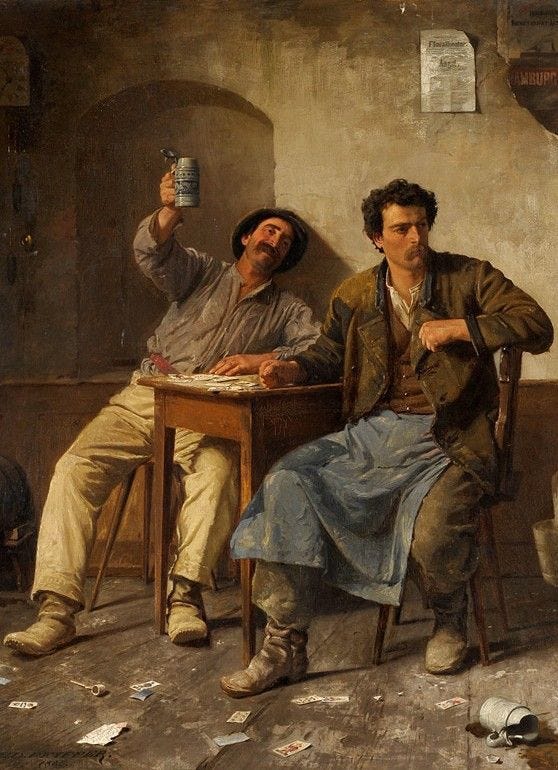
Whereas modern emancipation seems eager to embrace a progress that emancipates us from our human nature itself, the simplicity of the Common Man’s desires becomes the torch bearer of humanity — that man is a social animal whose nature is perfected via communion, civic duty, faith, and familial love.
For indeed, “The most extraordinary thing in the world is an ordinary man and an ordinary woman and their ordinary children.”
Perhaps, then, the Common Man is civilization's last and best defense — not because he’s virtuous by default, but because he still wants the ordinary things that are actually worth wanting. To honor him then, does not require a grand political project (as espoused by our Uncommon ideals of today).
Instead, the proper honor is done through simplicity:
The simplicity of choosing the honest job, the family dinner, the Sunday at church, and the contented satisfaction of wanting nothing more.
I offer private mentorship in the Great Books for those seeking clarity of vision and depth of soul. Inquire here.
If you’d like to support this work and receive future writings, you can subscribe below.
This reminds me of CS Lewis’s Abolition of Man, wherein he spoke of the pernicious subversion of traditional virtues by the modern sentiments, as though a quiet robbery of “another little portion of the human heritage”.
Thank you for sharing this disquisition, Brother. God Bless you and Keep you ❤️✝️
Modernity and postmodernity have succeeded in building a world of mutual resentment. Civilization's decay can only follow, leaving the common man buried in ruin.
Yet, the individual maintains that peculiar power: decision. For while the modernity hates him, he may love others. His "freedom" is his to give away, and in giving, he receives unbridled joy. Well done, as always, Sean.