

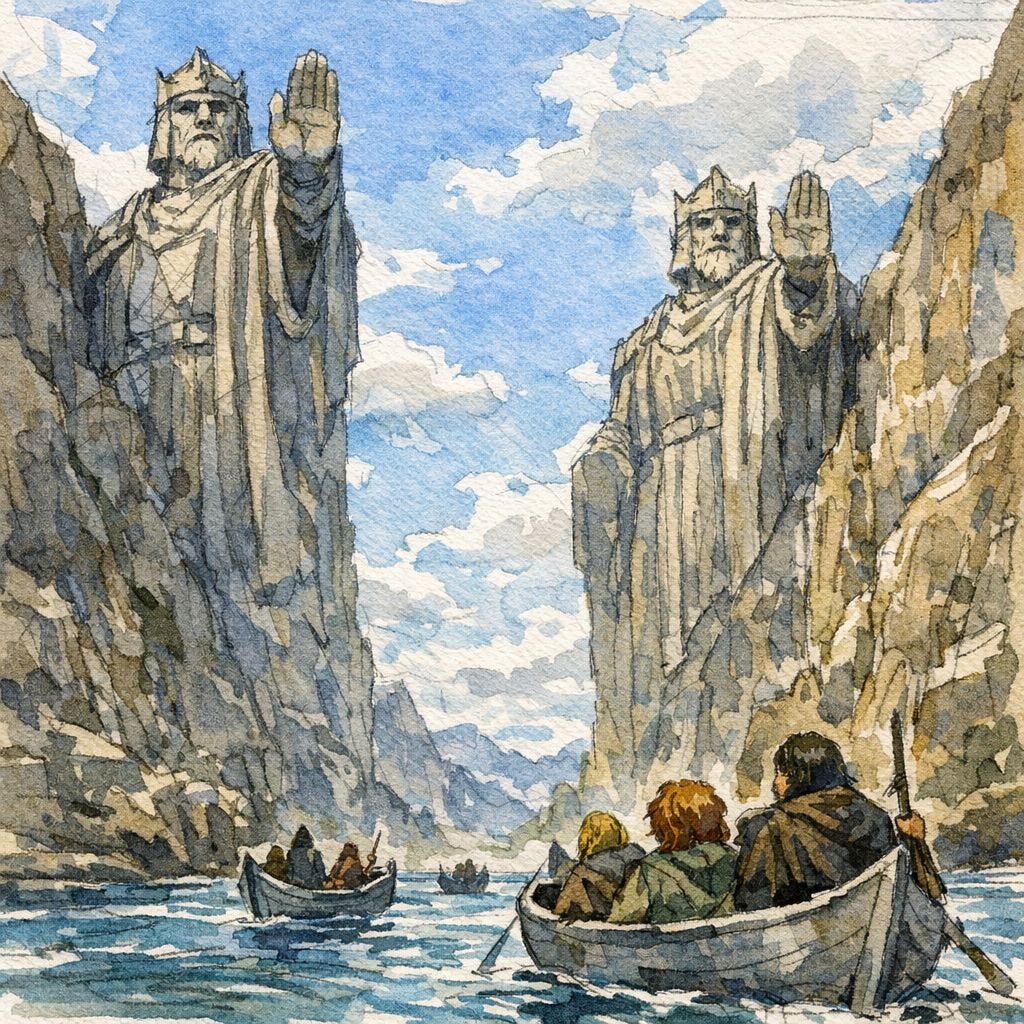
Tolkien’s Lord of the Rings is one of the most unexpected success stories in literary history.
Today we recognize it as a classic that has sold millions and launched a multi-media empire, but no one would have expected it to succeed when it was first published.
At the time, Tolkien was an obscure professor, writing fantasy in an age when fantasy had no literary merit.
Worse still, Europe had been traumatized by two world wars that ushered in modernity and the lost generation. The prevailing sentiment was that life was meaningless, and redemption was futile. As such, a story about hobbits, good vs. evil, and “happily ever afters” had no business resonating with modern audiences… yet it did.
Lord of the Rings is now one of the greatest-selling novels in human history. Its glories transcend generations, nationalities, and cultures, and has won the hearts of modern man — who struggles to believe in anything.
How did it succeed? And why has virtually no fantasy novel replicated its success since?
Tolkien shared the secret in an obscure essay titled On Fairy Stories.
The essay explains how to write good fantasy — but more importantly, why reading and writing fantasy may be among the greatest gifts you can give your soul.
Today, then, we’ll explore the key insights of On Fairy Stories — to help you appreciate fantasy, learn from Tolkien’s wisdom, and understand the truths good fantasy writing can reveal to you about your soul.
I offer private mentorship in the Great Books for those seeking clarity of vision and depth of soul. Inquire here.
If you’d like to support this work and receive future writings, you can subscribe below.
Defining Faërie
First, Tolkien begins by defining what a fairy story is.
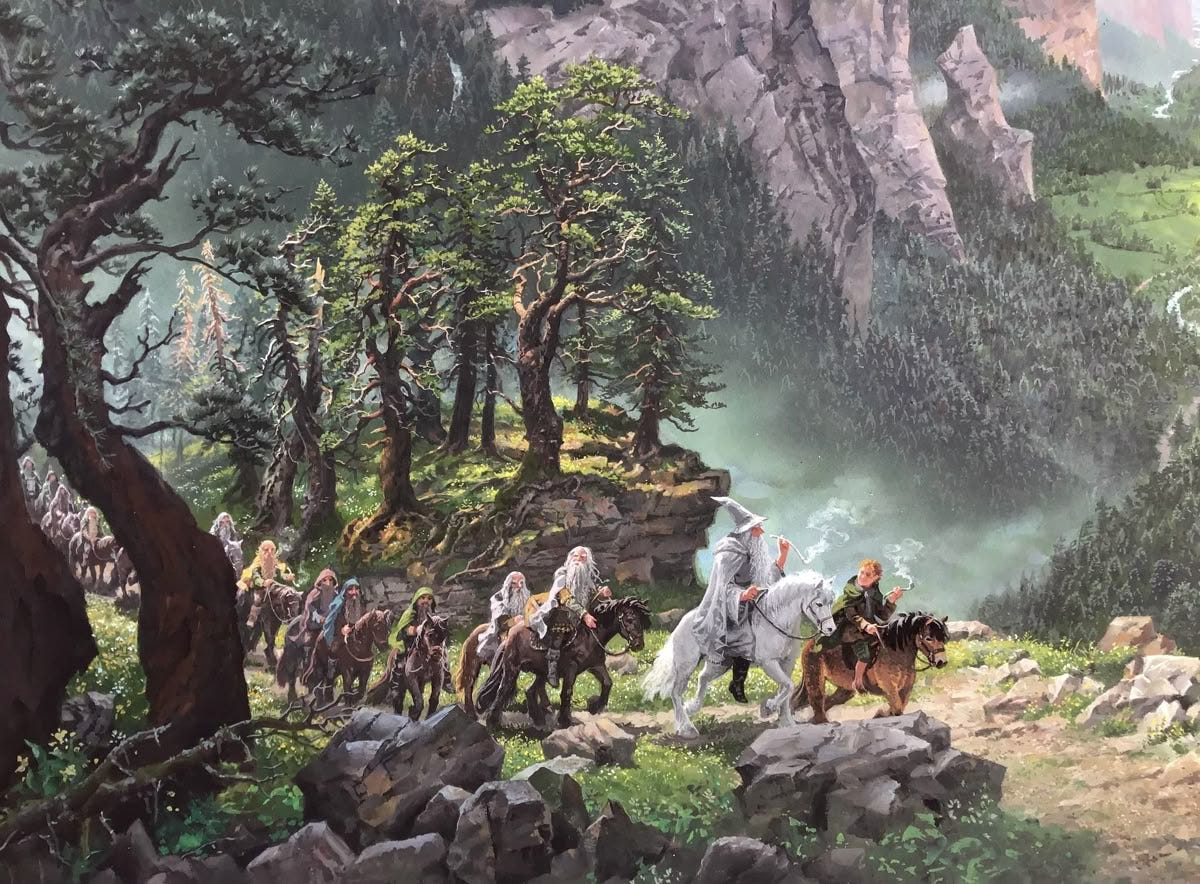
You’ll notice his definition is unique from most fantasy writers:
“The definition of a fairy-story—what it is, or what it should be—does not, then, depend on any definition or historical account of elf or fairy, but upon the nature of Faërie: the Perilous Realm itself, and the air that blows in that country.
I will not attempt to define that, nor to describe it directly. It cannot be done. Faërie cannot be caught in a net of words; for it is one of its qualities to be indescribable, though not imperceptible.”
So a true fairy-story transcends definition. It cannot be explained, only experienced. A fairy story must create a world, and the reader must be immersed in it. You’ll notice that Lord of the Rings does this wonderfully, creating an entire mythology and immersive world.
But how did Tolkien bring Middle Earth to life?
What did he know about humanity, storytelling, and myth-making that created such a vibrant universe?
The answer, surprisingly, has to do with his sharp and refined understanding of the human soul.
Perfecting Human Desire
Tolkien continues to explain how to cultivate “Faerie,” or the authentic nature of fantasy:
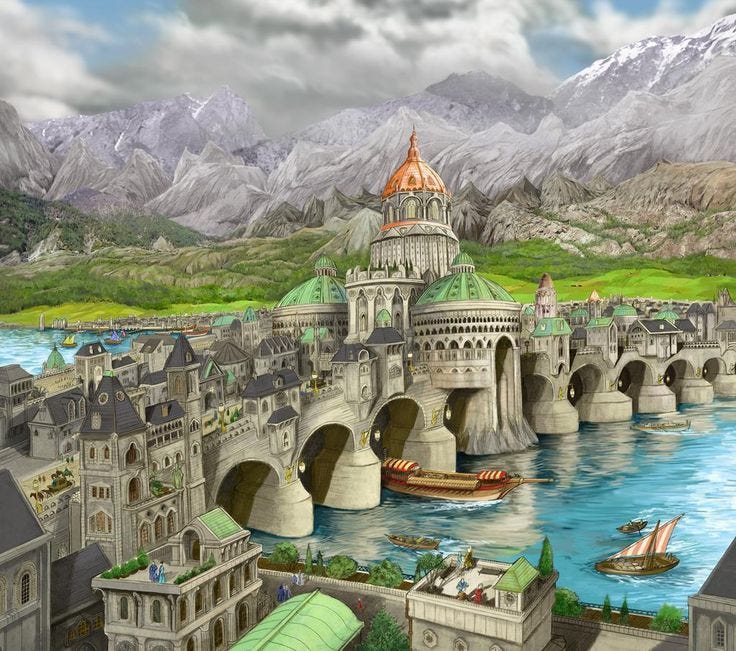
“The magic of Faerie is not an end in itself, its virtue is in its operations: among these are the satisfaction of certain primordial human desires. One of these desires is to survey the depths of space and time.
Another is (as will be seen) to hold communion with other living things.
A story may thus deal with the satisfaction of these desires, with or without the operation of either machine or magic, and in proportion as it succeeds it will approach the quality and have the flavour of fairy-story.”
So true fairy stories don’t require magic, dragons, witches, etc. rather they must satisfy primordial human desires. A fantasy world feels authentic — as real as reality — when it satisfies universal yearnings like the desire to explore the cosmos and hold communion with nature, man, and living things.
In fact, Tolkien suggests that fairy-stories are not about escapism, rather they actually help you perceive reality more clearly:
“Fantasy is a natural human activity. It certainly does not destroy or even insult Reason; and it does not either blunt the appetite for, nor obscure the perception of, scientific verity.
On the contrary. The keener and the clearer is the reason, the better fantasy will it make.”
Good fantasy perfects reason. True fantasy stories cohere with rational truths about human nature and the cosmos, but are dramatized in narrative form.
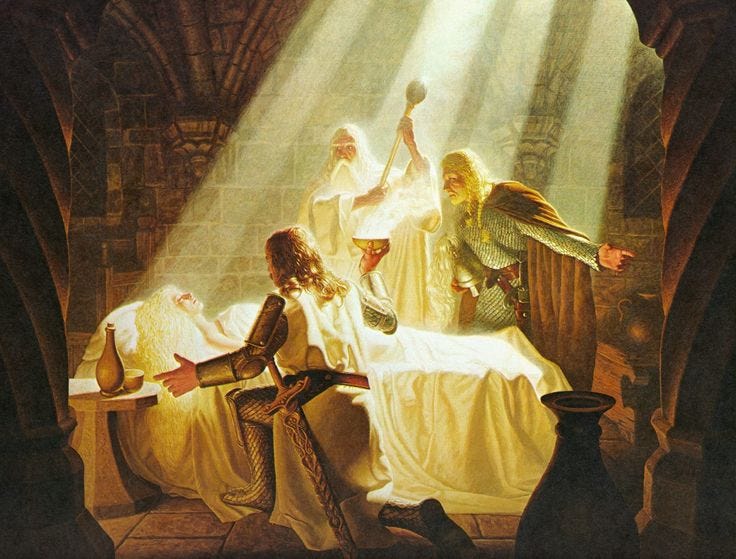
Let’s give an example.
You can tell a young boy, “you must be courageous.” He might agree, but the command alone won’t turn a coward to a warrior.
However, if that young boy reads about Aragorn’s valor at the battle of Helms Deep — and spends the next day fighting imaginary orcs in his backyard — that boy has implicitly embraced courage without thought. His soul has conformed closer to the Good.
At this point, we recognize that good stories satisfy primordial human desires — that they teach yout about the world and your soul — but Tolkien says true fairy stories go even deeper.
He says they actually satisfy the deepest desire that all human beings crave from the moment they become conscious.
Here’s what it is.
Conquering Death
What is this “oldest and deepest desire?”
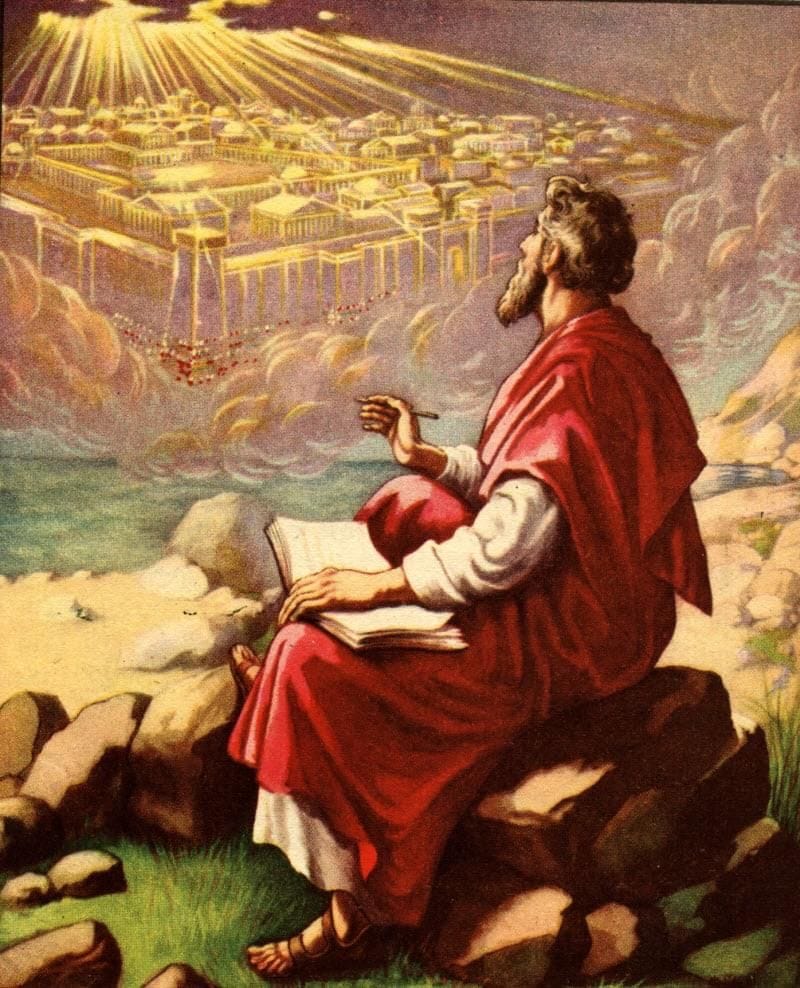
Tolkien continues:
“Lastly there is the oldest and deepest desire, the Great Escape: the Escape from Death. Fairy-stories provide many examples and modes of this—which might be called the genuine escapist, or (I would say) fugitive spirit.”
Tolkien stresses that all stories, ultimately, are about death, and the human yearning to conquer it. He says fairy-stories are far better at conquering death than most other stories:
“The ‘consolation’ of fairy-tales has another aspect than the imaginative satisfaction of ancient desires.
Far more important is the Consolation of the Happy Ending. Almost I would venture to assert that all complete fairy-stories must have it. At least I would say that Tragedy is the true form of Drama, its highest function; but the opposite is true of Fairy-story.
Since we do not appear to possess a word that expresses this opposite—I will call it Eucatastrophe. The eucatastrophic tale is the true form of fairy-tale, and its highest function.”
This is one of Tolkien’s most famous inventions, the term “eucatastrophe,” or the sudden joyous turn that leads to a happy ending.
He continues:
“[Eucatastrophe] denies (in the face of much evidence, if you will) universal final defeat and in so far is evangelium, giving a fleeting glimpse of Joy, Joy beyond the walls of the world…
The peculiar quality of the ”joy” in successful Fantasy can thus be explained as a sudden glimpse of the underlying reality or truth. It is not only a ‘consolation’ for the sorrow of this world, but a satisfaction, and an answer to that question, ‘Is it true?’
The answer to this question that I gave at first was (quite rightly): “If you have built your little world well, yes: it is true in that world.”
In other words, eucastrophe satisfies the deepest desire and most prescient Truth of the world:
That life is good, and worth fighting for, despite its sufferings and evils.
In the end, a joy can be attained that conquers death and ushers you towards everlasting life, if you handle your burdens nobly.
Tolkien concludes his essay with a nod towards Christianity — noting that it reads as a fairy story, but one that took place in real human history.
Thus, we are left with the striking conclusion that fairy stories may be more real than “real life.”
For reality itself, in its fullness, has the structure of a fairy story — one that moves toward a final eucatastrophe.
Though we remain in a valley of pain and tears, there is good news to come — and perhaps an unperishable fire blazing beyond death.
I offer private mentorship in the Great Books for those seeking clarity of vision and depth of soul. Inquire here.
If you’d like to support this work and receive future writings, you can subscribe below.
Wonderful write-up! Thank you.
Read The Name of the Wind.