

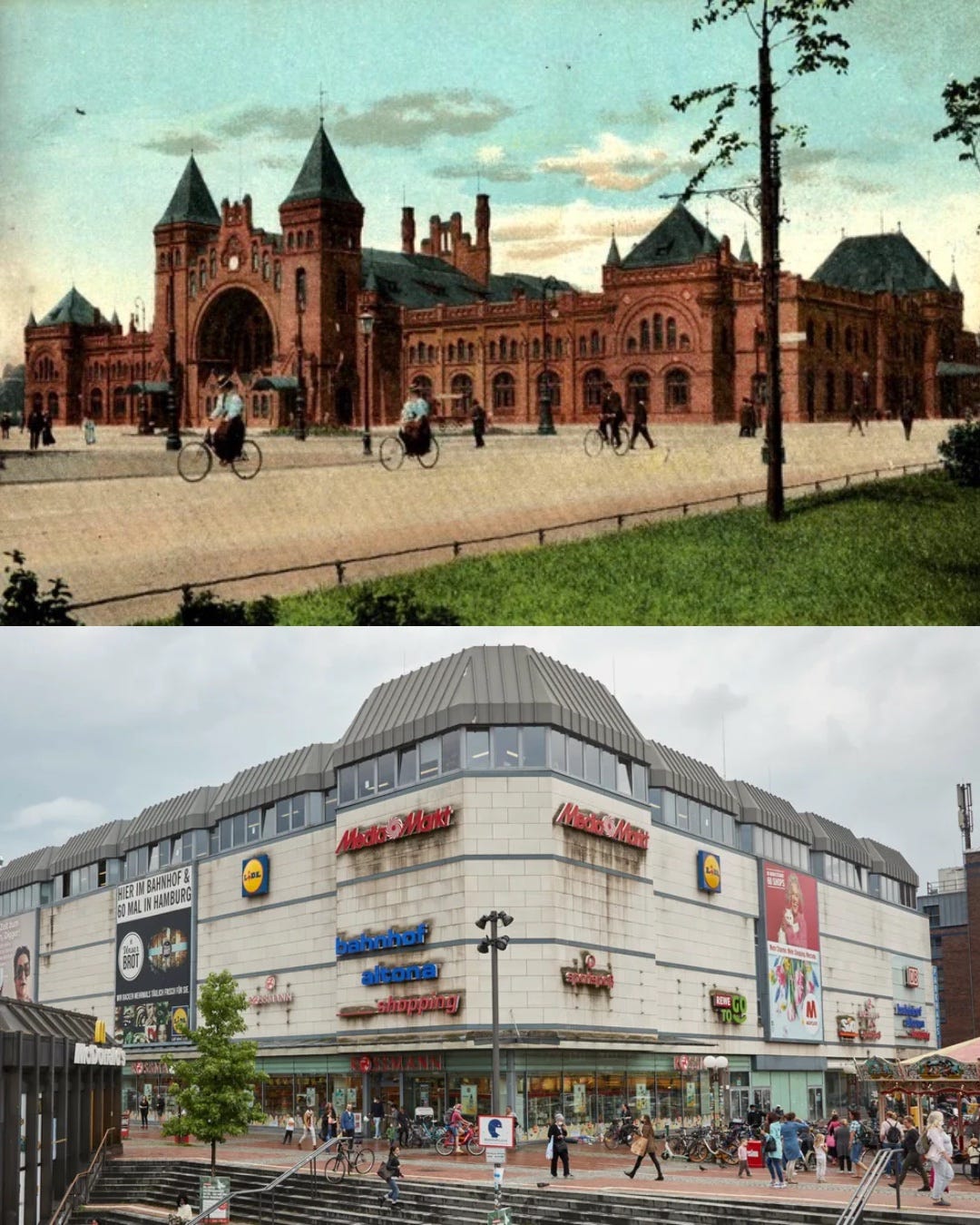
Why did the modern world become so ugly?
Though modern man enjoys far more material wealth than his medieval predecessors, his relationship to art, beauty, and aesthetics is deeply impoverished.
Buildings today are often bland or sterile. Cities are carved up by mega highways, traffic, and unwalkable design.
Much of modern music is mass-produced and engineered for virality — recycling familiar patterns, chords, and harmonic structures to capture our ever-decreasing attention spans.
And perhaps most egregious of all is modern art, which has largely abandoned beauty in favor of shock, irony, and even hatred of the human spirit (if you think this sounds exaggerated, wait until the end of this article).
We’ll find that this abandonment of beauty is no accident. In fact, it was quite intentionally a war on beauty that began 100 years ago.
But why destroy beauty in the first place? Why would anyone reject it?
And more importantly — what has humanity lost in doing so?
Today we’ll discuss modernity’s war on beauty, and re-examine the classical understanding of beauty — what it was, why it matters, and why its loss has been so devastating to the human spirit.
I offer private mentorship in the Great Books for those seeking clarity of vision and depth of soul. Inquire here.
If you’d like to support this work and receive future writings, you can subscribe below.
Form Follows Function
Beauty matters, and nowhere is this clearer than in architecture.
Architecture does not just shape our environment, but also our mood, emotions, and even our souls.
Compare the old and new city hall of Boston:
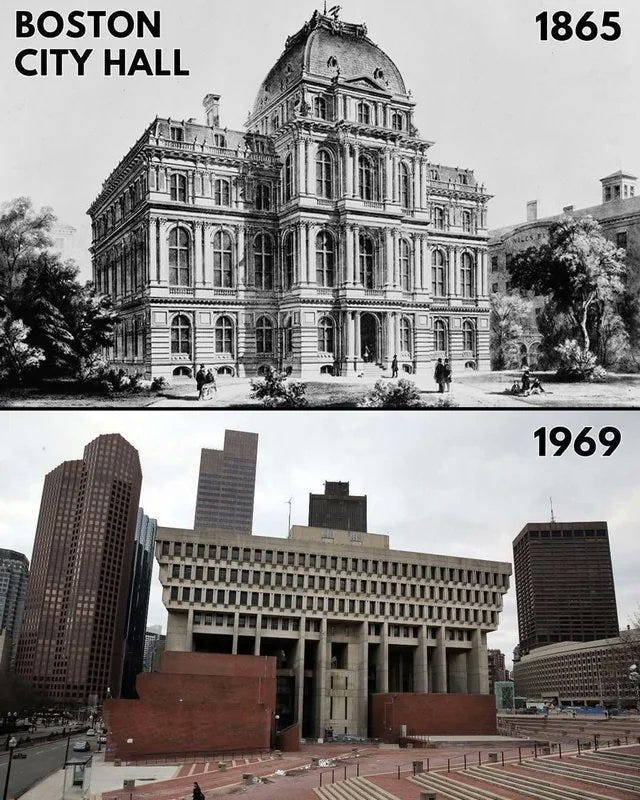
The symmetry of the old city hall is aesthetically pleasing. Its exterior harmony instills a harmony in your spirit.
The new city hall is an example of modern brutalist architecture — a school of thought that rejects classical standards entirely.
You can find many such examples of these modern downgrades on twitter (just search “name a bigger downgrade” for an inexhaustive list), but the destruction of Penn Station for Madison Square Garden (below) is another egregious example:
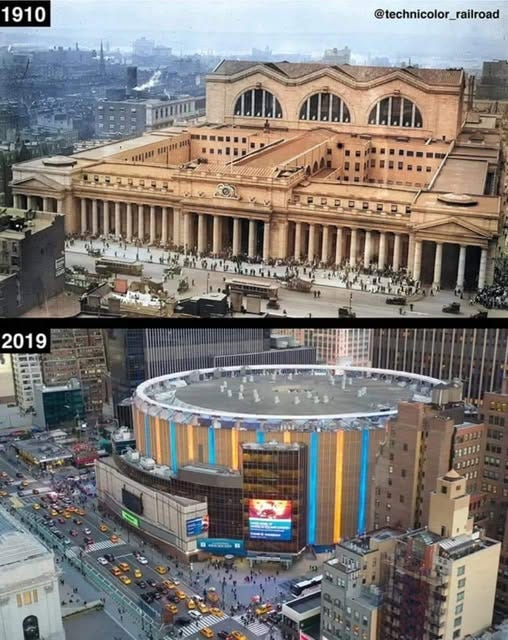
Why this modern destruction of beautiful architecture?
This new ethos of modern architecture traces back to a 3 word slogan:
“Form follows function”
This was the design principle of architect Louis Sullivan. He embraced this in 1896, stating that a building’s appearance should be based on its functional use, not on aesthetics, like in the bridge below:
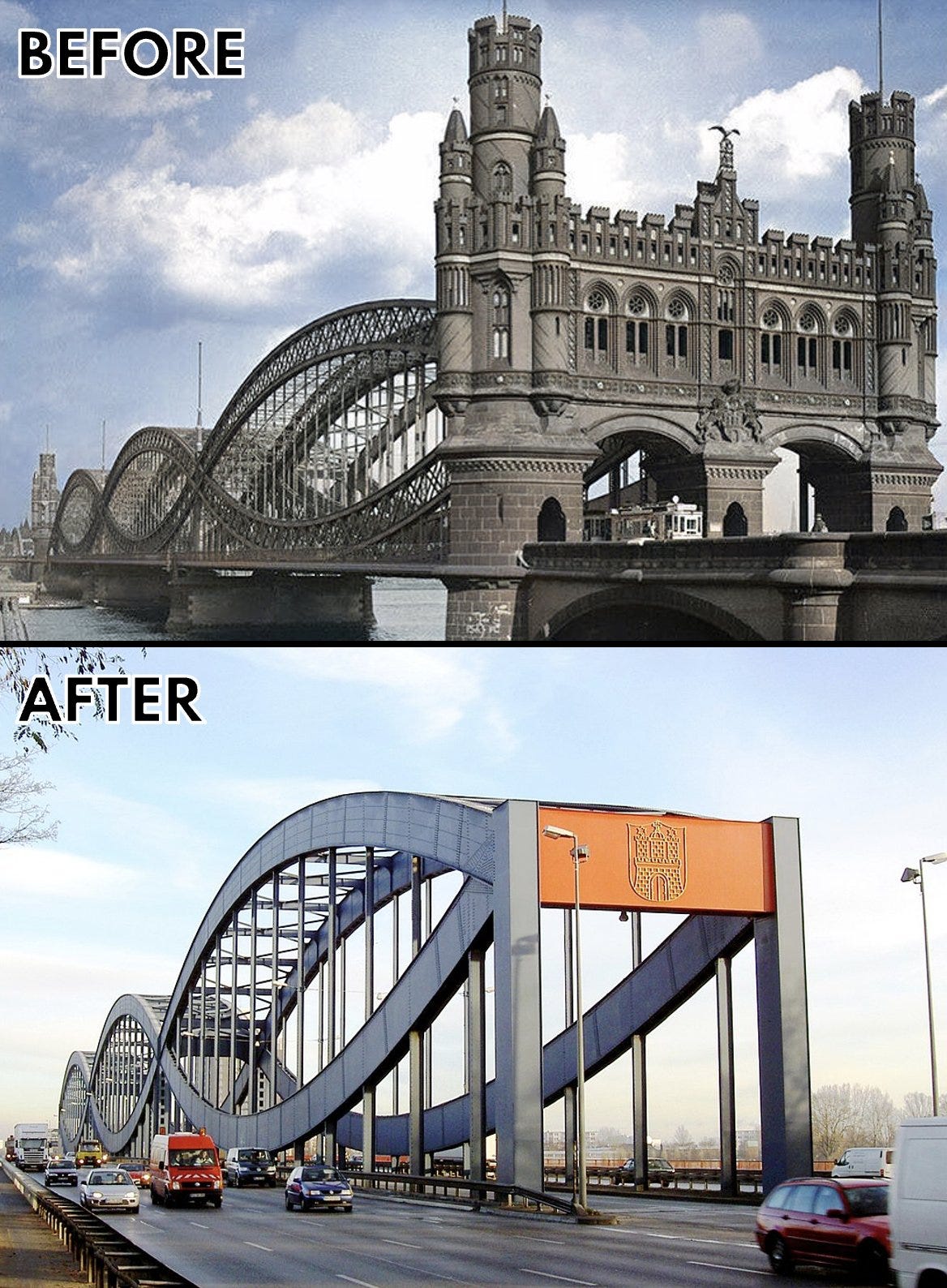
The modern vision of architecture has no desire for beauty. What matters most is efficiency and profit. If a civilization models its architecture on utility and profit alone, one wonders what that might do to the spirit of its citizens…
Nonetheless, the “cult of utility” divorced beauty from architecture, particularly in America.
Yet this is only half the picture about the death of beauty in the modern world.
To understand the deeper loss of beauty, we must turn to modern art.
Anything Can Be Art
One of the most common claims today is that beauty is purely subjective.
You hear phrases like:
“Beauty is in the eye of the beholder”
“Anything can be art”
This shift can be traced, in part, to Marcel Duchamp.
Duchamp made waves when he submitted a signed urinal to an art exhibition:

He called such works “readymades”—ordinary objects presented as art.
This set a new precedent: that anything, simply by being declared so, could be art.
Piero Manzoni took this further with Artist’s Shit (1961), which is exactly what it sounds like:
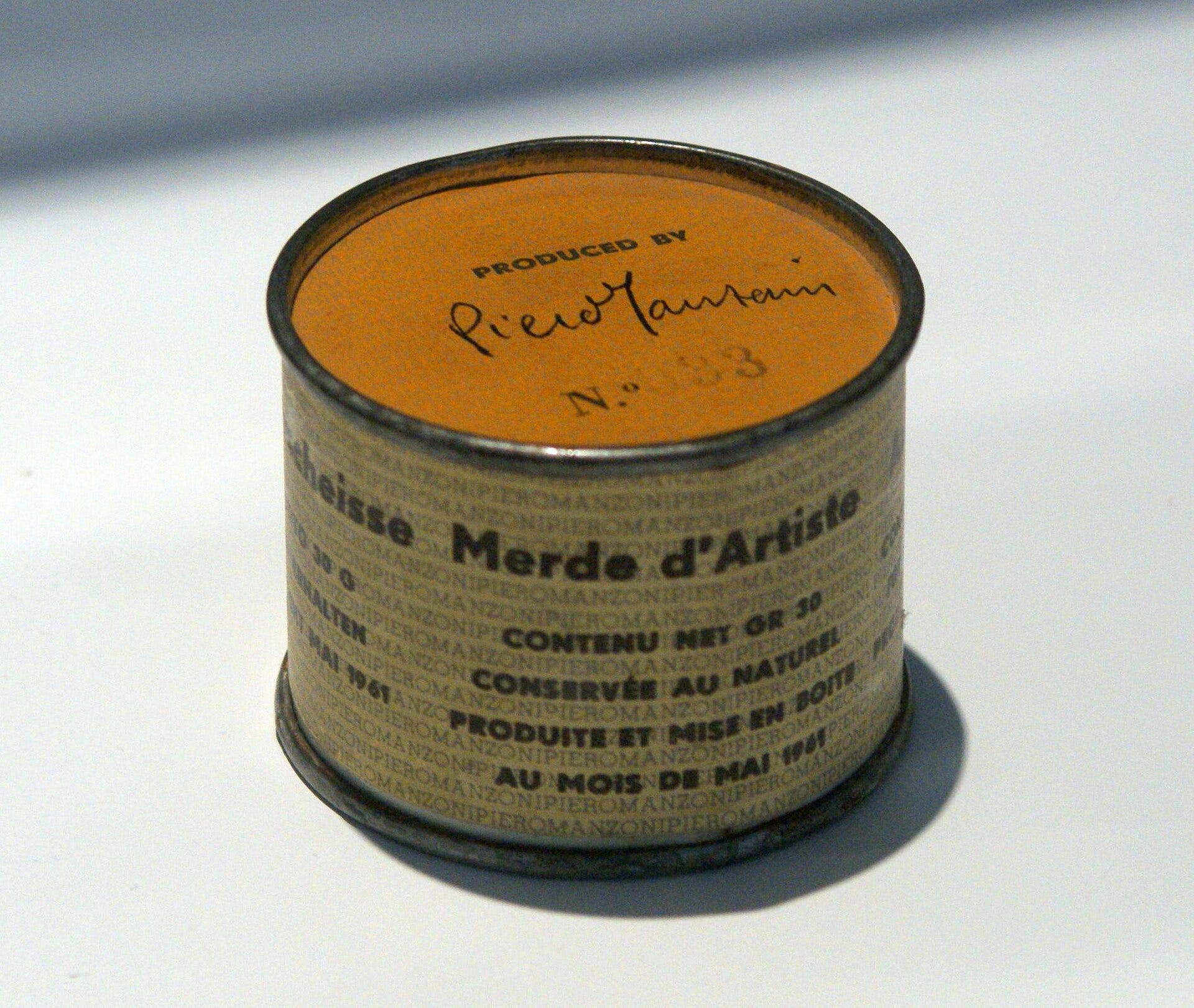
But what in the world is the goal of this ugliness?
Duchamp was blunt in his 1968 interview with the BBC:
“I want to do away with art like man has done with religion.”
Duchamp was driven by contempt of classical art. His aim was not to create beauty, rather to collapse the distinction between beauty and ugliness in its entirety. He published the urinal to claim it was on equal grounds with Da Vinci’s Mona Lisa or Michelangelo’s David.
He — and his followers — were driven by a contempt of beautiful things, because they rejected the idea that art should uplift the human spirit.
Again, we must ask why? Beauty is natural to the human condition and uplifts your spirit… Why on Earth would you hate it?
To answer this question, we must return to the classical understanding of what beauty actually is.
Remembering Classical Beauty
Philosopher Roger Scruton understood beauty as essential to fulfillment and self-knowledge:
“Through the pursuit of beauty, we shape the world as our home and come to know ourselves as spiritual beings”
Beauty is what makes the world habitable to the human soul, quite literally.
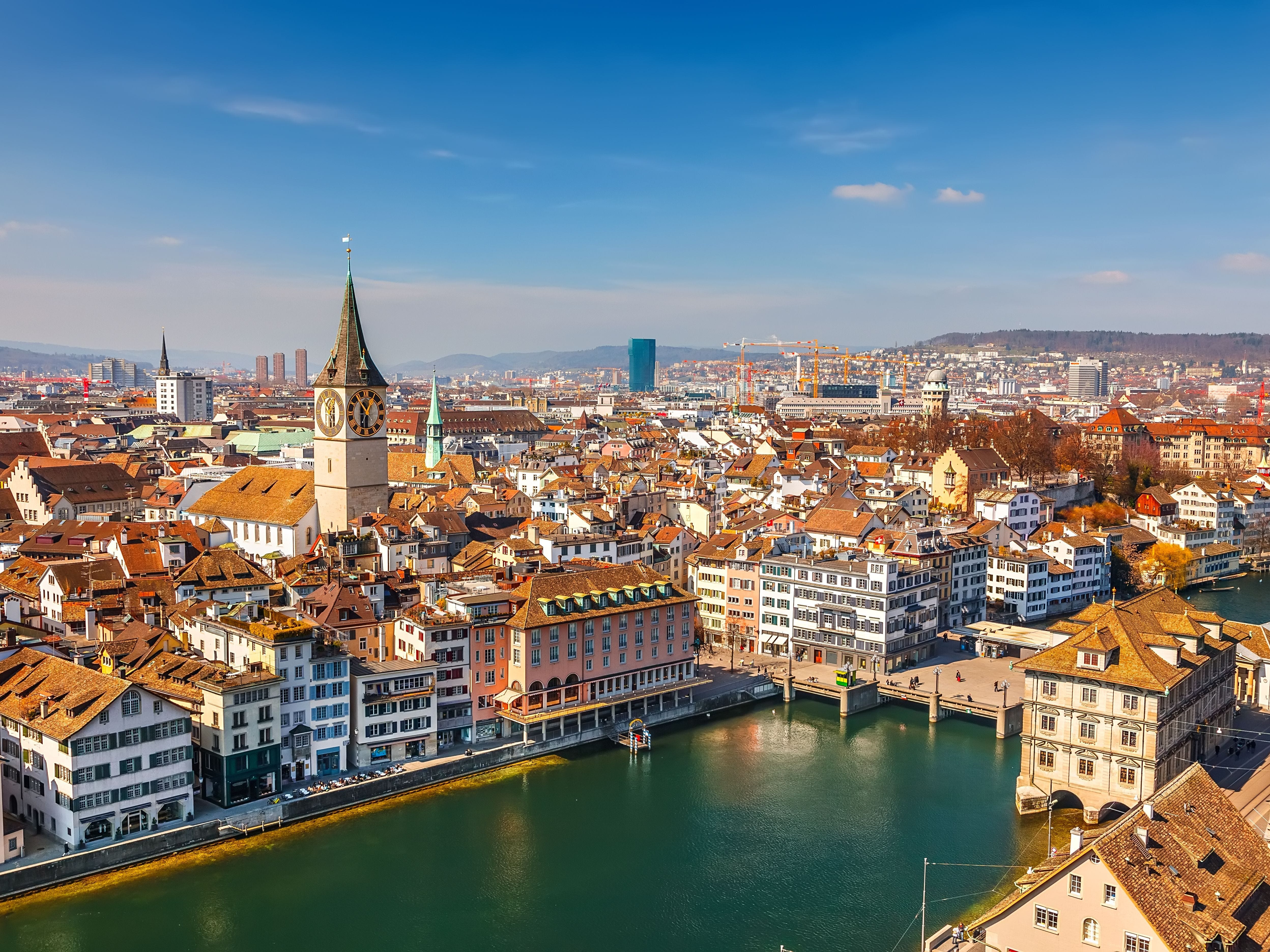
Every year, millions vacation to European cities like Zurich, Switzerland (above), but no one travels to Russia to see USSR soviet bloc apartment buildings (below).

You cannot have a home without beauty. In fact, Plato argued in The Symposium that our soul fundamentally yearns for beauty:
Specifically, he claimed human eros — our erotic passions — are a love for beauty. He believed love of beautiful things was meant to teach you a love for heavenly things.
In other words, if beauty is real, it points beyond itself, and if it points beyond itself, it points to an objective reality.
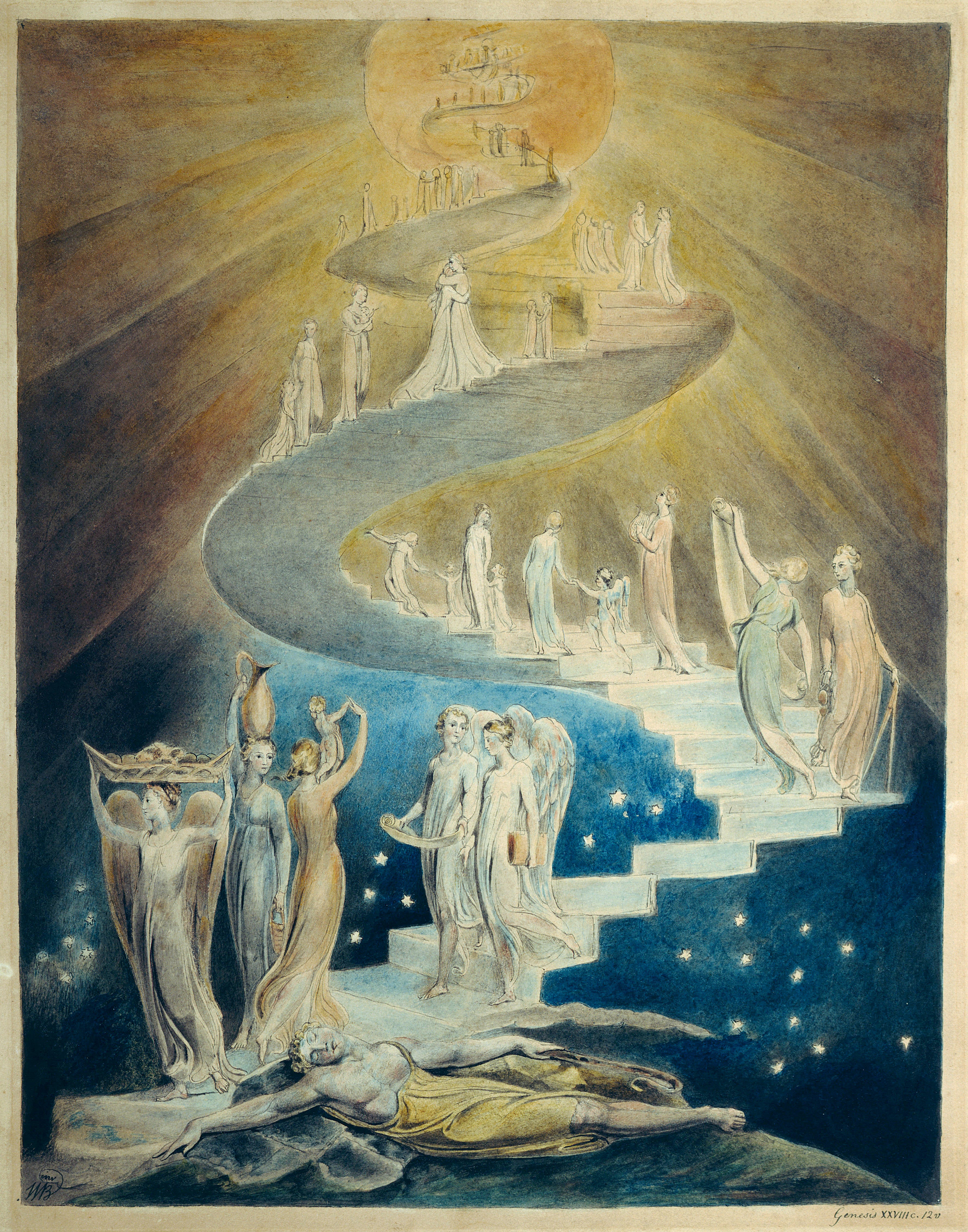
Christianity would develop this further, claiming that the ultimate form of Beauty is found in God himself, who is the essence of Truth, Beauty, and Goodness.
We might recall Duchamp’s words:
“I want to do away with art like man has done with religion.”
The rejection of beauty parallels the rejection of truth and goodness.
“Beauty is subjective,” is the same spirit as “morality is subjective.”
It’s the same spirit of Dostoevsky’s villains — like Raskolnikov, Stavrogin, and Pyotr Verkhansky — who commit murder and countless other atrocities as a means to disprove God.
The ugliness of today’s world then, is not just a product of commercialism, but a product of a deeper philosophical shift against God. If beauty is not real, then perhaps nothing is real.
One might even go so far as to say this war against beauty is rooted in envy and hatred for the human spirit, as the beauty of the human spirit also reflects the divine.
Learning from Venus
How might we recapture our love of beauty?
We do so by learning to love beautiful things again. Botticelli’s Birth of Venus actually teaches us how to do this:
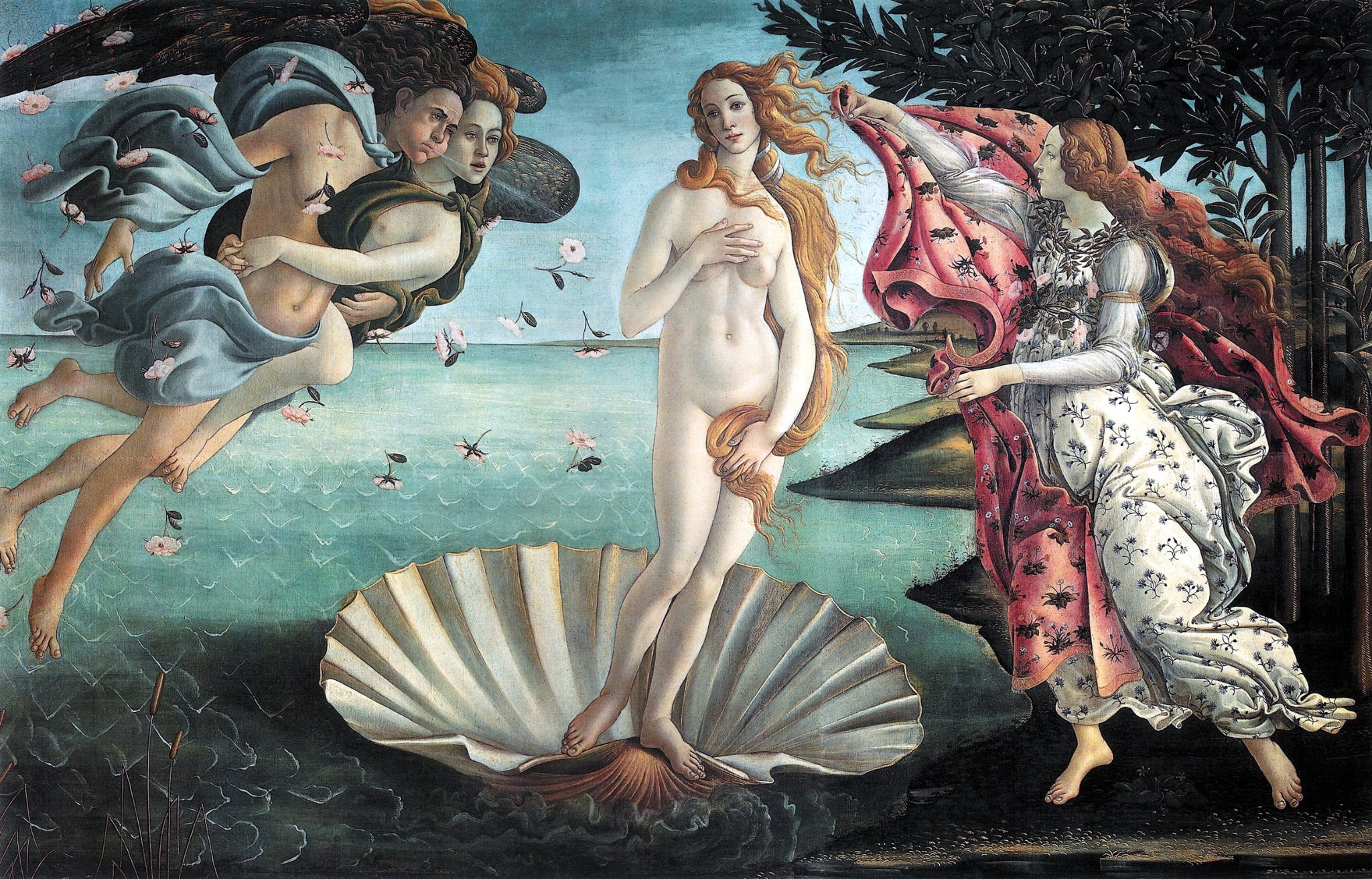
You’ll notice Venus’ gaze is contemplative — that she’s in harmony with the world, yet beyond the world. Her gaze is tranquil, and she’s inviting us to join her in desire. This desire is not lustful, rather induced by love. The same love you feel listening to a trickling stream, or summer breeze, or listening to Mozart.
It’s a love of beauty that leads to unity and selfless love.
Love of beauty inspires man to become beautiful, and in becoming beautiful, he creates beauty throughout the world.
And given that beauty is truth, and truth is goodness, it’s a love of beauty that may be predicated on saving the world from falling apart…
Dostoevsky himself said it best, “beauty will save the world.”
Let us aspire then, to fall more deeply in love with beauty, to be made more perfect in the image of love.
I offer private mentorship in the Great Books for those seeking clarity of vision and depth of soul. Inquire here.
If you’d like to support this work and receive future writings, you can subscribe below.
We should be, through beauty, arranging things “on earth as in heaven.” But, instead, modernity is turning earth into hell.
Wonderful and beautifully written.