

Perelandra is CS Lewis’ most underappreciated work of fiction. It’s the 2nd book in his Space Trilogy series, where protagonist Elwin Ransom finds himself trapped on the planet Perelandra with the Devil.
The plot of this book is simple — the Devil is trying to seduce this planet’s Queen (who is without sin) to disobey God and fall from grace. Ransom’s task is to outwit the devil. He must protect the Queen, Perelandra, and Paradise lest the “fall from paradise,” repeat itself on this planet.
At its core, this novel helps you understand your identity as a “Fallen Man,” and the very temptation that threatens paradise. Even better, Perelandra gives CS Lewis’ jarring but brilliant defense of how to defeat the devil himself in spiritual warfare…
I am 100% reader-supported. This newsletter is free, but if you’re able to support, please consider a paid membership — it helps my mission of sharing Truth, Beauty and Goodness with maximal reach
As a paid member, you’ll get:
Two full essays a week
Access to all recordings (past & future) of my Great Books lectures on this publication
Eternal gratitude from me
Pre-Fallen Paradise
As stated earlier, the novel takes place on the planet of Perelandra (Venus).
Dr. Ransom arrives via space travel and finds a paradisal utopia. The surface of the planet is a bed of ocean water, with floating islands of vegetation drifting across the seas unmoored. The planet has a vigor and freshness as if it had only just emerged from its own seven days of creation.
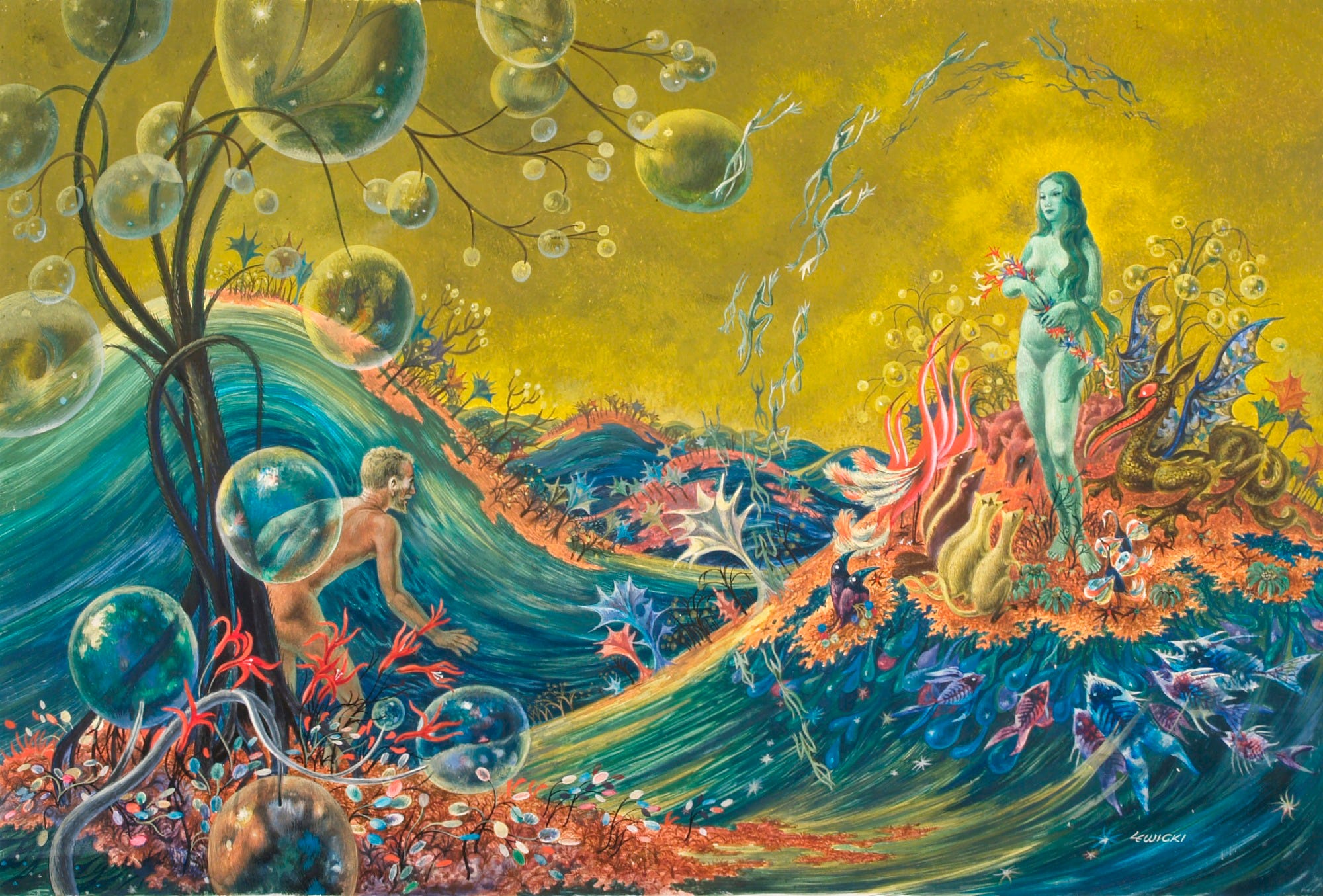
After exploring, Ransom meets the Queen of the planet — a woman with Pre-fallen innocence and no knowledge of evil. Her husband, the King, is away on a separate island, so she tends to Perelandra by herself. That said, Perelandra doesn’t remain a peaceful paradise for long.
Soon, Ransom and the Queen are visited by a demon possessed human, formerly known as Weston.
Lewis writes:
“[Weston] was unrecognizable. He did not look like a sick man: but he looked like a very dead one. The face had that terrible power which the face of a corpse sometimes has of simply rebuffing every conceivable human attitude one can adopt towards it. The expressionless mouth, the unwinking stare of the eyes, said clearly:
I have features as you have, but there is nothing in common between you and me.”
The devil, smirking at Ransom, turns to the Queen and begins tempting her to damnation.
The Serpent’s Tongue
Earlier, the Queen revealed that there is only one law on Perelandra — that she cannot spend a night on the fixed land. For simplicity, consider this the equivalent of Eve’s forbidden fruit in Eden.
The devil begins tempting the Queen to disobedience:
“Your deepest will, at present, is to obey [God] — to be always as you are now, only His beast or His very young child. The way out of that is hard. It was made hard that only the very great, the very wise, the very courageous should dare to walk in it — to go on out of this smallness in which you now live — through the dark wave of Hid forbidding, into the real life, Deep Life, with all its joy and splendour.”
This devilish temptation is distinct from the Garden of Eden. In Eden, the Serpent played on deceit — “Did God really say to obey him? Wouldn’t it be happier if you ate the fruit?”
Here, however, the devil plays on envy, advising the Queen to despise her “bestial,” condition and dare to be great. Interestingly, his words echo Raskolnikov, the axe murderer of Crime & Punishment who thought committing murder would make him an “extraordinary man.”
Thus we see another example of how pride is the root of all evil — in which man deigns to become an equal to God, by affirming that “anything is permitted.”
The Queen is intrigued by the Devil’s words, but Ransom intervenes, reminding her that obedience to God promises her salvation. This pattern of temptation and restraint in the Queen will continue, as engage in a days-long back and forth battle of wits.
Though Ransom has delayed the Queen’s Fall, he feels himself losing ground:
“[Satan] began to teach her many new words: words like Creative and Intuition and Spiritual…
When she had at last been made to understand what “creative,” meant she forgot all about the Great Risk and the tragic loneliness and laughed for a whole minute on end.”
Here the Queen’s joyful curiosity is on dangerous grounds. This is what John Milton dramatized in Paradise Lost — which critics call “the fall before the fall,” — namely the curiosity that Eve felt before eating the apple. Augustine echoes this thought in The City of God.
Furthermore, Augustine himself called curiosity a, “vain desire cloaked in the name of knowledge,” that moves man to grave error.
So the Fall of man isn’t a condemnation of knowledge, but a curious desire for a knowledge divorced from God and Goodness. In other words, a desire for sin, preceded by an “innocent,” curiosity. Implicitly, such an “innocent curiosity,” is rooted in a pride seeking independence from God.
Meanwhile, Ransom despairs. He feels himself losing ground and realizes he cannot outwit the Devil. His battle is lost, and he is only delaying the inevitable Fall.
Yet in his darkest hour, Ransom discovers an unlikely solution. It’s a strategy that seems to contradict everything we associate with Christian virtue — and one of the most startling moments in Lewis’s entire literary canon.
Here, Ransom discovers what it truly means to fight evil incarnate…
