

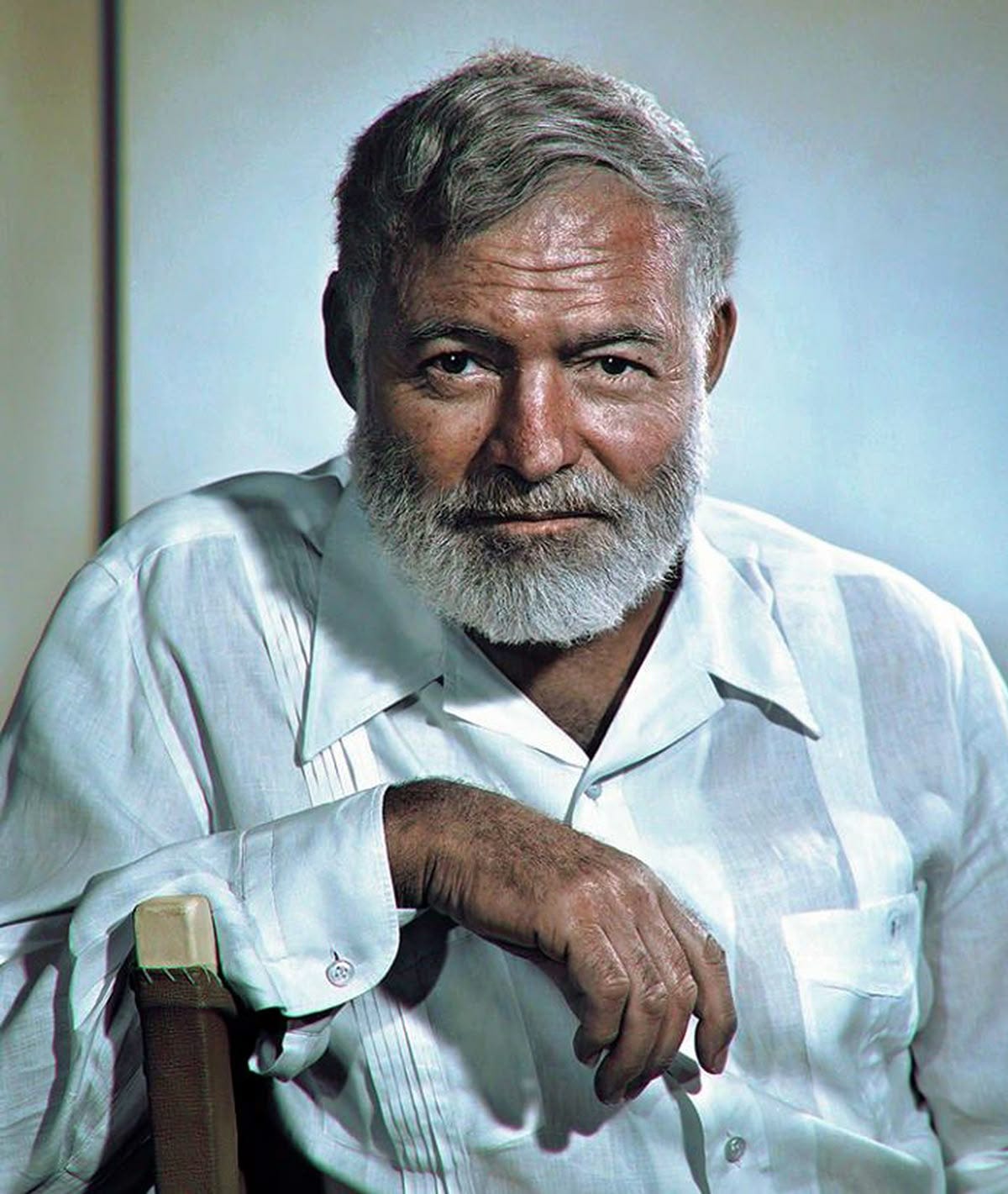
Hemingway was the first great writer to diagnose the spiritual destruction of the Lost Generation.
As a World War I veteran himself, he knew firsthand how trench warfare murdered and traumatized millions, gutting the heart and soul of modern European civilization. The result was the abandonment of God, morality, and meaning.
Hemingway captures this bleak reality in his debut novel The Sun Also Rises. Through protagonist Jake Barnes, he reveals the spiritual malaise of modernity — and why men, in particular, have remained dejected, abandoned, and restless to this day.
Here’s what the story reveals about the Lost Generation, manhood, and what a path back to virtue might look like.
I offer private mentorship in the Great Books for those seeking clarity of vision and depth of soul. Inquire here.
If you’d like to support this work and receive future writings, you can subscribe below.
Broken-Hearted
On the surface, the Sun Also Rises is a story of romance between Jake and his love interest Lady Brett Ashley.

They share a mutual affection, but there’s two problems hindering their romance:
Jake is made impotent from the war
Lady Brett Ashley lost her first love at war, and heartbroken, now refuses to settle with any man
The plot itself seems insignificant — it follows Jake, Brett, and their friends who aimlessly wander Europe, drinking and partying without purpose. Yet what first seems to be a superficial story of failed romance, actually becomes a brilliant social commentary on a closer read.
As “shallow” as the plot may appear, it’s not a celebration of party life. In fact, it becomes clear that every character we encounter is heartbroken, numbing an unbearable pain they do not understand.
Jake, for instance, spends most nights alone, in tears over Brett, longing for her comfort.
Brett, meanwhile, spends no nights alone — unable to bear solitude, silence, or even herself.
Yet while both Jake and Brett are miserable in solitude, we soon realize that—contrary to popular tales—romance is not the answer. They suffer from a deeper illness that not even marriage can cure.
A Reluctant Soul
Throughout Jake’s many nights of drinking, a strange motif emerges in the novel:
His lukewarm Catholicism.
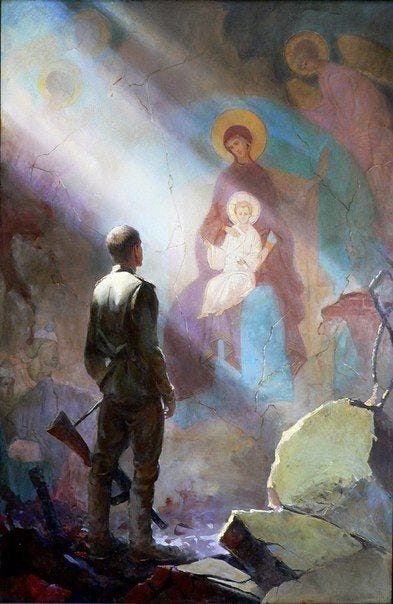
There are no substantive theological discussions, but Jake often laments in passing that he’s a lousy Catholic — yet a Catholic nonetheless.
In his own words:
“The Catholic Church had an awfully good way of handling people. Good advice, anyway. Oh it was swell advice. [I should] try and take it sometime.”
This pattern — admiring Catholicism while failing to practice it — reveals that Jake’s true illness is not romantic loneliness, but spiritual malaise.
Jake’s physical “impotence,” which prevents his romance with Brett, is a sign of a deeper spiritual impotence — one that prevents him from a true union with God (Christians are, after all, the “bride of Christ”).
In this sense, The Sun Also Rises is a profound lie — if we take it to be a story about romance between Jake and Brett. Jake believes Brett is his path to a happy, meaningful life, but in truth, it doesn’t matter whether they marry or not:
Brett cannot make Jake happy. Jake cannot make Brett happy. Man needs more than marriage to find eternal meaning.
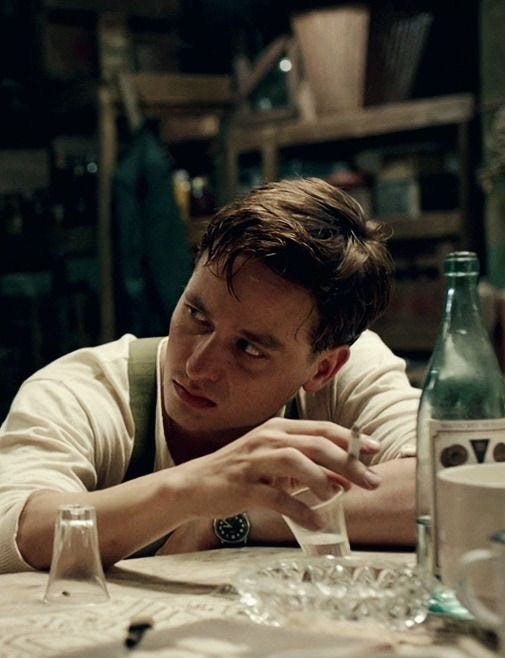
Jake and Brett’s misery is but the misery of modern man divorced from the divine, with no transcendent force to create true unity between man. While God lamented that “it’s not good for man to be alone,” both Jake and Brett alike are testimony to the fact that modern independence, in totality, amounts to nothing more than a living hell…
And yet, futile as Jake’s prospects for happiness remain, his misery is not the whole story.
Hemingway never fully answers the crisis of modern meaning, but he does understand the first step out. That step runs through all his great works, and is captured in one famous sentence.
Fighting the Good Fight
The aforementioned sentence appears in a separate novel, For Whom The Bell Tolls. Protagonist Robert Jordan, suffering in the midst of war, asserts:
“This world is a fine place and worth fighting for, and I hate very much to leave it.”
This idea underlies the heart of Hemingway’s works. In a sense, most all of his protagonists seem to suggest:
Life may be meaningless, but it is meaningful to fight and strive for meaning nonetheless.
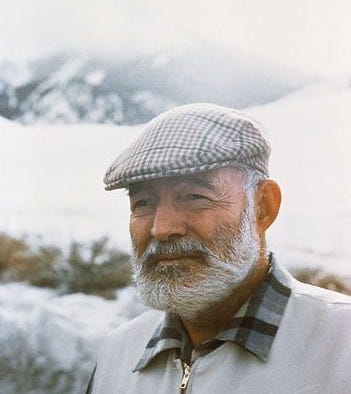
You even see Jake Barnes himself fight for meaning, briefly, in The Sun Also Rises. His fight is spiritual — far more subtle, but poignant nonetheless.
Consider his visit to a Cathedral:
“At the end of the street I saw the cathedral and walked up toward it. The first time I ever saw it I thought the facade was ugly but I liked it now. I went inside. It was dim and dark and the pillars went high up, and there were people praying, and it smelt of incense, and there were some wonderful big windows. I knelt and started to pray and prayed for everybody I thought of, Brett and Mike and Bill and Robert Cohn and myself…
I wondered if there was anything else I might pray for, and I thought I would like to have some money, so I prayed I would make a lot of money, and then I started to think of how I would make it…
I was a little ashamed, and regretted that I was such a rotten Catholic, but realized there was nothing I could do about it, at least for a while, and maybe never, but that anyway it was a grand religion, and I only wished I felt religious and maybe I would the next time.”
That final line is the most revealing — Jake lamenting that Catholicism is a grand religion, yearning to feel religious, yet unable to love God.
In a nutshell, the question becomes:
How can man fall in love with a God he has lost faith in?
This is not just Jake’s plight, but modern man’s in totality.
Jake’s Catholicism can be understood as the “old order” the Lost Generation inherited and, in many ways, rejected — Christianity itself, along with the conceptions of Truth, Beauty, and Goodness that accompany it.
The answer, traditionally speaking, begins with the fight itself.
When Hemingway says the world is a fine place and worth fighting for, Christianity reminds you that such a fight entails carrying a cross. It entails long suffering, fortitude, and humility — and such a fight precedes formation of soul. One might advise Jake Barnes:
If you wish to feel religious, you must first act religious.
His life is spent drinking, idling, and longing for Brett. Little time is given to prayer, the sacraments, or the command to love God and neighbor.
The answer for Jake, then, is the same for modern man.
The life of faith — the faith the Lost Generation rejected, yet longed for nonetheless — is not one of mere intellectual assent, but one lived through sacrifice.
Hemingway shows us what went wrong, and he teaches us how to strive, such that we don’t despair. Yet to move beyond Jake’s silent desperation requires more than fighting. It requires love, a love of the world, a love of neighbor… a love of God.
We are not called to wish the world were good, but called to love Goodness itself.
Hence the lives of modern man ought not reflect the times of modernity. He is called to reflect the Good, and if one’s life is in harmony with the Good, then in totality, all shall be good.
I offer private mentorship in the Great Books for those seeking clarity of vision and depth of soul. Inquire here.
If you’d like to support this work and receive future writings, you can subscribe below.
Incredible points here. The point you emphasized that I most admire is how Jake's physical impotence symbolizes his spiritual shortcomings.
What makes this novel great is how Hemingway plants the seeds of deep theological issues, but with restrained prose, he never goes too far. Unlike so many other writers who spell everything out and beat people over the head with their ideas, Hemingway leaves these topics at the readers feet. Without going into religion, the novel still stands on its own two feet. But like the ground, the book can be dug into and hacked apart to reveal some powerful ideas. And it's so rewarding to discover these buried treasures on your own. The way you framed this is spot-on.
Great work, Sean.
Sean, please would you put in the quote that you quoted this evening by Richard Adams, I think, and the lost generation.
Yes, I listened - not convinced me yet about Hemingway but I do have the book on my shelf so hopefully will get around to it.