

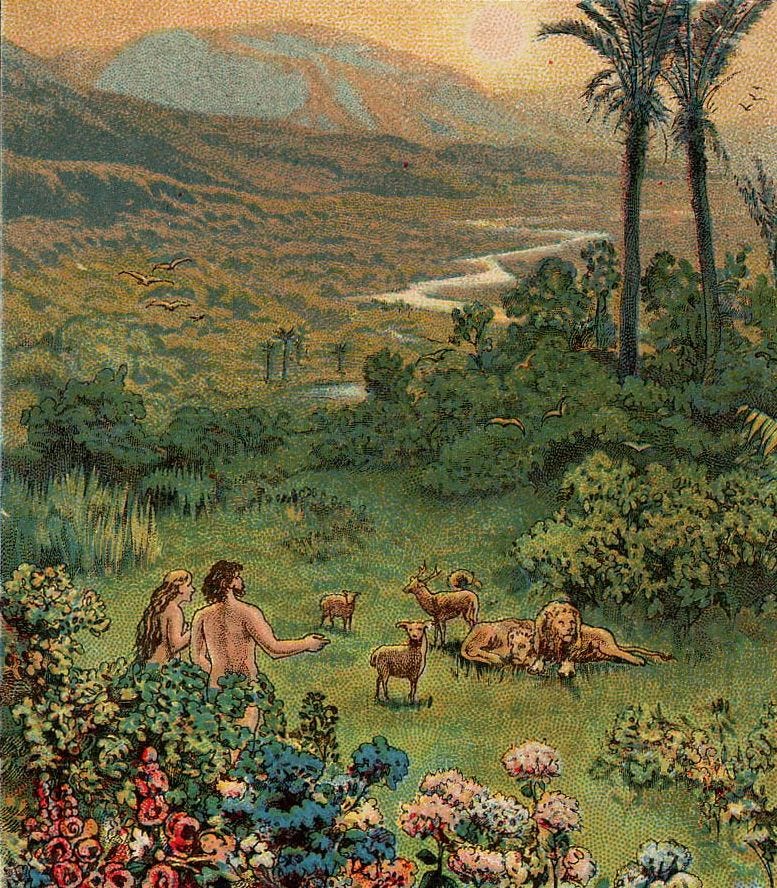
Long before the Bible was written, humanity was already wrestling with the same terrifying question:
Why must we die?
This, in fact, is the core theme of the oldest surviving work of literature in history — the Epic of Gilgamesh.
Gilgamesh’s influence cannot be overstated. It’s shaped the entire tradition of epic poetry, addressing the same questions and themes later asked by Homer, Virgil, Dante, and countless others… and that’s not all.
Believe it or not, Gilgamesh may have even helped shape the literary form of the Bible itself!
Today we’ll dive into the narrative of Gilgamesh, to understand its wisdom, how it shaped the literary tradition of Western Civilization, and how it may have even helped cultivate the soil for divine revelation.
I offer private mentorship in the Great Books for those seeking clarity of vision and depth of soul. Inquire here.
If you’d like to support this work and receive future writings, you can subscribe below.
A Historic King
So first, what is the Epic of Gilgamesh?
It’s based on a historic king — Gilgamesh — of the Sumerian civilization, estimated to have lived around 2700 BC.
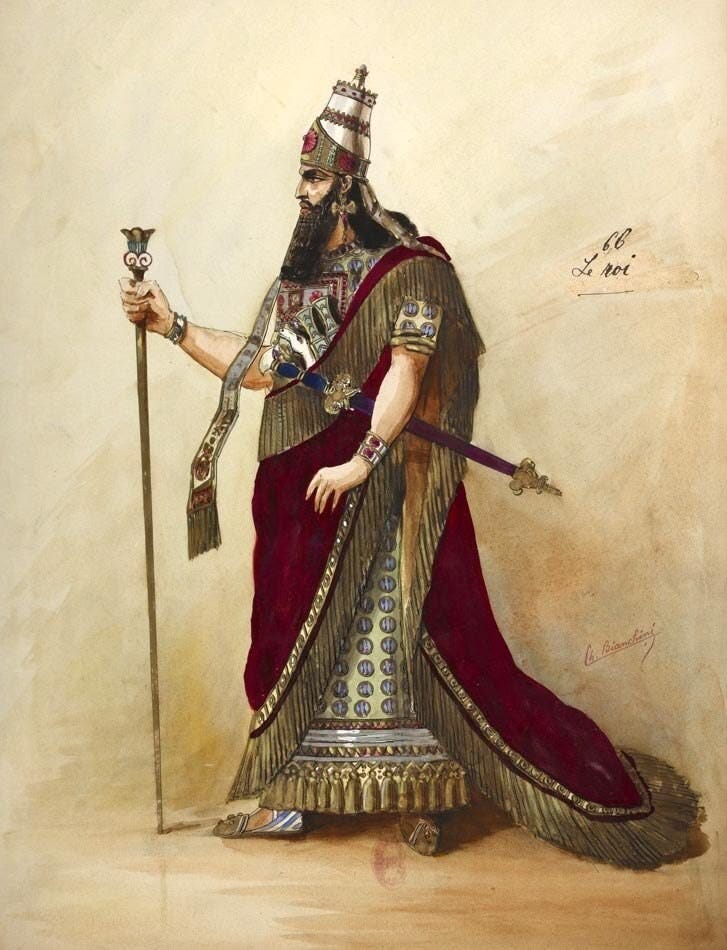
Gilgamesh was likely a virtuous leader, as his life inspired a litany of epic poems celebrating his deeds and valors for centuries to come. Eventually, these poems were combined into a single compendium, known today as the Epic of Gilgamesh.
It’s important to understand that for primordial man, epic poetry wasn’t merely story-telling, rather it was a compendium of a civilization’s knowledge. An epic gave a civilization its identity, its understanding of nature, and understanding of self.
Therefore, the Epic of Gilgamesh was like a “Bible,” for the Sumerians.
What lessons did it teach the Sumerians exactly?
Its wisdom is ultimately based on one, timeless, universal lesson.
A Fear of Death
This story follows the literary character Gilgamesh, a noble king and demi-god, who must confront and wrestle with his own mortality.
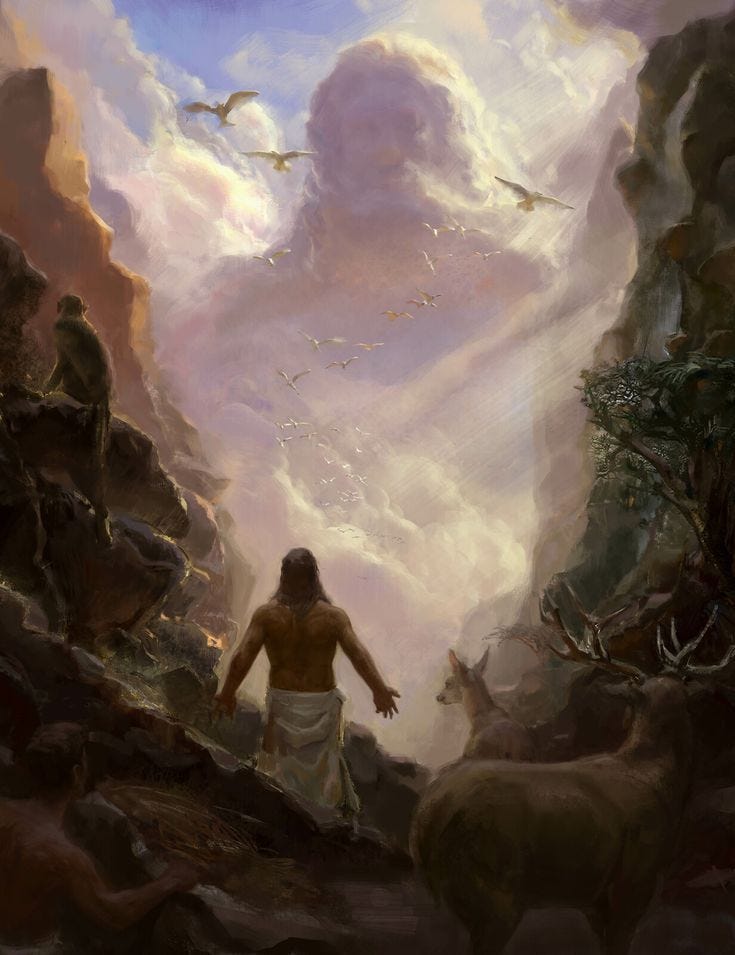
Favored by the gods, he’s blessed with beauty and strength, and beloved by all in his kingdom.
However, tragedy strikes after he offends the goddess Ishtar — rejecting her romantic advances — and as a result his best friend Enkidu perishes.
Gilgamesh is grieved at the loss of his friend, and becomes terrified of his own mortality. There is hope, however. Legend has it that one man, Utnapishtim, was beloved by the gods and given immortal life.
Gilgamesh seeks him out on a perilous journey. He travels to the end of the world, where Utnapishtim warmly receives him.
Gilgamesh asks for the secret to immortality, and in response, Utnapishtim gives him a story never before revealed to mankind.
A Cataclysmic Flood
What is the story?
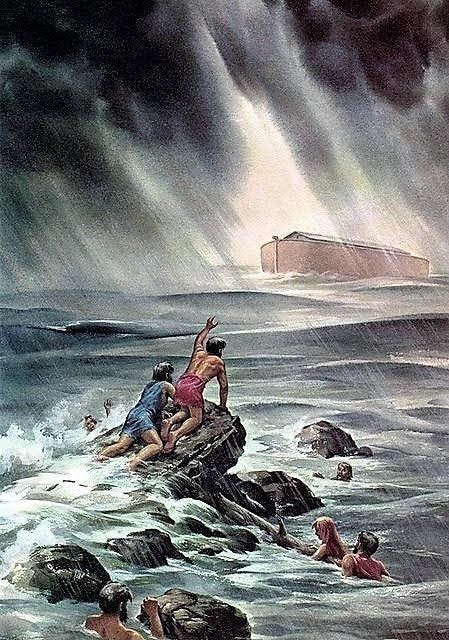
Utnapishtim tells of a cataclysmic flood, caused by the vengeance of the gods who sought to exterminate man. Utnapishtim and his wife alone survived, building a boat after advance warning from the gods. They were marked as righteous amongst the many, and worthy of immortality.
So Utnapishtim reveals that his immortal life was a gift from the gods, but he tells Gilgamesh despair not, for there is one more hope to attain immortality:
At the bottom of the sea lies a plant of immortal life for whoever eats of it.
Gilgamesh retrieves it with joy, vowing to bring the plant home with him, to save mankind from the horror of death. Yet to his despair, a serpent arrives and eats the plant on the voyage home.
The epic ends shortly after, recounting Gilgamesh’s death, and a lamentation that his fate is the natural and necessary end to mortal man.
And yet, Gilgamesh’s story may end here, but the story of mankind, divine revelation, and perhaps true everlasting life, was just getting started.
Gilgamesh and Genesis
By now, shrewd readers will have noticed that this epic is filled with imagery and narrative structure that will appear in the writings of Genesis, which was written ~1,500 years after the life of the historic Gilgamesh.
The more notable influences include a flood story with a righteous family spared, and man divorced from the plant (tree) of immortal life through the wiles of a serpent.
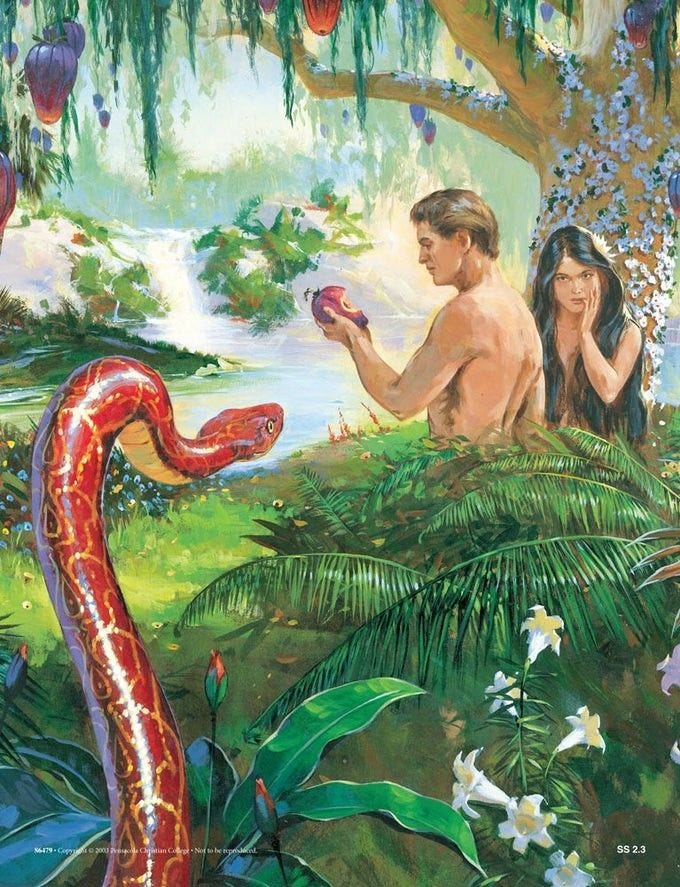
How are we to understand the literary connection of Gilgamesh and Genesis?
It’s of course inaccurate to say that Gilgamesh “debunks,” Genesis, but it would also be foolish to dismiss Gilgamesh as a mere pagan myth devoid of value.
If we recall Tolkien’s “true myth,” argument, he asserts that all myths are vehicles of wisdom aiming at the same truth, and that truth is the “myth,” of Christ who was made flesh in human history — a “true myth.”
In other words, to read Gilgamesh is to deepen one’s appreciation of both pagan myth and the theological grandeur of the book of Genesis.
To see this more clearly, we need to examine what makes Genesis both similar to, and radically different from, the myths that preceded it.
I Am Who Am
Genesis makes itself distinct from all pagan stories with its opening line:
“In the Beginning, God created the Heavens and Earth.”
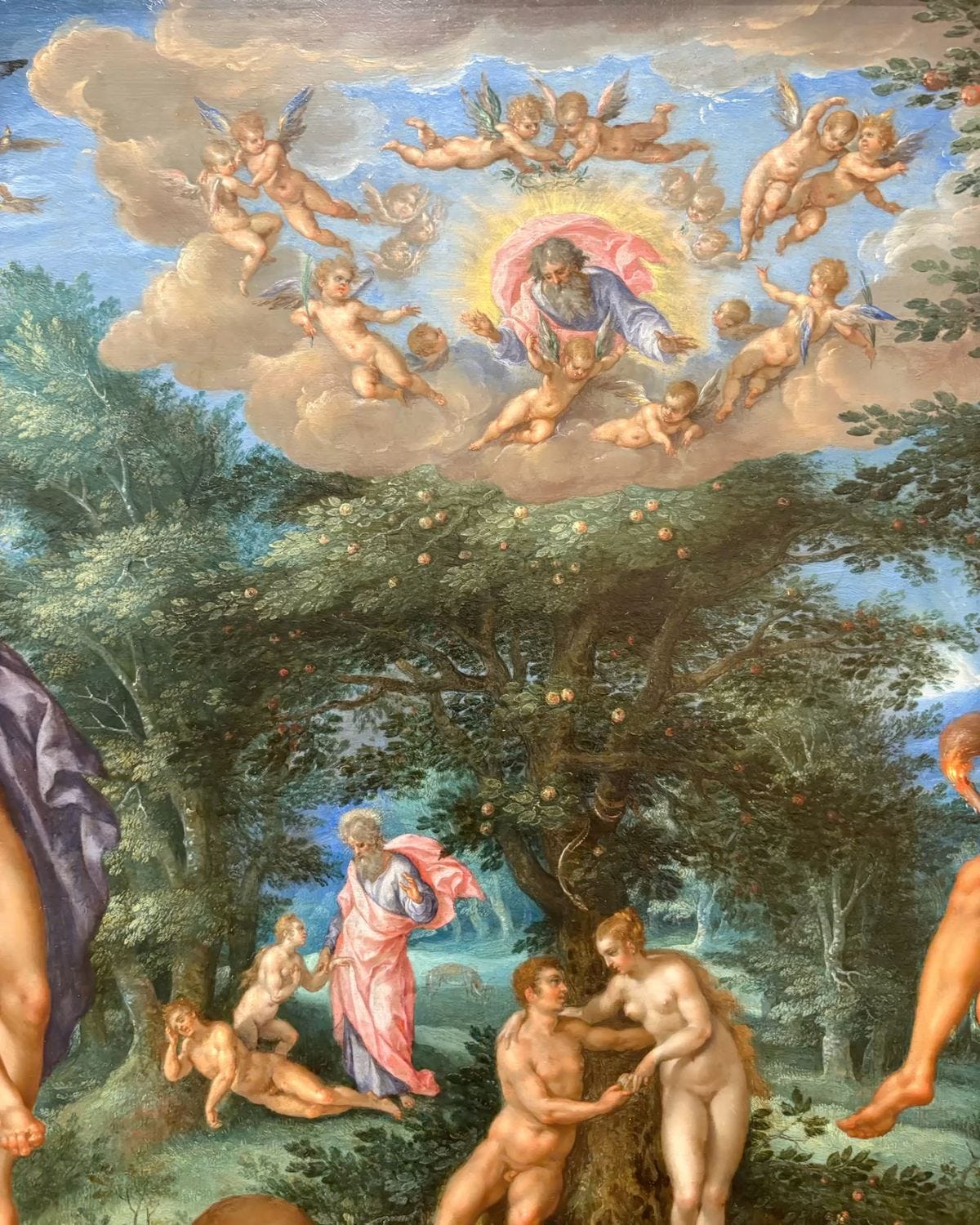
Whereas pagan myths feature polytheistic nature gods, Genesis is predicated on a monotheistic God, transcendent of nature. In this sense, Genesis is a work of cosmological theology, fundamentally distinct from Gilgamesh and all corresponding myths.
Yet how do we account for the narrative similarities between Genesis and Gilgamesh?
The writers of Genesis wrote within the same ancient Near Eastern narrative world in which stories like Gilgamesh circulated.
Christian orthodoxy would say Gilgamesh’s flood is an imperfect remembering of an actual cataclysmic event. Genesis adopts this mythological substrata, “perfects it,” via revelation, yet dramatizes it through the mythological archetype of the flood.
Thus Genesis’ theological grandeur is understood as revelation of literal theological truths, conveyed through the allegorical medium of mythological narratives, which reveal spiritual wisdom about the human condition.
Or in layman’s terms, Genesis uses stories to convey inexpressible, heavenly truths.
This also gives recourse to the teachings of Christ, who spoke in parables rather than prosaic language.
The True Myth
We now arrive full circle back to the question of why read Gilgamesh? What does it teach us?
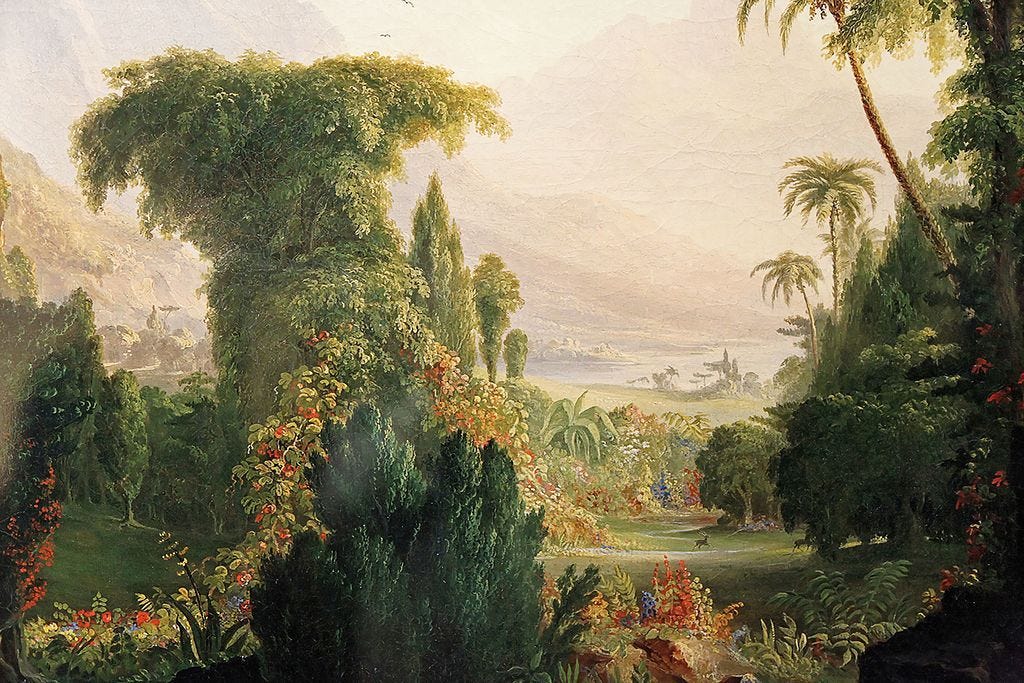
As a stand alone story, Gilgamesh reveals the heart of ancient, primordial man, wrestling with mortality in a world with no hope after death.
We are left with the impression that man ought not to strive for unnatural immortality, rather content himself with worldly pleasure and striving after earthly glory — means to living a temporal but thrilling existence.
And yet, immersing our imagination into this primordial mythological landscape cannot help but deepen our appreciation for the eternal, and transcendent.
Consider the example of CS Lewis, who abandoned 20+ years of atheism after listening to Tolkien’s “true myth,” argument:
“Now what Dyson and Tolkien showed me was this:
that if I met the idea of sacrifice in a Pagan story I didn’t mind it at all: again, that if I met the idea of a god sacrificing himself to himself . . . I liked it very much and was mysteriously moved by it: again, that the idea of the dying and reviving god (Balder, Adonis, Bacchus) similarly moved me provided I met it anywhere except in the Gospels.
The reason was that in Pagan stories I was prepared to feel the myth as profound and suggestive of meanings beyond my grasp even tho’ I could not say in cold prose ‘what it meant’.
Now the story of Christ is simply a true myth: a myth working on us in the same way as the others, but with this tremendous difference that it really happened.”
Indeed, such writings were the beginnings of the famed career of the 20th century’s most famous christian apologist.
Whether or not you have theological inclinations is secondary to the point of this discussion. The assertion is, authentic engagement with myth-making and tales of primeval history do wonders for the human spirit.
If you want to awaken in your soul a desire for heavenly truth, or a spirited pursuit of meaningful, vital life, immerse yourself in the tales of myth, and read the book of Genesis. You may just find yourself being made anew.
I offer private mentorship in the Great Books for those seeking clarity of vision and depth of soul. Inquire here.
If you’d like to support this work and receive future writings, you can subscribe below.
Beautifully written, Sean. You're a wonderful teacher.
"Thus, Genesis' theological grandeur is understood as revelation of literal theological truths, conveyed through the allegorical medium of mythological narratives, which reveal spiritual wisdom about the human condition."
I have been taught that when Jesus, or any apostle, quotes part or all of an Old Testament passage, that confirms the truth and validity of that passage. Examples of this would be Matt. 19:4-6, where Jesus confirms the truth of Adam and Eve; Matt. 24:37-39, here, Jesus confirms the truth of Noah and the flood. Also, in Rom.5:12, Paul contrasts the first Adam with Christ.
Are these allegorical examples, in your opinion, or did the events actually take place? This is a question I have been dealing with. I like your quote that I started this comment with; though I will have to think more about it, it has added a new dynamic to my way of understanding Genesis.